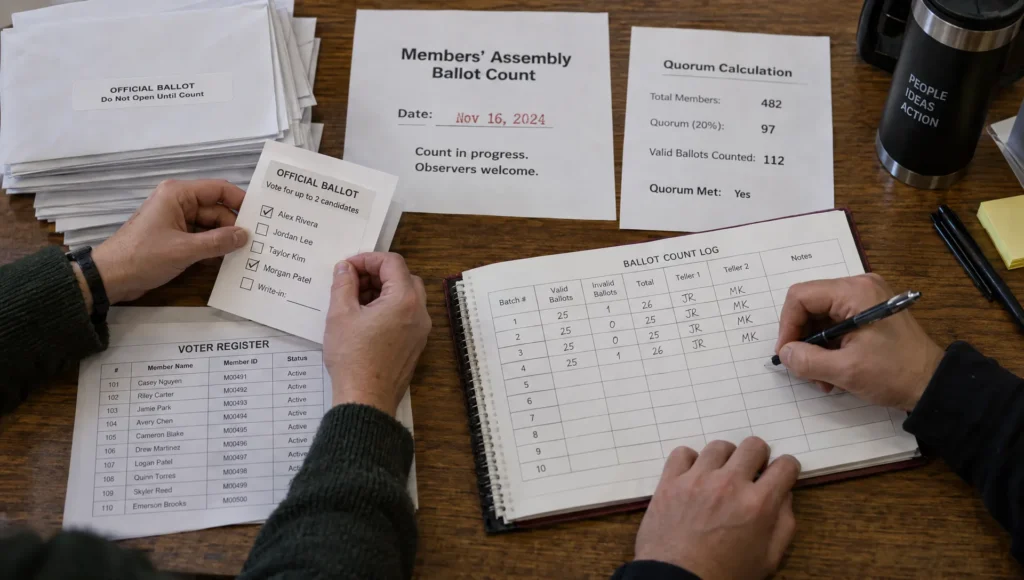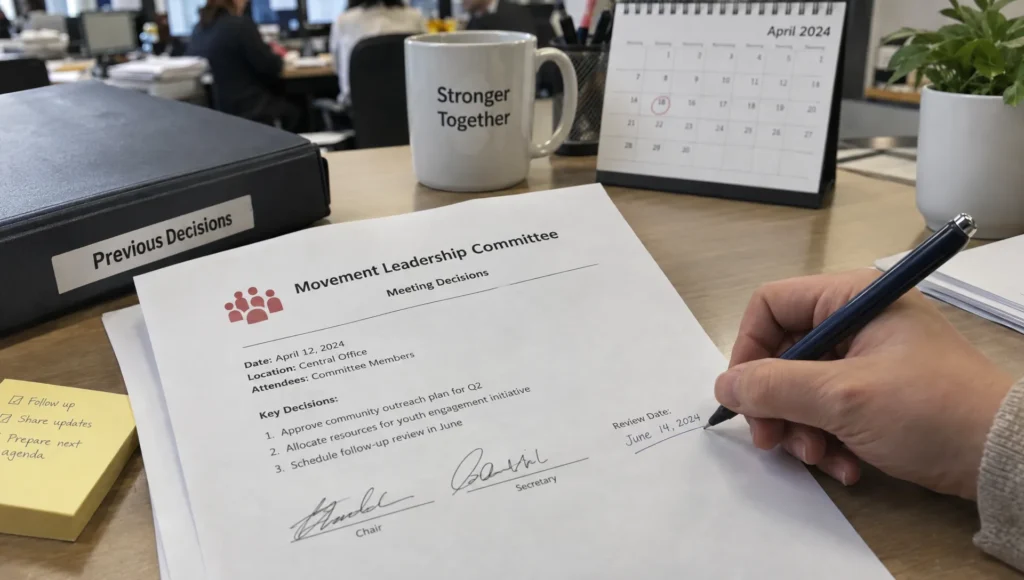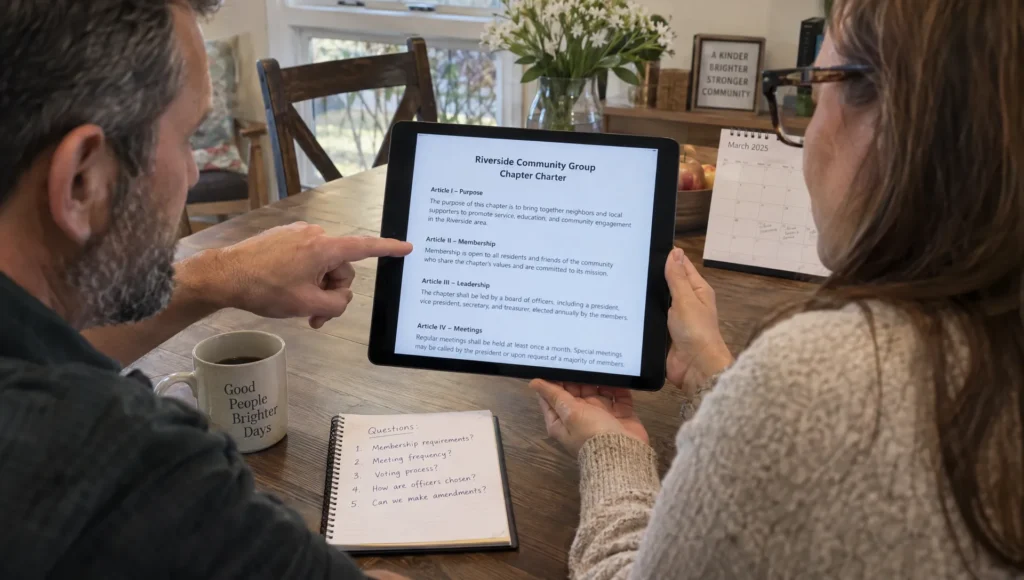
Protest is a flare. Elections are a gate. A serious political movement needs something more durable: a way for ordinary people to shape decisions before, during, and after power is formally exercised.
That is the missing middle of democratic life. Many citizens are willing to march, vote, post, donate, or argue. Far fewer are given a repeatable path for turning concern into public evidence, structured choices, institutional response, and follow-through. This is why movements often burn bright and then fade. They win attention, but not memory. They create pressure, but not process.
The JustSocial manifesto argues that citizens should not be reduced to voters, taxpayers, and private consumers. A modern political movement should treat civic participation as an everyday capacity, supported by technology, transparent records, and a culture of public reasoning. The goal is not to replace protests or elections. The goal is to build the civic machinery that makes them matter more.
The missing middle: from attention to participation
Protests and elections do important work. Protests show that a threshold has been crossed. Elections authorize representatives, punish failure, and create legal pathways to power. But neither one, by itself, answers the daily question of democracy: how do people influence the thousands of public decisions made between election cycles?
A movement that relies only on protests is vulnerable to fatigue. A movement that relies only on elections is vulnerable to capture by party machinery, donors, media cycles, and internal elites. A movement that builds civic participation becomes harder to ignore because it produces decision-ready public work.
This is where discursive democracy and deliberative democracy become practical tactics, not academic labels. Discursive democracy improves the public conversation: claims become clearer, evidence becomes visible, and disagreements are mapped instead of buried under slogans. Deliberative democracy takes the next step: a smaller, more structured group weighs tradeoffs, listens to affected people and experts, and produces options that decision-makers can actually answer.
Together, they help a political movement become more than a campaign. They make it a civic institution in formation.
A tactical map beyond protests and elections
The tactics below are not substitutes for mobilization. They are ways to convert mobilization into power that can be inspected, repeated, and scaled.
| Movement need | Tactic | Public output | What it changes |
|---|---|---|---|
| Know where power is being exercised | Build a decision docket | List of live decisions, owners, dates, and rules | Turns vague anger into targeted action |
| Improve public debate | Practice discursive democracy | Claim maps, evidence shelves, structured comments | Turns noise into usable public reasoning |
| Resolve tradeoffs | Run deliberative option rooms | Options memo, minority report, tradeoff table | Turns conflict into decision-ready choices |
| Build trust | Publish public receipts | Requests, responses, rationales, trackers | Makes influence visible and auditable |
| Grow capacity | Form civic teams | Role-based working groups | Turns supporters into operators |
| Scale locally | Package repeatable kits | Templates, meeting guides, local issue packs | Lets the movement travel without losing standards |
Build a public decision docket
Most movements begin with a demand. Better movements begin with a map.
A public decision docket is a living list of real decisions that matter to the movement. It identifies who can decide, when they can decide, what legal or administrative process governs the decision, and where public input can enter. This sounds simple, but it changes everything. Instead of saying, “We demand better housing policy,” the movement can say, “The city council housing committee will vote on the zoning amendment on July 14. Written comments close on June 30. Here is the decision owner, the agenda item, and the proposed amendment.”
That shift moves civic participation from expression to leverage. It also lowers the barrier for busy citizens. People do not have to understand the entire system. They need one accurate entry point.
A good decision docket should include:
- The decision title and plain-language summary
- The decision owner and institution
- The timeline and participation window
- The current documents, proposals, and constraints
- The movement’s requested public artifact, such as a response memo or implementation tracker
This tactic connects directly to the JustSocial vision of continuous democracy. If the people are to become a real civic branch, they need a public agenda they can see, search, and act on.
Turn public speech into discursive democracy
Movements often confuse volume with voice. A thousand comments saying “this is unacceptable” may show emotion, but officials can dismiss them as repetitive. Discursive democracy gives public speech a structure that makes it harder to ignore.
The basic unit is not the slogan. It is the claim.
A useful civic claim names what is happening, why it matters, what evidence supports it, who is affected, and what decision should change. This does not make politics emotionless. It makes emotion legible. Anger, grief, fear, and hope all belong in democratic life, but they become more powerful when connected to reasons and requests.
A movement can apply discursive democracy in town halls, online comments, WhatsApp groups, newsletters, livestream chats, neighborhood meetings, and protest follow-ups. Instead of asking supporters to “share your thoughts,” ask them to submit in a standard format: claim, reason, evidence, affected group, requested action.
Over time, the movement can publish a claim map. This shows the major arguments, recurring concerns, evidence gaps, and points of disagreement. It also protects minority voices by making dissent visible instead of allowing the loudest faction to define consensus.
Use deliberative democracy to produce options, not just demands
Discursive democracy improves the conversation. Deliberative democracy helps produce judgment.
A deliberative option room is a structured process where a diverse group reviews evidence, hears from affected people, compares tradeoffs, and drafts practical options. It does not need to be perfect or expensive. A small local movement can start with 12 to 20 participants, a neutral facilitator, a shared issue pack, and a clear promise about what will be published.
The most important rule is that deliberation should not be theater. It must produce something usable. That usually means an options memo with two to four choices, each including benefits, costs, risks, implementation requirements, and unresolved disagreements.
This is where the JustSocial manifesto’s idea of an academic branch becomes tactically useful. Experts should not rule over citizens, but they can help clarify evidence, uncertainty, and tradeoffs. A movement can invite academics, practitioners, or independent specialists to prepare short, contestable briefs. The deliberative group then uses that expertise without surrendering democratic judgment to it.
Deliberative democracy is especially valuable when a movement faces internal disagreement. Should a city prioritize rent control, public housing, zoning reform, tenant legal aid, or vacancy taxes? A protest can raise the issue. A deliberative process can show which combinations are realistic, which tradeoffs people accept, and which disagreements remain principled.
Publish receipts so trust does not depend on faith
Political movements ask people for time, money, reputation, and emotional energy. Trust cannot be sustained by charisma alone. It needs records.
Public receipts are short, inspectable documents that show what was promised, what happened, who responded, and what changed. They are not bureaucracy for its own sake. They are anti-cynicism infrastructure.
| Receipt | What it proves |
|---|---|
| Participation promise | The movement said in advance how input would be used |
| Meeting note | People can see what was discussed and what was not |
| Evidence index | Claims are traceable to sources or lived testimony |
| Options memo | The movement considered tradeoffs, not only slogans |
| Response log | Officials, candidates, or institutions answered or refused to answer |
| Implementation tracker | The movement followed the issue after the public moment passed |
Receipts also discipline leadership. A political movement that publishes its own processes is better positioned to demand transparency from government. It models the democracy it wants to build.
This is central to the manifesto’s larger argument: public systems are too often opaque, slow, and detached. The answer is not merely to shout at them. It is to create public memory around decisions so neglect becomes visible.
Occupy the boring channels
Movements are drawn to dramatic moments because drama recruits. But many consequential decisions happen in quiet rooms: committees, procurement boards, school councils, zoning hearings, budget workshops, regulatory comment periods, and administrative reviews.
A mature political movement treats these “boring” channels as democratic terrain.
This does not mean every supporter must attend every meeting. It means the movement assigns coverage. One person tracks agendas. Another summarizes documents. Another submits questions. Another watches recordings. Another updates the decision docket. This is how civic participation becomes continuous without exhausting everyone.
The JustSocial manifesto’s rParliament concept points in this direction: public committees should not be hidden in procedural fog. Their documents, recordings, votes, and debates should be available, searchable, and connected to citizen response. Until institutions provide that infrastructure, movements can create shadow versions at local scale.
A committee watch team can publish three things after every relevant meeting: what was decided, what was deferred, and what citizens should do next. That alone can make a movement more useful than most political media.
Build civic teams, not just audiences
An audience listens. A base reacts. A civic team produces.
Many movements are built around messaging channels: email lists, social accounts, donor lists, event groups. These are useful, but they do not automatically create governing capacity. If the movement wants to change policy, it needs roles.
A small civic team can include a decision mapper, an evidence steward, a facilitator, an outreach lead, a receipt keeper, and a liaison to officials or institutions. These roles can rotate monthly to prevent burnout and concentration of power.
The point is not to professionalize citizens out of participation. The point is to make participation easier. When roles are clear, a volunteer does not have to ask, “What should I do?” The work is visible.
This also helps movements avoid personality politics. If the only path to influence is being loud, charismatic, or close to the founder, the movement will reproduce the same hierarchy it criticizes. If influence comes through public work, more people can contribute meaningfully.
Package the work so it can travel
A political movement grows when local groups can copy its practices without needing constant permission from the center. That requires packaging, not only branding.
Packaging means templates, facilitation guides, issue pack formats, receipt examples, training scripts, slide decks, meeting cards, and local action kits. Some of this can be digital. Some should remain physical, especially for communities with limited digital access or low trust in online platforms.
For movements that distribute printed civic kits, meeting materials, or local organizing packs, even practical logistics such as durable folders, labeled boxes, and custom cardboard packaging can support consistency across local teams. The point is not aesthetics. The point is making participation easy to recognize, store, share, and repeat.
This may sound mundane, but movements fail on mundane details. If every local chapter invents its own process, quality collapses. If the center controls everything, scale collapses. Good packaging creates freedom within standards.
Use service projects as listening infrastructure
Not every tactic should begin with policy language. Sometimes the strongest movement work begins with direct help: food distribution, legal aid clinics, school support, neighborhood safety walks, translation assistance, public technology help desks, or community repair days.
The strategic mistake is to treat service as separate from civic power. Service projects reveal where systems fail. They show which forms are impossible to understand, which agencies do not respond, which families are excluded, and which local rules contradict lived reality.
A movement can turn service into civic participation by documenting patterns without exploiting personal stories. For example, a tenants’ assistance clinic can publish an anonymized monthly memo: top five recurring problems, agencies involved, response delays, policy bottlenecks, and requested changes.
This approach reflects a deeper democratic principle. People should not have to become policy experts before they are heard. Movements can translate lived experience into public evidence while protecting dignity and privacy.
Create a 30-day cycle after every major action
The most important moment after a protest is the next morning. The most important moment after an election is the first public decision. A movement should have a standard 30-day cycle that converts attention into civic work.
| Timeframe | Movement action | Output |
|---|---|---|
| Days 1 to 3 | Collect claims, stories, and demands | Initial claim map |
| Days 4 to 7 | Identify decision owners and timelines | Decision docket update |
| Days 8 to 14 | Build an issue pack and evidence shelf | Public issue pack |
| Days 15 to 21 | Run a deliberative option room | Options memo and minority note |
| Days 22 to 30 | Deliver requests and demand response | Response log and tracker |
This cycle prevents the classic movement failure: a powerful event followed by scattered energy. It also gives supporters a sense of progress. They can see the path from emotion to influence.
Guardrails that keep tactics democratic
Tactics beyond protests and elections can become manipulative if they are not governed well. A movement should publish rules before it scales.
First, separate mobilization from deliberation. Mobilization rallies people around a cause. Deliberation requires openness to tradeoffs, evidence, and dissent. Both are legitimate, but they should not pretend to be the same thing.
Second, protect minority voices. A movement that claims to represent “the people” must not erase people who disagree inside the movement. Minority reports, dissent logs, and alternative options are signs of strength, not weakness.
Third, avoid surveillance disguised as participation. The manifesto speaks about willing and anonymous civic identity because people should be able to participate without fear of retaliation or profiling. Identity rules should match the stakes of the process. Low-stakes input can allow more anonymity. High-stakes voting or eligibility-based decisions may require stronger verification, but always with privacy safeguards.
Fourth, make money and leadership visible. If donors, vendors, consultants, or affiliated organizations shape the movement’s agenda, participants should know. Transparency does not eliminate conflict, but it makes conflict governable.
How these tactics connect to the JustSocial vision
The manifesto’s reference to the Greek Polis is not nostalgia. It is a design challenge. The Polis gave citizens a direct sense of belonging and influence, but it could not scale to modern nations. The question for our time is whether technology, civic education, and institutional reform can recover some of that immediacy without sacrificing rights, pluralism, or complexity.
Political movement tactics beyond protests and elections are small steps toward that larger Cosmopolis idea. A decision docket makes public power visible. Discursive democracy makes public speech usable. Deliberative democracy makes conflict more intelligent. Public receipts make trust inspectable. Civic teams make participation sustainable.
None of these tactics requires waiting for a perfect platform or a new constitution. They can begin locally, around one school policy, one neighborhood dispute, one public budget, one committee, or one law. That is how a movement proves its seriousness: by building the habits of democratic power before it holds power.
Frequently Asked Questions
Are protests still useful for a political movement? Yes. Protests show urgency, attract attention, and reveal public will. The problem is relying on protest alone. A strong movement uses protests as an entry point, then moves supporters into decision tracking, evidence building, deliberation, and follow-through.
How is discursive democracy different from normal debate? Normal debate often rewards speed, performance, and tribal signaling. Discursive democracy adds process rules so public speech becomes clearer and more useful: claims are stated precisely, evidence is visible, interests are disclosed, and disagreements are mapped.
What makes deliberative democracy useful for movements? Deliberative democracy helps movements handle complexity. Instead of producing only slogans, it produces options, tradeoffs, minority reports, and public reasoning that officials, journalists, and citizens can evaluate.
Can these tactics work without government cooperation? Yes. A movement can create shadow decision dockets, public issue packs, response logs, and implementation trackers before institutions cooperate. Government adoption helps, but movements can model the standard first.
What is the first tactic a small team should try? Start with a decision docket. Choose one live issue, identify the decision owner and timeline, publish a one-page explanation, and ask supporters to submit structured claims. This creates the foundation for every other tactic.
Build the movement between the moments
A political movement wins durable democratic power when it becomes useful between dramatic events. It helps people understand decisions, weigh evidence, participate safely, demand responses, and remember what happened.
That is the work JustSocial is advancing: continuous civic participation, supported by transparent processes and technology that serves citizens rather than replacing them. If you believe democracy should be more than protests and elections, explore the manifesto, contribute your skills, volunteer with the project, or start a local participation loop where you live.
The future of democracy will not be built only at the ballot box or in the street. It will be built in the ordinary civic routines that make the people impossible to ignore.