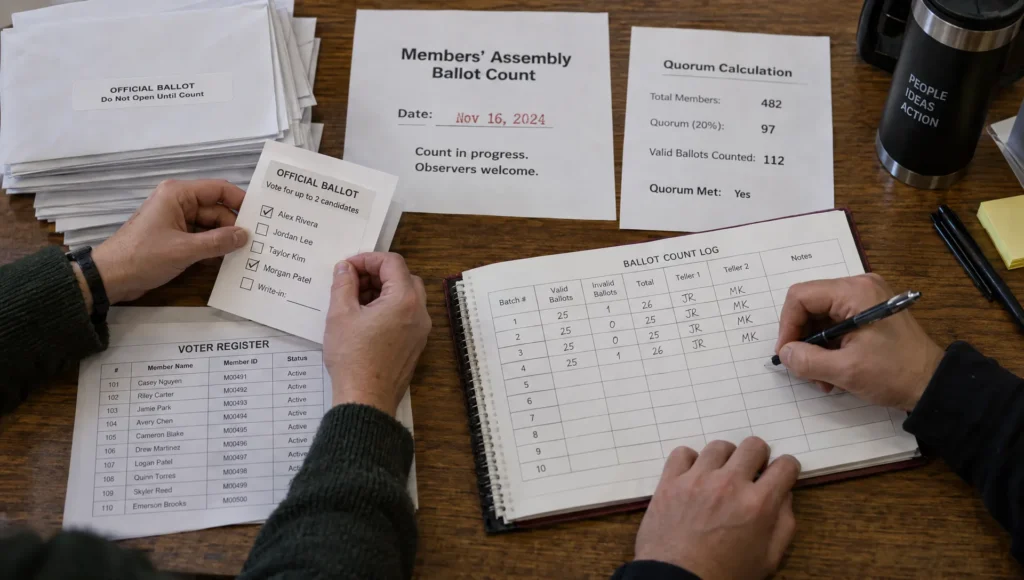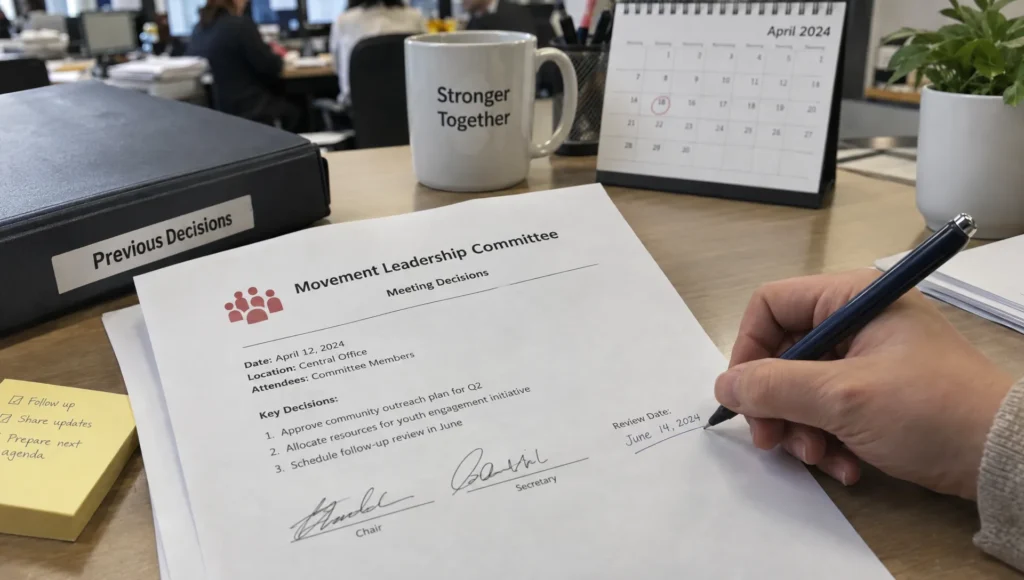
A political movement in 2026 cannot treat the internet as only a megaphone. The digital public square is where people discover issues, argue about facts, build identities, organize pressure, and judge whether institutions deserve trust. Yet most online politics still runs on a weak model: publish a message, chase attention, collect reactions, repeat.
That model can mobilize anger, but it rarely builds democratic power. A healthier political movement needs a model that turns public speech into civic participation, civic participation into better judgment, and judgment into visible public action.
This is where JustSocial’s manifesto, The Face of Democracy, offers a useful starting point. Yuval D. Vered argues that modern public institutions are still shaped by industrial-era habits, while citizens now live in a technological culture that could support continuous participation. The task is not to replace institutions with noise. It is to design a digital public square where the people can be heard, where representatives can see structured public judgment, and where decisions leave a public record.
The digital public square needs models, not just platforms
A platform is a technical environment. A model is a theory of how people participate, how information becomes useful, and how public pressure becomes institutional change.
This distinction matters because many digital civic projects fail for the same reason. They create a place to speak, but not a process for listening. They collect comments, but not reasons. They count clicks, but not trust. They produce “engagement,” but not civic participation connected to real decisions.
The digital public square has at least five democratic jobs:
- It helps people discover public problems that affect their lives.
- It gives citizens a way to argue, question, and correct claims in public.
- It creates pathways from broad public concern into deliberative democracy.
- It connects public input to decision owners, timelines, and official responses.
- It preserves memory, so citizens can see what was promised, decided, and implemented.
A political movement that ignores these jobs becomes another attention machine. A movement that designs for them becomes civic infrastructure.
Five political movement models for the digital public square
Different movements need different models at different stages. A campaign that is trying to expose corruption needs a different structure than a citywide education reform effort. A protest wave needs a different process than a long-term civic technology movement.
The strongest movements usually combine several models, but they should know which one they are using at any given moment.
| Movement model | Main purpose | Best use case | Public artifact | Core risk |
|---|---|---|---|---|
| Signal and mobilization model | Make an issue visible fast | Urgent injustice, corruption, crisis response | Action card or demand page | Attention without follow-through |
| Discursive democracy model | Improve public reasoning | Polarized debate, misinformation, vague demands | Claim map, evidence shelf, synthesis note | Endless talk without decisions |
| Deliberative democracy model | Produce considered judgment | Complex tradeoffs, policy design, budget choices | Issue pack, options memo, minority report | Capture by experts or insiders |
| Civic participation pipeline model | Turn input into accountable action | Local reform, petitions, public services | Decision pack, response log, implementation tracker | Participation theater |
| Institutional bridge model | Connect citizens to formal power | Public committees, councils, agencies, parliament | Committee record, duty-to-respond memo | Bureaucratic absorption |
The question is not “Which model is the one true model?” The better question is “What democratic failure are we trying to fix right now?”
Model 1: The signal and mobilization model
The signal model is the most familiar form of digital politics. A movement identifies a problem, frames it in emotionally clear language, spreads it through social channels, and asks people to act quickly. The action might be signing a petition, joining a demonstration, donating, contacting representatives, or sharing a campaign message.
This model is useful when an issue is invisible or deliberately buried. It can break silence. It can show that a problem is not isolated. It can help citizens realize that others share their concern.
But signal-based movements often hit a wall. Once attention peaks, the movement needs a next step. If it cannot name the decision owner, the decision window, the evidence, and the specific public ask, energy leaks away.
A stronger signal model should always produce an action card. That card should answer: What happened? Who can act? What decision is pending? What evidence supports the claim? What should citizens do today? What public receipt should we expect next?
In the JustSocial manifesto, the TakeAction! concept points in this direction: news should not leave citizens as passive consumers of outrage. It should connect public information to concrete civic participation, such as petitions, contacting representatives, volunteering, donating, or organizing.
Model 2: The discursive democracy model
Discursive democracy focuses on the quality of public conversation. It asks whether people can make claims, give reasons, challenge evidence, disclose interests, and revise positions without being drowned out by virality or intimidation.
This is not the same as asking everyone to be polite while nothing changes. Discursive democracy is a way to make public speech legible. It turns scattered comments into a usable civic record.
A discursive political movement should build rules for public reasoning. For example, participants can be asked to separate claims from evidence, name affected groups, identify uncertainty, and avoid pretending that one anecdote settles a complex issue. Moderators should enforce process rules, not ideological conformity.
This model is especially valuable in the digital public square because social media rewards speed, outrage, and identity performance. A movement that practices discursive democracy slows the conversation enough to make it useful. It creates a bridge between raw public expression and structured deliberative democracy.
For a deeper comparison, JustSocial’s guide on discursive democracy vs deliberative democracy explains how open public reasoning and structured decision-making can support each other.
Model 3: The deliberative democracy model
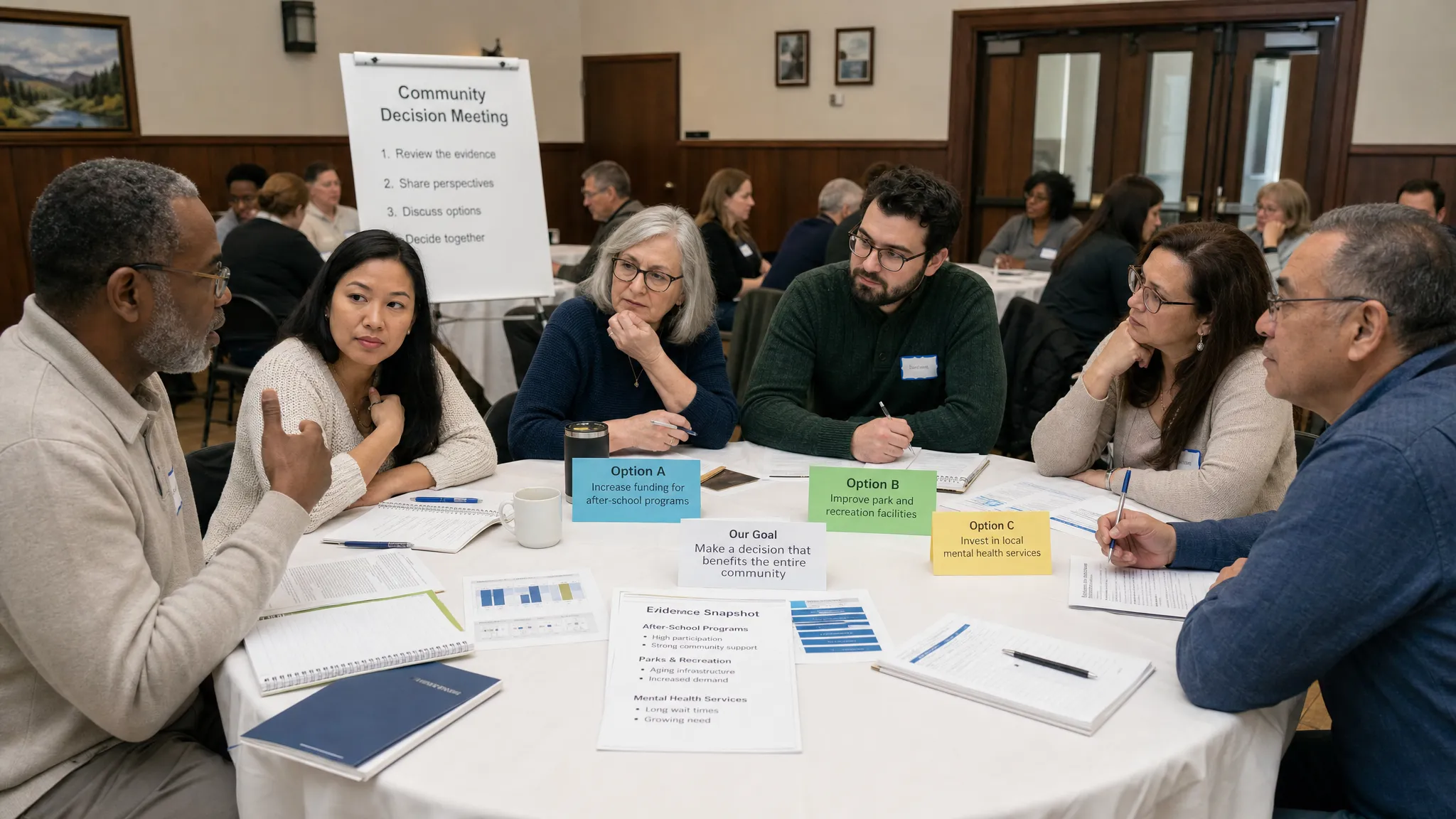
Deliberative democracy is designed for questions where slogans are not enough. It creates structured spaces where citizens review evidence, hear different perspectives, discuss tradeoffs, and produce considered recommendations.
This model is useful when a movement must answer hard questions: How should a city allocate a limited budget? How should schools use AI? How should housing policy balance affordability, density, neighborhood character, and infrastructure? How should a society respond to a national crisis without sacrificing rights?
Deliberative processes are not just meetings. They require careful design: a clear question, balanced information, facilitation, inclusion, and a public output. The OECD has documented the rise of deliberative processes, including citizens’ assemblies, juries, and panels, as tools for addressing complex public problems.
A political movement can use this model before it ever wins formal power. It can convene citizens, publish issue packs, invite experts, document disagreements, and produce options memos. This gives the movement more credibility than a list of demands alone.
The risk is capture. Deliberation can be shaped by whoever frames the question, selects the evidence, controls facilitation, or writes the final summary. The safeguard is transparency. Publish the question, evidence sources, facilitation rules, participant selection method, dissenting views, and decision linkage.
Model 4: The civic participation pipeline model
A civic participation pipeline is the model that turns public concern into a repeatable democratic workflow. It is not only about expressing an opinion. It is about moving through stages: issue discovery, public reasoning, deliberation, decision linkage, official response, implementation tracking, and evaluation.
This model fits the heart of JustSocial’s vision. The manifesto argues that citizens should not be reduced to voters, taxpayers, and consumers. They should have a day-to-day role in shaping public policy and monitoring institutions.
In practice, a participation pipeline needs public receipts. These are inspectable records that prove the process happened and show what changed because of it. Receipts might include a decision statement, issue pack, claim map, options memo, response memo, vote record, implementation tracker, or public rationale.
The pipeline model is powerful because it creates memory. A movement can say: here is what citizens raised, here is the evidence, here are the options, here is what decision-makers said, and here is whether implementation happened.
Without that memory, participation becomes theater. Officials can say “we listened” without showing how input shaped the outcome. Movements can claim victory without proving change. Citizens can spend hours participating and still have no idea whether anyone heard them.
Model 5: The institutional bridge model
The institutional bridge model is for movements that want to connect the digital public square to formal government. It asks: how can public committees, councils, agencies, schools, and parliaments become more visible, searchable, understandable, and responsive?
This model closely connects to the rParliament concept in the JustSocial manifesto: public committee documents, livestreams, recordings, votes, and user-generated civic commentary should be organized so citizens can follow public work in real time. The idea is not merely transparency as publication. It is transparency as participation-grade infrastructure.
An institutional bridge movement might focus on one city council committee, one school board, one legislative committee, or one public agency. It would publish decision pages, summarize meetings, timestamp key claims, invite structured public input, and demand response memos.
This model also connects to the manifesto’s “People’s Branch” idea. The people do not replace the executive, legislative, or judicial branches. They become a standing civic force that can continuously express priorities, produce public reasoning, and hold institutions accountable.
The danger is bureaucratic absorption. A government can adopt the language of participation while keeping real decisions unchanged. The safeguard is a clear duty to respond. If public input is invited, institutions should state what they will do with it, when they will respond, and how citizens can verify follow-through.
A practical digital public square stack
The most durable political movement will not choose only one model. It will build a stack that moves citizens from expression to influence.
| Layer | Democratic question | Movement practice | Output |
|---|---|---|---|
| Public signal | What needs attention? | Campaigns, stories, petitions, media pressure | Action card |
| Discursive layer | What are people claiming and why? | Structured comments, evidence shelves, claim mapping | Synthesis note |
| Deliberative layer | What options can survive scrutiny? | Citizen panels, working groups, facilitated tradeoff sessions | Options memo |
| Participation layer | What do people support, request, or authorize? | Surveys, votes, endorsements, public submissions | Participation report |
| Accountability layer | What did institutions do? | Response tracking, implementation monitoring, public review | Tracker and rationale |
This stack helps a movement avoid two common traps. The first is pure virality, where attention rises but nothing becomes decision-ready. The second is closed expertise, where policy becomes detailed but disconnected from public legitimacy.
JustSocial’s broader idea of a “Cosmopolis” can be understood as a society where this stack becomes normal. Citizens do not need to wait years to be heard. Public institutions do not need to guess what people think from protests or polls alone. Representatives remain independent, but they operate with a clearer, more continuous view of public judgment.
How to choose the right model
A movement should choose its model based on the bottleneck it faces.
If the problem is invisible, start with signal and mobilization. If the public conversation is chaotic, build a discursive democracy layer. If the issue is complex, convene a deliberative process. If people are participating but nothing changes, build a civic participation pipeline. If institutions are open but opaque, build an institutional bridge.
The mistake is using the same tool for every democratic problem. A petition cannot solve a complex tradeoff by itself. A citizens’ assembly cannot create mass awareness by itself. A public hearing cannot build trust if it produces no response. A social feed cannot serve as a democratic institution if it rewards manipulation over reason.
The best political movement models are modular. They let people enter at different levels of time, knowledge, and commitment. A busy citizen might sign an action card. A subject expert might contribute to an evidence shelf. A randomly selected resident might join a deliberative panel. A local organizer might track implementation. Each role matters, but the process must show how they connect.
Safeguards that make digital movements legitimate
A digital public square can strengthen democracy, but only if legitimacy is designed into the process. Technology alone does not create trust. In some cases, it can scale manipulation, harassment, surveillance, and exclusion.
Four safeguards are essential.
First, participation must be accessible. If only highly educated, highly online, or politically intense citizens can participate, the movement will reproduce inequality. Digital participation should be supported by plain language, translation where possible, offline options, and accessibility standards.
Second, identity should be proportional to the stakes. Low-stakes public discussion may allow anonymity or pseudonymity. Higher-stakes participation may require stronger eligibility checks. The goal is to prevent fraud and manipulation without turning civic participation into surveillance.
Third, deliberation needs visible process rules. People should know who sets the agenda, how evidence is chosen, how disagreements are recorded, and how recommendations are written. This protects the movement from accusations that outcomes were predetermined.
Fourth, every participation process needs follow-through. A political movement should publish what it asked for, what citizens contributed, what decision-makers answered, and what happened afterward. Public memory is a democratic asset.
These safeguards echo the manifesto’s central tension: technology should help the state and the individual become more connected, but it must not reduce citizens to data points. The goal is empowerment, not extraction.
What this means for movement builders
For organizers, the lesson is simple: build the public square you want institutions to adopt.
If a movement demands transparency, it should publish its own receipts. If it demands deliberation, it should deliberate internally and publicly where appropriate. If it demands citizen empowerment, it should give supporters meaningful roles beyond sharing content. If it demands better public institutions, it should model better procedures.
This is also why a political movement for digital democracy should not be built only around a charismatic leader or a viral message. It needs civic routines, templates, moderation rules, evidence practices, public records, and a culture of learning.
In the language of JustSocial’s manifesto, the movement must help citizens practice being more than spectators. The digital public square should become a place where people can learn, reason, decide, and hold power accountable together.
Frequently Asked Questions
What is a political movement model? A political movement model is the organizing logic a movement uses to turn people, messages, tools, and actions into influence. In the digital public square, models matter because online attention does not automatically become civic participation or policy change.
How are discursive democracy and deliberative democracy different? Discursive democracy focuses on improving broad public conversation: claims, reasons, evidence, and framing. Deliberative democracy uses more structured processes to produce considered recommendations or options for a specific decision.
Can a digital public square be democratic if private platforms control attention? It can support democratic activity, but it should not be treated as sufficient. Movements need their own public artifacts, transparent records, and decision-linked processes so civic participation is not dependent on opaque algorithms.
Which model should a new movement start with? Start with the bottleneck. If nobody knows the issue, use a signal model. If everyone is arguing without clarity, use a discursive model. If the issue requires tradeoffs, use deliberative democracy. If officials ignore input, build a participation pipeline with public receipts.
How does this connect to JustSocial? JustSocial promotes continuous direct democracy through citizen empowerment, transparency, and technology-supported participation. The manifesto’s ideas, including a People’s Branch, civic tools, and public transparency, point toward political movements that function as democratic infrastructure.
Help build a better digital public square
The future of democracy will not be shaped by technology alone. It will be shaped by the civic models we build around it.
If you believe citizens should have a continuous, visible, and accountable role in public life, explore The Face of Democracy and the JustSocial vision for continuous direct democracy. You can also learn more about how JustSocial defines itself in What Is JustSocial? Continuous Direct Democracy Explained.
Movements need organizers, technologists, writers, educators, designers, donors, and citizens willing to practice a better form of politics. The digital public square is already here. The question is whether we leave it to attention markets, or redesign it for civic participation, deliberative democracy, and public accountability.