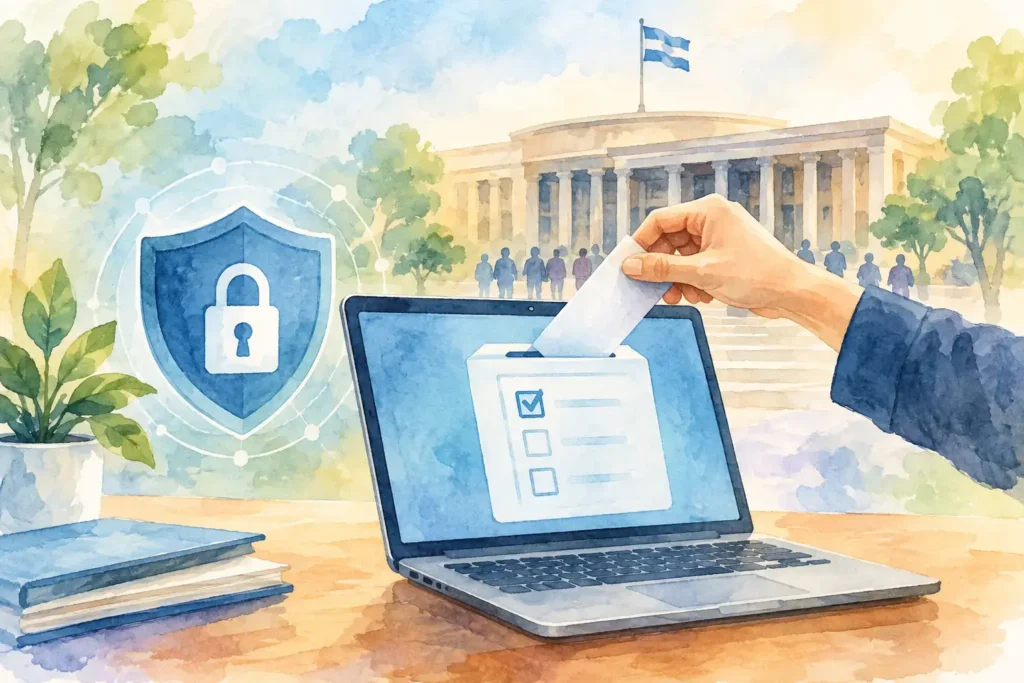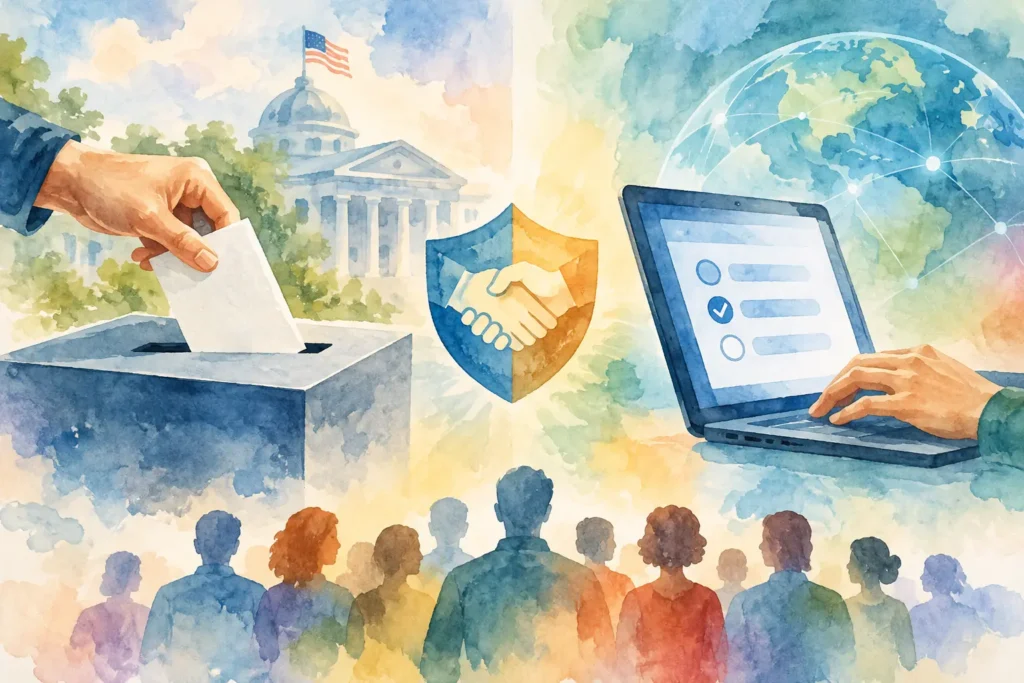
A neighborhood learns a major development is planned only after the meeting agenda is posted. A nonprofit asks volunteers what programs matter most, then makes decisions behind closed doors. A city collects public comments but never explains what happened to them. These are not simply communication failures. They are failures of civic power.
Community decision making tools can help change that pattern when they are designed to give people a real role in shaping choices, not merely a place to react after the choice is already made. Used well, they make participation visible, accessible, and connected to outcomes. Used poorly, they can turn democracy into another form to fill out.
For communities that want stronger institutions and more meaningful public participation, the question is not whether to use digital tools. It is whether we will build systems that treat residents as decision-makers.
What community decision making tools should do
A decision-making tool is more than a polling feature or an online meeting room. It is part of the public infrastructure that helps a group identify an issue, understand the available options, weigh trade-offs, decide, and see what follows.
That full path matters. A quick survey can tell a school district which calendar option receives the most support. It cannot, by itself, show whether families understood the transportation, child care, and staffing consequences of each option. A public comment portal can gather testimony. It cannot guarantee that decision-makers will respond to recurring concerns.
The strongest community decision making tools connect information, deliberation, voting or prioritization, and public accountability. They make it clear who can participate, what influence participants have, how a decision will be made, and when the community will receive an answer.
This does not mean every decision must be put to a public vote. Communities need different levels of participation for different decisions. A city may seek broad resident input on a comprehensive plan, convene a smaller representative group for detailed budget trade-offs, and leave technical procurement decisions to staff under transparent rules. Democratic participation is not the absence of institutions. It is institutions that remain accountable to the people they serve.
Start with the decision, not the platform
Too many participation efforts begin with a product question: Should we use an online forum, a survey, a voting app, or a virtual town hall? The better starting point is more direct: What decision is open, and what authority will the community have?
If residents are choosing among a fixed set of options, a verified ballot or ranked-choice process may be appropriate. If the goal is to allocate a portion of a public budget, participatory budgeting software can help people submit ideas, review cost estimates, and vote on proposals. If leaders need to understand lived experience before drafting policy, moderated discussion and structured feedback may be more useful than a vote.
The method should match the stakes. Low-stakes questions can be answered quickly. High-stakes questions deserve time, context, translation, accessible formats, and clear protections against manipulation. Speed is valuable, but rushed participation often rewards the people who already have time, confidence, and reliable internet access.
Before selecting any tool, communities should be able to state four things in plain language: the decision being made, who is eligible to participate, how input will affect the outcome, and when the final decision will be published. If those answers are vague, technology will not solve the problem.
Voting tools work best when the choices are ready
Digital voting can widen access to local decisions, member governance, and nonprofit priorities. It can also create false certainty if the choices were designed without public input or if participants lack the context to evaluate them.
A sound voting process provides clear options, neutral explanations, secure identity verification appropriate to the stakes, and an auditable record of results. It should also explain whether the vote is binding, advisory, or one part of a larger decision process.
For many community questions, ranked-choice voting is worth considering. It allows participants to rank options rather than choose only one, which can reveal broader consensus when no single proposal has majority support. But it is not automatically the right answer. If people do not understand the ballot or counting method, trust can decline even when the process is fair.
Deliberation tools work best when the issue is complex
Some decisions cannot responsibly be reduced to a yes-or-no prompt. Housing policy, school boundaries, public safety, land use, and climate resilience involve competing needs and real consequences. In these cases, people need opportunities to learn, ask questions, hear from neighbors, and revise their views.
Digital deliberation spaces can support that work through guided discussion, shared documents, proposal annotations, multilingual participation, and moderated question-and-answer sessions. The goal is not to eliminate disagreement. It is to make disagreement more informed, respectful, and publicly legible.
Moderation is essential here. An unstructured comment section often gives the loudest voices the greatest power. Clear participation rules, trained facilitators, and transparent enforcement help create space for people who are routinely pushed aside in public debate.
Access is a design requirement, not an outreach task
A community tool cannot be called inclusive just because it is available online. People face unequal access to devices, broadband, language support, disability accommodations, free time, and trust in public institutions. Communities must plan for these realities before participation opens.
That means offering participation through more than one channel. A resident should be able to contribute online, at a library or community center, by phone where feasible, or through trusted local partners. Materials should be readable, translated when needed, and compatible with assistive technology. Meetings should not be the only route to influence, especially when shift workers, caregivers, and people with mobility barriers cannot attend.
There is a trade-off. Multiple channels require more coordination and can make duplicate participation harder to manage. But a simpler process that excludes large parts of the community is not truly simple. It merely shifts the cost onto the people least able to absorb it.
Trust also requires privacy. Communities should collect only the information needed to administer participation, explain how data will be used, and avoid turning civic engagement into a source of surveillance. A person should not have to surrender more personal information than necessary to help decide how their community operates.
Make the process visible after people participate
The most damaging sentence in public engagement is often never spoken: “Nothing happened.” Residents reach that conclusion when they cannot see where their input went or why a different outcome was chosen.
Every participation process should have a public feedback loop. Share the results. Publish the decision. Explain how community input shaped it. If leaders could not follow the majority preference because of legal, financial, or safety constraints, say so plainly. People may disagree with the outcome, but they are more likely to remain engaged when institutions show their reasoning.
Public records and decision histories matter here. A community should be able to see the proposals considered, the criteria used, the votes or recommendations recorded, and the next steps. This creates accountability for leaders and continuity for residents who join the process later.
Transparency does not require exposing every individual participant. Aggregate results, anonymized feedback themes, and documented rationales can provide public visibility while protecting people from retaliation or unwanted attention.
Build shared ownership, not just better feedback forms
Technology can make participation easier, but it cannot manufacture legitimacy. Legitimacy grows when people recognize that a process is fair, understandable, and worth their time. It grows when officials and nonprofit leaders share authority where they can, communicate limits honestly, and return to the community after decisions are made.
For governments, this may mean creating a standing digital participation channel rather than treating engagement as a one-time campaign. For nonprofits, it may mean giving members, volunteers, and directly affected communities a defined role in setting priorities. For residents, it means claiming a place in public life that extends beyond election day.
JustSocial believes democracy should be an ongoing relationship between citizens and the institutions that shape their lives. The tools matter because they can make that relationship more practical. They can help us turn public frustration into proposals, proposals into choices, and choices into accountable action.
The next community decision does not need to be perfect to be more democratic. Start by making the decision clear, opening a real path for participation, and showing people what their contribution changed. That is how civic confidence is built: one visible act of shared power at a time.