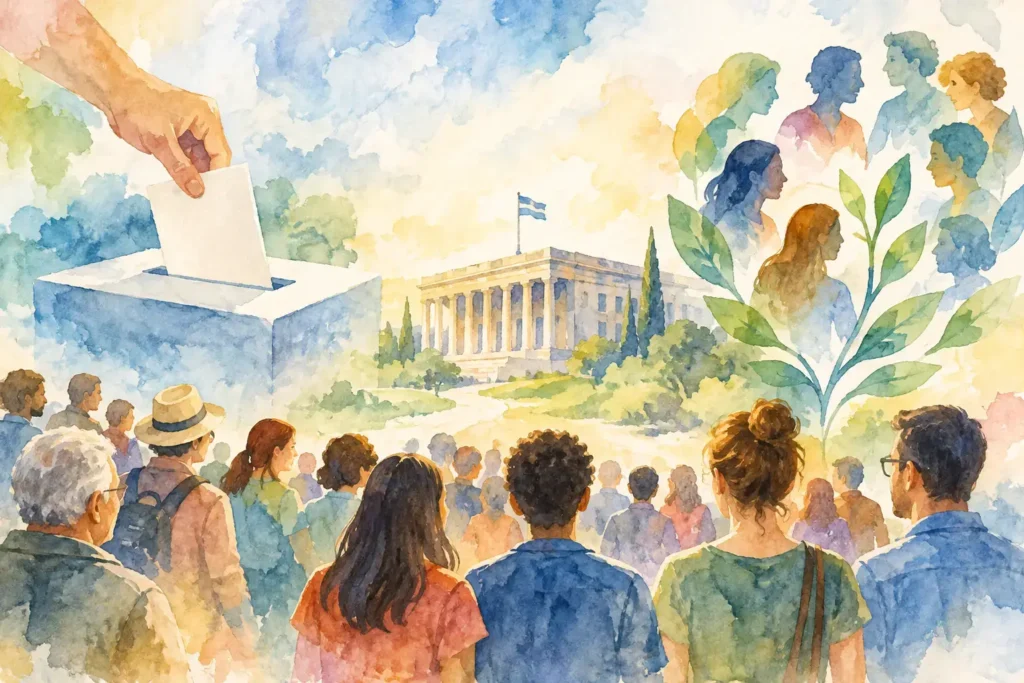
A ballot can feel like the clearest expression of public power: one question, one vote, one visible result. Yet referendums versus representative democracy is not a contest between democracy and its absence. It is a question of how we share decision-making power, how often people can use it, and whether our civic systems make participation meaningful rather than ceremonial.
For many Americans, government becomes visible only during elections, crises, or fights over major legislation. That distance feeds distrust. People see decisions that shape their housing, schools, health, transportation, and local environment being made somewhere else, often in processes that feel difficult to follow and even harder to influence.
We do not have to choose between public voice and capable institutions. We can build democratic infrastructure that gives citizens a stronger role between election days while preserving the deliberation, accountability, and rights protections that public decision-making requires.
Referendums versus representative democracy: the basic difference
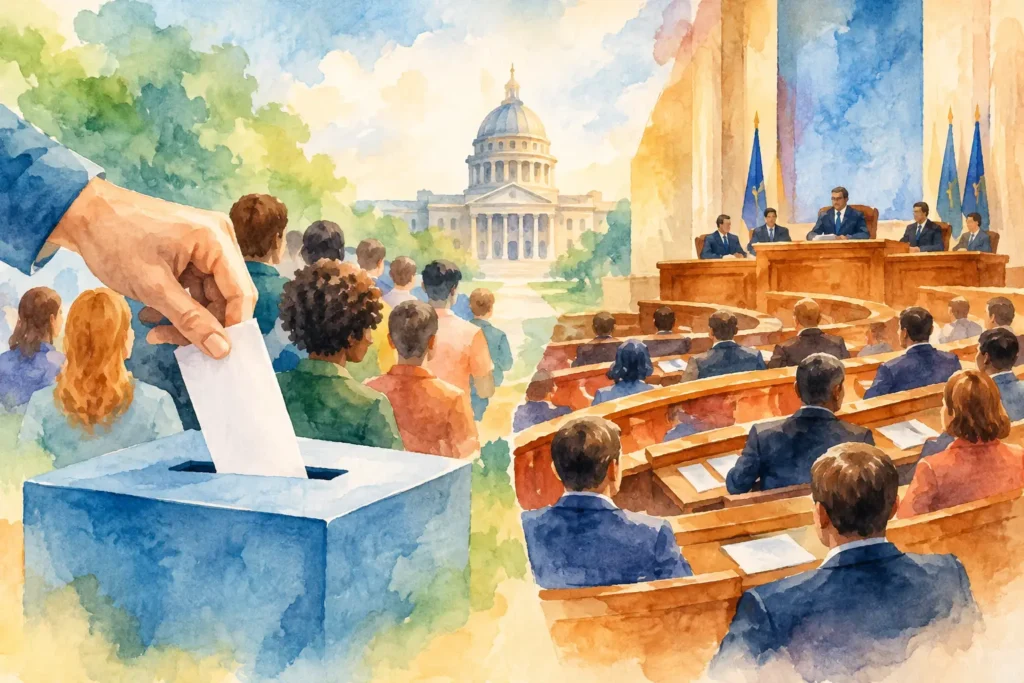
A referendum asks eligible voters to decide a specific question directly. Depending on the jurisdiction, it may approve a constitutional amendment, bond measure, local policy, or law passed by a legislature. Some referendums are required by law; others reach the ballot through a citizen initiative or a government referral.
Representative democracy works differently. Citizens elect people to study issues, debate alternatives, negotiate with one another, and make decisions on the public’s behalf. At the federal level, the United States relies on representative institutions. States and local governments may also use direct-democracy tools, though the rules vary widely.
The difference is not simply who casts the final vote. It is where deliberation happens, how much time is available to understand a policy, and who is accountable for its consequences. A referendum can give a public decision direct legitimacy. A representative body can examine details, hear testimony, revise a proposal, and respond when circumstances change.
Both systems can fall short when citizens lack clear information, unequal resources shape the debate, or participation is treated as a one-time transaction. The real goal should be a democracy in which people can learn, contribute, deliberate, decide, and hold institutions accountable throughout the process.
Why direct votes appeal to citizens
Referendums speak to a reasonable frustration: people want a direct say over decisions that affect their lives. When elected officials appear insulated from public priorities, a ballot measure can offer a route around political gridlock or entrenched interests.
Direct votes can be especially valuable when the question is clear and the decision has broad public significance. Local capital projects, public financing choices, and constitutional questions often benefit from explicit consent. A referendum can also place issues on the agenda that representatives have delayed or avoided.
There is a civic value in asking people to decide together. Campaigns can prompt conversations among neighbors, community groups, and families about what they want their community to become. Done well, this is more than voter mobilization. It is public learning.
But direct voting is not automatically equal voting. Gathering signatures, purchasing advertising, and shaping a public narrative require money, time, and organizational capacity. Communities already excluded from political power may face additional barriers to participating. The question is not whether citizens are capable of making decisions. It is whether the process gives every citizen a fair opportunity to understand, discuss, and influence the choice.
The strengths and limits of representation
Representative democracy exists for practical reasons. Public policy is often connected to budgets, administrative rules, court decisions, technical evidence, and competing legal obligations. A short ballot question cannot carry every trade-off behind a complex decision.
Elected representatives can hold hearings, consult affected communities, commission research, and amend proposals as new information emerges. Ideally, they can turn a broad public purpose – safer streets, more affordable homes, cleaner water – into laws and programs that can actually be administered.
Representation also creates identifiable responsibility. Voters can assess an official’s record across many issues rather than judging a government only through isolated ballot measures. Legislatures can protect minority rights even when a majority is impatient, fearful, or misinformed. That protection is essential. Popular support should never be a license to deny equal rights or due process.
Still, representation becomes weaker when access depends on professional connections, campaign donations, or the ability to attend a weekday meeting. Elections every two or four years are necessary, but they are not a complete relationship between citizens and government. A representative who hears from the same narrow set of stakeholders will make decisions with an incomplete picture of the public they serve.
The hardest problem is not voting
The most difficult part of democratic participation often happens before the vote. Who defines the problem? Whose experience counts as evidence? What options are considered? Who can see the data, the costs, and the likely impacts?
A referendum with weak public education can reduce a complex issue to a slogan. A legislature with closed-door negotiations can turn representation into spectator politics. Neither model earns trust merely because it follows formal rules.
Meaningful participation needs accessible information in plain language, outreach beyond the most politically connected residents, and time for people to ask questions. It also requires transparency after a decision is made. If the public cannot see implementation, spending, outcomes, and unintended effects, a vote becomes a promise without a feedback loop.
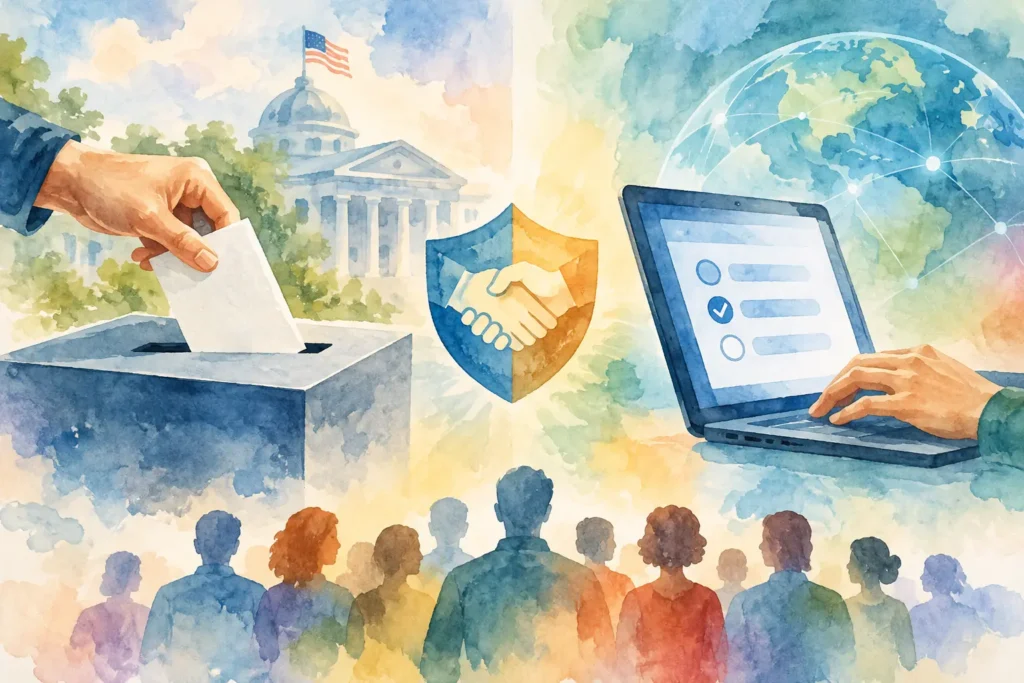
This is where civic technology can serve the public interest. Digital tools can make meeting materials easier to find, allow residents to submit ideas and comments, show how proposals evolve, and report back on what government did with public input. They can support participation across schedules, languages, and physical locations.
Technology is not a substitute for trust, in-person organizing, or accountable public leadership. Poorly designed platforms can amplify harassment, exclude people without reliable access, or turn civic dialogue into a popularity contest. Digital participation must be secure, accessible, transparent, and paired with real pathways to influence decisions.
Build a bridge, not a false choice
The strongest answer to referendums versus representative democracy is often a hybrid model. Citizens should have clear opportunities to set priorities, develop proposals, review evidence, deliberate with one another, and make direct decisions where direct decisions are appropriate. Representatives should remain responsible for careful lawmaking, rights protections, public administration, and transparent follow-through.
Consider a city deciding how to spend a portion of its capital budget. Residents could identify needs through neighborhood forums and digital participation tools. Staff could publish cost estimates and feasibility information. Community members could deliberate over viable projects, then vote on a defined pool of options. Elected officials would still oversee legal compliance, long-term maintenance, and equitable distribution across neighborhoods.
That process is not less representative because citizens participate directly. It is more responsive because representation is informed by ongoing public knowledge and public priorities.
The same principle applies when a ballot measure is proposed. Before voters are asked to decide, governments and civic organizations can provide neutral explanations, publish fiscal and equity analyses, host moderated community discussions, and make arguments from multiple perspectives easy to access. The objective is not to tell people what to think. It is to ensure that public choice is grounded in more than the loudest campaign.
Participation must lead somewhere
People disengage when participation feels performative. A survey that disappears into a spreadsheet, a public comment period with no response, or a town hall where decisions were already made all teach the same lesson: your time does not matter.
Public institutions can change that pattern by being specific about what residents can influence, what constraints exist, and when a decision will be made. Afterward, they should explain what they heard, what changed, and why some requests could not be adopted. Honest limits build more trust than vague invitations.
For nonprofits and community organizers, this means designing engagement around shared ownership rather than extraction. Ask people not only to endorse a finished agenda, but to help identify needs, test solutions, and evaluate results. For public leaders, it means treating resident input as civic capacity, not as an obstacle to efficient governance.
A healthier democracy will not emerge from a single referendum, a better election app, or a new public meeting format. It grows when we create repeatable ways for people to practice self-government together. The next useful step is close to home: ask where a local decision is being made, who has been invited into it, and what would help more neighbors participate with real power.