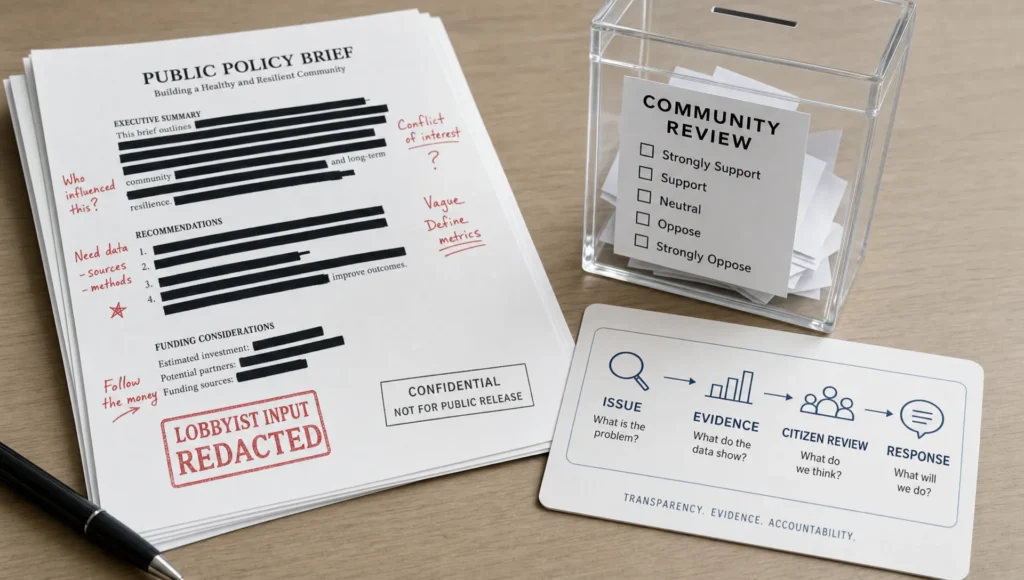
Trust is the scarce resource of every political movement. You can have a brilliant message and a talented team, but if supporters cannot verify how decisions are made, money is handled, and promises become outcomes, skepticism fills the gap. In 2026, that skepticism is rational: people have watched institutions and movements alike mistake visibility for accountability.
A practical fix exists, and it is boring on purpose: public receipts.
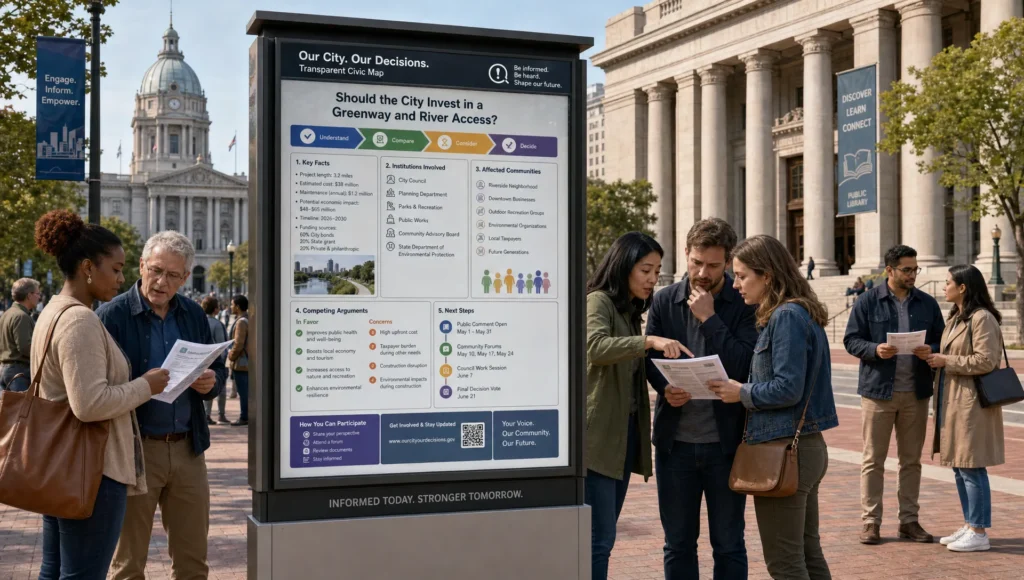
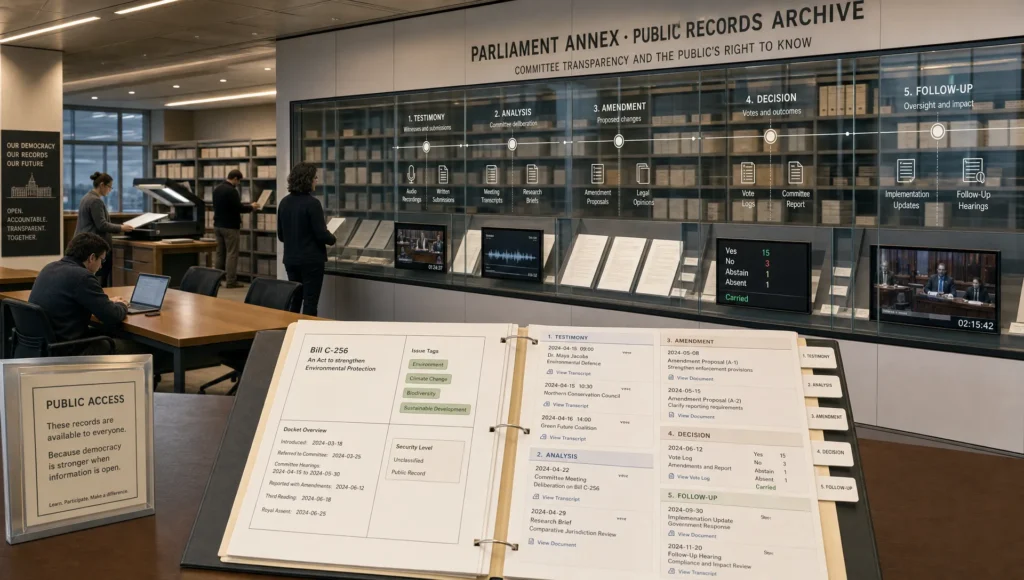
Public receipts are not slogans, livestreams, or “trust us” threads. They are the durable, checkable artifacts that make civic work legible: what was decided, by whom, on what basis, with what tradeoffs, and what happened afterward. If your political movement cares about civic participation that survives news cycles, public receipts are your core strategy.
What “public receipts” mean (and what they are not)
A public receipt is any public-facing record that allows an outsider to audit your claims without personal access to leadership.
In practice, receipts are things like:
- A published participation promise (scope, timeline, how input will be used)
- An agenda and minutes for a policy meeting
- A decision rationale with citations to evidence and summarized dissent
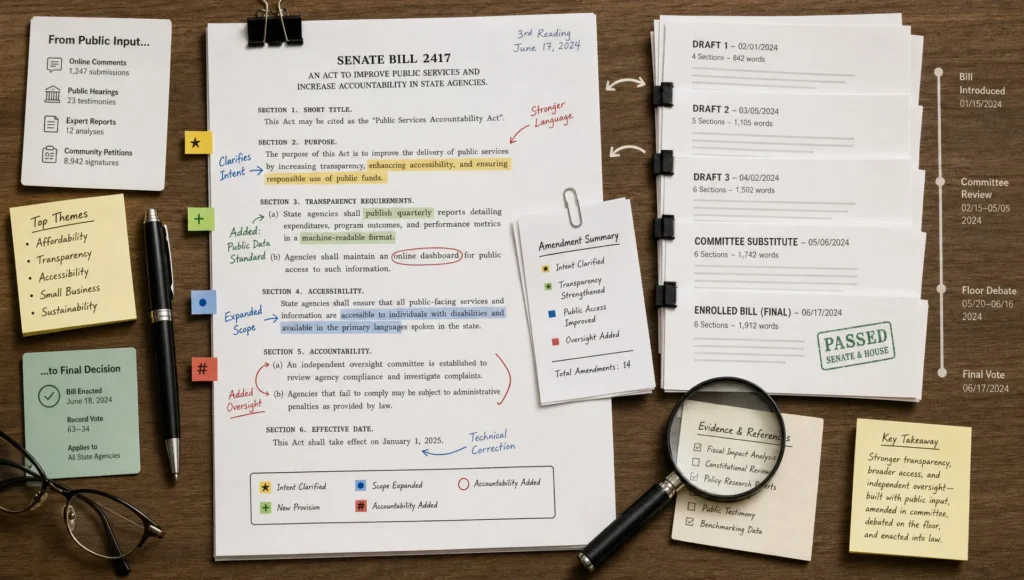
- A change log showing what shifted after feedback
- A public tracker that follows implementation, not just announcements
Receipts are not “radical transparency” where everything is dumped online. That tends to become unreadable, unsafe, or both. Receipts are designed outputs that balance three goals:
- Legibility (a normal person can understand the story)
- Auditability (a serious critic can check the trail)
- Safety (privacy, consent, and security are not sacrificed)
This maps directly onto the JustSocial manifesto’s insistence that democracy needs infrastructure, not vibes: continuous participation, yes, but also systems that measure, safeguard, and meaningfully integrate public input (see The Face of Democracy).
Why receipts are a political movement strategy, not an admin chore
Movements often treat operations as “back office.” In reality, operations are your credibility engine.
Public receipts create four strategic advantages:
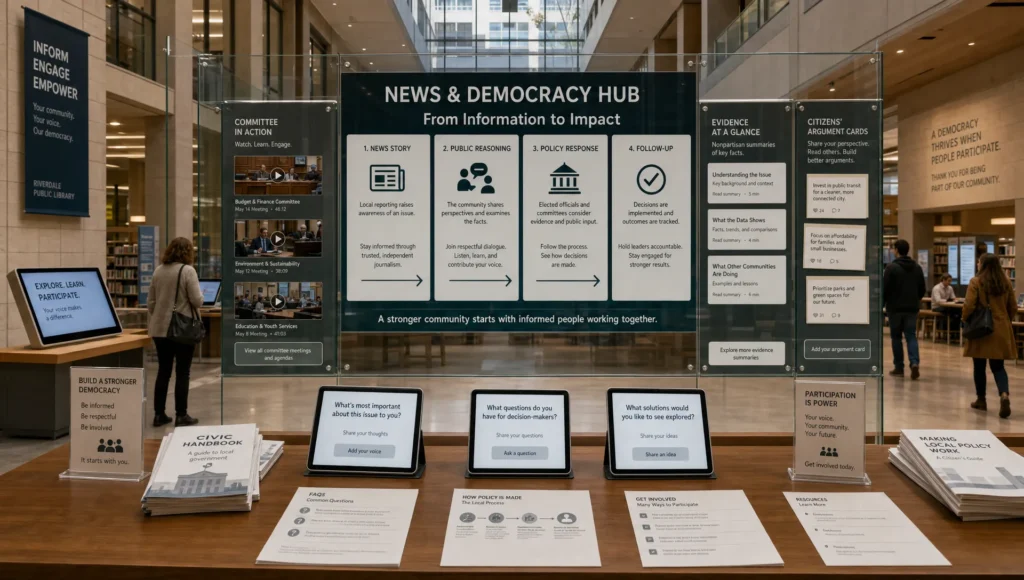
Receipts convert discursive democracy into usable signal
Discursive democracy is the messy public sphere where narratives, frames, and meaning are contested. Movements live here every day: posts, rebuttals, op-eds, group chats, street conversations.
The problem is that discursive space rewards speed and outrage, not accuracy and accountability. Receipts give your discourse a backbone. Instead of arguing endlessly about intentions, people can check the record.
Receipts make deliberative democracy scalable
Deliberative democracy adds structure: shared evidence, clear rules, facilitated discussion, and decision-grade outputs. That structure is hard to sustain if your process cannot be inspected.
Receipts solve the “black box” problem. When outsiders can see the evidence base, the deliberation rules, and the rationale, deliberation stops looking like elite choreography and starts looking like legitimate public reasoning.
Receipts reduce “participation theater” and burnout
Many supporters leave when they realize their civic participation was harvested for legitimacy, not used for decision-making.
A receipt-based movement can prove the loop is real:
- Here is what you contributed.
- Here is what we did with it.
- Here is what changed.
- Here is what still did not change, and why.
That honesty is stabilizing. It also fits the manifesto’s theme of replacing industrial-era political inertia with continuous, meaningful engagement that respects citizens as more than periodic voters.
Receipts are an anti-corruption design
You do not fight corruption only with good people. You fight it with systems that make corruption harder to hide.
Receipts create “default sunlight” for money, decisions, and conflicts of interest, without requiring perfect leaders.
The receipts-to-trust loop (a lifecycle you can run every month)
Movements build trust when they consistently run a repeatable loop that people can see.

Here is a practical mapping between stages and the receipts that make each stage credible.
| Stage | What the public needs to know | The receipt that proves it | What it builds |
| Participation promise | What is in scope, who is eligible, what “influence” means | A one-page participation promise | Safety and clarity |
| Intake and evidence | What was heard and what sources are being used | Issue brief + evidence list + intake log | Fairness and competence |
| Deliberation | How reasoning happened (not just who spoke loudest) | Deliberation rules + summary notes | Legitimacy |
| Decision | What was chosen, why, and what tradeoffs were accepted | Decision memo with rationale and dissent | Accountability |
| Follow-through | Whether anything changed in the world | Implementation tracker + outcome update | Trust over time |
This is not theoretical. It is the movement analogue of what JustSocial calls continuous, auditable civic participation: a public operating system, not a once-every-few-years event.
The “Public Receipt Stack” every political movement should publish
Most movements publish communications. Fewer publish receipts. The gap is where distrust thrives.
A good baseline is a Public Receipt Stack: a small, consistent set of recurring artifacts that supporters can rely on.
1) Governance receipts (how power works inside the movement)
If you want public trust, you have to show how leadership is constrained.
Minimum governance receipts:
- Decision rights (what leadership can decide alone vs what must be participatory)
- Conflict-of-interest policy
- How moderators, facilitators, and decision owners are selected
- How disputes and appeals work
This echoes the manifesto’s critique of captured party systems and “deaf” representation. Receipts are how you demonstrate you are building a different kind of institution.
2) Participation receipts (how civic participation becomes decision-grade)
If civic participation is the front door, receipts are the hallway signs.
Minimum participation receipts:
- Issue briefs written in plain language
- Evidence lists that separate facts, assumptions, and values
- Structured submissions (claims plus sources, not only comments)
- Summaries that show what themes emerged
3) Deliberation receipts (how you protected fairness in reasoning)
Deliberative democracy depends on process integrity.
Minimum deliberation receipts:
- Rules of deliberation (time, format, civility, sourcing expectations)
- Facilitation model (who facilitated, what training or mandate they had)
- A synthesis note that shows how arguments were weighed
4) Decision receipts (what was decided, and why)
This is the receipt most movements avoid, because it forces specificity.
Minimum decision receipts:
- The final option chosen
- The rationale (why this option, why now)
- Tradeoffs explicitly acknowledged
- A short dissent section (what serious critics argued)
- A change log (what shifted after public input)
5) Impact receipts (proof of follow-through)
Movements lose trust when they only measure attention.
Minimum impact receipts:
- A public tracker (milestones, owners, dates)
- Outcome updates (what changed, what did not)
- Learnings (what you would do differently next cycle)
The manifesto’s call to replace bureaucratic distance with community-level meaning points in the same direction: people re-engage when the state, or a movement seeking to shape it, becomes concrete and responsive.
Here is a compact way to operationalize this stack.
| Receipt type | Purpose | Minimum fields | Suggested cadence |
| Participation promise | Prevents bait-and-switch | scope, eligibility, timeline, decision linkage, privacy note | per issue cycle |
| Issue brief | Aligns attention | problem, constraints, stakeholders, decision owner | per issue |
| Evidence list | Reduces info chaos | sources, date, what is contested | rolling update |
| Deliberation summary | Shows reasoning | themes, arguments, open questions | after each session |
| Decision memo | Enables accountability | decision, rationale, dissent, tradeoffs | every decision |
| Implementation tracker | Proves follow-through | milestones, owner, status, next update date | weekly or monthly |
Using receipts to connect discursive and deliberative democracy
A movement that relies only on discursive democracy will drift into perpetual narrative combat. A movement that relies only on deliberative democracy can become slow, insular, and disconnected from public meaning.
Receipts allow a healthier division of labor:
- Discursive democracy generates questions, lived experience, and frames.
- Deliberative democracy turns those inputs into decision-grade options.
- Receipts publish the bridge so outsiders can inspect how the handoff happened.
A simple rule helps: Every heated public argument should end with a pointer to a receipt, or a plan to create one.
This is also where craft matters. If you want receipts to actually be read, you have to present them as a coherent story, not a compliance dump. Good documentary storytelling shows how to turn real moments into a clear narrative without falsifying them. For an example of that craft outside politics, see how Stories by DJ’s cinematic storytelling documents high-stakes personal decisions with clarity and emotional honesty.
A 30-day rollout plan for a receipts-first movement
You do not need a platform rewrite to start. You need discipline.
Week 1: Publish a participation promise and one decision pipeline
Pick a single issue your movement can realistically influence and publish the participation promise. Keep it short and specific. Your goal is to prevent the most common trust failure: inviting participation with no defined decision linkage.
Weeks 2 and 3: Run one deliberative sprint with public outputs
Host a time-boxed deliberative process and publish:
- The issue brief
- The evidence list
- The deliberation rules
- The synthesis note
Do not wait for perfection. The practice of publishing is the muscle you are building.
Week 4: Ship a decision memo and an implementation tracker
Make the decision, publish the rationale, then publish the tracker that will embarrass you if you do not follow through.
That “productive embarrassment” is a feature. In the JustSocial manifesto, the core friction is that power prefers to keep itself close. A receipt-based practice is a way of voluntarily binding your own power, so you can credibly argue that governments should do the same.
Common objections (and how receipts address them)
“Publishing this will give opponents ammunition”
They already have ammunition. Ambiguity is ammunition.
Receipts let you:
- Admit tradeoffs before opponents weaponize them
- Show dissent without fragmentation
- Prove competence with evidence and rationale
“We cannot be fully transparent for privacy and safety reasons”
Correct. Receipts are not surveillance.
Good receipts disclose process and reasoning while minimizing personal data. Publish what the public needs to audit legitimacy, not what feeds harassment.
“This is too much work for a small team”
A receipts-first approach is often less work than constant crisis comms, because it creates stable defaults:
- Fewer repetitive arguments
- Fewer rumor cycles
- Faster onboarding of volunteers
- Clearer handoffs between teams
Why this aligns with JustSocial’s vision
JustSocial argues that modern society has the technology to escape industrial-era political habits, but lacks the institutional will and infrastructure. The manifesto’s aspiration, a modern civic culture where people can participate continuously and meaningfully, depends on something unglamorous: auditable public processes.
Public receipts are the smallest unit of that infrastructure.
They are how a political movement demonstrates that civic participation is not a marketing funnel. They are how deliberative democracy earns legitimacy beyond the room it happens in. They are how discursive democracy becomes more than noise. And they are how trust becomes measurable, not mystical.
If you want to build a political movement that deserves power, start by making your work inspectable.
For the deeper institutional vision behind this approach, read The Face of Democracy and consider contributing your time, craft, or critique to building receipts-first civic infrastructure.