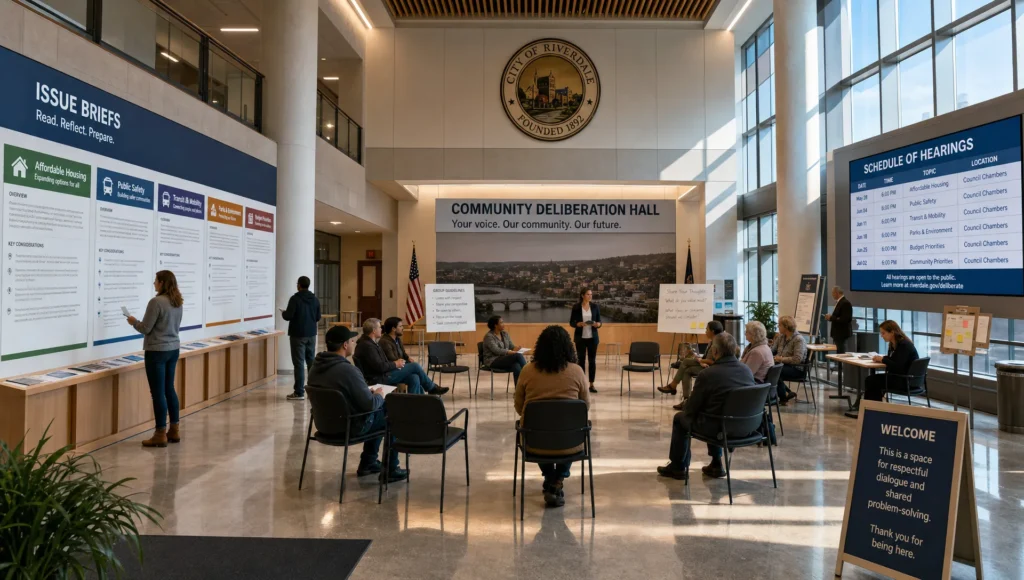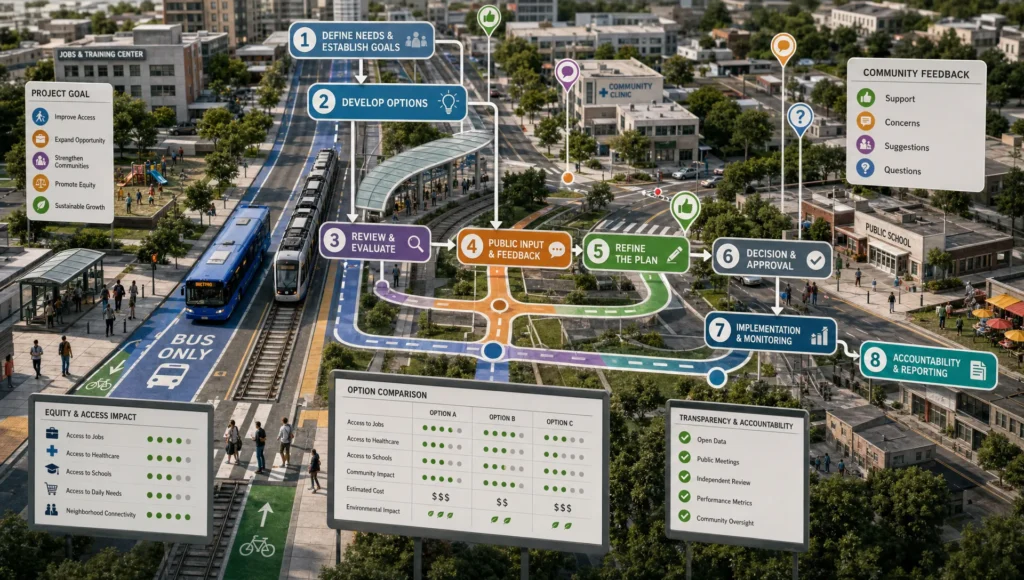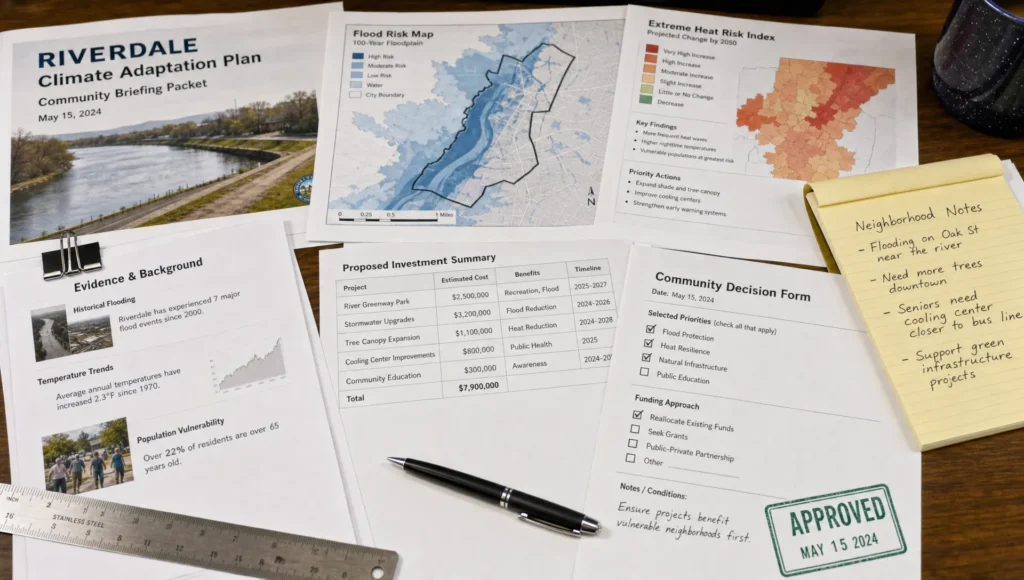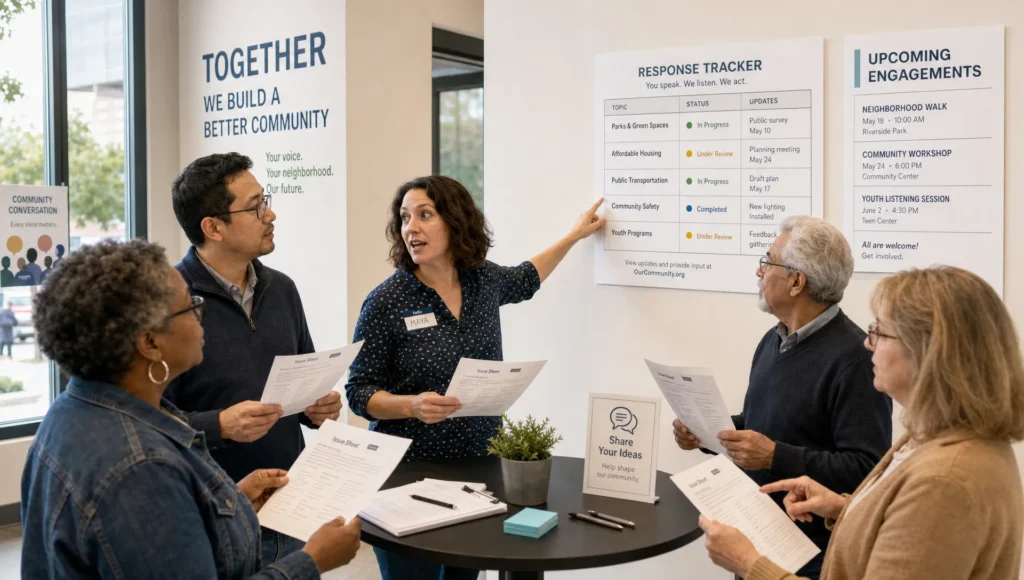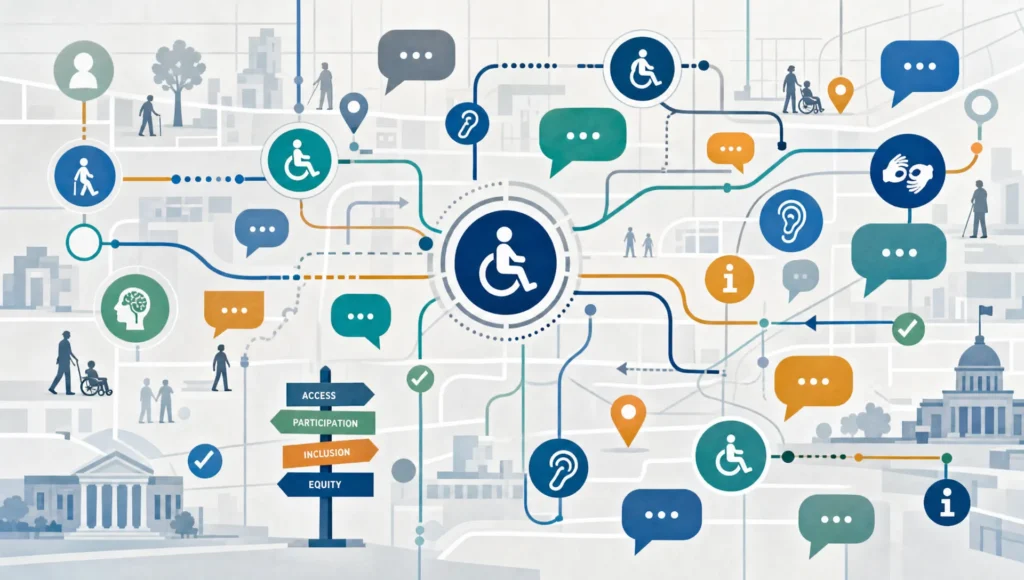
Discursive democracy begins with a simple but uncomfortable truth: people often do not say what they really think when political speech can cost them a job, a friendship, a school relationship, a permit, or their safety. Open civic participation is noble in theory, but public naming can punish the very people democracy most needs to hear: minorities, public employees, students, parents, whistleblowers, immigrants, religious dissenters, political independents, and anyone living inside a polarized community.
At the same time, full anonymity can corrode public debate. If nobody is accountable even to the process, bots multiply, harassment grows, astroturfing becomes easier, and decision-makers can dismiss input as noise.
Anonymous civic identity is the middle path. It lets a person be verified as a real and eligible participant while remaining anonymous to the public conversation. In a system of discursive democracy, that distinction matters. The goal is not to hide everyone. The goal is to make it safe enough for more people to speak honestly, and structured enough for their speech to become usable public judgment.
What discursive democracy asks identity to do
Discursive democracy is the democratic layer where public meaning is formed. Before a community can deliberate on a policy, it has to name the problem, hear competing frames, surface lived experience, challenge assumptions, and decide what questions are legitimate.
That is different from deliberative democracy, where a smaller or more structured group evaluates evidence and produces decision-ready options. Discursive democracy is wider, messier, and more cultural. It asks: What are people saying? Who is not being heard? Which words, fears, hopes, and tradeoffs are shaping the public sphere?
Identity systems in this layer must do more than verify names. They must protect the conditions for speech. A good civic identity model should answer four questions:
- Is this participant a real person or a legitimate representative of a group?
- Is this participant eligible for this specific civic process?
- Can the public evaluate the contribution without exposing private facts?
- Can abuse be investigated without turning the whole platform into surveillance?
That is why anonymous civic identity is not a technical side issue. It is a constitutional design question for digital democracy.
Anonymous civic identity, defined simply
Anonymous civic identity means separating three things that are usually collapsed together online: legal identity, civic eligibility, and public expression.
A person may prove privately that they are a resident, student, parent, worker, taxpayer, or citizen. The system may then allow them to speak, vote in a low-stakes poll, join a consultation, or submit evidence under a public identity that does not reveal their legal name. The platform can still enforce one-person-one-account rules, eligibility boundaries, and moderation procedures, but the public sees only the civic contribution.
In practice, it may look like this:
| Layer | Purpose | Publicly visible? | Example |
|---|---|---|---|
| Legal identity | Prove personhood and eligibility | No | Verified privately by a trusted process |
| Civic credential | Show the right to participate | Sometimes, in limited form | Verified resident or verified parent |
| Public civic identity | Enable speech and reputation | Yes | Anonymous participant or persistent pseudonym |
| Voluntary attributes | Add context when safe | Aggregated or optional | Student, renter, veteran, small business owner |
| Process record | Make participation auditable | Yes, without exposing names | Comment counts, themes, moderation receipts |
The key principle is separation. The state or platform may need to know enough to prevent fraud. The public does not need to know a person's name to evaluate whether their reason is relevant, sourced, and connected to a real decision.
Why anonymity can improve civic participation
The common argument against anonymity is that it lowers responsibility. That is sometimes true on ordinary social media, where identity is weak, incentives reward outrage, and moderation is often opaque. But civic participation is not ordinary social media. It should have rules, scope, evidence, response duties, and public records.
When designed well, anonymity can increase responsibility because it shifts attention away from social status and toward reasons. The important question becomes: Is the claim clear? Is the evidence traceable? Which community is affected? What decision does this input inform?
Anonymous civic identity can improve discursive democracy in at least five ways.
First, it reduces fear. A teacher can discuss school policy without risking retaliation. A municipal employee can describe procurement problems without becoming a public target. A parent can raise concerns about special education without exposing a child.
Second, it weakens status dominance. In named spaces, titles, wealth, celebrity, and social confidence often determine who gets taken seriously. Anonymous formats do not eliminate power, but they can make arguments compete more on substance.
Third, it surfaces hidden impacts. People affected by housing, policing, healthcare, immigration, debt, disability, or family violence may not speak if participation means permanent public exposure. In civic design, confidentiality should be as ordinary as it is in other sensitive settings. People expect a bank, attorney, or specialized clinic handling sensitive personal information to protect intimate facts; democratic infrastructure should meet an even higher standard because political beliefs can also put people at risk.
Fourth, it improves opinion mapping. If people only say what their tribe approves, analytics will measure conformity rather than public judgment. Anonymous civic identity can make public sentiment more accurate, especially on issues where social pressure is high.
Fifth, it makes civic learning safer. A healthy political movement needs people who can ask naive questions, change their minds, and test arguments before they become slogans. Public shame punishes learning. Structured anonymity can protect it.
How this connects to JustSocial's manifesto
In The Face of Democracy, Yuval D. Vered argues that modern society is still governed by institutions inherited from the industrial era, while everyday life has already moved into a technological revolution. The manifesto calls for a form of continuous democracy in which citizens can weigh in consistently on public affairs, not merely appear every few years as voters.
One of its most important ideas is a People's Branch: a civic layer where people can voice opinions, identify voluntarily, and be measured as part of public decision-making without turning every contribution into a binding referendum. In that vision, representatives still govern, courts still protect rights, and institutions still make decisions. But public opinion becomes continuous, visible, and harder to ignore.
Anonymous civic identity is a practical condition for that vision. If the People's Branch requires public naming for every view, participation will skew toward the loud, secure, wealthy, retired, or professionally insulated. If it allows pure anonymity with no eligibility controls, it will be vulnerable to manipulation. The credible path is verified participation with public privacy.
This is also where JustSocial's broader work on civic tools, online participation, decision-making software, and transparency initiatives becomes relevant. Technology should not merely collect reactions. It should create civic records that governments, journalists, researchers, and communities can inspect without exposing citizens unnecessarily.
What anonymous civic identity is not
Anonymous civic identity should not become a loophole for chaos. It is not a license to defame, threaten, impersonate, spam, or manipulate. It is also not a secret political file controlled by government with no oversight.
A trustworthy model needs clear boundaries.
| Misunderstanding | Better principle |
|---|---|
| Anonymous means unaccountable | Anonymous to the public, accountable to the process |
| Verification means surveillance | Verify only what is needed, separate identity from expression |
| More identity data means more trust | Data minimization often creates more trust |
| Anonymous comments should decide everything | Anonymous discourse should inform decisions, not replace all judgment |
| Moderation is censorship | Process-based moderation protects participation when rules are public and appealable |
The NIST Privacy Framework uses the language of managing privacy risk through governance, control, communication, and protection. Civic systems should adopt a similar mindset. The question is not how much data can be collected. The question is what minimum data is needed to make participation legitimate, safe, and useful.
A practical workflow for anonymous civic identity
A civic platform or political movement does not need to solve every identity problem at once. It can start with a narrow use case, publish the rules, and improve through public feedback.
A practical workflow might look like this:
- Name the decision: Define the public issue, decision owner, timeline, and what kind of input is being requested.
- Define eligibility: Decide who should participate, such as residents of a city, parents in a school district, students in a campus, or members of a civic organization.
- Verify privately: Use a trusted process to confirm eligibility and uniqueness without publishing legal names.
- Issue a civic credential: Let participants contribute as verified but unnamed participants, or as persistent pseudonyms if reputation matters.
- Structure the contribution: Ask for claim, reason, evidence, affected group, tradeoff, and preferred option instead of open-ended outrage.
- Aggregate safely: Publish themes, counts, arguments, dissenting views, and voluntary attributes only when groups are large enough to reduce re-identification risk.
- Escalate when needed: Move from broad discursive input into deliberative democracy when decisions require tradeoff analysis, expert evidence, and option-building.
- Publish receipts: Show what was heard, what changed, what was rejected, and why.
This workflow protects two democratic values at once: the individual's right to participate without unnecessary exposure, and the public's right to know whether participation was fair.
The handoff to deliberative democracy
Anonymous civic identity is especially powerful when discursive democracy feeds deliberative democracy.
In the discursive phase, many people can submit lived experience, objections, proposals, and evidence. Their names do not need to be public. The output is a structured map of the public conversation: the main claims, disputed facts, values in tension, affected communities, and unanswered questions.
In the deliberative phase, a smaller group can use that map to build decision-ready options. Depending on the stakes, participants in the deliberative group may need stronger eligibility checks, balanced selection, and more formal facilitation. The public output should still protect personal privacy while making reasoning inspectable.
This layered model also aligns with international practice. The OECD has documented the growth of citizens' assemblies, citizens' juries, and other deliberative processes that rely on structured information, representative participation, and public recommendations. The next step is connecting those processes to a broader, safer discursive layer so deliberation does not begin from the loudest voices alone.
Design safeguards that matter
The legitimacy of anonymous civic identity depends on the safeguards around it. Privacy without integrity invites manipulation. Integrity without privacy invites fear. A serious civic system must hold both together.
| Risk | How it appears | Safeguard |
|---|---|---|
| Bot participation | Many fake accounts distort public sentiment | Personhood checks, rate limits, audit logs |
| Astroturfing | Coordinated groups pretend to be spontaneous citizens | Disclosure rules, duplicate detection, campaign labeling |
| Harassment | Anonymous users target individuals | Conduct rules, enforcement ladder, appeals |
| Re-identification | Small-group details reveal who someone is | Aggregation thresholds, redaction, privacy review |
| Government misuse | Identity data becomes a political control tool | Independent oversight, data separation, deletion rules |
| False consensus | Algorithms over-amplify popular frames | Transparent ranking, random sampling, minority reports |
| Participation inequality | Safer groups participate more than vulnerable groups | Offline access, language support, community outreach |
A related principle is proportionality. Not every civic action requires the same level of identity. A comment on a public issue pack may need lighter verification. A participatory budgeting vote may need stronger eligibility controls. A binding election is a different category and should be governed by much stricter legal and technical requirements. For a deeper comparison of verification options, see JustSocial's guide to identity verification for voting.
Voluntary identity, not forced exposure
One of the most delicate questions is whether participants should be able to identify as part of a group. The manifesto imagines citizens optionally tagging parts of their identity so public opinion can be understood with more nuance. That can be useful, but only if it remains voluntary, protected, and aggregated.
A renter may want officials to know that housing policy affects renters differently from homeowners. A disabled person may want to explain how transportation policy affects access. A religious minority may want to show how school scheduling creates hidden burdens. But no one should have to expose a sensitive identity to be counted as a citizen.
The right model is contextual disclosure. People can share identity signals when those signals improve public understanding, but the system should avoid turning civic identity into a permanent dossier. Identity should help democracy hear people. It should not create new ways to sort, punish, target, or market to them.
What a political movement should publish
A political movement that advocates anonymous civic identity should practice it internally before demanding it from governments. Trust begins with public rules.
At minimum, a movement should publish:
- A plain-language identity policy explaining what is collected, why, who can access it, and when it is deleted.
- A participation promise explaining whether input is advisory, deliberative, binding, or part of movement strategy.
- A moderation policy based on behavior and process, not viewpoint.
- A transparency report showing participation numbers, removed content categories, appeals, and decision outcomes.
- A privacy and safety review for any process involving minors, vulnerable communities, or sensitive topics.
This is not bureaucracy for its own sake. It is movement discipline. The long-term aim is not to build another personality-centered campaign. It is to build a repeatable civic institution, a local prototype of the People's Branch, where participation can be trusted because the process is visible.
For movements building locally, JustSocial's guide to building a People's Branch in practice offers a useful institutional frame: issue dockets, deliberation records, decision packs, implementation trackers, and public response duties.
The ethical core: being counted without being exposed
Representative democracy often asks citizens to make a trade: stay private and be mostly unheard, or speak publicly and accept social risk. Discursive democracy with anonymous civic identity offers a better trade. It says: you can be counted, you can reason in public, and you can help shape the agenda without surrendering more personal exposure than the process requires.
That matters because democracy is not only a counting mechanism. It is a relationship between people and the state. In the old social contract, a citizen is too often reduced to voter, taxpayer, and consumer. In a continuous civic model, the citizen becomes a participant in public meaning, public judgment, and public oversight.
The challenge is to build systems worthy of that role. Anonymous civic identity will fail if it is bolted onto outrage platforms. It can succeed only if it is paired with clear decisions, structured speech, transparent moderation, privacy-by-design, and a real duty to respond.
Frequently Asked Questions
Does anonymous civic identity mean people can say anything without consequences? No. It means people are anonymous to the public, not exempt from process rules. A legitimate system can enforce conduct rules, remove threats or spam, investigate manipulation, and provide appeals without exposing every participant's legal name.
Can anonymous civic identity be used for online voting? It depends on the stakes. Low-stakes consultations and community polls can often use lighter verification. Binding elections require much stronger legal, security, audit, and coercion protections. Anonymous civic identity is best understood as one layer of a broader democratic architecture, not a universal voting solution.
How can one-person-one-voice work without public names? The system can verify uniqueness privately, then separate that verification from the public contribution. Privacy-preserving credentials, trusted registrars, and audit logs can help prove eligibility without publishing identities.
Will anonymity make public debate less civil? It can if the platform rewards attention and has no rules. In discursive democracy, anonymity should be paired with structured prompts, evidence fields, moderation receipts, rate limits, and clear consequences for abuse.
Why not just require everyone to use real names? Real-name systems favor people who can afford exposure. They can silence workers, minorities, students, public employees, and people living in high-conflict communities. Democracy should not confuse courage with safety.
Help build civic identity that deserves public trust
JustSocial exists to move democracy from occasional voting toward continuous, transparent, technology-enabled civic participation. Anonymous civic identity is one piece of that larger mission: a way to let people speak honestly, be counted fairly, and remain protected from unnecessary exposure.
If this vision resonates with you, read The Face of Democracy, share it with someone who cares about democratic reform, or explore how you can contribute as a volunteer, supporter, technologist, organizer, educator, or public-sector partner. A healthier democracy will not be built by technology alone. It will be built by people willing to design institutions that listen.