Most people use deliberative democracy and discursive democracy as if they mean the same thing, “people talking about politics.” They overlap, but they solve different problems.
If you are designing civic participation that should actually inform decisions, or building a political movement that wants legitimacy beyond slogans, the difference matters because it changes what you build, what you measure, and what can go wrong.
Why the distinction matters for civic participation in 2026
In practice, today’s civic life has two opposite failure modes:
- We get lots of public talk, but it is fragmented, performative, and easy to manipulate.
- We get carefully designed forums, but they can feel disconnected from everyday people and everyday meaning.
Deliberative democracy tries to fix the second problem: “How do we produce considered public judgment under fair conditions?”
Discursive democracy tries to fix the first: “How do we make sure the public sphere includes the right voices, frames, and lived experience, not just the loudest channels or the most ‘policy fluent’ citizens?”
JustSocial’s manifesto argues that democracy should feel less like a once-in-a-while ritual and more like an ongoing civic capability, closer to a modern version of the Polis: people having real, day-to-day influence and a sense of belonging (see The Face of Democracy). In that world, you usually need both discursive and deliberative layers.
Deliberative democracy (what it is, in plain terms)
Deliberative democracy is a democratic approach where legitimacy comes from public reasoning under conditions designed to be fair, informed, and inclusive.
The core idea is not “everyone speaks,” but “people have a structured chance to:
- learn (shared evidence),
- weigh tradeoffs,
- hear opposing reasons,
- revise views,
- and produce a conclusion others can inspect.”
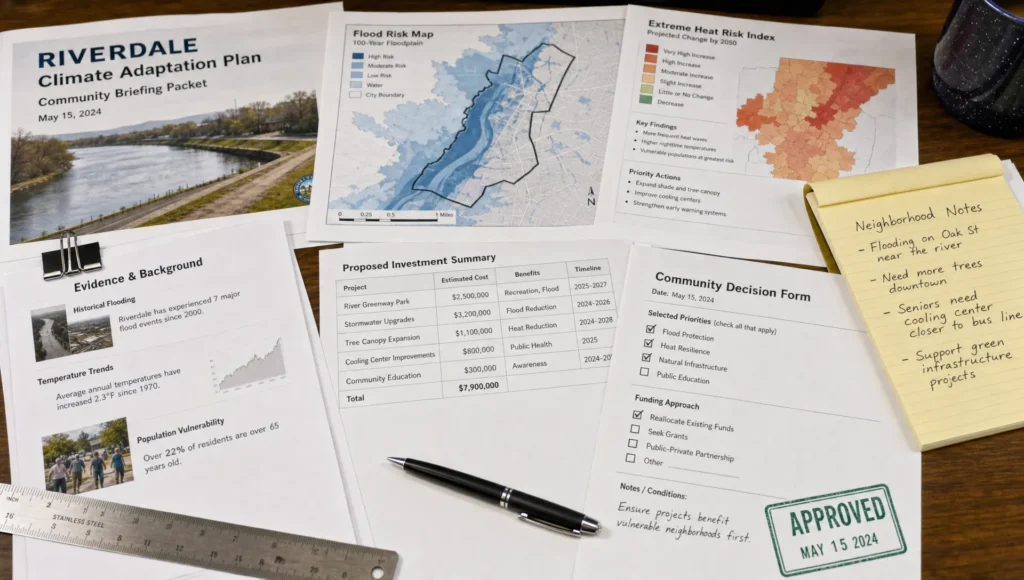
In real-world practice, deliberative democracy typically involves some combination of:
- A clearly defined question (what decision is actually being shaped)
- A balanced information base (briefings, expert testimony, evidence packets)
- Facilitation (to reduce domination and keep discussion productive)
- A method for producing outputs (recommendations, ranked options, majority report and minority report)
- A public record (so outsiders can audit the process, not just the outcome)
Deliberative democracy is especially useful when:
- The issue is complex (policy tradeoffs are real, not symbolic)
- The public is polarized, and you need a legitimate “shared reality”
- The decision needs a justification that survives scrutiny
But it also has characteristic risks, which we will cover below.
Discursive democracy (what it is, in plain terms)
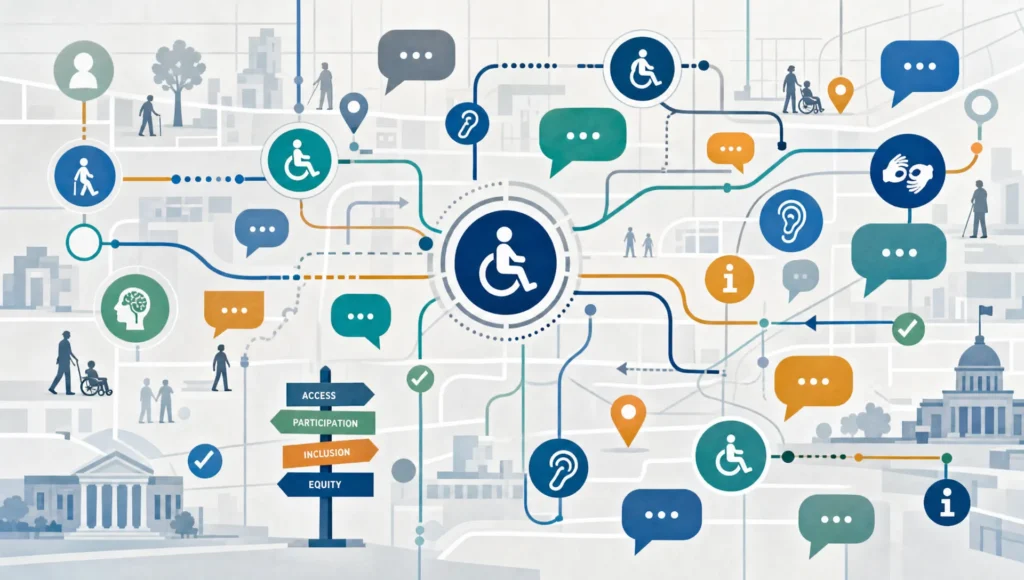
Discursive democracy focuses on the broader ecosystem of public communication: the way issues are framed, what stories count as “evidence,” which identities are recognized as legitimate speakers, and how power shapes what can be said, heard, and repeated.
Where deliberative democracy often emphasizes structured “reason-giving,” discursive democracy emphasizes that democratic legitimacy also depends on:
- Which problems are recognized as problems
- Which communities get to define the stakes
- Whether language and norms exclude people who are not “policy professionals”
- Whether alternative frames can contest dominant narratives
This matters because, long before any formal deliberation begins, the public sphere has already decided what is “normal,” what is “extreme,” what is “practical,” and what is “naive.” Discursive democracy tries to make that arena more plural, more contestable, and more inclusive.
Discursive democracy is especially useful when:
- The main conflict is about meaning, identity, dignity, or recognition
- The public agenda is captured by narrow frames
- A political movement needs to expand what citizens consider possible
- Civic participation is widespread but shallow, and you need better public sensemaking
Discursive democracy vs deliberative democracy (side-by-side)
Both are democratic, both care about legitimacy, and both rely on communication. The difference is what they treat as the primary unit of democratic work.
| Dimension | Deliberative democracy | Discursive democracy |
| Primary goal | High-quality, fair public reasoning that can justify decisions | A public sphere where diverse discourses can appear, compete, and be heard |
| Typical setting | Designed forums (assemblies, panels, structured groups) | The wider civic space (community talk, media, civil society arenas) |
| What “good” looks like | Informed tradeoffs, reasons, revisions, decision-ready outputs | Inclusion, contestation, visibility of marginalized frames, narrative pluralism |
| Common outputs | Recommendations, options memos, rationales, votes with reasoning | Issue framing, agenda shifts, new coalitions, new language for old problems |
| Biggest failure mode | “Mini-publics” that feel disconnected, technocratic, or symbolic | Noise, polarization, manipulation, and untraceable influence |
| Best fit | Decisions that require legitimacy through reasoning | Agenda-setting, meaning-making, and legitimacy through recognition |
A practical way to remember it:
- Deliberative democracy optimizes decision quality.
- Discursive democracy optimizes public meaning and inclusion.
The hidden engineering problem: traceability
Both models break when civic participation cannot be traced from input to outcome.
- Discursive democracy breaks when discourse becomes a sea of claims with no accountability.
- Deliberative democracy breaks when outputs feel like a “black box” that the wider public cannot inspect.
In other domains, we already know how to build trust through traceability. In logistics, for example, organizations invest in systems that make movement visible and auditable across many handoffs (think chain-of-custody and tracking). The democratic equivalent is being able to see how ideas moved through stages, who summarized them, what was accepted or rejected, and why. Even outside politics, industries that rely on coordination at scale often start with supply-chain visibility as a baseline for trust.
Where deliberative democracy usually fails (and what to do instead)
Deliberative democracy fails less because people cannot deliberate, and more because the design does not match reality.
Failure 1: “Forum legitimacy” without public legitimacy
A deliberative group can do excellent work and still be rejected by the broader community if outsiders cannot see themselves in the process.
What helps:
- Publish the question, scope, and constraints in plain language
- Make the evidence base public and readable
- Publish reasons, not just recommendations
- Ensure visible diversity, not just demographic diversity (diversity of experience and viewpoint)
Failure 2: Over-weighting “policy fluent” communication
If the forum rewards a specific style of speaking, it can silence participants whose contributions are experiential, narrative, or emotionally grounded.
What helps:
- Allow multiple contribution formats (testimony, stories, structured claims)
- Train facilitation to translate without sanitizing
- Explicitly protect minority reports and dissenting rationales
Failure 3: No real pathway to consequence
If deliberation outputs do not connect to an actual decision, people learn that participation is theater.
What helps:
- Pre-commit to what decision-makers must do with outputs (adopt, respond, revise)
- Publish a rationale when deviating from recommendations
- Track implementation after a decision
These “consequence commitments” map closely to the manifesto’s insistence on civic participation that is continuous and inspectable, not a sporadic performance.
Where discursive democracy usually fails (and what to do instead)
Discursive democracy fails when the public sphere is treated like a neutral marketplace of ideas. It is not neutral, it has incentives, gatekeepers, and power.
Failure 1: Discourse without boundaries becomes domination
If there are no procedural rules, the most resourced actors can flood attention and shape the agenda.
What helps:
- Clear participation rules focused on procedure (what counts as a contribution)
- Anti-domination norms (limits on repetition, visibility controls, structured prompts)
- A transparent moderation and appeals process
Failure 2: Inclusion without sensemaking becomes fragmentation
A discursive space can include many voices but still fail at collective understanding.
What helps:
- Public synthesis artifacts (what are the main frames, disagreements, and tradeoffs)
- Publicly readable summaries with traceable sourcing
- Explicit mapping of “claims and counterclaims,” not just sentiment
Failure 3: Contestation without decision linkage becomes endless talk
Discursive democracy is strong at agenda-setting, but weak at closing.
What helps:
- Time-boxed cycles: frame, contest, synthesize, then hand off to deliberation
- Clear handoff criteria: when does a question move from discursive exploration to deliberative decision work?
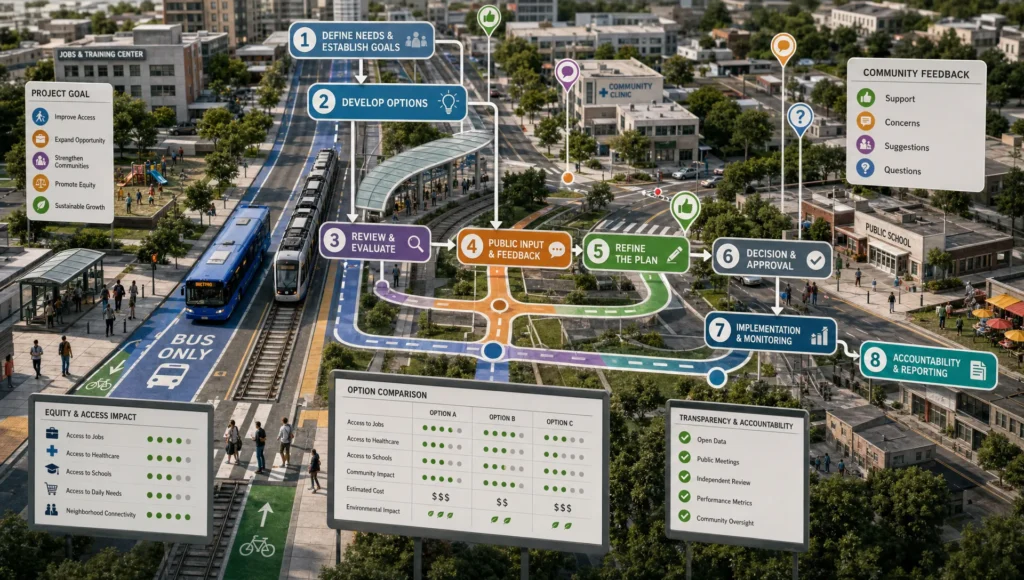
A practical hybrid: discourse first, deliberation second
If you are building civic participation that aims to scale, a common pattern is:
- Discursive phase: broaden frames, surface lived experience, identify what is contested
- Deliberative phase: narrow the decision question, build a shared evidence base, weigh tradeoffs, generate decision-grade options
- Public rationale phase: publish the “why,” including dissent
- Follow-through phase: track what happened, what changed, what did not
This structure reflects a major theme of the JustSocial manifesto: civic life should not end at expression. It should produce legible outputs and feedback loops that teach people how decisions are made.

What this means for a political movement
A political movement often has two jobs that pull in different directions:
- Build identity, solidarity, and a shared story (discursive work)
- Build credible, governable positions that can withstand scrutiny (deliberative work)
Movements that only do discursive work can grow fast but break when they face concrete tradeoffs.
Movements that only do deliberative work can produce impressive proposals but fail to recruit and retain people because they do not generate meaning.
A balanced strategy looks like:
- Use discursive democracy to widen the agenda and legitimize new frames
- Use deliberative democracy to convert those frames into decision-ready proposals
- Publish the reasons so outsiders can evaluate the movement as serious, not just loud
This is also where manifesto-style “education for civic adulthood” becomes a strategic asset. The more your supporters learn to participate in structured reasoning, the less your movement depends on charismatic interpretation, and the more it can scale without drifting into factionalism.
A short selection guide (which approach do you need right now?)
Ask these questions about your current civic participation problem:
If your problem is “we are not being heard”
You likely need discursive democracy first.
Signals:
- People disagree on what the issue even is
- Certain groups are invisible in public discussion
- The “official” framing excludes lived experience
If your problem is “we are heard, but nothing is decided”
You likely need deliberative democracy next.
Signals:
- Many opinions exist, but tradeoffs are not confronted
- People argue past each other because they do not share an evidence base
- Decision-makers can dismiss participation as incoherent
If your problem is “decisions happen, but trust collapses afterwards”
You need the connective tissue: public rationales and follow-through.
Signals:
- People suspect deals, bias, or capture
- Even good decisions look illegitimate because the reasoning is not visible
Connecting back to JustSocial’s manifesto
The manifesto’s core claim is cultural as much as institutional: citizens should not be reduced to occasional voters. Civic participation should be routine, meaningful, and capable of shaping public life in a way people can see.
Discursive democracy and deliberative democracy are two complementary answers to that claim:
- Discursive democracy helps a society recover a healthier public sphere, where people can contest frames and be recognized as legitimate speakers.
- Deliberative democracy helps a society make better, more legitimate choices when the time comes to decide.
If you want a democracy that is continuous rather than episodic, you do not pick one and ignore the other. You build a civic culture (and eventually, institutions) that can do both reliably.
To go deeper into the worldview behind that ambition, read JustSocial’s manifesto and consider how you can contribute, not only by speaking, but by helping create repeatable, inspectable civic participation that others can trust.