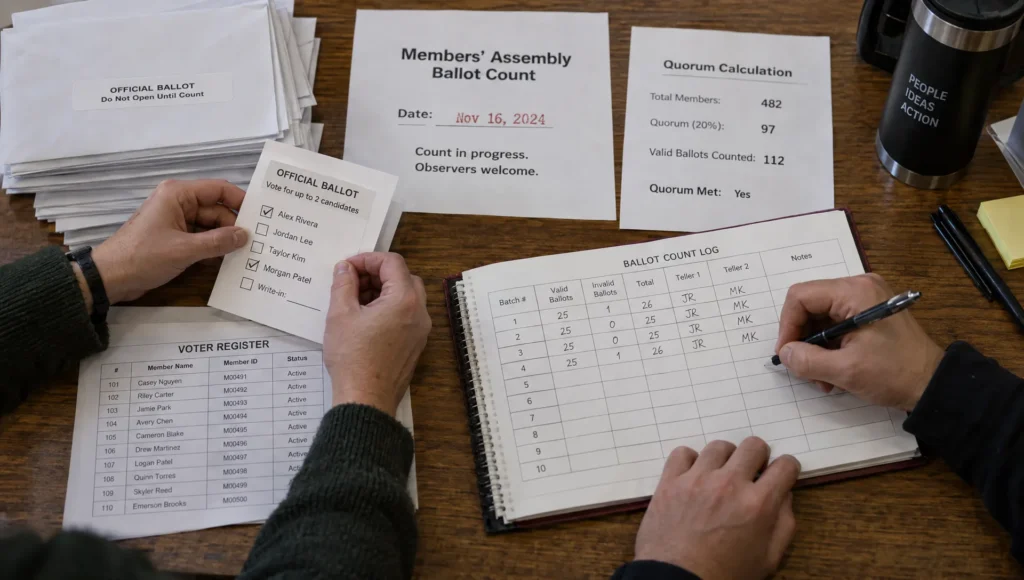
A community decision can lose legitimacy long before ballots are counted. If people cannot understand the question, access the vote, or trust the process, participation becomes another closed door. Finding the best online voting platform free is therefore not simply a search for a no-cost tool. It is a decision about whose voice is heard, what evidence communities can review, and whether a result can lead to meaningful action.
For neighborhood coalitions, nonprofit boards, tenant associations, advocacy campaigns, and public engagement teams, a free platform can be an excellent starting point. But free tools vary widely. Some are designed for casual polls. Others can support structured decisions with voter verification, clear records, and accessible participation. The right choice depends on the stakes of the decision, the people affected by it, and the accountability your group owes them.
What a Free Online Voting Platform Should Actually Do
A voting platform is not automatically democratic because it has a button labeled “Vote.” Democratic participation requires a process people can enter on fair terms. Before comparing features, decide what kind of decision you are organizing.
A quick community pulse check may only need a simple poll with a visible deadline. A nonprofit membership vote, coalition endorsement, or participatory budgeting proposal needs more care. Participants may need to confirm eligibility, rank choices, review background materials, and see a clear explanation of how results will be used. The platform should support that process rather than force your community into a narrower one.
For formal government elections, the standard is higher still. Official elections are governed by state and local laws, election-administration procedures, accessibility obligations, and security requirements. A free online platform may be useful for consultation or outreach, but it should not be treated as a substitute for an authorized election system merely because it can collect votes.
The most useful free tools help a group do three things well: invite eligible participants, collect responses in a format that matches the decision, and communicate outcomes honestly. That sounds basic, but each part carries a public responsibility.
How to Evaluate the Best Free Online Voting Platform
Start with access. People should be able to participate from a phone, computer, or assistive technology without needing specialized knowledge. Plain-language instructions matter as much as interface design. If your members speak multiple languages, have uneven internet access, or rely on public devices, plan for those realities before you announce a vote.
Then look at voter eligibility. A platform may offer open links, email invitations, passwords, unique access codes, or account-based participation. Each approach creates a trade-off. Open links lower the barrier to entry but make it harder to limit a decision to a defined community. Account requirements can prevent duplicate voting, yet they may exclude people unwilling or unable to create an account. Choose the lightest verification method that protects the integrity of the decision.
Privacy also deserves careful attention. Anonymous voting can protect people from pressure, retaliation, or social discomfort. At the same time, organizers may need a way to confirm that each eligible person voted only once. Ask whether the platform separates voter identity from ballot choices, what information administrators can see, and whether personal data is retained after the vote closes.
The ballot method should fit the question. A yes-or-no vote can be appropriate when the proposal is specific and the consequences are clear. Multiple-choice voting works when choices are mutually exclusive. Ranked-choice ballots are often fairer when there are several viable options, because they allow participants to express preferences beyond a single favorite. Do not use a more complicated method just because it appears more sophisticated. Explain the method in everyday language and show how the winner will be determined.
Transparency should extend beyond the final number. Participants deserve to know who is eligible, when voting opens and closes, whether ballots can be changed, how ties are handled, and whether organizers can edit questions once voting begins. A trustworthy process publishes these rules before the vote. It also preserves a record of the question, timeline, turnout, and result without exposing individual ballot choices.
Finally, examine the free plan with skepticism and clarity. Some platforms limit the number of voters, questions, elections, or administrative controls. Others display branding, collect more user data than your group is comfortable with, or reserve exports and audit features for paid accounts. A free tier can still be the right option, especially for a small organization. Just make sure the limit will not appear halfway through a decision that people have already invested in.
Build the Process Before You Open the Ballot
The platform is only one part of legitimate participation. Communities are more likely to trust a result when the process begins before voting day and remains open to questions afterward.
Write the decision in one clear sentence. If people need background to make an informed choice, provide it in a short, neutral explanation. Avoid loaded language that implies one answer is more responsible, reasonable, or community-minded than another. When there are arguments on multiple sides, give each side a fair opportunity to be heard.
Set the eligibility rules and deadline in advance. A group should not change who can vote after seeing early participation or alter the closing time because a preferred outcome appears unlikely. If a change is genuinely necessary, explain it publicly, document the reason, and consider restarting the vote when fairness requires it.
Outreach is also part of election integrity. Sending one email is not the same as offering meaningful access. Use the communication channels your community already trusts, such as text messages, meetings, newsletters, phone trees, or partner organizations. Offer help for people who need assistance accessing the ballot, while protecting the privacy of their choices.
Before launch, test the entire experience with a small group. Ask them to open the invitation on a phone, read the question, cast a ballot, and explain what they think will happen next. Their confusion is useful information. Fixing unclear language before the vote begins is easier than defending a disputed result later.
Free Tools Have Real Trade-Offs
No-cost software can lower barriers for groups with limited budgets, but it does not remove the labor of democratic stewardship. Someone still needs to define the question, manage invitations, answer access issues, protect participant data, and report results. The cost may be paid in staff time, volunteer time, or reduced functionality rather than dollars.
Be especially cautious about platforms that make results public by default or turn civic participation into engagement metrics. A high number of clicks is not the same as representative participation. A smaller, verified vote among people directly affected by a decision may be more legitimate than an open poll that can be shared far beyond the intended community.
For decisions with serious financial, legal, employment, housing, or public-policy consequences, free software may not provide enough support. Your organization may need stronger identity verification, independent oversight, formal accessibility review, secure record retention, or professional election administration. That is not a failure of free tools. It is an honest recognition that the stakes should shape the infrastructure.
Choose for Democratic Capacity, Not Just Convenience
The best online voting platform free for your group is the one that helps people participate with dignity and helps organizers account for the result. A polished interface cannot repair a vague question. An anonymous ballot cannot compensate for excluding the people most affected. And a rapid vote is not automatically a fair one.
At JustSocial, we see digital participation as civic infrastructure: something communities should be able to understand, question, and help shape. The goal is not to move every decision onto a screen. It is to create more regular, accessible ways for citizens and institutions to listen, deliberate, and act together.
Begin with one decision your community is ready to share. Make the rules visible, invite people where they are, and be candid about what the result will change. Each well-run vote can do more than settle a question. It can give people a reason to believe that participation has a place in public life between election days.