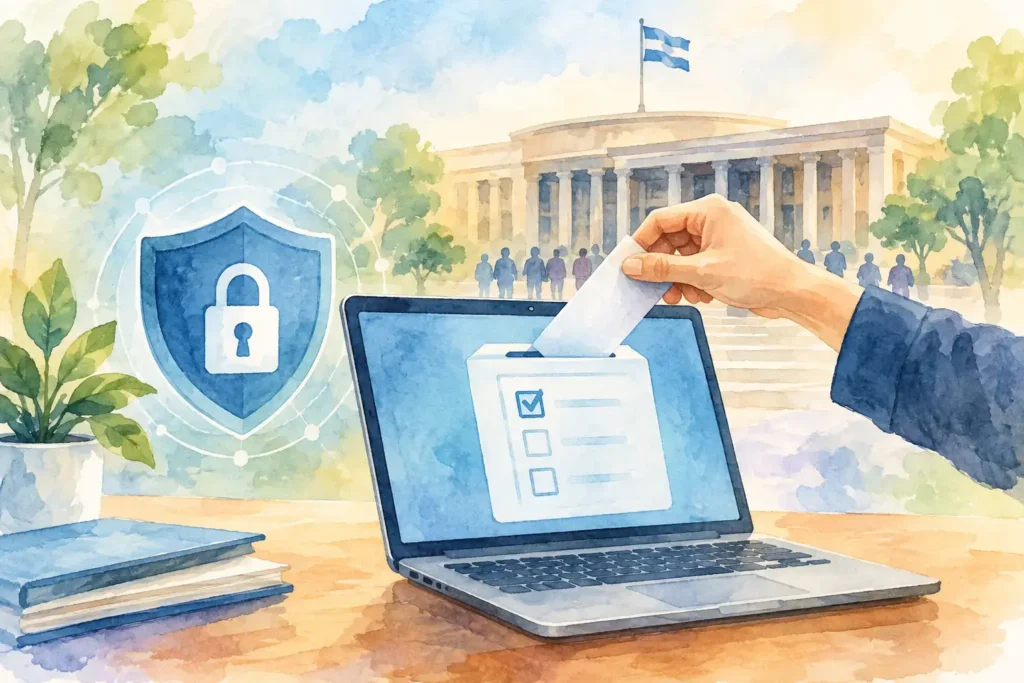
A voter should not need special expertise, insider access, or blind faith to believe their ballot will count. What makes voting trustworthy is a system people can use, observe, question, and verify – before, during, and after votes are cast. Trust is not a public-relations outcome. It is earned through institutions and practices that give every community a real stake in the result.
For a democracy to work, people must be able to lose a contest without losing confidence in the process. That does not mean everyone will agree with every outcome. It means we share enough evidence, protections, and public accountability to recognize the outcome as legitimate.
Trust Begins With Equal Access
A vote cannot be trustworthy if eligible people face unreasonable barriers to casting it. Registration rules, polling locations, voting hours, language access, disability accommodations, ballot design, mail voting procedures, and identification requirements all shape who can participate.
Equal access does not mean every voter must use the same method. A rural voter, a shift worker, a college student, an older adult, and a voter with a disability may need different paths to the same fundamental right. The standard is straightforward: each eligible person should have a practical, private, and secure way to vote without facing burdens that are unrelated to election integrity.
Access also affects confidence. When voters see long lines concentrated in certain neighborhoods, confusing instructions, or polling places moved without clear notice, they have good reason to question whether the system serves everyone fairly. Election administration is not merely logistical work. It is the daily work of equal citizenship.
Clear Rules, Applied Consistently
People should know how to register, vote, correct an error, and have their ballot counted well before Election Day. Rules that change abruptly, vary without explanation, or are enforced differently from one community to another create confusion that can look like favoritism, even when it is not intended.
Trustworthy elections make procedures public. They explain deadlines in plain language, train poll workers consistently, and provide voters with a way to resolve common problems. If a ballot is rejected because of a missing signature, a mismatched record, or an envelope error, voters should receive timely notice and a realistic chance to fix it where the law allows.
There are real trade-offs. Election officials must balance convenient voting with safeguards against errors and fraud. But security measures should be proportionate to the risk they address. A rule that prevents a rare problem while excluding many eligible voters does not strengthen democracy. It shifts the cost of administration onto citizens.
What Makes Voting Trustworthy: Evidence, Not Assurances
Officials can tell the public an election was secure, but assurances alone are not enough. A trustworthy system produces evidence that can be checked by people with different political views.
Paper ballots or voter-verifiable paper records remain central to that evidence. Technology can help voters mark ballots, support accessibility, and improve administration, but there should be a durable record of voter intent that can be reviewed independently. When questions arise, election workers and auditors need something more reliable than a software screen or a vendor’s claim.
Post-election audits are equally important. A meaningful audit checks whether reported outcomes match the physical records, using transparent methods and publicly available results. It is not a ceremonial recount conducted only when a race is close. It is a routine public test of whether the system worked as intended.
The public also needs to understand the difference between an audit, a recount, and an investigation. Each serves a different purpose. Clear explanations prevent ordinary election procedures from being misrepresented as proof that something went wrong.
Security Must Protect Both Ballots and Privacy
Election security includes locked storage, documented chain of custody, trained staff, secure equipment, tested contingency plans, and protections against cyberattacks. It also includes the quieter disciplines that rarely make headlines: accurate voter rolls, reliable power and connectivity plans, careful ballot handling, and communication between local officials.
Yet a secure election is not one that exposes how people voted. The secret ballot protects voters from coercion, retaliation, and pressure from employers, family members, campaigns, or powerful local interests. We should be able to verify that ballots were counted without creating a system that lets anyone prove how a particular person voted.
That balance matters as digital participation expands. Online tools can make public comment, participatory budgeting, community polling, and ongoing civic decision-making more accessible. But any digital voting system must meet a high bar for security, privacy, accessibility, independent testing, and public verification. Convenience is valuable, but it cannot substitute for evidence.
Independent Administration Builds Legitimacy
Election workers are often neighbors serving under intense pressure. Their work deserves resources, protection, and respect. Trust grows when administrators can follow the law without partisan interference, intimidation, or threats.
Independence does not mean secrecy. It means that decisions about ballot access, counting procedures, and certification are governed by established rules rather than by who benefits from a particular outcome. Public meetings, bipartisan observation, documented processes, and accessible records can make that independence visible.
Observers also play a constructive role when they follow clear rules. Candidates, parties, journalists, and community groups should be able to watch key parts of the process without disrupting voters or election staff. Observation turns trust from a demand into a shared civic practice.
Information Integrity Is Part of Election Integrity
Many voters encounter elections first through a phone screen, a forwarded text, or a neighbor’s social post. False information about deadlines, polling locations, eligibility, or results can suppress participation and damage confidence before a ballot is ever cast.
The answer is not to expect citizens to sort through every claim alone. Election offices, libraries, nonprofits, local media, and community leaders all have a role in distributing timely, factual information in the languages and formats people use. The most effective communication is specific: where to vote, what identification is required, how to track a ballot, and what to expect on election night.
Responsible leaders must also avoid declaring victory before votes are counted or treating normal delays as evidence of misconduct. Counting every valid ballot can take time, especially when states use mail ballots or verify eligibility carefully. Accuracy should not be mistaken for weakness.
Trust Is a Relationship, Not a Single Election
A healthy democracy cannot ask people to care deeply once every few years and then shut them out of public decisions. When residents have meaningful ways to help shape local priorities, nonprofit initiatives, public services, and policy choices, they gain a clearer view of how collective decisions are made.
That is why civic infrastructure matters beyond the ballot box. Accessible participation tools, transparent public records, understandable meeting processes, and genuine feedback loops help people practice democracy continuously. They also make elections less vulnerable to cynicism, because citizens can see that their voice has a place between major contests.
At JustSocial, we see participation as shared infrastructure: something communities build, inspect, improve, and protect together. Technology can support that work when it expands public agency rather than concentrating power behind opaque systems.
The Work Belongs to All of Us
Trustworthy voting depends on capable election officials and sound laws, but it also depends on citizens who are willing to participate in good faith. We can check registration deadlines early, rely on verified local information, volunteer when possible, support election workers facing harassment, and resist spreading claims we have not examined.
We do not have to agree politically to defend a system where every eligible voter can participate and every valid ballot is counted. The next step is close to home: ask whether the civic systems around us make participation clearer, fairer, and more visible – then help build the ones that do.