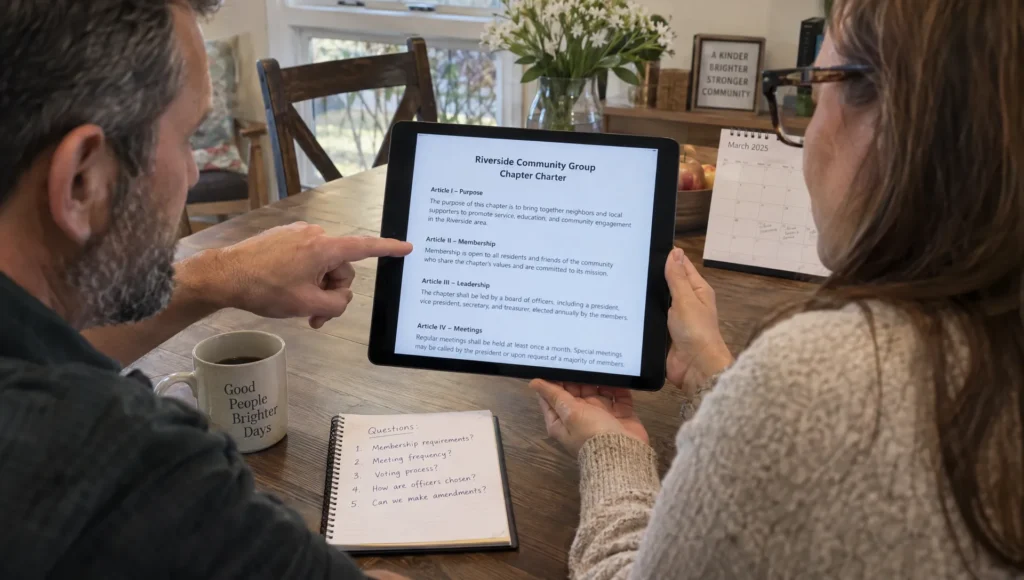
Education policy is one of the places where democracy becomes personal. A curriculum decision shapes what children learn about history, science, citizenship, and themselves. A budget decision determines whether a school can hire counselors, reduce class sizes, or expand arts and vocational programs. An assessment policy can change how teachers teach and how students experience their own worth.
Yet in many communities, education policy is still made through a thin democratic ritual: officials draft a proposal, the public gets a hearing, a small number of highly motivated voices speak for two minutes, and the final decision is announced as if the community has truly been heard.
That is not enough for modern education. If schools are meant to prepare people for civic life, then education policy itself should model civic life. Deliberative democracy offers a better path: a structured way for parents, students, teachers, experts, and citizens to learn together, weigh trade-offs, and influence decisions before policy hardens into law.
Why education policy needs more than public comment
Education debates often become polarized because they combine three difficult things at once: values, evidence, and personal experience.
Parents may focus on safety, identity, opportunity, or future employability. Teachers may focus on feasibility, workload, classroom reality, and student development. Students may focus on belonging, stress, curiosity, and whether school feels meaningful. Researchers may focus on evidence from learning science, child psychology, economics, or comparative education. Public officials must then turn all of this into policy under budget, legal, and political constraints.
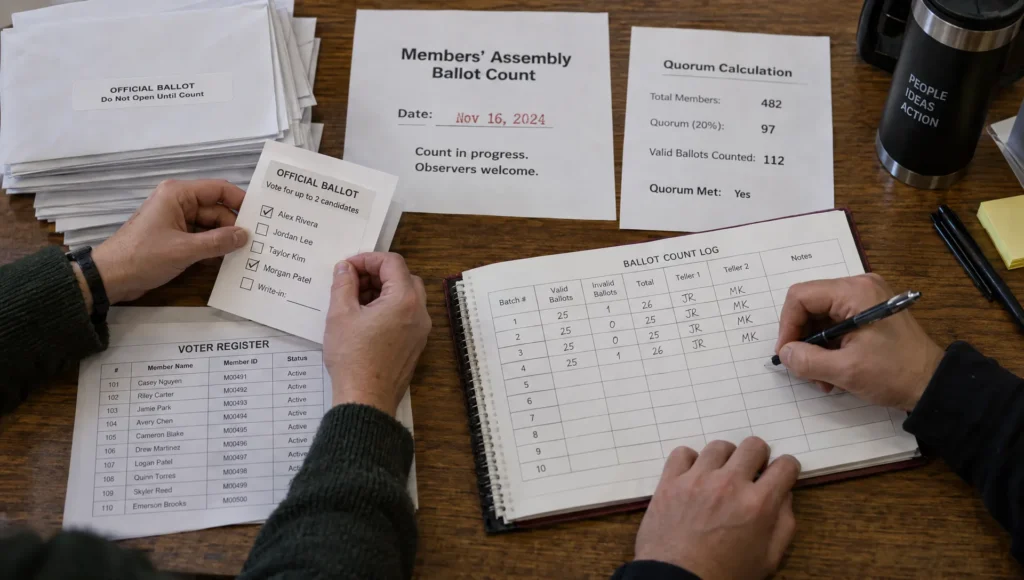
Traditional public consultation is poorly designed for this complexity. Open hearings tend to reward the loudest and most organized groups, not necessarily the most representative or informed judgment. Surveys can measure preference, but they rarely show what people would think after hearing evidence and listening to others. Elections reveal broad political alignment, but they are too blunt to guide the details of curriculum, assessment, school schedules, technology, special education, or teacher training.
Deliberative democracy improves the decision environment. It does not assume that the public already has a fully formed answer. Instead, it creates the conditions for citizens to form better judgments: balanced information, time to deliberate, access to experts, respectful disagreement, and a clear connection between public input and official response.
The OECD has documented the growing use of deliberative processes around the world, especially for complex public questions where legitimacy, trust, and trade-offs matter. Education belongs squarely in that category.
The JustSocial view: education is part of the social contract
JustSocial's philosophy begins from a simple frustration: our public systems still carry too many relics of the Industrial Revolution. The school system, in particular, often treats education as an assembly line, moving students between subjects, tests, and institutional routines while giving them little meaningful say in the world they are being prepared to inherit.
In the JustSocial manifesto, education reform is not treated as a narrow administrative issue. It is part of a broader social contract. Citizens are not only voters, taxpayers, and consumers. They should be active participants in shaping public life, including the institutions that shape children before they become full adult citizens.
This matters because schools are not only service providers. They are civic institutions. A school teaches mathematics, language, history, and science, but it also teaches children what authority feels like, whether their voice matters, how disagreement is handled, and whether public institutions can be trusted.
If policy is imposed from above, students learn one lesson about democracy. If policy is shaped through structured civic participation, they learn another.
What deliberative democracy adds to education reform
Deliberative democracy is not the same as simply asking everyone what they want. It is a disciplined process for turning public opinion into public judgment.
In education, that distinction is essential. A parent may begin with a strong position against a school schedule change, then revise that position after hearing from working families, transportation officials, adolescent sleep researchers, and teachers. A student may support replacing exams with projects, then develop a more balanced view after discussing college admissions, teacher grading capacity, and the value of basic knowledge checks. A teacher may resist a technology policy, then support a narrower pilot after privacy protections and training commitments are added.
This is where deliberative democracy connects with two other democratic layers.
Discursive democracy is the wider public conversation: town halls, student forums, parent groups, teacher discussions, public writing, media debates, and digital civic spaces. It helps surface concerns and language from the community.
Civic participation is the broader act of taking part: organizing, volunteering, joining committees, proposing policy, voting, attending meetings, or contributing professional knowledge.
Deliberation sits between them. It takes the raw energy of public discussion and gives it structure, evidence, and decision relevance.
For readers who want a more procedural design, JustSocial has also outlined a working model for deliberative democracy in education reform. The point here is the deeper principle: better education policy requires not only more participation, but better conditions for participation.
What makes education deliberation different
Education policy is not like choosing a park location or approving a road repair. It affects children, families, labor markets, culture, and the future character of society. That gives it several special features.
First, the people most affected are not always the people with formal political power. Students live the consequences daily, but minors usually cannot vote. Deliberative democracy can give them a structured voice while still recognizing adult legal responsibility.
Second, expertise is necessary but incomplete. Learning science, teacher experience, and educational research matter deeply. But lived experience also matters. A policy that looks elegant in a white paper may fail in a classroom, a low-income household, a rural district, or a multilingual community.
Third, education policy creates long feedback loops. A curriculum decision may take years to show results. A teacher training reform may improve culture slowly. A bad assessment policy may damage motivation before test data captures the harm. Deliberation helps policymakers examine long-term consequences before acting.
| Education policy question | Why normal consultation struggles | How deliberative democracy helps |
|---|---|---|
| Curriculum reform | Debates quickly become symbolic and ideological | Participants examine content, evidence, developmental needs, and community values together |
| Assessment policy | Surveys capture stress or preference, but not trade-offs | Citizens weigh exams, projects, standards, equity, workload, and future pathways |
| AI in classrooms | Technology adoption can move faster than public understanding | Deliberation can define acceptable use, privacy limits, teacher roles, and student protections |
| School budgeting | Public meetings often favor organized interest groups | Representative deliberation forces transparent choices between competing needs |
| Student voice | Students are often consulted informally, then ignored | Structured participation gives student input a visible place in the policy record |
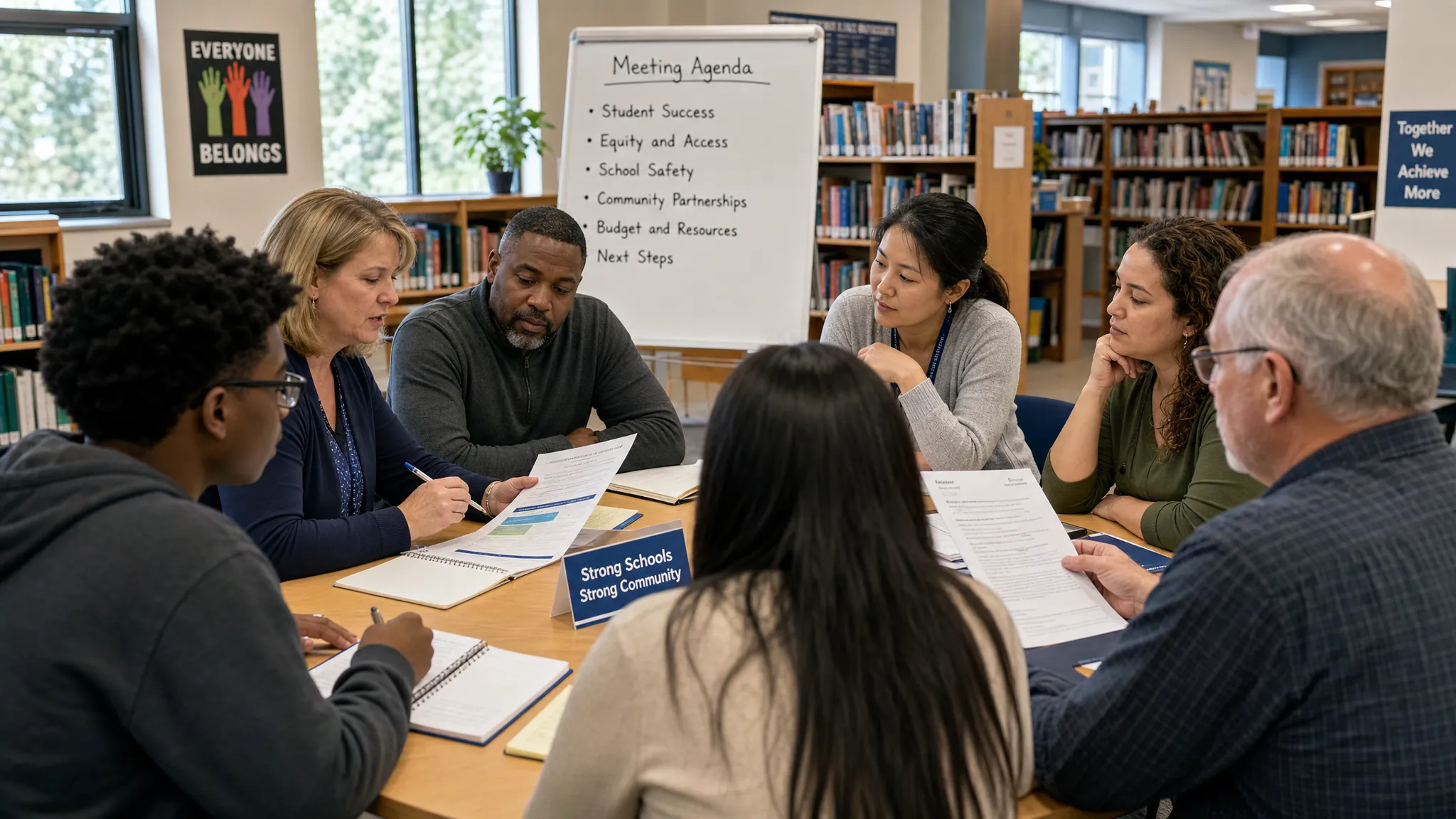
Better education policy starts with better democratic conditions
A deliberative process does not guarantee that everyone will agree. That is not the goal. The goal is to make disagreement more informed, more honest, and more useful to decision-makers.
For education policy, a credible deliberative process should include several conditions.
| Democratic condition | Why it matters for education policy |
|---|---|
| Representative participation | The process should include families, teachers, students, and citizens who reflect the community, not only activists or insiders |
| Balanced evidence | Participants need accessible briefings that include research, cost, legal limits, and practical classroom realities |
| Expert questioning | Citizens should be able to question educators, researchers, administrators, and affected professionals directly |
| Skilled facilitation | Good facilitation prevents domination by confident speakers and protects minority viewpoints |
| Student inclusion | Age-appropriate participation recognizes that students are not passive recipients of policy |
| Public reasoning | Recommendations should explain why trade-offs were accepted, not just state a winning preference |
| Official response | Authorities should be required to respond publicly to recommendations, especially when they reject them |
The last condition is crucial. Without an official response, deliberation becomes political theater. People will not keep participating if they sense that decisions have already been made.
This is also where a political movement matters. A single school board can experiment with deliberation, but a movement can demand that deliberation become a normal standard of public decision-making. JustSocial's broader argument is that citizens should not be occasional spectators of government. They should be continuously heard through transparent, structured, and technologically supported channels.
Technology should widen the circle, not replace judgment
Education deliberation can benefit from technology, but it should not be reduced to clicks, likes, or instant polls.
Digital tools can help publish evidence, collect questions, translate materials, include people who cannot attend in person, archive committee discussions, and show how recommendations influenced final decisions. They can also help communities identify patterns in public concern, such as whether parents are mainly worried about academic standards, student anxiety, classroom safety, or unequal access.
But education policy should not be governed by raw engagement metrics. A viral post is not the same as public judgment. A majority reaction on a platform is not the same as a considered recommendation after balanced deliberation. Analytics can help listen, but they should not become a substitute for listening.
The JustSocial manifesto argues that public institutions should assimilate modern technology faster and more responsibly. In education, that means using technology to make governance more transparent and participatory, while building safeguards around privacy, minors, data use, and cybersecurity.
This is especially important for AI in education. Before a school system adopts AI tutors, classroom assistants, automated grading, or student analytics, the community should deliberate on questions such as: What role remains uniquely human? What data should never be collected? How should teachers be trained? What happens when AI advice conflicts with teacher judgment? Who audits the tool?
Those are not only technical questions. They are democratic questions.
Teachers and academia should inform decisions without owning them
One danger in education politics is the false choice between expert rule and public rule. Education policy needs both expertise and democracy.
Teachers understand the practical life of policy. They know whether a reform can survive a Monday morning classroom, a crowded timetable, limited planning time, and the emotional needs of students. Their voice should be central in deliberation, not treated as just another stakeholder comment.
Academia also has a major role. Researchers can summarize evidence, explain uncertainty, identify weak claims, and prevent policy from being captured by slogans. The JustSocial manifesto goes further, imagining academia as a more formal public branch that holds government to evidence-based standards and strengthens lifelong learning.
Even without that full institutional reform, education deliberation can apply the principle now: researchers should help citizens reason, not dictate conclusions. A deliberative education process should make evidence understandable, contestable, and relevant to lived reality.
UNESCO's report on reimagining our futures together frames education as a public endeavor and calls for a new social contract for education. Deliberative democracy gives that idea a practical democratic form. It asks communities not only what schools should teach, but how society should decide what schools are for.
From protest to policy
Many education debates begin only after trust has already collapsed. A district announces a closure plan. Parents protest. Teachers object. Students walk out. Officials defend the process. The public assumes the decision was predetermined.
Deliberative democracy works best before that point. But it can also help after conflict begins by creating a path from outrage to policy.
The first step is to name the real decision. Is the community deciding whether to close a school, how to handle declining enrollment, how to allocate resources, or how to redesign neighborhood education? Those are different questions.
The second step is to bring affected groups into a structured process, not just a microphone line. That includes families who cannot attend evening meetings, students who may be intimidated by formal hearings, teachers who fear professional consequences, and residents whose taxes or neighborhoods are affected.
The third step is to require a public record of reasoning. If officials accept a recommendation, they should explain how it will be implemented. If they reject it, they should explain why, using evidence and constraints rather than vague language.
When communities are already mobilizing, JustSocial's guide on turning civic participation in schools from protest to policy offers a useful next step. Protest can reveal democratic energy, but deliberation can turn that energy into durable reform.
What better education policy can look like
A deliberative approach changes both the process and the substance of education policy.
Instead of a district asking, should we extend the school day, it might ask: What combination of schedule, enrichment, rest, transportation, family time, and teacher workload best serves student development?
Instead of asking, should we use standardized tests, it might ask: What forms of assessment best balance fairness, accountability, deep learning, teacher capacity, and student well-being?
Instead of asking, should students have more voice, it might ask: Which decisions should students help shape, at what ages, through what safeguards, and with what accountability from adults?
These better questions do not eliminate disagreement. They make disagreement more productive. They move education policy away from slogans and toward public reasoning.
That is the democratic upgrade schools need. Not endless meetings. Not performative consultation. Not technocratic reform imposed from above. Better education policy requires a living civic process where citizens learn, deliberate, decide, and keep refining the social contract around education.
Frequently Asked Questions
What is deliberative democracy in education policy? Deliberative democracy in education policy is a structured process where students, parents, teachers, experts, and citizens review evidence, discuss trade-offs, and make informed recommendations before public officials decide.
How is deliberative democracy different from a school board meeting? A school board meeting usually allows short public comments, often after proposals are already developed. Deliberative democracy gives participants time, balanced information, facilitation, and a clearer link between public reasoning and final policy.
Should students participate in education policy deliberation? Yes, students should have age-appropriate ways to participate because they experience school policy directly. Their role should be structured, protected, and transparent, while adults remain responsible for legal and institutional decisions.
Can deliberative democracy work for controversial curriculum debates? It can help because it slows the debate down and forces participants to examine evidence, values, developmental needs, and competing rights. It may not create full agreement, but it can produce more legitimate and better reasoned decisions.
What role should technology play in deliberative education policy? Technology should help widen access, publish evidence, gather questions, document discussions, and track official responses. It should not replace human judgment or reduce education policy to simple online reactions.
Help build a more democratic education system
Education policy should not be written for communities without being shaped with them. If schools are where democratic citizens are formed, then the governance of schools must become more democratic too.
JustSocial is a political movement for deeper civic participation, public transparency, and technology-supported democratic reform. If you believe education policy should be built through informed public judgment rather than top-down decisions, explore JustSocial.io and join the effort to make democracy a continuous part of public life.