A public meeting can be full of sincere people and still fail democracy. One person brings a story, another brings a statistic, a third brings suspicion that the statistic was selected to win the room. Everyone speaks, but the public has no shared way to know what has been established, what remains contested, and what decision each piece of evidence should inform.
That is the missing layer in many democratic reforms. Deliberative democracy is not only about giving citizens more time to talk. It is about giving citizens the conditions to reason together. Public evidence is one of those conditions.
In JustSocial’s manifesto, the critique of modern politics is blunt: citizens are too often reduced to voters, taxpayers, and private consumers, while public systems continue to operate with the inertia of an earlier industrial age. The manifesto’s answer is continuous direct democracy, supported by technology, transparency, education, and a renewed sense that people should shape the state that shapes them. But that vision requires more than participation. It requires evidence that the public can see, test, challenge, and use.
What public evidence means in a democracy
Public evidence is not just information released by government. It is not simply a PDF, a press conference, or an expert report. Evidence becomes public when ordinary citizens, journalists, academics, officials, and affected communities can inspect how a claim was formed and why it matters to the decision at hand.
A useful standard is simple: evidence must be visible enough to build trust, structured enough to guide decisions, and open enough to be challenged.
| Quality | What it means | Why it matters |
|---|---|---|
| Traceable | People can see the source, method, date, and limits of a claim | Prevents claims from becoming civic folklore |
| Accessible | The evidence is written and presented in language citizens can use | Keeps deliberation from becoming expert-only politics |
| Contestable | People can challenge interpretations, missing data, and conflicts of interest | Turns disagreement into civic review |
| Contextual | Evidence is connected to tradeoffs, legal limits, budget constraints, and affected groups | Stops facts from floating outside the real decision |
| Actionable | The evidence is tied to a question that a public body can actually decide | Prevents endless discussion without responsibility |
A democracy can publish huge amounts of information and still have weak public evidence. The issue is not volume. The issue is whether information can travel from public concern to public judgment.
Why deliberative democracy needs a public evidence layer
Deliberative democracy asks citizens to do something harder than voting for a team. It asks them to hear competing arguments, weigh evidence, recognize tradeoffs, and form a judgment that can survive contact with disagreement. The OECD’s work on deliberative processes emphasizes conditions such as balanced information, time, facilitation, and transparency because deliberation depends on the quality of the environment around citizens.
Without public evidence, deliberation can collapse into three familiar failures.
First, the most emotionally powerful story becomes the truth of the room. Lived experience is essential, but one experience cannot automatically stand for everyone. Public evidence helps testimony become part of a wider pattern without stripping it of its human force.
Second, officials can cherry-pick facts. When evidence is not traceable, citizens are asked to trust institutions that many already distrust. Public evidence does not demand blind trust. It gives citizens a way to verify, contest, and correct.
Third, expertise becomes either untouchable or ignored. In unhealthy systems, experts are treated like priests or enemies. Deliberative democracy needs a better role for expertise: public, checkable, and humble about uncertainty.
This is where deliberative democracy and discursive democracy meet. Public discussion can surface problems quickly, but viral attention cannot decide what is true. JustSocial has already argued that discursive democracy needs evidence, not virality. Deliberation is the next step: after a claim becomes visible, the public needs an evidence process that can turn attention into judgment.
From opinion to public evidence
Civic participation often begins with a signal: anger about a school policy, concern about policing, frustration over public transit, fear about housing costs, or hope for a new reform. In a continuous democracy, those signals should not vanish into comment sections or campaign slogans. They should move through a visible chain.
| Stage | Democratic function | Example |
|---|---|---|
| Citizen signal | A concern or proposal becomes visible | Parents report that a school schedule is harming family life |
| Claim definition | The concern is translated into testable questions | Does the schedule improve learning, stress, attendance, and safety |
| Source packet | Relevant data, testimony, law, cost, and expert input are gathered | Attendance records, teacher testimony, student surveys, budget data |
| Public challenge | Citizens and reviewers identify gaps or bias | People ask whether low-income families were included |
| Deliberative synthesis | A representative group weighs evidence and tradeoffs | A mini-public recommends two pilot options |
| Official response | Decision-makers explain what they accepted, rejected, and why | The education department adopts one pilot and publishes reasons |
| Implementation record | Outcomes are tracked after the decision | Public reports compare promised and actual results |
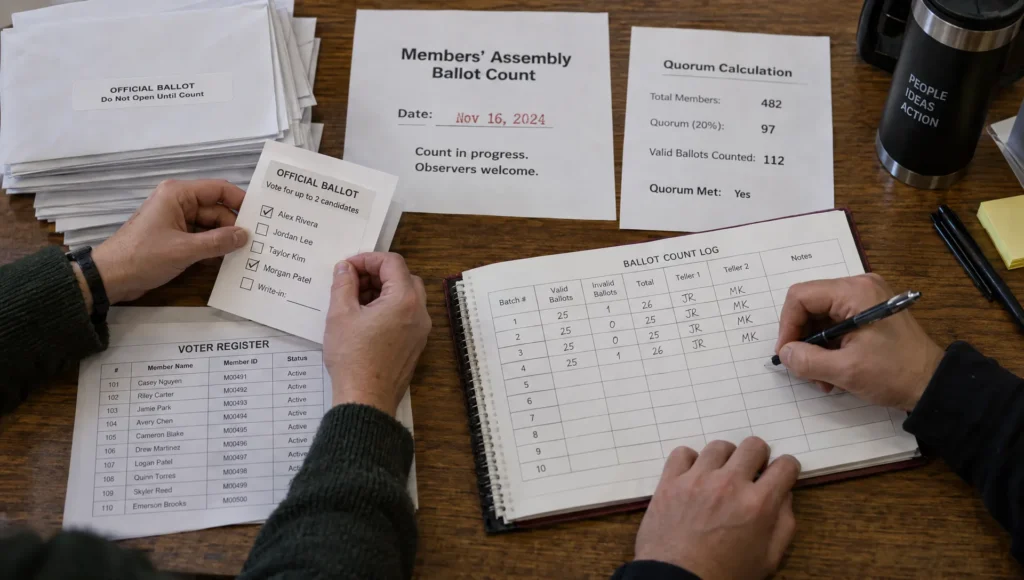
This chain matters because people do not only want to speak. They want to know that speech entered the public record in a way that could influence action.
Evidence must be plural, not technocratic
A common mistake is to treat public evidence as a synonym for data. Data matters, but it is not enough. A spreadsheet can show absenteeism rising, but it cannot fully explain whether students feel unsafe, teachers are burned out, parents are struggling with transport, or a new policy has created unintended pressure.
Deliberative democracy should use several kinds of evidence together:
- Quantitative data, including budgets, outcomes, service levels, and demographic patterns
- Lived experience from affected citizens, especially those usually absent from formal hearings
- Frontline knowledge from teachers, nurses, social workers, civil servants, and local staff
- Academic research that explains what has worked elsewhere and under what conditions
- Legal and constitutional analysis that clarifies what government may or may not do
- Implementation evidence from pilots, audits, and after-action reviews
The point is not to flatten all evidence into the same category. A randomized study and a personal testimony do different things. But both can be public evidence if their role is clear. The study may help estimate likely effects. The testimony may reveal harms or practical realities that the study did not measure.
This is also why academia should not sit outside democracy as a distant commentary class. The JustSocial manifesto proposes academia as an independent branch that can advise, educate, and hold public decision-making to higher standards. That idea is not about rule by experts. It is about making expertise a civic service. A similar argument appears in JustSocial’s discussion of how deliberative democracy should use academia well: experts should clarify evidence, assumptions, and uncertainty so citizens can deliberate more intelligently.
Public evidence in continuous direct democracy
Continuous direct democracy changes the rhythm of politics. Instead of waiting years to be counted, citizens can weigh in repeatedly on public matters. The JustSocial manifesto imagines state-sanctioned civic platforms, public analytics, anonymous political identity, and structured ways for representatives to understand public opinion throughout a term.
That model needs a clear guardrail: participation should not become permanent polling without reasoning. If the state only measures likes, dislikes, petitions, comments, and reactions, it may become more responsive but not necessarily wiser. Public evidence is what keeps continuous democracy from becoming a dashboard of public mood.
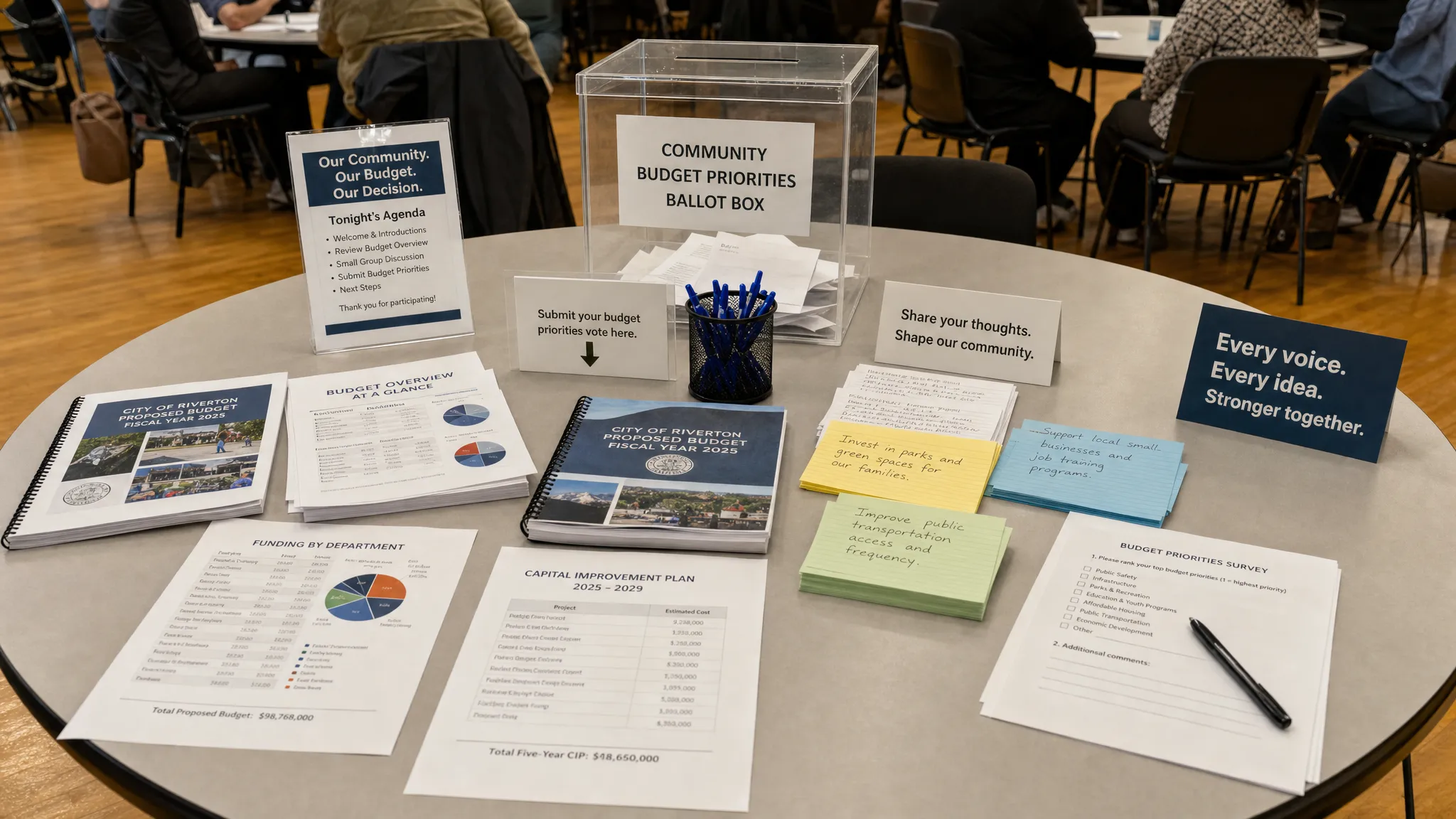
In practice, this means a digital democracy platform should not only ask what people think. It should also show what evidence people are seeing, what claims are disputed, which groups are affected, and how public opinion changes when citizens receive better information.
It also means privacy cannot be an afterthought. Public evidence should illuminate the issue, not expose the citizen. A person may choose to identify with a community, profession, ideology, or lived experience, but democratic systems should avoid turning civic participation into surveillance. The public record should preserve the argument, evidence, and decision path while protecting personal data wherever possible.
A practical test for public evidence
Before a public body asks citizens to deliberate, it should be able to answer a few basic questions. These questions are not bureaucratic decoration. They are the minimum conditions for trust.
| Question | What a good answer should include |
|---|---|
| What decision is actually being made | The authority, timeline, and available options |
| What evidence supports each option | Sources, dates, methods, and known limits |
| Who is affected | Distributional effects across geography, income, age, disability, minority status, and future generations |
| What remains uncertain | Missing data, disputed assumptions, and risks |
| Who reviewed the evidence | Experts, public servants, affected communities, and independent reviewers |
| How will the final decision be explained | A public response showing why evidence was accepted, rejected, or weighted differently |
| How will outcomes be checked later | Metrics, review dates, audits, and routes for correction |
This test makes public reasoning harder to fake. A leader can still make a controversial decision. A parliament can still reject majority opinion. A court can still protect rights against popular pressure. But public evidence requires institutions to show their work.
The education reform example
Education reform shows why public evidence matters. The JustSocial manifesto argues that industrial-age schooling should give way to more holistic models, including project-based learning, personalized learning, stronger social-emotional support, and careful use of AI in the classroom. These are serious proposals because they affect children, teachers, parents, budgets, labor markets, and civic culture itself.
A weak democratic process would reduce the debate to slogans. One side might say AI will modernize schools. Another might say AI will destroy teaching. One side might demand more student choice. Another might warn about falling standards. Everyone would be partly right and still collectively stuck.
A public evidence process would ask better questions. What learning outcomes are we trying to improve? Which students benefit from project-based learning, and under what support conditions? How does teacher workload change when one holistic teacher stays with a class for more hours? What privacy rules apply to classroom AI? What do students say about curiosity, stress, and belonging? What does the budget allow? What should be piloted before national rollout?
In deliberative democracy, citizens do not need to become education professors. They need access to a balanced evidence packet, the ability to question experts and practitioners, and enough time to weigh values. Some tradeoffs are technical, but many are moral: what childhood should feel like, what skills a society should prioritize, and how much risk we accept when reforming public institutions.
Public evidence does not remove ideology from education reform. It makes ideology honest about reality.
Why political movements need an evidence ethic
A political movement can win attention through anger, charisma, identity, or crisis. But if it wants to build a durable democratic culture, it needs an evidence ethic.
That ethic says: do not ask people to believe a movement merely because its intentions are good. Let them inspect its claims. Let them challenge its assumptions. Let them see how proposals are shaped, revised, and connected to public needs.
For JustSocial, this is especially important. A movement for continuous direct democracy cannot reproduce the habits it criticizes: closed decision-making, vague promises, top-down certainty, or leaders speaking for people without listening to them. The movement’s legitimacy should grow from the same principles it asks government to adopt: transparency, participation, evidence, and accountability.
The manifesto’s image of a future Cosmopolis is not nostalgia for the ancient Polis. It is a modern attempt to recover immediacy at scale. In the Polis, political life felt close enough to touch. In today’s large states, technology can help restore some of that closeness, but only if it builds public reasoning rather than public manipulation.
Public evidence is the difference between a crowd and a citizenry.
Frequently Asked Questions
What is public evidence in deliberative democracy? Public evidence is information that citizens can inspect, trace, challenge, and connect to a real public decision. It includes data, testimony, expert analysis, legal constraints, budget information, and implementation results.
How is public evidence different from transparency? Transparency can mean publishing information. Public evidence goes further by organizing information around a decision, explaining its source and limits, and creating a way for citizens to contest or use it.
Does deliberative democracy mean experts decide for the public? No. Experts help clarify facts, risks, and uncertainty. Citizens and legitimate public institutions still weigh values, priorities, and tradeoffs. The goal is informed self-government, not technocracy.
Can online voting platforms support public evidence? They can, but only if they do more than count preferences. A strong civic platform should connect votes or reactions to evidence packets, public reasoning, privacy protections, and accountable responses from decision-makers.
Help build a democracy that shows its work
If democracy is going to become continuous, it must also become more evidence-based, more transparent, and more humane. Public evidence gives civic participation a memory. It lets citizens see how their concerns become claims, how claims become deliberation, and how deliberation becomes public action.
If this case resonates with you, read the JustSocial manifesto, share the idea, and consider how your skills, community, or local initiative could help build the evidence layer of modern democracy. The future of politics should not be a louder feed. It should be a public process worthy of free people.