Democracy was built around scarcity: scarce travel, scarce information, scarce time with representatives, and scarce ways for ordinary people to be heard. Elections made sense as the main democratic ritual when the practical cost of participation was high. But in a connected society, that bargain feels increasingly outdated.
The new question is not whether citizens should participate. The question is whether the social contract will recognize civic participation as a continuous public right, supported by trustworthy digital infrastructure, deliberation, education, and transparent institutions.
A digital social contract is not a shortcut to politics by app. It is a deeper agreement between citizens and the state: people receive meaningful, accessible, and protected ways to influence public life, while institutions commit to listening, explaining, and adapting. In return, citizens accept a larger civic role, not as spectators, but as participants in the shared work of self-government.
From a thin social contract to civic participation by design
The traditional social contract reduces most citizens to a narrow civic identity. You are born into the state, attend the public systems it builds, pay taxes, obey laws, and vote every few years for representatives who may or may not reflect your actual views. Between elections, your influence is often indirect, fragmented, or dependent on protest, media attention, lobbying access, or personal connections.
The JustSocial manifesto argues that this old arrangement belongs to industrial-era institutions: centralized, slow, bureaucratic, and poorly equipped to hear citizens in real time. Its critique is blunt but useful. The citizen is too often reduced to voter, taxpayer, and private consumer, while public systems continue to make decisions with limited civic feedback.
A new digital social contract would treat participation as a designed public capability. That means the state does not merely tolerate civic input. It builds channels for it, protects it, measures it responsibly, and brings it into decision-making cycles.
This is where civic participation becomes more than volunteering, voting, or attending a town hall. It becomes a normal part of public life, embedded in schools, communities, local budgets, legislative committees, public consultations, and policy evaluation.
What makes the social contract digital?
A digital social contract is not simply the old state with more websites. Many governments already have online forms, public portals, livestreams, and social media accounts. That is digitization, not democratic renewal.
The digital social contract changes the relationship itself. It gives citizens recurring ways to see, understand, deliberate, vote, object, propose, and track outcomes. It also gives institutions obligations they cannot easily ignore.
| Dimension | Old social contract | Digital social contract |
|---|---|---|
| Civic voice | Periodic elections and occasional consultations | Continuous channels for input, voting, petitions, and public reasoning |
| Transparency | Documents published late, scattered, or in technical language | Searchable records, accessible summaries, open agendas, and visible decision trails |
| Trust | Based mainly on institutional authority | Built through verification, auditability, responsiveness, and public explanation |
| Identity | Citizen treated as a generic voter | Citizen can participate with relevant civic context while privacy is protected |
| Education | Schooling prepares people for work more than citizenship | Lifelong civic learning supports informed participation |
| Accountability | Representatives judged mainly at election time | Representatives respond to public sentiment and evidence throughout the term |
This shift matters because democracy is not only a system for choosing leaders. It is a system for producing legitimate collective decisions. Legitimacy grows when people can understand how a decision was made, how their voices entered the process, and why officials acted as they did.
Civic participation is not the same as constant voting
A common mistake in digital democracy is to imagine that every issue should become a referendum. That would be exhausting, shallow, and dangerous. Civic participation must include voting, but it cannot be reduced to voting.
Deliberative democracy adds a crucial layer. It asks citizens to weigh evidence, hear competing arguments, consider tradeoffs, and revise their views when necessary. This is why citizens assemblies, participatory budgeting, public hearings, and structured consultations can be so valuable. They slow politics down enough for judgment.
Discursive democracy adds another layer. It recognizes that democratic opinion forms through public conversation: journalism, classrooms, community meetings, social networks, neighborhood groups, professional associations, and cultural life. A healthy digital social contract should not only count preferences. It should improve the quality of public discourse that shapes those preferences.
That is why an online voting platform is only one part of the puzzle. Petitions, public comments, committee annotations, civic forums, open law repositories, participatory budgeting tools, and transparent analytics all serve different democratic functions.
The goal is not to make citizens click more. The goal is to make public judgment more visible, more informed, and more connected to institutions.
The institutional bargain: rights, duties, and limits
If civic participation becomes a continuous right, citizens need protections. They need access regardless of income, disability, geography, language, or technical skill. They need privacy and data minimization, especially when political identity and opinions are involved. They need explanations in plain language, not only legal documents. They need a way to verify that their participation was recorded without exposing sensitive personal data.
This is why the digital divide is not a side issue. It is a democratic infrastructure issue. If participation moves online while many citizens lack devices, reliable internet, digital literacy, or trust in public systems, the state will amplify inequality instead of solving it. JustSocial has argued separately that closing the digital divide in civic participation requires more than access to technology. It requires access to real influence.
Citizens also have duties. A digital social contract cannot work if participation becomes only outrage, disinformation, harassment, or factional pressure. Democratic systems must welcome disagreement, but they must also cultivate evidence, patience, and responsibility.
There is another limit: participation cannot become unpaid civic overwork. A humane democracy should not demand that every citizen monitor every committee, policy draft, and budget line every day. Good democratic tools should summarize, notify, translate, prioritize, and allow people to participate at different levels of intensity.
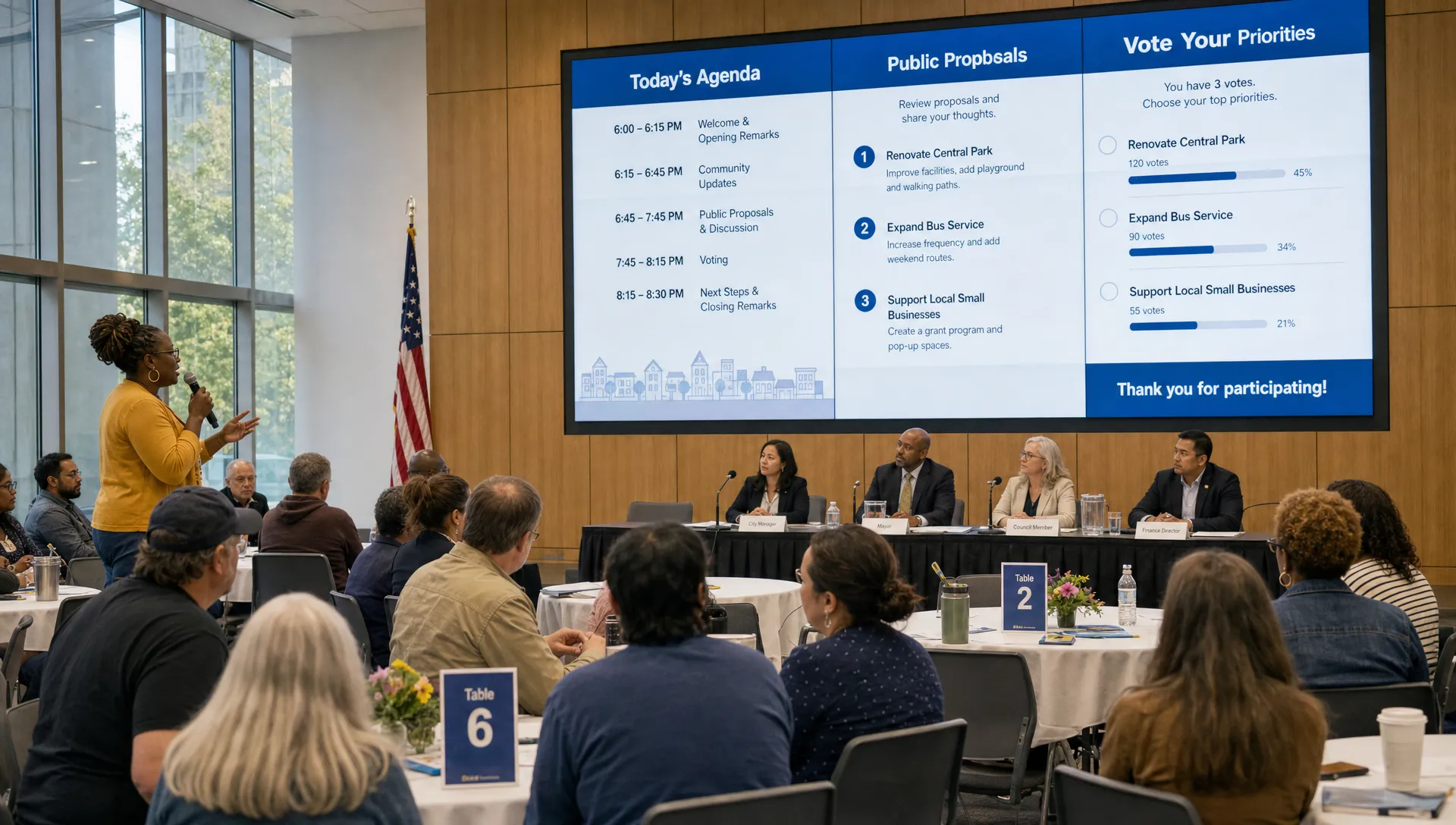
Public tech as democratic infrastructure
Private platforms are optimized for attention, growth, and monetization. Public technology must be optimized for legitimacy, inclusion, and accountability. That is a different design philosophy.
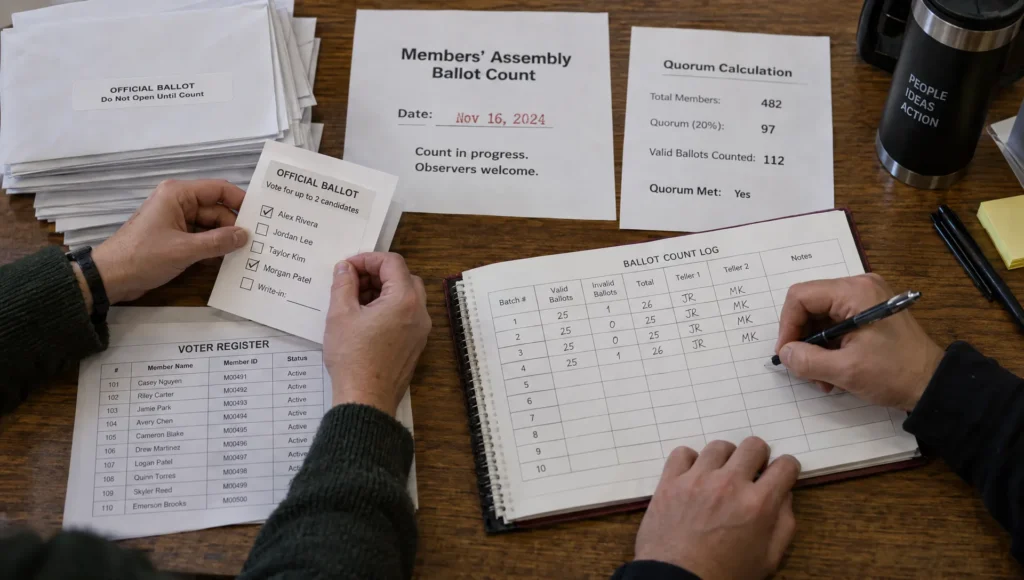
A serious digital social contract needs tools that make public life easier to inspect and influence. Legislative committees should be searchable. Public meetings should be archived with summaries, transcripts, and linked documents. Ballots for communities and municipalities should be verifiable. Draft laws should be traceable, versioned, and cross-referenced. Civic sentiment should be measured carefully, with safeguards against manipulation and privacy abuse.
This is the difference between posting a livestream and creating participation. A raw video recording of a committee is technically transparent, but it is not necessarily usable. Citizens need context, timestamps, topics, documents, positions, and ways to respond. That is why civic participation needs better public tech, not just more portals.
The JustSocial vision points toward tools such as public social platforms for civic action, parliament and committee registries, community voting systems, analytics for public opinion, and open repositories of state law. The exact products may evolve, but the principle is stable: public systems should make the work of government visible, understandable, and influenceable.
Done well, analytics can help representatives see what different publics think. But analytics must never become a substitute for judgment. Public opinion data can inform institutions, not enslave them. Representatives, courts, civil servants, and academic bodies still need independence, expertise, and responsibility.
A humane digital social contract starts with capacity
Civic participation depends on human capacity. People cannot deliberate well if they are exhausted, isolated, traumatized, economically desperate, or constantly manipulated by attention platforms. A citizen may be digitally connected and still civically absent.
That means the new social contract must care about education, mental health, time, family life, and community belonging. Burnout and stress are not only private problems. At scale, they weaken democracy by shrinking the number of people with enough energy to participate thoughtfully. Societies that value participation should normalize care, recovery, and support, including specialized models such as personalized recovery and support programs for people dealing with burnout, trauma, addiction, depression, or severe stress.
This may seem far from online voting or government transparency, but it is central. Democracy is not built by users. It is built by human beings with bodies, families, fears, attention spans, and emotional limits.
A digital social contract must therefore be anti-extractive. It should not harvest outrage or turn politics into an endless feed. It should help citizens engage in the right moment, with the right context, and with enough dignity to remain whole.
From the Polis to the Cosmopolis
The JustSocial manifesto returns to the Greek idea of the Polis because it represents a form of political life where citizenship was immediate, communal, and meaningful. The Polis was not just a government. It was the shared world in which people became fully civic beings.
The problem was scale. Ancient direct democracy could not include millions of people across modern nation-states. Representative democracy solved part of that problem, but it created distance. Citizens became represented more than present.
The digital age reopens the question of scale. If technology can help millions communicate, learn, deliberate, vote, and audit institutions, then a modern version of civic intimacy becomes possible. JustSocial calls this future the Cosmopolis: a larger political culture where citizens are no longer subjects of distant systems, but active members of public life.
This does not require abolishing representative democracy. It requires surrounding it with continuous democratic participation. Representatives should become better listeners and implementers. Academia can provide independent standards, evidence, and civic education. Public platforms can give the people a recognized institutional voice. Courts, legislatures, executives, citizens, and knowledge institutions can check one another more effectively.
The result is not mob rule. It is a more mature democracy where public opinion is visible, but not blindly obeyed; expertise is respected, but not isolated from citizens; and elected officials remain empowered, but no longer deaf between elections.
Guardrails for the new digital social contract
Digital democracy can fail if it is built carelessly. The same tools that make participation easier can also make manipulation easier. A credible social contract must admit these risks from the beginning.
| Risk | Democratic guardrail |
|---|---|
| Digital exclusion | Offline access points, civic education, multilingual design, accessibility standards, and public support |
| Manipulation | Independent audits, transparent moderation rules, bot detection, and open reporting of influence campaigns |
| Privacy abuse | Data minimization, anonymous aggregation, strong cybersecurity, and clear limits on political profiling |
| Participation fatigue | Digestible summaries, opt-in alerts, representative filters, and realistic participation cycles |
| Populist pressure | Institutional independence and a duty to explain decisions that diverge from majority sentiment |
| Performative consultation | Public response requirements showing how citizen input affected the decision or why it did not |
These guardrails are not technical details. They are constitutional principles translated into product design.
How a political movement can begin now
A political movement for the digital social contract does not need to wait for national reform. It can begin locally, experimentally, and transparently.
Communities can prototype civic forums around school policy, neighborhood budgets, public transit, housing, and local safety. Municipalities can publish committee materials in more usable formats. Schools can teach students how to deliberate, not only how to memorize. Journalists can connect policy coverage to public documents and voting records. Developers and designers can build civic tools with open standards. Citizens can demand procurement that treats democratic technology as essential infrastructure.
The movement should also recruit beyond politics. Product managers, teachers, social workers, cybersecurity experts, UX designers, lawyers, economists, and community organizers all have a role. A digital social contract is not only a political theory. It is a buildable public system.
This is especially important because trust will not be restored through messaging alone. Institutions regain trust when people can see the work, enter the process, and verify that participation matters.
Frequently Asked Questions
What is a digital social contract? A digital social contract is a renewed agreement between citizens and the state in which civic participation becomes continuous, accessible, secure, and institutionally meaningful through public technology and transparent processes.
How is civic participation different from voting? Voting is one form of participation, but civic participation also includes deliberation, petitions, public comments, community organizing, participatory budgeting, volunteering, policy feedback, and monitoring public decisions.
Does digital democracy replace elected representatives? Not necessarily. A strong digital democracy can make representatives more responsive by giving them better public input, clearer evidence of citizen priorities, and stronger accountability between elections.
Why are deliberative democracy and discursive democracy important? Deliberative democracy improves the quality of judgment by encouraging evidence-based discussion. Discursive democracy recognizes that public opinion forms through wider civic conversation, including media, schools, communities, and online spaces.
How can governments avoid excluding people from digital civic participation? Governments need offline alternatives, accessible design, public training, multilingual support, privacy protections, and policies that treat digital access as democratic infrastructure, not a luxury.
Building the contract we deserve
The new digital social contract will not be handed down by political elites. It has to be demanded, designed, tested, and protected by citizens.
JustSocial exists to advance that political movement: continuous direct democracy, public transparency, citizen empowerment, educational reform, and technology-driven participation. If this vision resonates, the next step is not only to agree with it. The next step is to help build the civic tools, public pressure, and democratic culture that can make it real.
Civic participation is not a feature of democracy. It is the living proof that democracy still belongs to the people.