When trust collapses, a political movement cannot behave as if the problem is awareness. People are already aware. They have watched campaigns overpromise, leaders disappear behind closed doors, institutions consult the public after decisions were effectively made, and movements ask for loyalty before offering accountability.
A trust-collapse environment changes the basic task of political movement building. The first job is no longer persuasion. It is proof.
That distinction matters. Persuasion asks people to believe. Proof allows people to verify. In a healthy public culture, both can coexist. After collapse, verification must come first.
The JustSocial manifesto names one of the core wounds clearly: citizens have been reduced to voters, taxpayers, and consumers, asked to participate every few years while daily public decisions move without them. A movement built after that kind of alienation has to offer more than a better platform, a sharper slogan, or a new leader. It has to offer a different civic relationship.
What collapsed trust actually means
Trust collapse is not the same as disagreement. Disagreement is normal in a democratic society. Trust collapse happens when people no longer believe the disagreement matters.
They suspect that consultations are symbolic, that party lists are closed circles, that money decides policy before voters enter the room, and that public language is designed to pacify rather than inform. They may still vote. They may still argue online. They may even attend protests. But beneath all of it is a deeper belief: “Nothing I say will be heard in a way that changes anything.”
That belief is not irrational. The OECD’s 2024 Survey on Drivers of Trust in Public Institutions found that, across surveyed countries, people were especially concerned about whether governments listen, use evidence, and act with integrity. In other words, citizens are not simply demanding nicer rhetoric. They are looking for signs that public systems can receive input, reason in public, and follow through.
For a political movement, that means every early choice is interpreted through suspicion. Who funds you? Who decides priorities? What happens to dissent? Are public votes binding, advisory, or theatrical? Do you publish what people said, or only what helps the campaign narrative?
A movement that ignores these questions will reproduce the very failure it claims to oppose.
Stop asking people to “trust the movement”
After trust has collapsed, “trust us” is almost always the wrong message. The better message is: “Do not trust us blindly. Check what we do.”
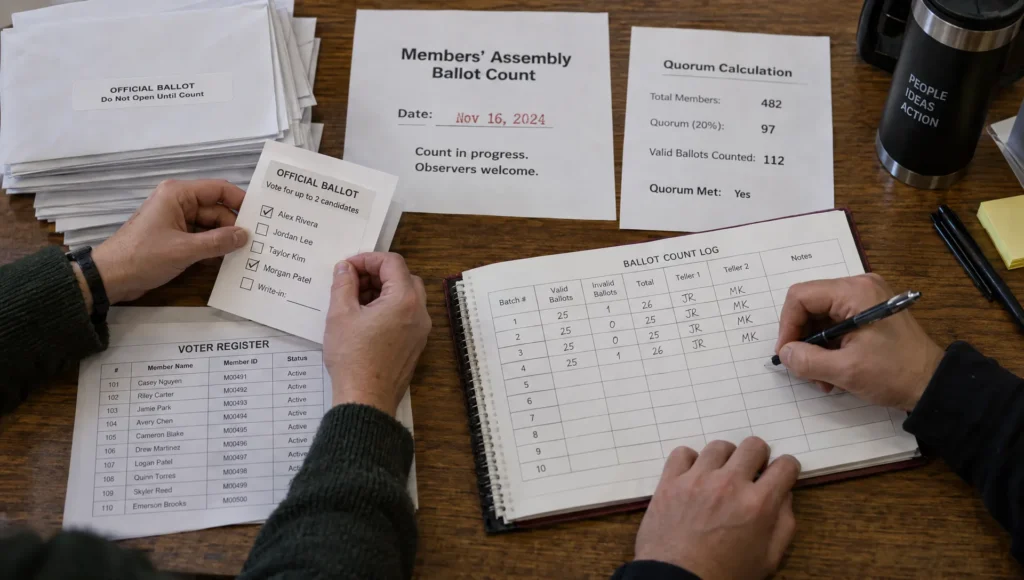
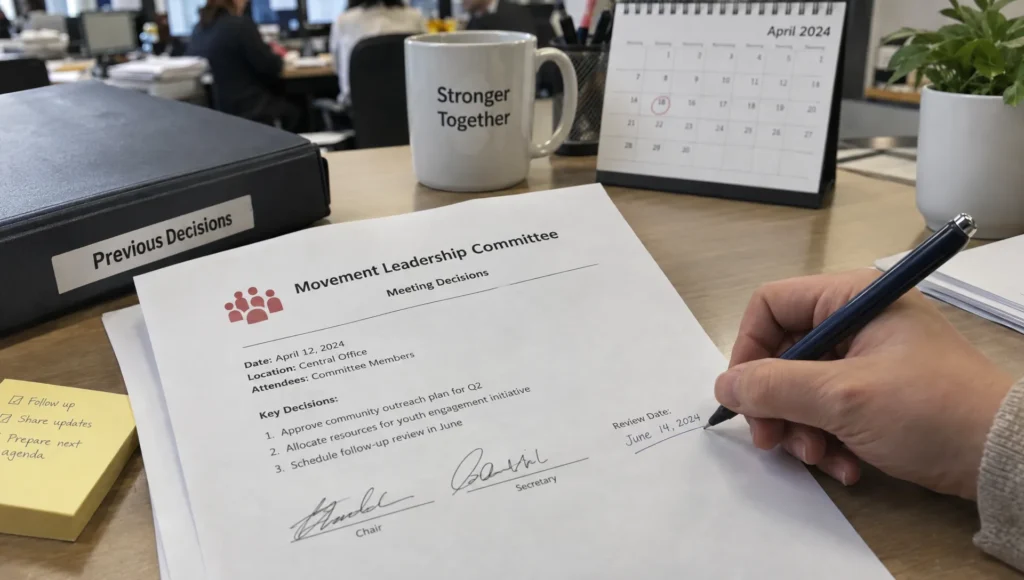
That requires public records of how a movement thinks and acts. Meeting summaries, decision notes, rejected alternatives, budgets, conflict-of-interest statements, timelines, and follow-up reports should not be treated as internal bureaucracy. They are democratic infrastructure.
This is why the idea of building trust with public receipts is so important. A receipt is not a press release. It is a short, auditable trail that lets citizens see the relationship between participation and action. It answers practical questions: What was proposed? Who gave input? What evidence was considered? What decision was made? What happens next?
When people can inspect the path from public input to public consequence, trust becomes less dependent on personality. That is the beginning of serious political movement building.
Civic participation is not supporter mobilization
Many movements confuse civic participation with mobilization. They are related, but they are not the same.
Mobilization asks people to show up for a predetermined goal. Civic participation gives people a meaningful role in shaping the goal, testing the assumptions behind it, and judging whether the result matched the promise.
| Question | Supporter mobilization | Civic participation |
|---|---|---|
| What is the citizen’s role? | Amplify, donate, vote, attend | Question, deliberate, propose, decide, review |
| Who defines the agenda? | Leadership or campaign staff | Leadership and citizens together |
| What happens to disagreement? | Often managed as a risk | Treated as democratic information |
| How is success measured? | Reach, turnout, donations | Influence, legitimacy, learning, follow-through |
| What does it build? | Campaign capacity | Democratic capacity |
A movement can mobilize thousands of people and still fail democratically if those people have no real influence. Conversely, a smaller movement can build durable legitimacy if participants can see their reasoning reflected in decisions, even when they do not get everything they want.
This is the practical heart of rebuilding public life. As JustSocial has argued in its work on how civic participation can rebuild trust, participation becomes meaningful when it has visibility, reasoning, consequence, and memory. People need to know not only that they were heard, but how their contribution entered the public record.
Deliberative democracy and discursive democracy must work together
A movement built after trust collapse needs two democratic muscles: deliberative democracy and discursive democracy.
Deliberative democracy creates structured spaces for people to weigh evidence, hear competing arguments, consider tradeoffs, and move toward reasoned judgment. It slows the public down enough to think. It is especially useful for complex issues like education reform, public budgets, constitutional design, and technology in government.
Discursive democracy is broader. It recognizes that democratic legitimacy is shaped through ongoing public conversation, not only formal meetings or ballots. People form views through articles, comments, local conversations, videos, community debates, and shared language. If a movement ignores that discursive layer, it will misunderstand what citizens actually fear, hope, and believe.
The JustSocial manifesto’s idea of a “people” branch of government can be read through this lens. Citizens should not be limited to one anonymous act every few years. They should be able to express opinions continuously, identify voluntarily and safely across relevant civic categories, and contribute to public understanding in ways that institutions must measure and answer. But those inputs should not become careless mob rule. Public opinion can inform institutions without replacing judgment, rights, minority protections, or evidence.
That is the difference between serious digital democracy and a glorified comment section. The goal is not to make every emotion instantly binding. The goal is to make public reasoning visible, measurable, and consequential.
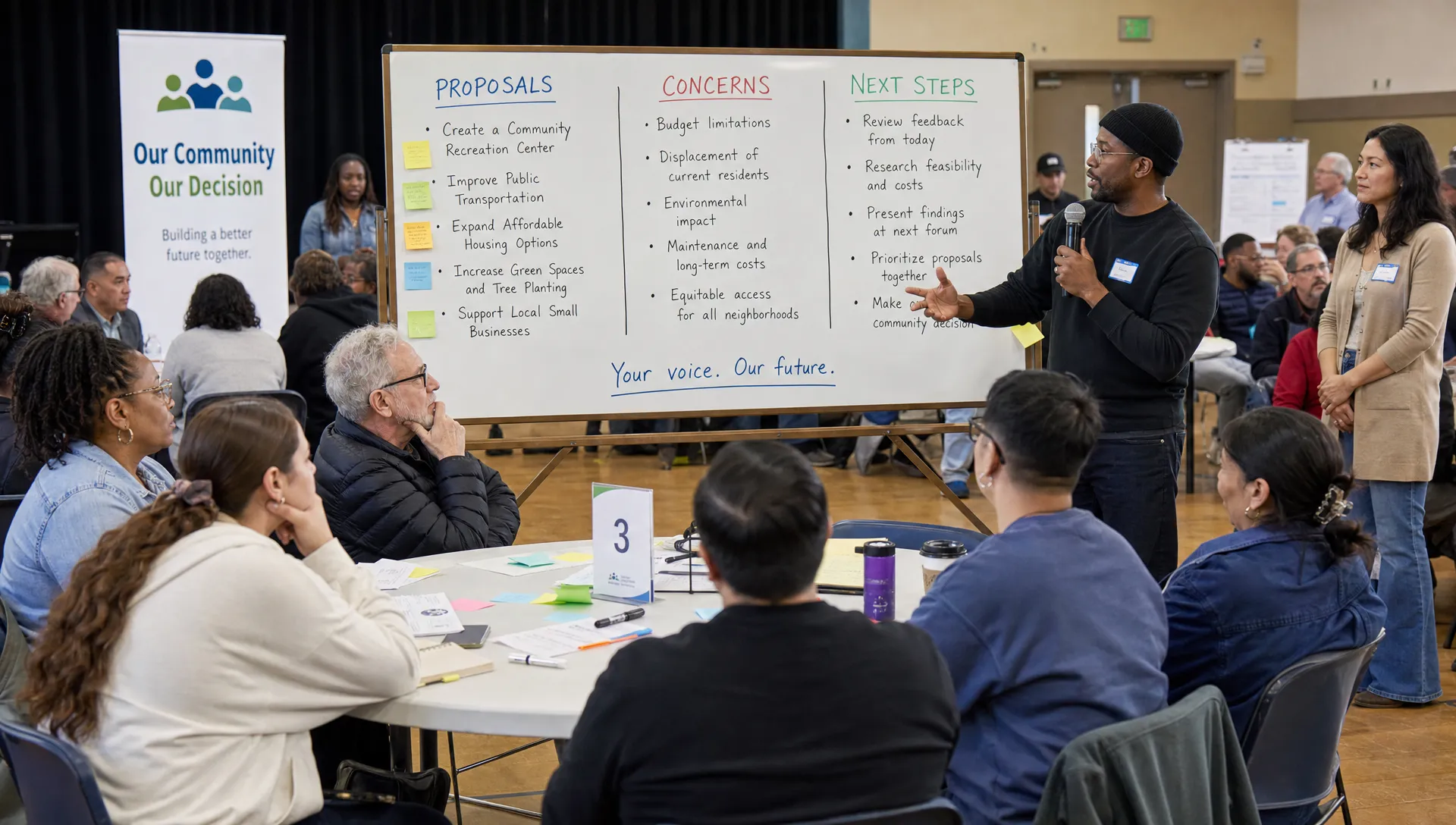
The first test is whether disagreement can stay inside the room
A political movement after trust collapse will attract angry people. That anger may be justified. Many citizens have been ignored, patronized, or used as campaign material. But anger alone cannot govern.
The movement’s first test is whether disagreement can remain inside the democratic process instead of being pushed out into factional warfare.
That requires clear norms. Criticism must be allowed. Bad-faith manipulation must be named. Minority views must be recorded. Evidence must be separated from opinion. Moderation rules must be public. Leaders must be able to say, “We disagree with this argument, but we will not erase it.”
This is where discursive democracy becomes practical. The public conversation must be broad enough to include friction, but structured enough to prevent harassment, disinformation, and domination by the loudest participants.
A movement that cannot host internal disagreement should not be trusted with public power.
Build infrastructure before you ask for scale
Many movements want growth first and governance later. That is backward after trust has collapsed.
If a movement scales before it defines participation rules, funding transparency, decision records, data protection, and conflict resolution, it will eventually be governed by improvisation. Improvisation favors insiders. Insiders create suspicion. Suspicion restarts the collapse.
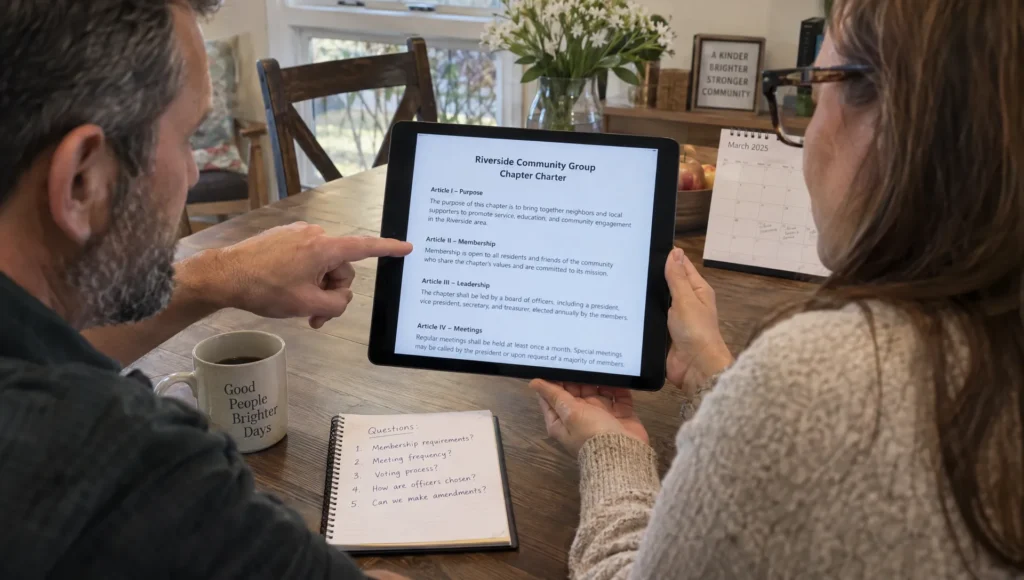
A more durable path is to build political movement infrastructure before scaling. Infrastructure does not have to be complicated at the beginning. It can start with a public participation promise, a simple decision log, a transparent budget, a member feedback process, and a clear statement of what citizens can and cannot decide at each stage.
The technology layer deserves special care. Movements that use civic platforms, databases, analytics, or voting tools must treat procurement as a governance issue, not an administrative detail. If a civic organization cannot explain what tools it uses, what data they collect, who has access, and how much they cost, it is asking the public to trust a black box.
This is not unique to politics. Organizations in other sectors increasingly audit their software contracts, licenses, and renewals to regain control over cost and accountability. The same discipline appears in commercial settings where teams rely on specialist Salesforce contract and SKU review teams before committing to major software spend. Political and civic organizations need an equivalent seriousness around their own technology choices, because civic tech does not only affect budgets. It affects legitimacy.
A recovery architecture for movements after collapse
A trust-rebuilding movement needs a visible operating model. The following structure is simple enough to start with, but strong enough to prevent participation from becoming theater.
| Layer | Public promise | Practical mechanism |
|---|---|---|
| Listening | We will hear before we decide | Open forums, surveys, local assemblies, moderated digital channels |
| Deliberation | We will reason in public | Evidence briefs, citizen panels, expert responses, recorded tradeoffs |
| Decision | We will show how choices are made | Decision memos, vote records, leadership statements, dissent notes |
| Implementation | We will track what happens next | Timelines, responsible owners, progress updates, budget reports |
| Review | We will admit what worked and what failed | Post-decision audits, public corrections, revised commitments |
The review layer is often the most neglected, but it may be the most important. Trust does not require perfection. It requires honest correction. A movement that can publicly say, “This decision failed, here is why, here is what we are changing,” will be more credible than one that hides every mistake behind morale management.
A 90-day plan for political movement building after trust collapse
The first 90 days should not be used to manufacture the appearance of momentum. They should be used to prove that the movement can operate differently.
| Timeframe | Main goal | What to publish |
|---|---|---|
| Days 1 to 15 | Establish the trust baseline | Founding commitments, funding sources, leadership roles, known limitations |
| Days 16 to 30 | Open structured listening | Public questions, participation channels, moderation rules, summary of concerns |
| Days 31 to 60 | Begin deliberation | Evidence briefs, citizen arguments, expert input, unresolved disagreements |
| Days 61 to 75 | Make first decisions | Decision memos, reasons, dissenting views, implementation owners |
| Days 76 to 90 | Close the loop | Progress report, missed commitments, next participation cycle |
The key is not speed. The key is rhythm. Citizens must learn that participation is not a one-time campaign event. It is a recurring civic process.
This connects directly to the manifesto’s call for continuous direct democratic life. The point is not to replace every institution overnight. The point is to create a habit of public input, public reasoning, and public response until citizens no longer experience the state as something remote and abstract.
From Polis nostalgia to Cosmopolis infrastructure
The manifesto draws on the Greek Polis through Charles Wayper’s account of a political community where civic life felt immediate. The Polis was not merely a state. It was a lived public world in which citizens could feel the connection between themselves and the community.
Modern nations cannot simply recreate the ancient city-state. They are larger, more diverse, more complex, and bound by rights that must protect individuals and minorities from majoritarian abuse. But the longing behind the Polis still matters. People want public life to feel close enough to touch.
That is where the idea of Cosmopolis becomes useful. A modern democratic culture can use technology, education, local communities, and transparent institutions to restore some of that lost intimacy at scale. Not by pretending everyone agrees. Not by flattening politics into instant polls. But by making participation continuous, structured, and visible.
Education is part of this too. A society cannot ask citizens to deliberate well while schooling them for passivity. The manifesto’s critique of industrial-era education belongs inside the trust conversation. If people are trained for years to receive decisions from above, then suddenly blamed for not participating wisely, the system is evading responsibility. Civic capacity has to be taught, practiced, and respected.
What movements must avoid
After trust collapse, certain habits are especially destructive.
- Do not run symbolic votes without explaining whether they are binding, advisory, or exploratory.
- Do not ask for money before explaining governance, spending priorities, and conflicts of interest.
- Do not treat critics as enemies simply because they expose weak points.
- Do not launch digital participation tools without privacy rules and public moderation standards.
- Do not confuse virality with legitimacy.
- Do not hide tradeoffs behind moral slogans.
The danger is not only corruption. It is theatrical democracy, where people are invited to participate in ways that make them feel included while power remains untouched.
A serious political movement should be willing to limit its own power before asking for public power. That is the democratic test.
Frequently Asked Questions
Can a political movement rebuild trust after a major failure? Yes, but only if it stops relying on messaging alone. It must publish records, admit limits, create real participation channels, and show how public input affects decisions.
Is deliberative democracy better than direct voting? They serve different purposes. Direct voting can capture preferences, while deliberative democracy helps citizens examine evidence, tradeoffs, and consequences before preferences harden into decisions.
What is discursive democracy in practical terms? Discursive democracy treats public conversation as part of democratic legitimacy. It includes the ongoing debates, stories, arguments, and shared meanings that shape how citizens understand public choices.
How can civic participation avoid becoming performative? Participation becomes real when citizens know the rules, see the record, understand how decisions are made, and receive follow-up after action is taken.
What should a movement build first: audience or infrastructure? After trust has collapsed, infrastructure should come first. Without transparent rules, records, and accountability, audience growth can magnify distrust rather than solve it.
The invitation after collapse
A political movement built after trust has collapsed has to be humble enough to be inspected and ambitious enough to change the social contract.
That is the work JustSocial is trying to advance: a future where citizens are not reduced to occasional voters, but become continuous participants in public life. If that vision speaks to you, start by reading the JustSocial manifesto, then consider how your skills, community, or local initiative can help turn civic participation into democratic power.