
A political movement can survive a lost vote more easily than a process its members believe was rigged. Disagreements over priorities, alliances, spending or tactics become organizational splits when people lose confidence that they can challenge a decision without losing their place in the group.
Conflict resolution should therefore protect both cooperation and dissent. The goal is not permanent harmony or compulsory consensus. It is a repeatable process that lets members clarify disagreements, reach legitimate decisions and continue working together where their commitments still overlap.
That requires more than asking everyone to be respectful. It requires fair procedures, limits on power and a credible route for raising concerns.
What political movement conflict resolution should protect
Three things deserve protection: members’ safety, their ability to disagree and the movement’s capacity to act. Neglect any one of them and conflict becomes harder to resolve.
A group that prizes unity above safety can shelter abusive behavior. A group that treats dissent as disloyalty can become intellectually stagnant. A group that requires unanimous agreement on every operational choice can exhaust its volunteers without accomplishing much.
Yuval D. Vered’s JustSocial manifesto argues for citizens to be heard continuously rather than only at election time. It also proposes institutions that take public opinion seriously while retaining independent responsibilities. Applied inside a movement, that means members need continuing opportunities to influence decisions, but participation does not make every preference binding.
Unity should mean commitment to a fair process and a shared purpose, not agreement on every issue.
Diagnose the dispute before calling a vote
A heated argument may contain several different problems. Members might disagree about evidence, campaign strategy or acceptable behavior. These require different responses.
| Type of disagreement | Example | Appropriate starting point |
|---|---|---|
| Factual | Members dispute a campaign’s actual costs | Check records and identify missing evidence |
| Strategic | Members favor different campaign priorities | Compare options against agreed goals and constraints |
| Foundational | Members disagree about a core commitment | Discuss whether the charter permits both positions |
| Conduct or safety | A member alleges intimidation or retaliation | Use a separate, impartial complaints process |
This distinction prevents two common mistakes: treating political disagreement as misconduct and treating misconduct as merely another political opinion.
Before arranging a meeting, ask participants to describe the disputed decision, its consequences and the resolution they are seeking. Private conversations can reveal whether the visible argument is also about exclusion, unpaid work or unequal access to information.
For example, an argument about a campaign launch might actually concern a coordinator repeatedly committing volunteers without consulting them. Choosing a launch date will not repair that underlying problem.
Do not require someone alleging harassment to negotiate directly with the person they accuse. Mediation is not a substitute for appropriate safeguarding, investigation or legal obligations.
A repeatable process for resolving disagreements
The following process is a proposed organizational practice, not a claim about systems JustSocial already operates. A political movement can adapt it to its size, governing rules and available resources.
Contain escalation without silencing members
Start by reducing immediate harm. Pause personal attacks, preserve relevant records and move sensitive allegations out of public discussion channels.
A temporary pause on the disputed action may help when a decision would be difficult to reverse. It should have a stated reason, an owner and a review date. Otherwise, the pause can become a way for one faction to block action indefinitely.
Moderators should distinguish criticism from intimidation. Saying “this proposal contradicts our agreed priorities” is not equivalent to threatening a volunteer or publishing their private information.
Members should still be able to criticize leadership and explain their concerns. Restricting abusive behavior must not become a blanket prohibition on discussing the dispute.
Agree on the question and a neutral facilitator
Write the issue as a question people can actually resolve. “Why does leadership ignore us?” expresses frustration, but it does not define a decision. “Must campaign commitments above an agreed spending limit receive member approval?” does.
Ask the participants to confirm that the question captures their concern. Record any disagreement about its scope before proceeding.
The facilitator should disclose relevant relationships and interests. Someone whose own conduct is under review should not chair the discussion or control the evidence. In a small group, a mutually accepted person from outside the immediate dispute may help, provided confidentiality and responsibilities are clear.
This is where leadership without cults of personality becomes practical: the founder’s judgment must be open to challenge through the same procedures that apply to everyone else.
Separate evidence, interests and proposals
Give each side an equal opportunity to explain its position using a shared structure: what happened, which evidence supports the account, what matters to the participants and what they propose doing next.
These categories should remain distinct. A documented expenditure is evidence. Fear that the movement is abandoning its purpose is an interpretation or concern. A requirement for spending approval is a proposed remedy.
Ask participants to summarize an opposing position accurately before criticizing it. They do not have to endorse it. They do need to demonstrate that they understand what the other members are trying to protect.
Discursive democracy provides a useful principle here: arguments should be answerable through reasons, not settled by status, popularity or accusations of disloyalty. Publish the same non-sensitive evidence for all participants and clearly label unresolved claims.
Deliberate before deciding
Deliberative democracy asks participants to consider information, weigh trade-offs and remain open to revising their initial preferences. That is different from collecting reactions immediately after an argument erupts.
The OECD’s report on innovative citizen participation identifies principles including transparency, inclusion and accountability for deliberative processes. An internal movement meeting is not a representative citizens’ assembly, but these principles offer useful standards for its design.
Provide a concise briefing, accessible participation options and enough time to consider alternatives. Include affected volunteers who may not attend the loudest meetings.
Explore reversible options where possible. Two rival campaign proposals might become a limited pilot, evaluated against criteria agreed in advance. However, a pilot should not be used to postpone a genuine dispute about foundational values.
Decide under rules members already know
Before voting or seeking agreement, identify who has authority, who can participate and which decision rule applies. Do not change the threshold because one side appears likely to lose.
Routine choices may use majority voting. Foundational changes may require a higher threshold under the movement’s charter. Consensus can work in some settings, but requiring it for every decision can give persistent objectors an informal veto.
The key is to distinguish consultation from decision-making. An open discussion can inform a decision without transferring authority to whoever attends it. JustSocial’s discussion of who decides what within a political movement provides a useful companion to this conflict-resolution process.
If no existing rule covers the dispute, agree on an interim procedure openly. Where possible, settle that procedure before judging competing proposals on their merits.
Record the outcome and protect dissent
A resolution needs more than an announcement that everyone had a productive conversation. Record the decision, its reasons, responsibilities and review conditions.
A short agreement can include:
- Decision: What will happen and what remains unresolved.
- Responsibilities: Who will carry out the work and what resources are authorized.
- Dissent: A concise statement of significant objections, approved by those raising them.
- Review: When the outcome will be assessed and what could justify reconsideration.
- Protection: How concerns about retaliation or procedural breaches can be raised.
Members who lose a strategic vote should not have to pretend they supported it. They can accept the decision’s legitimacy, decline a particular volunteer assignment and continue contributing elsewhere, subject to clearly stated role obligations.
Publish organizational decisions and reasoning where appropriate. Keep personal allegations, sensitive testimony and private mediation details restricted to those with a legitimate need to know.
Worked example: disagreement over a healthcare campaign
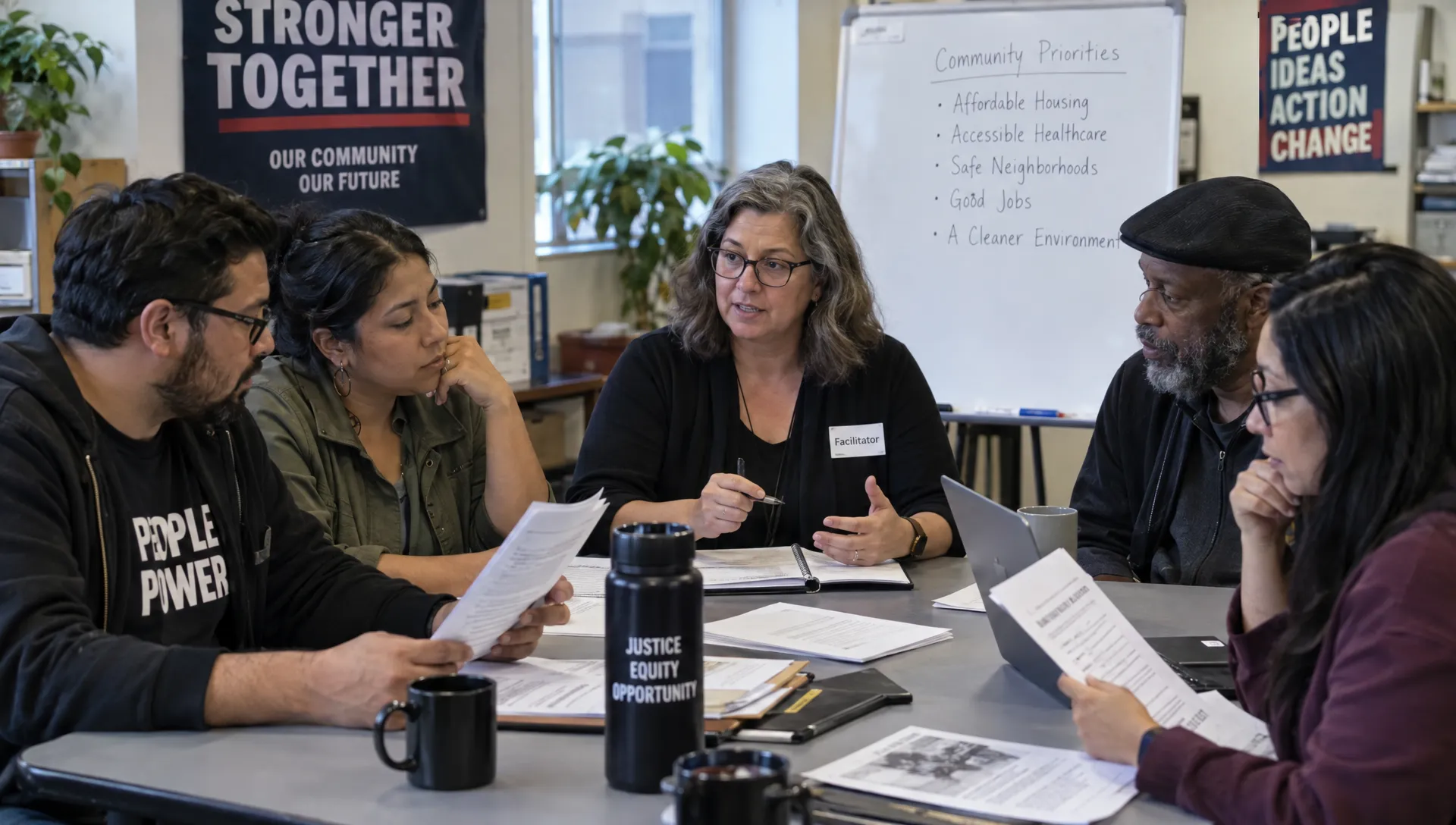
Imagine a local political movement campaigning for better access to dental care. One group wants to prioritize children’s care; another argues that adults facing high out-of-pocket costs are being overlooked. Accusations of indifference quickly replace discussion of campaign scope.
The facilitator first identifies the shared commitment: improving access. The disagreement concerns priorities, evidence and limited capacity, not necessarily incompatible values.
For a Gold Coast campaign, provider information such as The Dental Studio’s dental care information could help members identify questions about payment options and eligible children’s care. Fees, eligibility and availability should then be verified with providers. A clinic’s published information is a research input, not evidence of community-wide access or a reason to endorse that clinic.
Members also seek information about public services and residents’ experiences, without requesting unnecessary personal health details. They distinguish existing assistance from unmet needs.
The group then compares campaign options against agreed criteria: likely benefit, neglected needs, available volunteer capacity and the possibility of achieving a specific policy change. It might choose one initial priority while commissioning further research on the other.
The minority’s concern remains in the decision record, with a review date. This does not guarantee satisfaction, but it gives members a reason to stay engaged: their argument was considered, the choice was explained and another opportunity to influence it remains available.
Prevent the same conflict from returning
After implementation, review both the outcome and the process. Did the decision work? Could people participate without intimidation? Did everyone receive the relevant information? Were the promised safeguards actually used?
Look for patterns rather than treating each argument as an isolated personality clash. Recurring disputes about spending may indicate unclear authorization. Repeated complaints about exclusion may reflect inaccessible meetings or information held by a small inner circle.
Continuous civic participation, a central concern of the JustSocial manifesto, requires more than leaving a comment channel open. People need to see how their contributions affect decisions and how they can raise unresolved concerns again.
For a political movement, that can mean scheduled reviews, brief decision logs and accessible ways to submit proposals. Digital tools can support these practices, but they cannot repair unfair rules by themselves.
Avoid presenting participation totals as complete measures of member opinion. Silence may reflect agreement, exhaustion, fear or lack of access. Ask about barriers instead of assuming what non-participation means.
When keeping everyone together is the wrong goal
“Without splits” should be an objective, not an instruction to retain every member at any cost.
Some disagreements reveal incompatible commitments. Others involve repeated harassment, threats, misuse of resources or refusal to respect legitimate procedures. Preserving unity in those circumstances may harm members and weaken the movement’s purpose.
Use fair complaints and disciplinary processes, including appropriate opportunities to respond and routes for review. Do not force reconciliation or treat forgiveness as a condition of participation.
Where separation is necessary, agree on practical boundaries: use of the organization’s name, responsibilities for shared resources, access to member data and communication about the departure. Follow applicable rules and legal obligations.
A respectful departure can be better than a prolonged struggle for control. Success means avoiding preventable splits while allowing people to leave safely when cooperation is no longer workable.
Frequently asked questions
Does every conflict need a vote? No. Factual disputes need evidence checking, interpersonal disagreements may benefit from voluntary mediation and conduct allegations need an appropriate complaints process. Voting is useful for collective choices, not for deciding whether an allegation is true.
What if members reject the outcome? Determine whether they dispute the decision’s merits or the procedure’s fairness. Procedural failures may justify review. Disagreement with a properly reached result should remain expressible without automatically reopening the decision.
Can online discussion resolve movement conflicts? It can support preparation, participation and recordkeeping. Sensitive cases require careful access controls, and members need alternatives if digital discussion creates accessibility or safety barriers.
What if the founder is part of the dispute? The founder should not control the process, adjudicate allegations about themselves or select a facilitator unilaterally. Use an impartial process with disclosed interests and a clear review route.
Put the process in place before the next dispute
Begin with one practical commitment: agree on how members can raise a disagreement, who will facilitate it and how outcomes can be reviewed. Test the procedure on a manageable issue before a major crisis arrives.
For those organizing around JustSocial’s vision, treating members as continuing participants starts inside the movement itself. Make room for challenge, explain decisions and preserve the right to disagree without making departure the only way to be heard.





