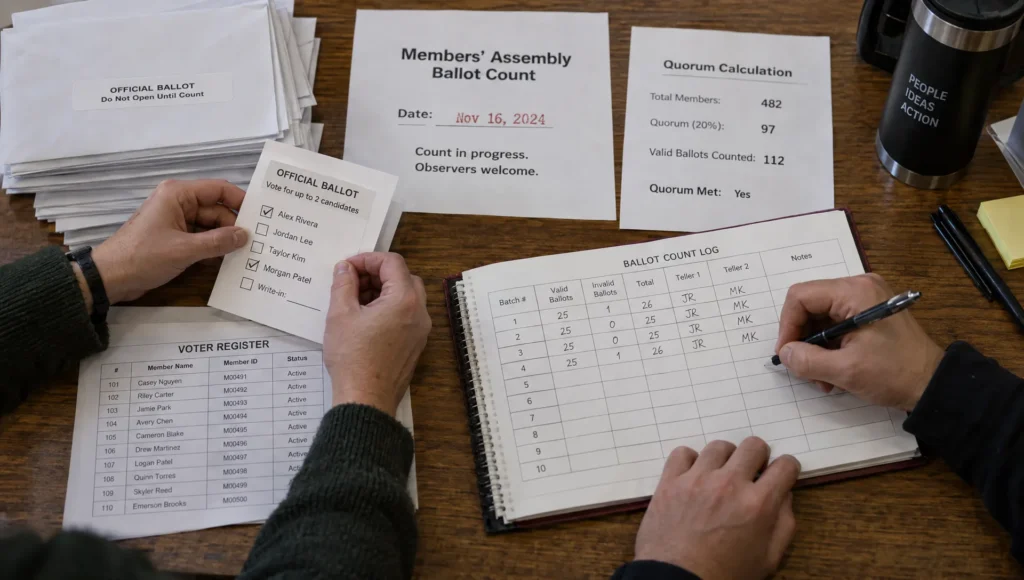
A resident who spends an evening ranking neighborhood street projects is doing more than offering an opinion. They are helping decide how public money is used. That distinction matters. The strongest citizen participation in government examples give people a defined role, clear information, and visible evidence that their contribution changed something.
For too long, civic participation has been treated as an event: vote every few years, attend a meeting if you can, submit a comment that may never receive a response. Elections remain essential, but they cannot carry the entire democratic relationship. Communities need meaningful ways to shape public decisions between election days.
That does not mean every policy should become a public referendum. Government has legal duties, budget limits, and a responsibility to protect minority rights. It does mean that when a decision affects a community, residents should be able to understand it, deliberate on it, and influence it in ways officials are required to take seriously.
Citizen Participation in Government Examples in Practice
The examples below are not identical. Some give residents direct decision-making power; others improve representation, oversight, or public problem-solving. What they share is a move away from participation as performance and toward participation as civic infrastructure.
Participatory budgeting
Participatory budgeting lets community members help decide how a defined portion of public funds will be spent. Residents may propose ideas, work with staff to determine feasibility and cost, then vote on the final projects. The results can be concrete: safer crossings, park improvements, youth programs, housing repairs, or accessibility upgrades.
New York City has used participatory budgeting in City Council districts, allowing residents to vote on local capital projects. Boston’s Youth Lead the Change program has given young people a role in directing city funds toward priorities they identify. These programs matter because they turn a budget – often seen as a technical document – into a public expression of values.
The trade-off is scope. If the available budget is too small or the winning projects take years to complete, residents can reasonably wonder whether the process was worth their time. Governments should state the amount available, the rules for eligibility, the timeline for delivery, and the status of every winning project. A vote without follow-through weakens trust rather than building it.
Citizens’ assemblies and deliberative panels
A citizens’ assembly brings together a broadly representative group of residents, often selected by civic lottery, to learn about a difficult issue, hear from varied experts, deliberate with one another, and develop recommendations. Selection is designed to reflect the wider community across age, geography, race, income, and other relevant factors.
This model is especially useful when an issue is complex or politically stuck. A well-run assembly gives people time that a public hearing rarely provides. Participants can ask questions, examine trade-offs, and move beyond the loudest voices in the room. Their recommendations do not automatically replace elected leadership, but they can give officials a clearer and more legitimate basis for action.
Oregon’s Citizens’ Initiative Review offers a related example. A randomly selected panel studies a ballot measure and produces a statement for voters describing key findings and arguments. The panel does not decide the election. It helps the public decide with more grounded information.
Assemblies require care. Recruitment, compensation, accessibility, independent facilitation, and balanced evidence are not optional details. Without them, a process can reproduce the same exclusions it claims to address. Officials must also commit in advance to a public response, explaining which recommendations they will adopt, revise, or decline and why.
Independent citizen redistricting
Redistricting determines how communities are grouped for representation. When partisan officials draw their own political boundaries, public confidence can suffer. California’s Citizens Redistricting Commission created a different approach by assigning district maps to an independent body of citizens selected through a structured process rather than to the legislature alone.
The commission model is a powerful example because it gives citizens responsibility over rules that shape political power itself. Public testimony remains part of the process, but the central safeguard is independence. Commissioners must consider legal requirements, communities of interest, and transparent mapmaking criteria.
This approach is not a cure-all. Redistricting law is complicated, and no map can satisfy every competing preference. Still, putting clear rules, public records, and citizen stewardship at the center makes it harder for self-interest to hide behind technical expertise.
Community co-design and ongoing advisory bodies
Not every decision requires a citywide vote or a months-long assembly. Sometimes participation works best when residents and public staff design a service together. A transit agency might work with riders to redesign bus stops. A housing department might partner with tenants to improve inspections. A public health office might ask trusted neighborhood leaders how to make services easier to access.
The key is shared problem definition. Too often, an agency asks the public to choose among options after the most important choices have already been made. Co-design begins earlier. It asks residents what the problem looks like in daily life, what barriers are being missed, and what success should mean.
Standing advisory boards can support this work when they are representative, resourced, and connected to real decisions. A board that meets regularly but has no access to decision-makers, data, or feedback becomes another dead end. Participation should reduce the distance between lived experience and public action.
What Makes Public Participation Worth People’s Time
The difference between meaningful participation and a symbolic consultation is usually visible before the first meeting begins. People need to know what is actually open for input, who will make the final decision, and how their role will affect the outcome. Vague invitations create vague accountability.
Good processes also remove predictable barriers. Meetings held only during work hours exclude many workers and caregivers. Technical documents written for specialists exclude everyone else. Digital tools can expand access, but they should not become the only door in. Phone access, multilingual materials, childcare, transit support, paper options, and community-based outreach are all part of democratic access.
Transparency must continue after participation ends. Governments should publish the ideas received, the criteria used to evaluate them, the decision made, and progress updates. When an idea cannot be adopted, an honest explanation respects the people who contributed it. Silence teaches residents that participation is theater.
There is also a question of power. Surveys are useful for discovering patterns, but they are not the same as shared decision-making. Public comment can reveal harm, but it does not guarantee a response. A healthy participation system uses different methods for different moments: listening when government needs to understand, deliberation when trade-offs need public judgment, and voting or delegated authority when people should decide.
Digital Tools Should Extend Democracy, Not Shrink It
Digital participation can make civic life more continuous. A well-designed platform can show residents upcoming decisions, explain proposals in plain language, collect ideas, host structured discussion, display budget data, and report results in one accessible place. It can help someone participate without taking a day off work or knowing the right person at City Hall.
But technology does not make a process democratic on its own. An online poll with no verified process or public commitment can be less meaningful than a well-facilitated neighborhood meeting. Digital systems need privacy protections, accessible design, moderation, auditability, and clear rules about how input is used. They should connect online engagement with in-person relationships, not replace them.
This is the civic infrastructure JustSocial seeks to advance: practical pathways that help citizens remain connected to public decision-making, not just to political campaigns. The goal is not more clicks. It is more accountable, inclusive, and ongoing public power.
Communities do not need to wait for a perfect national reform to begin. Ask a local agency what decision residents can help shape this year. Ask whether the process includes a public response and a way to track implementation. Then invite the people most affected to help set the terms. Democracy grows stronger when participation becomes a normal part of how we govern together.