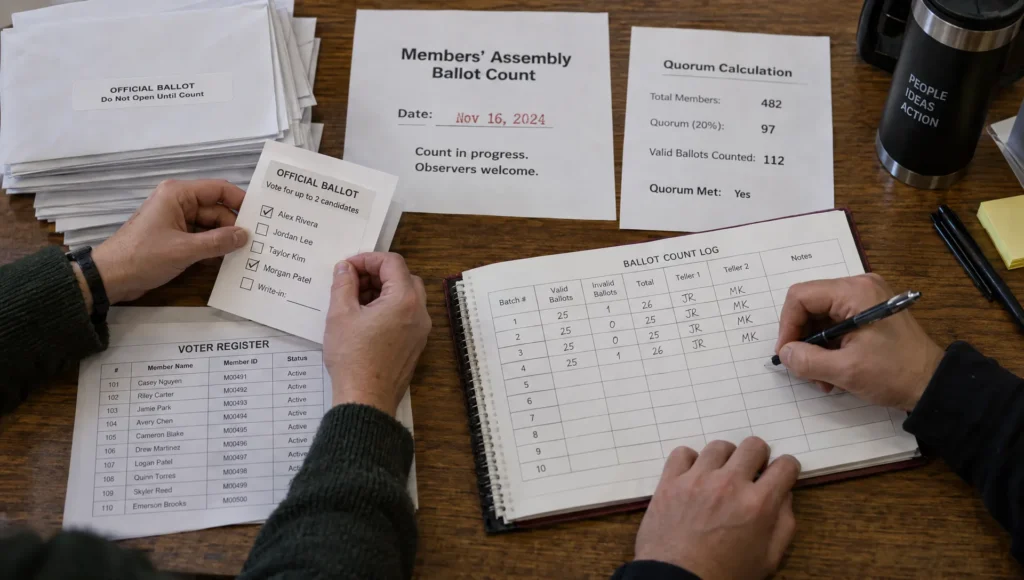
Democracy does not fail only when people stop voting. It also fails when public conversation becomes so hostile, shallow, or manipulated that citizens can no longer hear one another, learn from one another, or influence decisions together.
That is why discursive democracy needs better moderation.
Discursive democracy is built on a simple but demanding idea: political legitimacy depends not only on ballots, institutions, and laws, but also on the quality of the public discourse that shapes them. People should be able to argue, question, challenge, persuade, and revise their views in public. But if the spaces where they do this are dominated by abuse, misinformation, tribal signaling, or algorithmic outrage, participation becomes performative rather than democratic.
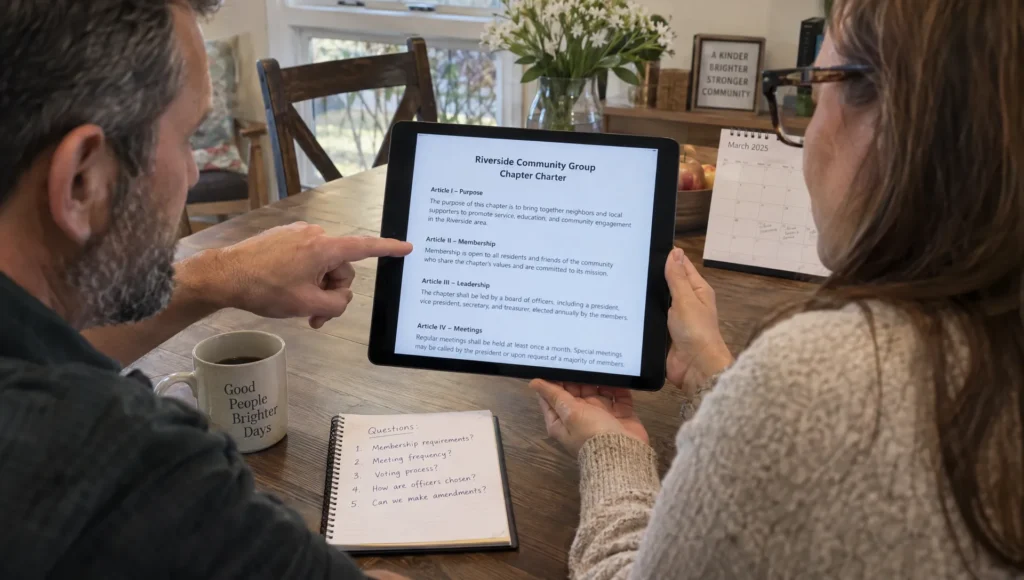
For JustSocial, this is not a side issue. The movement's vision of continuous direct democracy depends on citizens being heard regularly, not merely counted every few years. As described in the JustSocial manifesto, technology can help turn the public from passive voters and consumers into an active civic branch. But that transformation requires public digital spaces that are trusted, structured, and fair. Moderation is one of the conditions that makes those spaces possible.
Discursive democracy is more than open speech
Open speech matters. Without it, democracy becomes managed consent. But discursive democracy asks for something more specific than a loud marketplace of opinions. It asks whether public debate helps citizens understand the issue, test claims, expose tradeoffs, and move toward better decisions.
A healthy discursive space should allow deep disagreement. It should not flatten politics into politeness or punish people for unpopular views. Yet it must also protect the basic conditions of participation. If a citizen enters a public forum and is met with harassment, coordinated mockery, threats, or bad-faith flooding, their formal right to speak becomes almost meaningless.
This is where many political platforms get stuck. They treat moderation as either censorship or cleanup. In a democratic context, moderation should be neither. It should be a public process that defines how disagreement can remain productive without becoming coercive.
A comment that says a tax proposal will hurt working families should be protected, even if it is angry. A comment that shares evidence, asks a hard question, or criticizes a public official should be welcomed. But a comment that threatens, doxxes, dehumanizes, or floods the discussion with fabricated claims does not expand democracy. It narrows it by driving others out.
The moderation problem democracy cannot outsource
Most online political discussion currently happens on platforms built for engagement. Their business logic often rewards speed, emotion, and repetition. That does not mean every platform is malicious, but it does mean civic conversation is often shaped by incentives that are not civic.
A democratic society cannot simply outsource its public square to systems optimized for attention. If the future includes online voting platforms, civic engagement tools, participatory budgeting, public consultation portals, and government transparency dashboards, then moderation becomes part of democratic infrastructure.
The problem is not that citizens are too emotional or too divided to participate. The problem is that many spaces are designed in ways that amplify the worst incentives. When every issue is reduced to a viral fight, people learn to perform for their side instead of reasoning with the public.
Better moderation must therefore address three failures at once: abusive behavior, low-quality information, and institutional irrelevance. A space can be civil but useless if public officials ignore it. It can be active but dangerous if abuse is tolerated. It can be evidence-rich but exclusionary if only experts feel safe participating.
This is why moderation should be understood as a procedural question, not a viewpoint question. The goal is not to decide which ideology may speak. The goal is to define the rules that let many ideologies confront one another without destroying the forum. JustSocial has explored this distinction in more detail in its piece on discursive democracy and process boundaries.
Better moderation is civic infrastructure
In ordinary content moderation, success is often measured by what gets removed. In discursive democracy, success should also be measured by what becomes possible.
Can a minority group speak without being targeted? Can a public servant answer questions without being buried in insults? Can a citizen challenge a policy without being dismissed as disloyal? Can a community identify the best arguments on multiple sides of an issue? Can decision-makers understand where public opinion is divided and why?
These are civic outcomes. They require moderation systems that are transparent enough to be trusted and flexible enough to handle context.
A democratic moderation model should protect at least four conditions:
- Safety: Citizens should not face threats, doxxing, or targeted harassment for participating.
- Relevance: Discussions should stay connected to the public issue, decision, or institution at hand.
- Reason-giving: Participants should be encouraged to explain claims, not merely signal loyalty.
- Accountability: Moderation decisions should be explainable, appealable, and auditable.
This does not make discussion sterile. On the contrary, it makes stronger disagreement possible. People are more willing to engage in hard debate when they know the forum has enforceable boundaries.
What better moderation should do differently
The next generation of democracy tools should not copy the moderation habits of consumer social media. Civic platforms need a different design philosophy.
The table below shows the difference between reactive platform moderation and moderation designed for discursive democracy.
| Moderation issue | Typical platform approach | Discursive democracy approach |
|---|---|---|
| Abuse | Remove after reports accumulate | Prevent intimidation through clear rules, rapid review, and repeat-offender limits |
| Misinformation | Delete or label selected posts | Ask for evidence, mark uncertainty, and separate claims from opinions |
| Low-quality debate | Let engagement decide visibility | Promote reasoned, relevant, and constructive contributions |
| Bias concerns | Publish broad community guidelines | Publish rule rationales, enforcement data, and appeal pathways |
| Public impact | Discussion remains isolated | Summaries and patterns are transmitted to decision-makers |
The most important shift is from punishment to process. A democratic moderator should not act like a hidden authority deciding what citizens are allowed to think. The moderator should act like a steward of the forum, protecting the conditions that allow public reasoning to occur.
That stewardship can include removing threats. It can also include softer interventions: asking a participant to clarify a factual claim, moving off-topic comments to a separate thread, slowing down a heated conversation, labeling satire, grouping duplicate questions, or highlighting unanswered objections.
In many cases, the best moderation action is not deletion. It is redesigning the conversation so that citizens can see what is being argued, what evidence is offered, and what decision is actually at stake.
From comment threads to institutional memory
The promise of discursive democracy is not that everyone will agree. They will not. The promise is that public disagreement can become legible.
Today, valuable civic input often disappears into comment sections, protest signs, social posts, and private conversations. A resident raises a concern about public transit. A teacher explains why a school reform will fail in practice. A business owner warns that a regulation has unintended consequences. A young person describes how public policy looks from the future they will inherit.
These contributions may be emotionally raw, but they can contain important knowledge. Better moderation can help turn that knowledge into institutional memory.
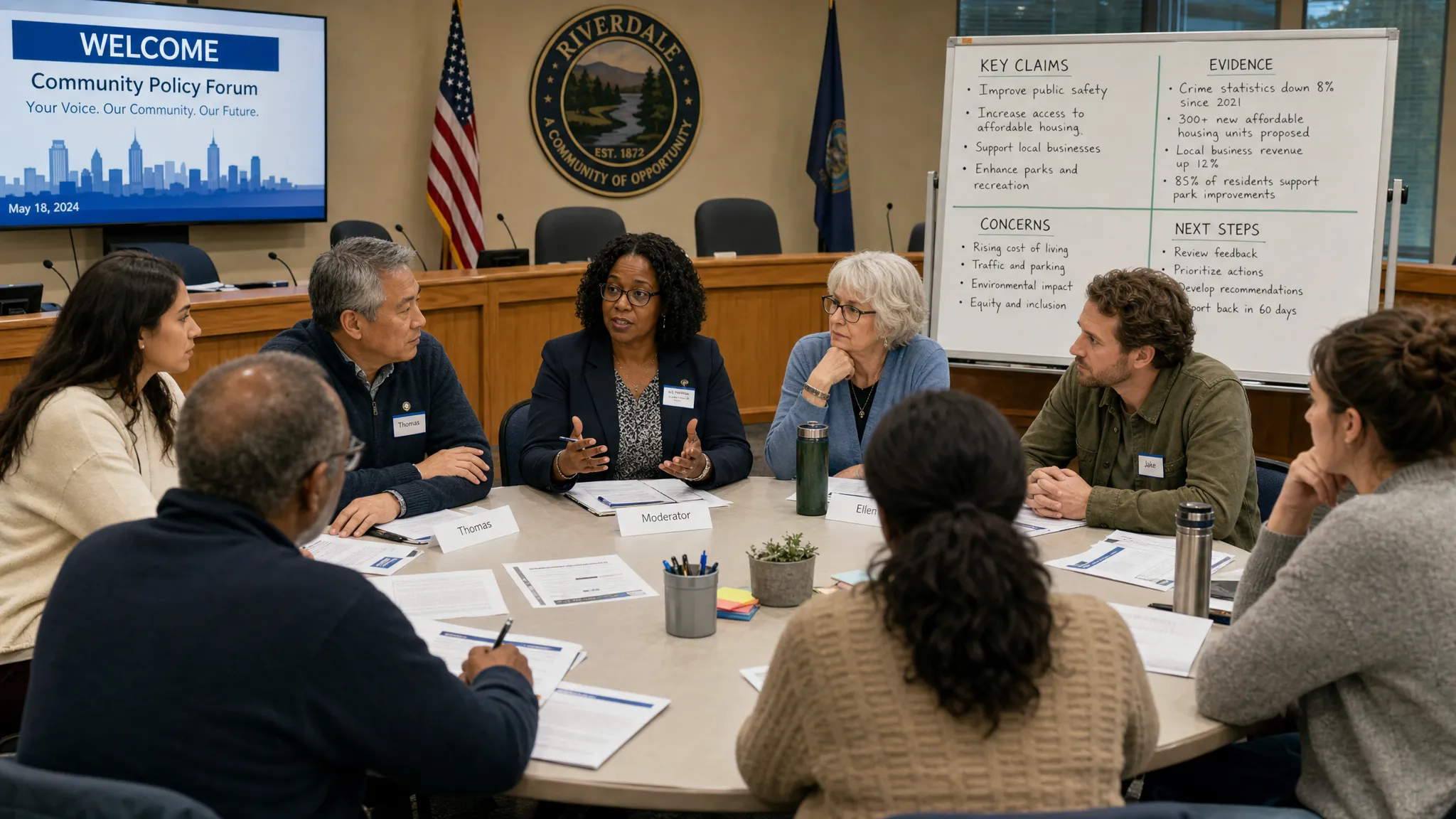
A civic platform can structure discussion around recurring claims, affected communities, evidence, questions for officials, and proposed alternatives. Moderators can help separate personal testimony from factual claims and policy preferences. Summaries can then show decision-makers not only what people support, but why they support it, who is affected, and what objections remain unresolved.
This connects directly to JustSocial's broader idea of continuous direct democracy. In the manifesto, citizens are not imagined as occasional voters who disappear between elections. They are ongoing participants whose opinions, identities, and concerns can be measured and considered in public decision-making, with strong safeguards. Better moderation is what prevents that system from becoming either chaos or surveillance.
For communities that want a practical starting point, JustSocial has also published a moderation template for online comments that can be adapted for civic forums, media pages, and public consultation spaces.
Moderation must include media, not just text
Political discourse is no longer only written. It happens through livestreams, short videos, podcasts, public hearings, documentary clips, campaign promos, and citizen explainers. A healthier discursive democracy therefore needs moderation across formats.
Video can humanize civic issues that text makes abstract. A well-produced interview with residents affected by zoning reform, a short explainer on a budget proposal, or a transparent recap of a public meeting can help citizens engage with complexity. Movements, municipalities, and civic organizations sometimes need skilled storytellers for this work, including independent creators such as a filmmaker and video director based on Vancouver Island who can produce clear, cinematic public-facing material.
But civic media also needs rules. Edited clips can inform, but they can also mislead. Livestream chats can widen access, but they can also become hostile. Video summaries can make meetings accessible, but they should not erase minority positions or difficult tradeoffs.
Moderation in a multimedia democracy should include context labels, full-source access when possible, clear distinction between official summaries and opinion content, and visible correction processes. The more powerful civic media becomes, the more important its procedural integrity becomes.
A practical model for democratic moderation
A discursive democracy platform should be designed from the beginning with moderation built in. Adding rules after a community is already toxic is far harder than creating civic norms early.
A practical model could include several layers:
| Layer | Purpose | Example practice |
|---|---|---|
| Identity layer | Reduce manipulation while protecting privacy | Verified participation with privacy-preserving public display options |
| Topic layer | Keep discussion connected to decisions | Each debate is tied to a proposal, policy area, committee, or public question |
| Claim layer | Improve reasoning | Users mark posts as opinion, evidence, question, testimony, or proposal |
| Visibility layer | Reward civic value | Constructive, sourced, and decision-relevant contributions gain prominence |
| Review layer | Prevent moderator abuse | Users can appeal decisions and view rule explanations |
| Reporting layer | Connect speech to institutions | Public summaries show major arguments, concerns, and unresolved questions |
This model does not require every citizen to become a policy expert. It simply helps different forms of participation become useful. A personal story should not be judged by the same standard as a statistical claim. A moral objection should not be treated like a technical forecast. A question should not be buried because it is inconvenient.
Good moderation respects these differences.
The role of citizens, moderators, and academia
The JustSocial manifesto argues for a future in which academia has a stronger independent role in public life, helping regulate other branches and holding public action to higher standards. That idea matters for moderation.
If moderation rules are written only by political actors, citizens may suspect manipulation. If they are written only by technology companies, civic priorities may be secondary. If they are written only by activists, opponents may see them as partisan. Academic participation can help create standards rooted in research, transparency, and public reasoning.
Still, moderation cannot be left only to experts. Citizens should help define the norms of the spaces they use. Community review boards, public rule consultations, published enforcement data, and participatory audits can make moderation itself democratic.
The point is not to create a perfect speech system. No such system exists. The point is to make the rules visible, contestable, and improvable.
Risks better moderation must avoid
Moderation can protect democracy, but it can also damage it if designed poorly. A movement committed to citizen empowerment must take these risks seriously.
First, moderation must not become ideological gatekeeping. If rules are used to suppress lawful dissent, the forum loses legitimacy.
Second, moderation must not become surveillance. Verified civic participation should be balanced with privacy, anonymity where appropriate, and strong protections against political retaliation.
Third, automation must not replace judgment. AI can help detect spam, cluster arguments, and flag harmful content, but public discourse contains irony, grief, anger, and context. Human review remains essential.
Fourth, majority sentiment must not be confused with justice. Discursive democracy should measure public opinion, but it should also protect minority voices and fundamental rights.
Finally, moderation should not be used to make politics comfortable. Democracy is often uncomfortable. The goal is not to remove conflict. The goal is to make conflict productive enough that citizens can share a society without surrendering their voice.
Better moderation is how civic participation scales
The ancient Polis was intimate enough that citizens could feel the state as part of their lives. Modern societies are too large for that same model without technology. But technology alone will not recreate civic intimacy. Unmoderated scale often produces noise, not democracy.
Discursive democracy offers a path between silence and chaos. It says citizens should be heard continuously, but also that public hearing requires structure. Better moderation is the bridge between mass participation and meaningful influence.
A political movement for continuous direct democracy should therefore treat moderation as foundational. Not as censorship. Not as public relations. Not as an afterthought. As the civic architecture that lets disagreement become knowledge, knowledge become pressure, and pressure become public action.
Frequently Asked Questions
What is discursive democracy? Discursive democracy is a democratic approach that emphasizes public reasoning, debate, and communication as essential parts of political legitimacy. It focuses on how citizens form, challenge, and communicate opinions, not only how they vote.
Why does discursive democracy need moderation? It needs moderation because open forums can be captured by abuse, spam, misinformation, and intimidation. Better moderation protects the conditions that allow citizens to participate meaningfully, especially when they disagree.
Is moderation the same as censorship? Not necessarily. Censorship suppresses viewpoints. Democratic moderation sets process rules for participation, such as no threats, no doxxing, clearer evidence standards, and transparent appeals. The goal is to protect debate, not eliminate it.
Can online civic platforms support direct democracy? Yes, but only if they are designed with security, transparency, privacy, inclusion, and moderation in mind. Technology can expand participation, but democratic legitimacy depends on how that technology is governed.
What should moderators do in political discussions? Moderators should enforce clear rules, protect participants from intimidation, keep discussion relevant, encourage evidence and clarification, explain decisions, and help turn public input into usable civic insight.
Join the work of building better democratic spaces
If democracy is going to move beyond occasional elections, citizens need spaces where their voices can be heard, organized, protected, and connected to public decisions. That is the future JustSocial is working toward: continuous direct democracy supported by better tools, better norms, and better civic infrastructure.
Explore the movement, share the ideas, and help build public spaces where disagreement can become democratic power at JustSocial.io.