Discursive democracy begins with a simple frustration: news tells us what happened, comment sections tell us who is angry, and elections tell us what people thought at one distant moment in time. What is missing is a civic path between awareness and influence.
That gap is not just a media problem. It is a democratic design problem. A citizen can read about a housing crisis, a court reform, a school policy, a war, a budget vote, or a local planning dispute, then feel the same helplessness: I understand enough to care, but I do not know where my voice goes next.
A healthier public sphere would not treat news as the end of the story. It would treat news as the beginning of a structured civic process, moving citizens from shared facts, to public reasoning, to visible action. That is where discursive democracy becomes powerful.
In the JustSocial manifesto, Yuval D. Vered argues that modern citizens are too often reduced to three roles: voter, taxpayer, and consumer. Discursive democracy pushes against that reduction. It asks what would happen if people were heard continuously, not only during campaign season, and if public dialogue became part of how institutions understand the country they govern.
What discursive democracy means in practice
Discursive democracy is democracy organized around public discourse. It does not assume that every conversation must immediately become a binding vote. Instead, it treats structured dialogue as a democratic asset in itself: a way to reveal public concerns, test arguments, clarify tradeoffs, surface minority viewpoints, and give institutions a more accurate picture of civic judgment.
This matters because most political communication today is either performative or episodic. Performative communication rewards outrage, slogans, and identity signaling. Episodic communication appears every few years in elections, or during occasional referendums, consultations, protests, and hearings. Discursive democracy tries to create something steadier: an ongoing civic memory of what people think, why they think it, and what they are willing to do.
It is related to deliberative democracy, but it is not identical. Deliberative democracy often refers to carefully designed forums where participants study evidence, discuss options, and produce recommendations. Discursive democracy is broader. It includes formal deliberation, but also the daily public conversation around news, community issues, civic education, journalism, activism, and institutional response.
| Democratic mode | Main question | Typical setting | What it contributes |
|---|---|---|---|
| Representative democracy | Who should decide for us? | Elections and legislatures | Accountability through periodic choice |
| Deliberative democracy | What would citizens conclude after informed discussion? | Citizens’ assemblies, panels, and forums | Deeper reasoning and legitimacy |
| Discursive democracy | How should public dialogue shape understanding and action over time? | News platforms, civic forums, communities, movements, and institutions | Continuous civic participation and public learning |
The key word is continuous. A discursive system does not ask citizens to be experts on everything. It asks institutions to stop pretending that silence means consent, that outrage means consensus, or that a vote every few years is enough to understand the public.
Why news needs a civic afterlife
News is essential, but news alone rarely creates civic participation. A report can reveal corruption, explain a policy failure, or document public suffering. Then what? The reader may share it, argue about it, forget it, or sink into despair. In a fragmented media environment, even accurate reporting can become just another item in the feed.
The scale of the problem is visible in public behavior. The Reuters Institute Digital News Report 2024 found that 39% of people surveyed across markets said they sometimes or often avoid the news. Many people are not avoiding information because they do not care. They are avoiding a cycle of anxiety without agency.
Discursive democracy gives news a civic afterlife. It asks every serious public story to answer three questions: What is happening? What are the legitimate disagreements? What can citizens, communities, journalists, and institutions do next?
That shift changes the relationship between journalism and democracy. The article is no longer a dead end. It becomes an entry point into a structured public process. For a journalist-specific view of that shift, JustSocial has explored how journalists can turn coverage into dialogue. The broader civic challenge is to make that path available not only to reporters, but to citizens and movements as well.
The news, dialogue, and action pipeline
A practical model of discursive democracy can be understood as a pipeline. Not a rigid bureaucracy, but a repeatable civic flow that helps people move from information to participation without losing accuracy, nuance, or accountability.
| Stage | Democratic purpose | Practical output | Failure to avoid |
|---|---|---|---|
| News | Establish shared facts and stakes | Context, sources, affected groups, timelines, and open questions | Sensational awareness without understanding |
| Dialogue | Let the public reason together | Arguments, counterarguments, evidence, lived experience, and value conflicts | Comment chaos, harassment, and tribal repetition |
| Action | Connect public judgment to civic options | Petitions, public questions, volunteer efforts, local meetings, policy requests, and institutional feedback | Empty engagement with no consequence |
The first stage, news, should make complexity usable. Citizens do not need every technical detail, but they do need enough context to understand what is being decided, who is affected, which facts are known, and which claims are disputed.
The second stage, dialogue, should slow down the emotional reflex. That does not mean removing emotion from politics. Emotion is part of public life, especially when people face injustice, insecurity, grief, exclusion, or fear. But emotion needs a civic container. Discursive democracy asks platforms, communities, and political movements to design spaces where disagreement can be sharp without becoming dehumanizing.
The third stage, action, should make participation visible and useful. Action does not always mean voting. It can mean joining a local meeting, signing a public request, sending a question to a representative, contributing expertise, volunteering, helping translate information, funding a civic initiative, or documenting how an institution responds.
This is where the JustSocial manifesto’s idea of the Polis becomes relevant. The ancient Polis was not merely a government structure. It was a lived civic environment where participation gave public life meaning. Modern societies cannot recreate the Greek city-state, nor should they romanticize it. But they can recover one crucial lesson: democracy feels real when people can see a path from concern to influence.
From audience to citizen
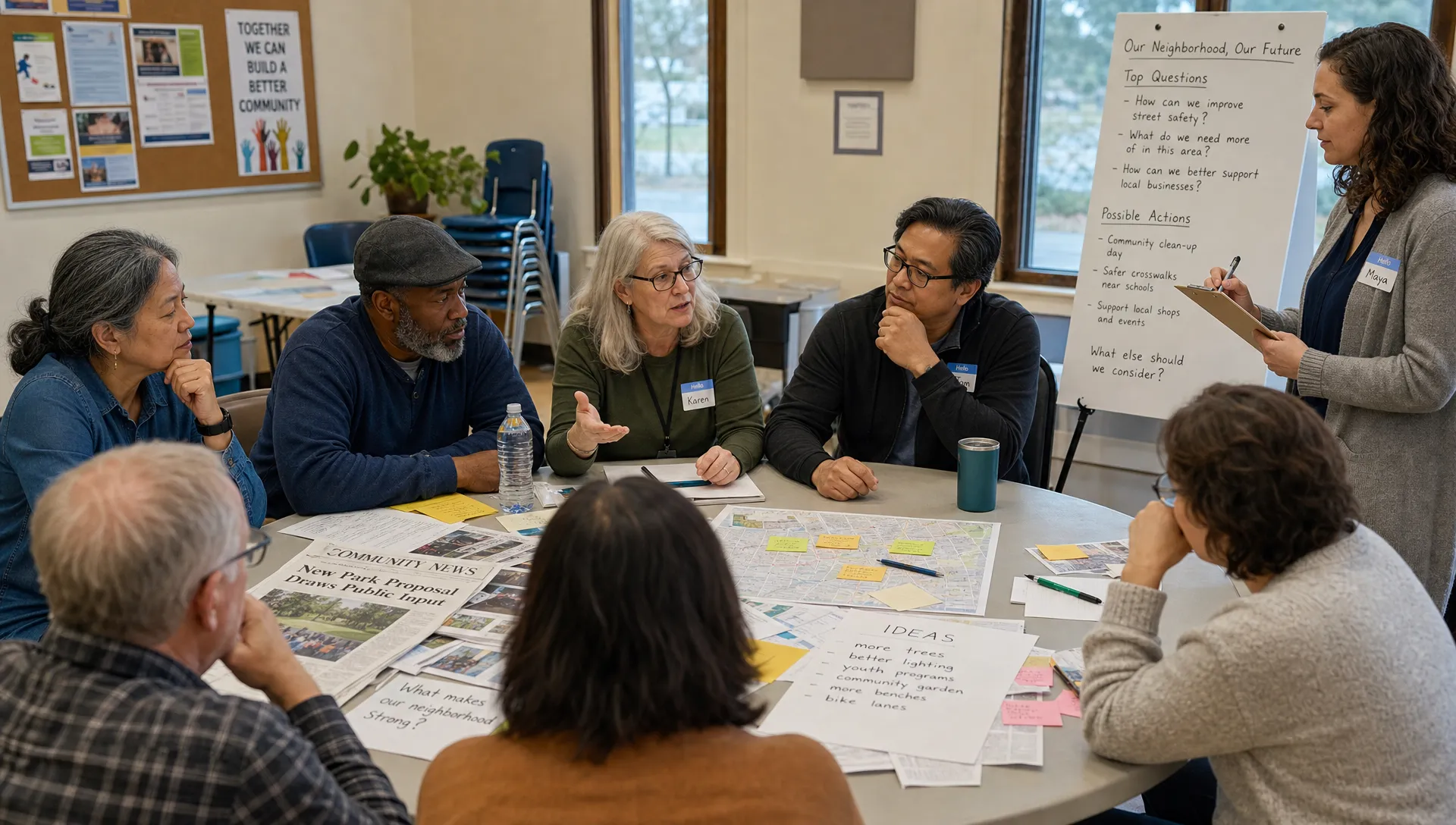
Modern media often speaks of audiences. Democracy needs citizens. The difference is not semantic. An audience consumes, reacts, and moves on. A citizen interprets, questions, responds, joins with others, and expects institutions to answer.
Discursive democracy turns civic participation into a habit rather than an emergency response. People should not have to wait for a scandal, a protest, or a national crisis to become politically relevant. They should be able to register concern, ask for clarification, support proposals, challenge assumptions, and follow institutional decisions as part of normal civic life.
That is especially important for people who are usually absent from formal politics. Working parents, young people, people with disabilities, rural communities, immigrants, minorities, and people without political connections often have less time and access for traditional participation. A discursive approach can lower barriers, provided it is designed with care.
Care is the key. A bad platform can amplify the loudest voices and call it democracy. A good civic system must distinguish between attention and representation. It must ask who is missing, who is being intimidated, who lacks time or digital access, and which communities are affected but unheard.
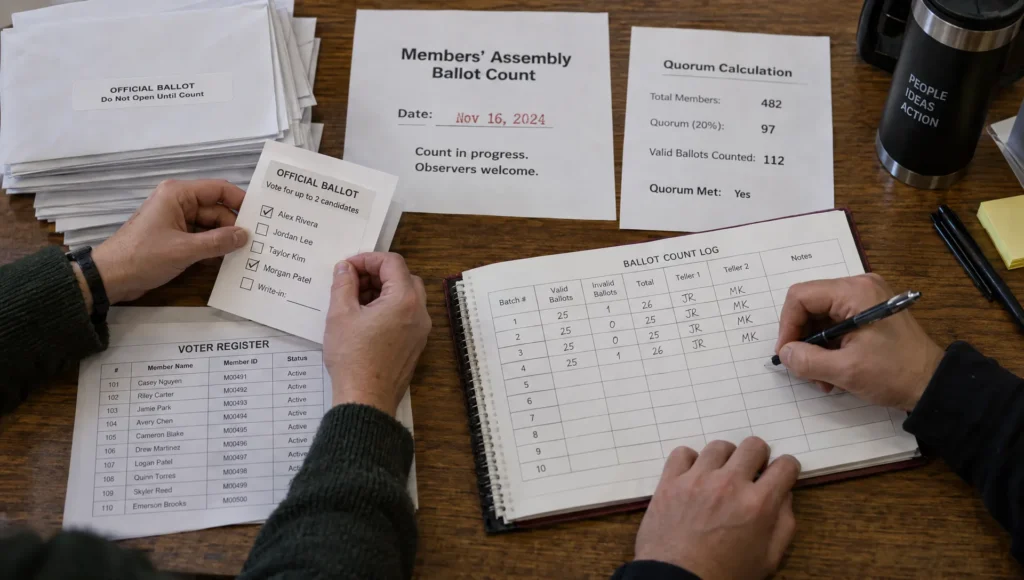
Discursive democracy should also make room for different levels of participation. Some citizens will only read summaries. Some will vote in local ballots. Some will contribute evidence. Some will moderate. Some will organize. Some will simply say, with legitimacy, that a proposed policy would harm their community. The point is not to force everyone into constant politics. The point is to make public influence available when people choose to use it.
How a political movement can avoid becoming an outrage machine
Every political movement faces the same temptation: simplify the message until it spreads, then reward the most aggressive voices for spreading it. That may create visibility, but it can damage trust. A movement that wants democratic renewal has to model the culture it wants to build.
For discursive democracy, that means a movement should treat disagreement as infrastructure, not as betrayal. Supporters need shared principles, but they also need legitimate internal debate. If a movement cannot reason publicly with its own members, it will struggle to build institutions that reason publicly with a whole society.
A disciplined political movement can use four guardrails.
- Separate facts from interpretations, so people can debate meaning without rewriting reality.
- Separate popularity from legitimacy, because a majority mood is not always a just decision.
- Separate identity from argument, so people are heard as whole citizens, not reduced to demographic labels.
- Separate action from pressure, because civic mobilization should persuade institutions, not terrorize opponents.
These guardrails are not abstract etiquette. They are survival rules for any democracy that wants strong participation without mob rule. JustSocial has already outlined practical discursive democracy rules for healthier public debate, and those rules matter even more when news, dialogue, and action are connected in one civic flow.
The danger is not too much participation. The danger is badly designed participation. If public dialogue is unstructured, it becomes noise. If action is disconnected from evidence, it becomes impulse. If institutions ignore all public input, participation becomes theater. A movement for democratic renewal has to solve all three problems together.
A civic action brief for every major public issue
One simple tool for discursive democracy is the civic action brief. For any major news issue, a community, newsroom, school, municipality, or movement can create a short public brief that helps people move from reaction to reasoned participation.
A strong civic action brief should include the core facts, the decision timeline, the institutions responsible, the affected communities, the main arguments on each side, the evidence still missing, the available civic actions, and a record of institutional response.
| Brief element | Why it matters |
|---|---|
| Core facts | Prevents debate from floating away from reality |
| Decision timeline | Shows citizens when participation can still matter |
| Responsible institutions | Clarifies who should answer, decide, or implement |
| Affected communities | Makes hidden costs and lived experience visible |
| Main arguments | Encourages fair disagreement rather than caricature |
| Civic actions | Converts concern into practical participation |
| Response record | Lets the public see whether institutions listened |
This kind of brief is modest, but powerful. It does not pretend to solve every political conflict. It simply gives citizens a common civic surface. Instead of hundreds of disconnected posts, there is a shared place where facts, arguments, actions, and responses can accumulate.
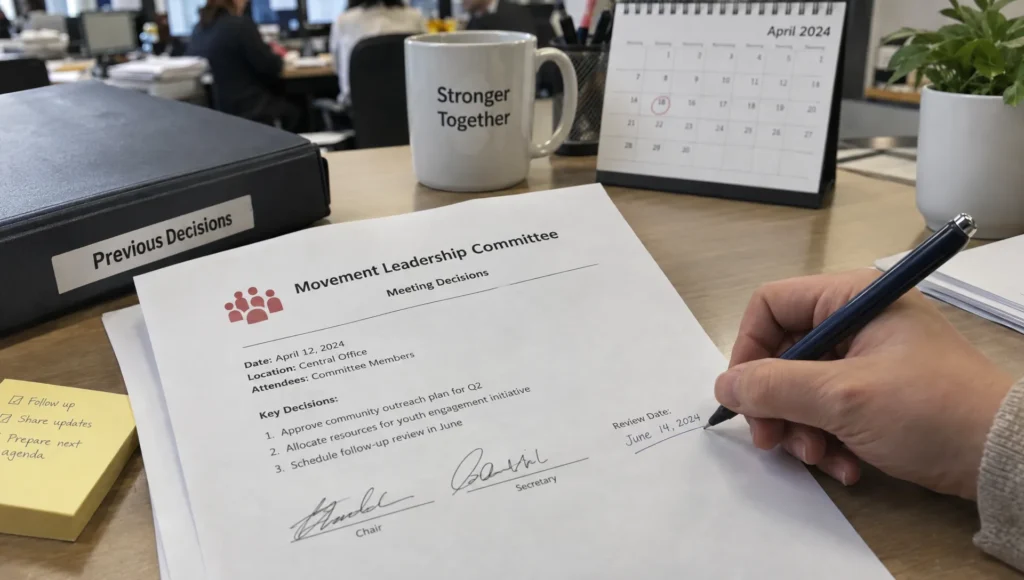
Over time, such briefs could create a public memory. Citizens would be able to see not only what was promised, but what happened next. Journalists would have a better record for follow-up reporting. Representatives would face clearer public questions. Movements would be pushed to make their claims more precise.
Technology must serve civic judgment, not manipulate it
Discursive democracy needs technology, but it cannot be naive about technology. The same tools that can widen participation can also distort it. Algorithms can reward outrage. Bots can fake consensus. Data collection can become surveillance. Poor moderation can silence vulnerable people. Bad design can make public life even more exhausting.
This is why civic technology must be treated as public infrastructure, not merely as engagement software. The JustSocial manifesto imagines public platforms, analytics, civic identity, transparent records, and tools for public participation. The democratic test for such tools is not whether they generate activity. The test is whether they improve civic judgment.
A trustworthy system should make several commitments clear. It should protect privacy. It should distinguish verified participation from anonymous harassment. It should show how summaries are produced. It should preserve minority arguments, not bury them under majority sentiment. It should allow citizens to challenge moderation and correction decisions. It should make institutional responses visible.
In other words, discursive democracy does not mean replacing representatives with comment sections. It means giving representatives, journalists, courts, public agencies, educators, and citizens a more honest map of public reasoning.
That map can support continuous democratic life. Representatives can see not only which side is louder, but which concerns are recurring across communities. Journalists can see what citizens still do not understand and what institutions have not answered. Schools can teach students how to reason publicly rather than merely memorize civic vocabulary. Communities can build local habits of dialogue before crisis arrives.
The deeper promise: a new social contract
The most radical idea behind discursive democracy is not technological. It is relational. It changes what the citizen can expect from the state, and what the state can expect from the citizen.
In the old model, the citizen periodically authorizes leaders, pays taxes, obeys laws, and consumes public services. In the discursive model, the citizen is also a continuous participant in public meaning. The state does not have to obey every public mood, but it must listen with precision, explain decisions, and make the path from public input to institutional action visible.
That is close to the manifesto’s proposed social contract: citizens should not be passive subjects of systems built in another era. They should be empowered by public institutions to take part in shaping education, budgets, laws, community life, and national direction.
This is also where discursive democracy and deliberative democracy can strengthen each other. Discursive systems can reveal which issues need deeper deliberation. Deliberative forums can produce careful recommendations. Public discourse can then test, challenge, support, and refine those recommendations. The result is not perfect consensus. It is a more mature democratic cycle.
The world needs that maturity. Freedom House reported that global freedom declined for the 18th consecutive year in 2023. Democratic decline is not only caused by coups or censorship. It is also caused by citizens losing faith that participation matters. A democracy that cannot hear its people between elections teaches them to withdraw, rage, or search for authoritarian shortcuts.
Discursive democracy offers another path. It says the answer to democratic exhaustion is not less public voice. The answer is better public voice, better listening, and clearer routes from dialogue to action.
Frequently Asked Questions
What is discursive democracy? Discursive democracy is a model of democracy that treats structured public dialogue as essential to political life. It focuses on how citizens discuss issues, test arguments, share evidence, and influence institutions over time.
How is discursive democracy different from deliberative democracy? Deliberative democracy usually refers to more formal processes, such as citizens’ assemblies or structured forums. Discursive democracy is broader and includes the wider public conversation around news, civic participation, journalism, community action, and institutional response.
Does discursive democracy mean every issue should become a public vote? No. Discursive democracy is not constant referendum politics. It can inform representatives, journalists, agencies, and communities without making every public sentiment legally binding.
Why does news matter to discursive democracy? News provides the shared facts and context citizens need before dialogue and action can become meaningful. Without reliable information, public participation becomes easier to manipulate.
Can a political movement use discursive democracy without becoming polarized? Yes, if it designs for evidence, fair disagreement, transparency, and accountability. A movement should not only mobilize supporters. It should build habits of public reasoning that can survive disagreement.
Help build a democracy that listens continuously
Discursive democracy is not a slogan. It is a practical response to a broken civic loop: people learn about public problems, argue in disconnected spaces, and rarely see how their voices matter.
JustSocial exists to advance a political culture where citizens are not reduced to occasional voters or passive consumers of politics. If you believe news should lead to dialogue, and dialogue should lead to meaningful civic action, explore JustSocial and take part in building the next stage of democratic participation.
The future of democracy will not be built by technology alone. It will be built by citizens who demand better tools, better institutions, and a better social contract.