A people’s republic can sound like a slogan until it is given institutional meaning. In the JustSocial sense, it is not a claim that one faction speaks for everyone. It is a strategy for making the public a permanent civic force, visible between elections, organized around participation, and capable of shaping institutions without destroying constitutional balance.
That distinction matters. Many political systems already use the language of the people while leaving citizens with only episodic influence. The JustSocial manifesto argues that modern citizens are too often reduced to three roles: voter, taxpayer, and consumer. A political movement for a people’s republic must break that reduction by building civic participation into the ordinary operating system of public life.
This is not merely a communications challenge. It is an institutional design challenge. The goal is to make participation routine, deliberation credible, public opinion measurable, and government response inspectable.
What a people’s republic means in democratic practice
A people’s republic, in this strategy, is best understood as a public layer of democracy that sits alongside existing institutions. It does not need to replace courts, parliaments, local councils, or professional administration. Instead, it creates a recognized civic channel through which people can speak, deliberate, vote, comment, organize, and be answered.
The JustSocial manifesto frames this as a new branch of government: the people. That idea should be read carefully. The people’s branch is not mob rule, and it is not a permanent referendum on every technical detail. It is a civic infrastructure that lets officials, journalists, researchers, civil servants, and communities know what citizens are saying, how they reason, where consensus exists, and where disagreement remains.
In that model, representatives are not abolished. They become more accountable. Public officials may still make decisions that differ from majority sentiment when rights, evidence, security, or long-term interests require it. But they should no longer be able to pretend that public opinion is invisible, unknowable, or only countable every few years.
That is the strategic promise: make the public continuously legible to the state while making the state continuously accountable to the public.
The strategic failure of traditional political movements
Most movements begin with outrage, identity, or an election cycle. They gather attention, frame an enemy, produce slogans, and try to convert anger into votes. Sometimes this works temporarily. But it rarely creates a durable people’s republic because it leaves the basic civic architecture untouched.
A movement organized only around winning office inherits the same weakness it criticized: once the election ends, the public is again outside the room. A movement organized only around protest faces a different limit: it can pressure institutions, but it cannot always replace broken procedures with better ones.
A people’s republic requires a different center of gravity. The political movement must become a builder of participation systems. It must teach citizens how to engage, create spaces where disagreement can become useful, and develop repeatable workflows for turning public voice into public record.
This is where JustSocial’s broader argument becomes important. The manifesto criticizes political and educational structures inherited from the Industrial Revolution, systems designed for hierarchy, standardization, and periodic evaluation. A people’s republic strategy should be the civic opposite: adaptive, continuous, transparent, and participatory.
Pillar one: civic participation as a daily habit
Civic participation cannot be treated as a heroic act reserved for elections, demonstrations, or crises. If the people are to become a real democratic branch, participation must become ordinary.
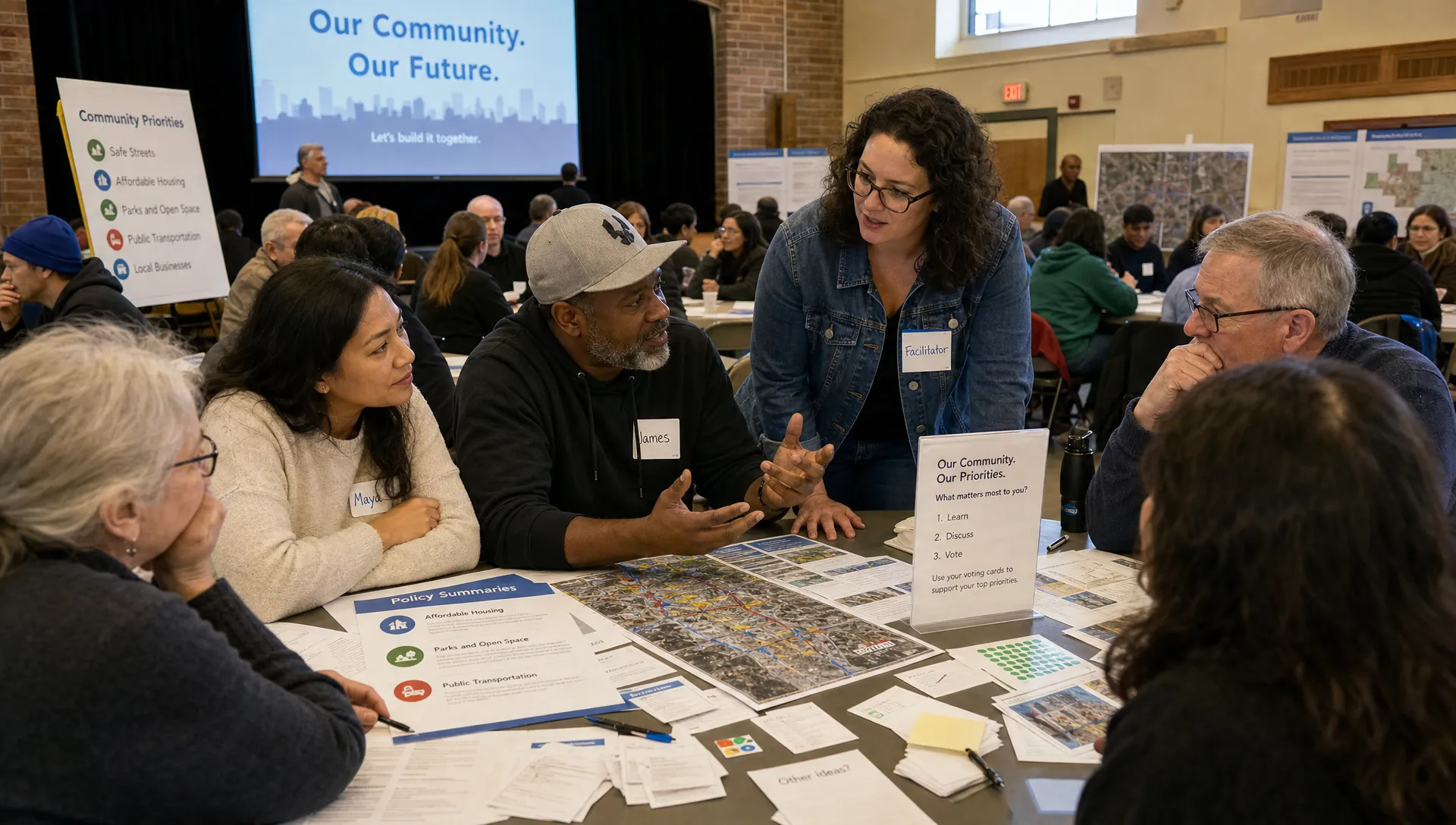
That means giving citizens low-friction ways to act on public issues. Not everyone will attend a three-hour meeting. Not everyone will write a policy brief. But many people will read a summary, register a concern, vote on a local priority, sign a petition, submit testimony, annotate a proposal, or join a short deliberative session when the process is credible and respectful of their time.
A movement should design participation around multiple levels of commitment. The citizen who has 30 seconds and the citizen who has 30 hours both matter, but they should not be placed in the same role. Lightweight signals can reveal broad public concern. Deeper participation can reveal reasoning, tradeoffs, and informed judgment.
This is why a strategy for a people’s republic should begin locally. A neighborhood, school community, city district, professional association, or civic coalition can pilot participation faster than a national government can reform itself. JustSocial has already explored this local institutional logic in its article on how to build a local People’s Branch, which is a natural starting point for turning theory into practice.
The key is repetition. One public vote is an event. A monthly participation cycle is infrastructure.
Pillar two: discursive democracy before decision-making
A people’s republic cannot be built on voting alone. Voting tells us what people prefer at a moment in time. It does not always tell us why they prefer it, what information they considered, what fears shaped their view, or what compromise they might accept.
Discursive democracy fills that gap. It treats public conversation as a democratic resource, not background noise. In a discursive system, citizens can express arguments, challenge assumptions, share lived experience, and see how different groups frame the same issue.
For a political movement, discursive democracy has three strategic benefits.
First, it prevents leadership from confusing silence with consent. If a policy affects parents, workers, students, patients, commuters, or small business owners, the people affected should be able to speak into a structured public record.
Second, it improves messaging. Movements often write slogans before they understand the public. Discursive listening reverses that order. It lets the movement learn the words citizens already use to describe their problems.
Third, it lowers polarization when designed well. Public discourse should not be a free-for-all comment section. It should include moderation standards, issue summaries, evidence links, transparent tagging, and a visible distinction between testimony, opinion, expertise, and official response.
The manifesto’s ideas for public-facing civic platforms, including committee records, civic social features, and tools for people to react to public affairs, point in this direction. The deeper insight is that democratic speech needs structure if it is going to become democratic power.
Pillar three: deliberative democracy to turn opinion into judgment
Discursive democracy gathers public reasoning. Deliberative democracy tests and improves it.
Deliberation asks citizens to slow down, hear evidence, encounter opposing views, and consider tradeoffs before reaching a conclusion. It is especially valuable when issues are complex, emotional, technical, or morally contested. A people’s republic needs this layer because continuous participation without deliberation can become reactive, and deliberation without broad participation can become elitist.
The strongest strategy combines both. Broad participation shows what the public cares about. Deliberative forums help communities understand what should be done.
| Democratic layer | Main question | Best use | Movement output |
|---|---|---|---|
| Civic participation | What do people care about? | Priority setting, issue discovery, public signals | Participation data and civic agenda |
| Discursive democracy | Why do people think this? | Public testimony, argument mapping, community understanding | Structured public record |
| Deliberative democracy | What should we do after reflection? | Tradeoffs, policy options, contested reforms | Citizen recommendations |
| Institutional response | What will government do and why? | Accountability, transparency, follow-up | Public response and implementation record |
Deliberative democracy also protects the people’s republic from a common criticism: that ordinary citizens are too uninformed to contribute. The better answer is not to exclude citizens. The better answer is to create processes that help citizens become informed together.
This connects directly to the manifesto’s educational argument. If democracy is meant to be lived continuously, then civic education cannot be a symbolic subject taught once and forgotten. Schools, communities, and public institutions should train people to deliberate, question evidence, listen across difference, and participate without surrendering their judgment to party machines.
Pillar four: a political movement must build an action pipeline
A people’s republic cannot survive as a discussion club. It needs a pipeline that connects public concern to public consequence.
A simple civic action pipeline can move through five stages: issue discovery, public discussion, deliberation, decision signal, and institutional response. The movement’s job is to keep that pipeline visible and repeatable.
This is where technology becomes useful, but only if it serves democratic procedure. Online voting platforms, civic forums, public transparency tools, and decision-making software should not be treated as magic. They are only legitimate when citizens understand how the process works, how identity is protected, how results are counted, and how officials are expected to respond.
The JustSocial manifesto suggests tools such as community voting, public committee archives, civic action apps, analytics, and law repositories. These are not random product ideas. Together, they describe a political movement strategy based on civic infrastructure rather than mere persuasion.
A useful comparison comes from outside politics. Whole-system thinking is common in fields that connect individual choices to long-term well-being, such as the holistic approach to overall well-being used in health-centered care. A people’s republic requires the same kind of systems view: education, participation, transparency, technology, public health, budgets, and representation all shape one civic body.
For that reason, a movement should not ask only, “How do we win the next campaign?” It should ask, “What civic capacity will exist after the campaign is over?”
Pillar five: transparency must be built into the operating model
Government transparency is often treated as a moral demand: tell us what you are doing. A people’s republic needs something more operational: show us the records, the process, the reasoning, the evidence, the alternatives, the conflicts of interest, and the response to public input.
Transparency should apply to the movement itself as well. If a political movement claims to represent a people’s republic, it must model the standards it wants institutions to adopt.
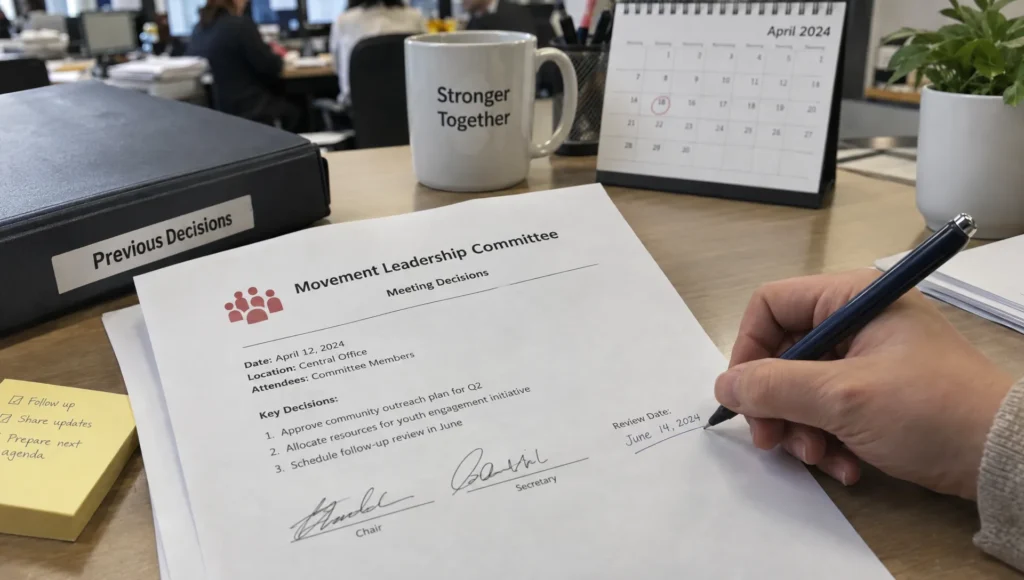
That means publishing meeting notes when appropriate, documenting decisions, disclosing governance rules, distinguishing leadership opinion from member consensus, and making participation results inspectable. A movement that demands accountability from the state while operating as a closed inner circle will lose legitimacy.
The manifesto’s proposed public visibility for parliamentary committees, except in legitimate cases such as defense and national security, reflects the same principle. Democracy weakens when public decisions become remote rituals. It strengthens when citizens can inspect the chain between public debate and public action.
A phased strategy for building a people’s republic
The strategy should unfold in phases. Trying to create a national people’s branch overnight would invite confusion, technical risk, and political resistance. A better path is to build legitimacy through working examples.
| Phase | Strategic goal | Practical focus | Evidence of progress |
|---|---|---|---|
| Seed | Define the civic promise | Manifesto, values, public language, volunteer base | Clear participation principles |
| Pilot | Prove the workflow locally | Local forums, issue votes, deliberative sessions | Repeatable monthly participation cycle |
| Coalition | Expand legitimacy | Civic groups, educators, technologists, local officials | Diverse partners and shared standards |
| Interface | Connect to institutions | Public response requests, council briefings, committee submissions | Officials answer public input |
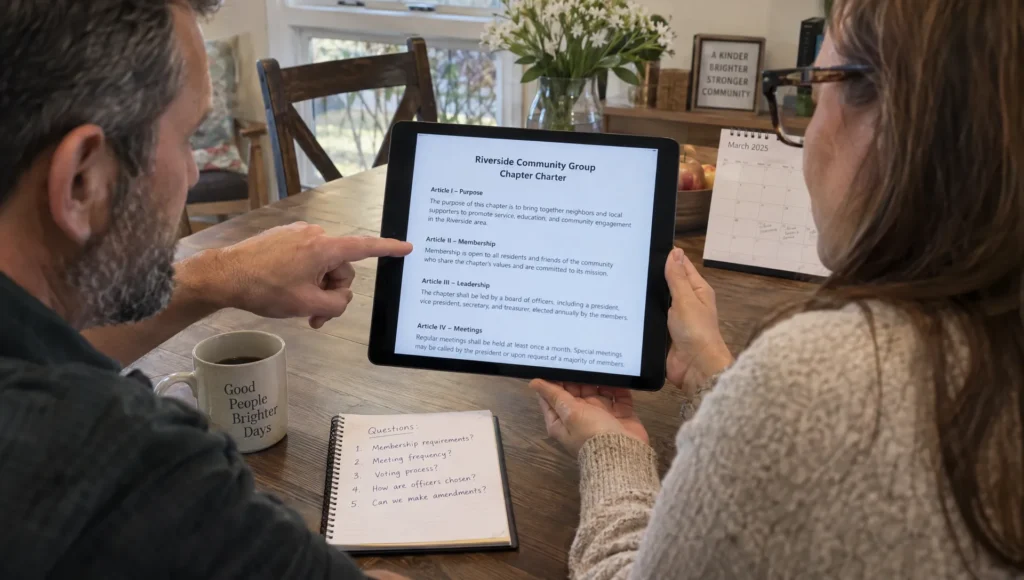
| Recognition | Formalize the people’s branch | Legal proposals, civic charters, public platforms | Participation becomes expected procedure |
Each phase should generate something tangible. A public dashboard is tangible. A deliberation report is tangible. A transcript archive is tangible. A local civic charter is tangible. A response from a council member is tangible. Anger alone is not.
This is also where a movement must decide whether it is personality-led or procedure-led. The manifesto is personal in origin, rooted in Yuval D. Vered’s experience and argument, but its strongest claim is collective: no single person has all the answers, while the people together may hold the necessary intelligence. A people’s republic strategy should therefore make leadership useful but not sacred.
The role of a political movement in constitutional change
A people’s republic will eventually face constitutional questions. How should public input be authenticated? What rights protect minority positions? When should deliberative recommendations trigger official hearings? Can minors participate in civic forums while being clearly identified as minors? What data may the state collect, and what must remain anonymous or private?
These questions should not be improvised after platforms are already deployed. They are central to legitimacy.
A responsible political movement should advocate for clear safeguards: privacy by design, transparent counting rules, independent audits, accessibility requirements, public-interest moderation, appeal mechanisms, and strong separation between civic identity and partisan punishment.
This is one reason the manifesto’s idea of academia as an independent civic regulator deserves attention. A people’s republic needs knowledge institutions that can evaluate participation systems, test claims, review evidence, and help public life resist manipulation. Citizen power and expert knowledge should not be enemies. In a mature democratic system, they correct each other.
Beyond left and right: the participation-first message
A people’s republic strategy can appeal across ideological lines because it does not begin by asking citizens to adopt a single policy package. It begins by asking whether the public should have a more continuous, structured, and visible role in the decisions that shape its life.
People on the left may see this as a path to social inclusion and public investment. People on the right may see it as a path to local control and a check on centralized bureaucracy. Independents may see it as a way out of party exhaustion. The shared message is simple: public power should not disappear between elections.
That is why a participation-first message is stronger than a faction-first message. It can hold disagreement inside a common democratic architecture. JustSocial has developed this angle further in its thinking on political movement messaging beyond left vs right, which complements the people’s republic strategy well.
The movement should make a promise that is both radical and restrained: more citizen power, but through visible rules; more public voice, but with deliberation; more technology, but with civic safeguards; more institutional pressure, but without contempt for institutions themselves.
The people’s republic as a modern Polis
The manifesto’s reflection on the Greek Polis is more than historical admiration. It points to a lost intimacy between citizen and public life. In the Polis, politics was not a distant performance. It was part of belonging.
Modern nation-states cannot recreate the ancient city-state literally. They are too large, too diverse, and too complex. But technology allows us to recover part of its civic immediacy. The strategic question is whether we use digital tools merely to intensify outrage or to rebuild democratic membership.
A people’s republic should aim for the second path. It should give citizens a meaningful civic presence without pretending that every citizen can study every issue in full. It should let people participate at different depths, learn over time, and see how their input moves through the system.
This is also the link between civic participation and dignity. People do not only want services from the state. They want to know that public life recognizes them as members, not subjects, spectators, or data points harvested by private platforms. A democratic civic platform should reverse that relationship: data should serve the citizenry, not exploit it.
For a broader strategic frame, JustSocial’s article on continuous democracy explains how participation can become a recurring democratic practice rather than an election-season event.
Frequently Asked Questions
What is a people’s republic in this article? It means a democratic civic structure where citizens participate continuously through discussion, deliberation, voting signals, and public accountability. It does not mean one-party rule or the removal of constitutional checks.
How is civic participation different from voting? Voting records a preference, usually at a specific moment. Civic participation includes discussion, testimony, agenda-setting, volunteering, deliberation, monitoring institutions, and helping shape public priorities over time.
Why does deliberative democracy matter for a political movement? Deliberative democracy helps citizens move beyond instant reactions. It creates time and structure for evidence, competing views, and tradeoffs, which makes public recommendations more legitimate.
What is discursive democracy? Discursive democracy focuses on public reasoning and conversation. It asks not only what people want, but why they believe it, how they explain it, and what experiences shape their views.
Can technology create a people’s republic by itself? No. Technology can support participation, transparency, and decision-making, but only civic rules, education, safeguards, and institutional accountability can make those tools democratic.
The next strategic step
A political movement for a people’s republic should begin with a simple act: build one repeatable participation cycle that people can understand, join, inspect, and improve.
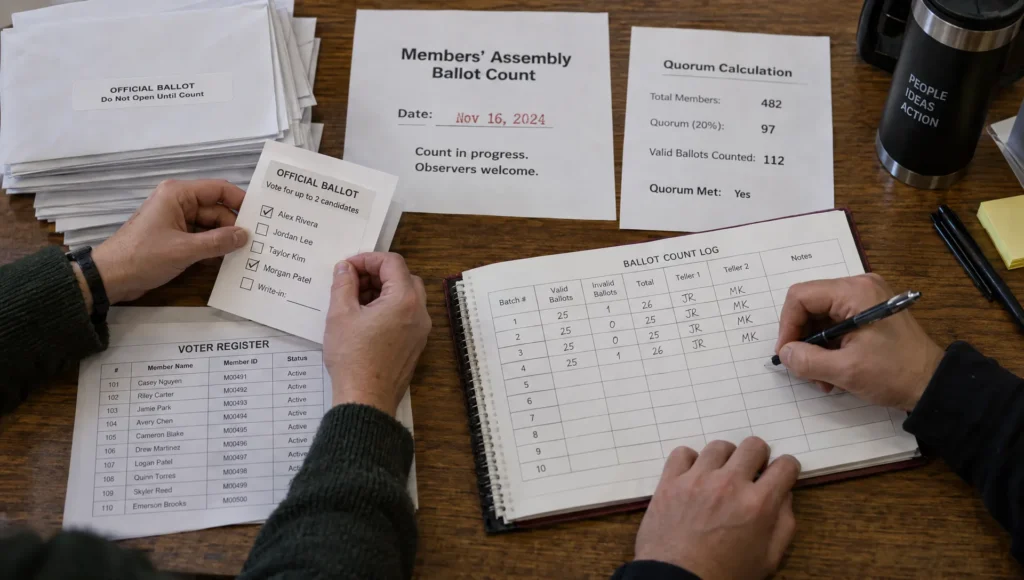
Choose a community. Choose one public issue. Gather testimony. Map arguments. Hold a deliberative session. Record a decision signal. Publish the results. Ask the relevant institution for a response. Then do it again next month.
That is how a people’s republic stops being an abstract demand and becomes a civic habit. If this vision speaks to you, explore the JustSocial manifesto and consider how your skills, community, or local initiative can help build the next layer of democratic participation.