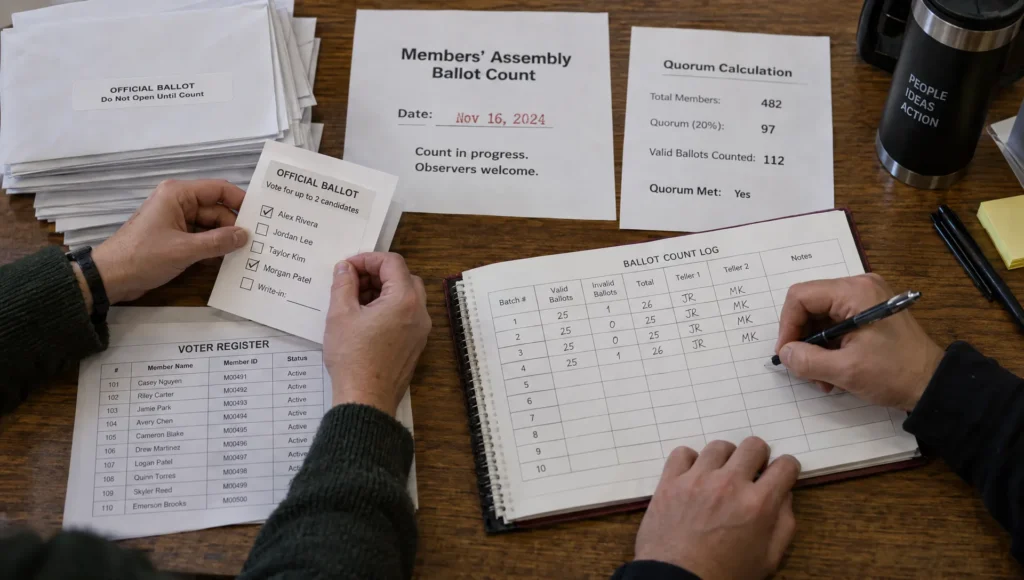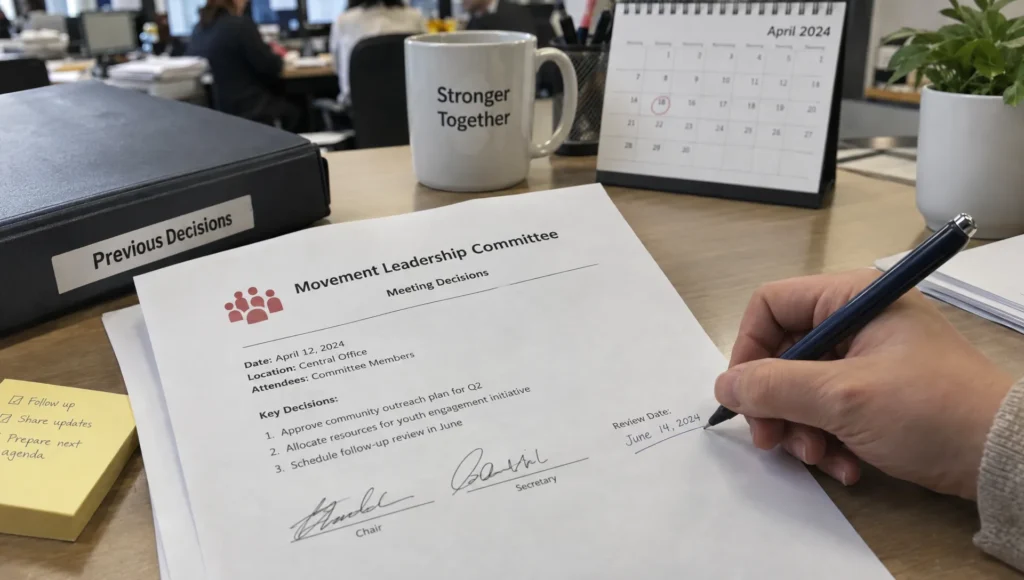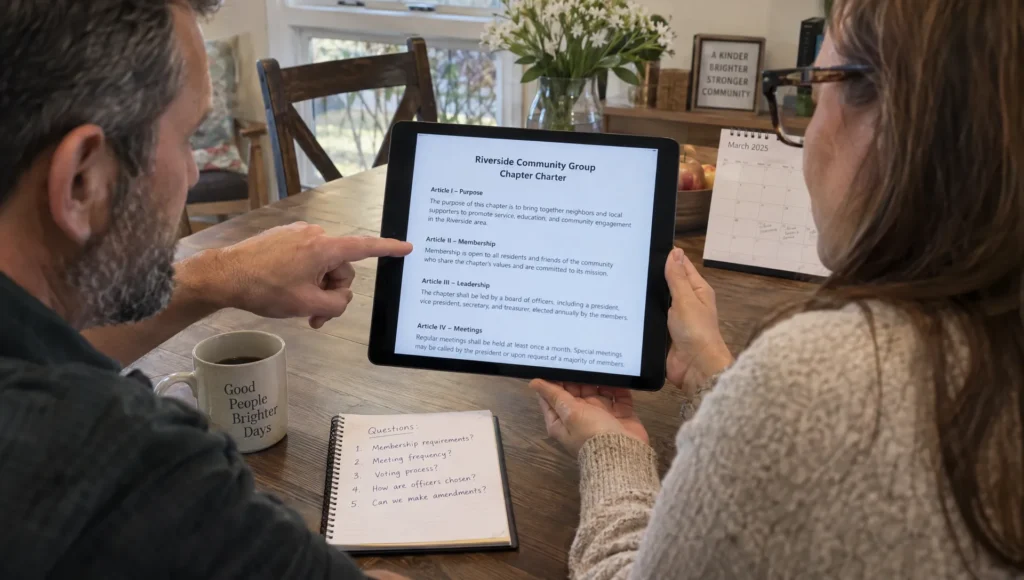
Public service design is where democracy becomes concrete. It is the school enrollment form that either welcomes a parent or exhausts them. It is the permit process that either helps a small business open or buries it in confusion. It is the public transit change, benefits application, clinic booking system, tax portal or neighborhood safety process that shapes how people experience the state.
When public services are designed without the people who use them, the result is predictable: long forms, unclear rules, inaccessible channels, duplicated visits, distrust and avoidable anger. Civic participation is not a decorative consultation at the end of that process. It is one of the strongest design methods available to public institutions.
For JustSocial, this connects directly to a larger democratic argument. In the JustSocial manifesto, Yuval D. Vered argues that modern societies still carry many relics of the Industrial Revolution: outdated schools, slow public institutions and representative systems that reduce citizens to voters, taxpayers and private consumers. Better public service design is one practical place to begin reversing that pattern. If citizens help shape the services they rely on, the state becomes less remote and more accountable.
Public service design is not only a technical problem
Governments often treat public service design as an administrative task. A department identifies a requirement, writes rules, creates a form, chooses a software system and publishes a process. Citizens enter later, usually when something fails.
That sequence may look efficient from inside the institution, but it ignores the most important source of knowledge: lived experience. A caseworker knows the policy. A software vendor knows the platform. A minister knows the political promise. But the citizen knows what happens when the policy, platform and promise collide with real life.
That is why civic participation matters. It helps public institutions discover the gap between the service as imagined and the service as experienced. It also helps governments see how one service affects another. A housing process may depend on income documents from a tax authority. A school placement system may depend on transportation. A healthcare appointment system may fail because the communication channel excludes elderly residents or people with limited language access.
Good service design asks a basic democratic question: who must live with this system, and have they helped shape it?
The UK Government Service Standard, for example, begins with the principle of understanding users and their needs. That is a design principle, but it is also a democratic principle. The GOV.UK Service Standard makes clear that public services should be built around real user needs, not institutional convenience alone.
Why participation often fails to improve services
Many governments already invite public input. They hold town halls, open comment periods, publish surveys and run public hearings. Yet citizens often leave feeling that nothing changed.
The problem is not participation itself. The problem is weak participation design.
Public input fails when it arrives after the real decision has already been made. It fails when the question is too vague, such as asking residents what they think about transportation without explaining the available budget, legal constraints or tradeoffs. It fails when participation is dominated by the most available or loudest voices. It fails when people give time and testimony, then never hear how their input affected the final decision.
This is why JustSocial has argued that civic participation needs better public tech. Digital systems alone do not create democracy, but they can make public decisions more visible, traceable and accountable when they are designed properly.
A better model treats participation as part of the service lifecycle, not as a public relations event.
The civic participation service design loop
Public service design should operate as a loop. Citizens help identify the problem, deliberate on tradeoffs, test possible solutions, review implementation and continue improving the service over time.
| Service design stage | What citizens contribute | What government must provide |
|---|---|---|
| Problem discovery | Lived experience, pain points, barriers and unmet needs | Clear scope, accessible channels and evidence about the current service |
| Problem definition | Agreement on what the service must actually solve | Plain language framing, data and transparency about constraints |
| Option design | Ideas, objections, edge cases and local knowledge | Draft options, cost ranges, legal limits and operational feasibility |
| Deliberation | Reasoned discussion about tradeoffs and priorities | Balanced information, facilitation and inclusion of affected groups |
| Prototyping | Testing of forms, channels, journeys and rules | Safe pilots, feedback tools and willingness to revise |
| Decision | Public legitimacy and evidence of preference | Named decision owner, timeline and explanation of what was adopted or rejected |
| Review | Ongoing feedback on whether the service works | Published outcomes, service metrics and a route for correction |
This loop turns civic participation into a design discipline. It is also close to the idea of a public decision loop, where input, decision, implementation and review are visibly connected. JustSocial explores this more deeply in its article on better local decision loops.
Discursive democracy makes service problems visible
Discursive democracy emphasizes public reasoning. It is not only about counting votes or collecting preferences. It is about making reasons, stories, conflicts and evidence visible enough for a public system to learn from them.
In public service design, this matters because many service failures are hidden inside individual frustration. One person gives up on a form. Another misses a deadline. Another calls three offices and receives three different answers. If each case remains private, the institution sees isolated complaints. If the stories are gathered, categorized and discussed publicly, the institution sees a design failure.
Discursive democracy helps governments ask better questions:
- What language do residents use to describe the problem?
- Which steps create confusion or mistrust?
- Which groups are missing from the conversation?
- Which rules are experienced as unfair, even if they are technically legal?
- Which explanations does the public find credible?
This is especially important in services that touch vulnerable moments: unemployment, disability support, immigration, housing insecurity, public health, policing, schooling and crisis response. A service may be legally compliant and still feel humiliating, inaccessible or unsafe. Discursive civic participation brings those experiences into the public record so they can be addressed.
Deliberative democracy improves tradeoffs
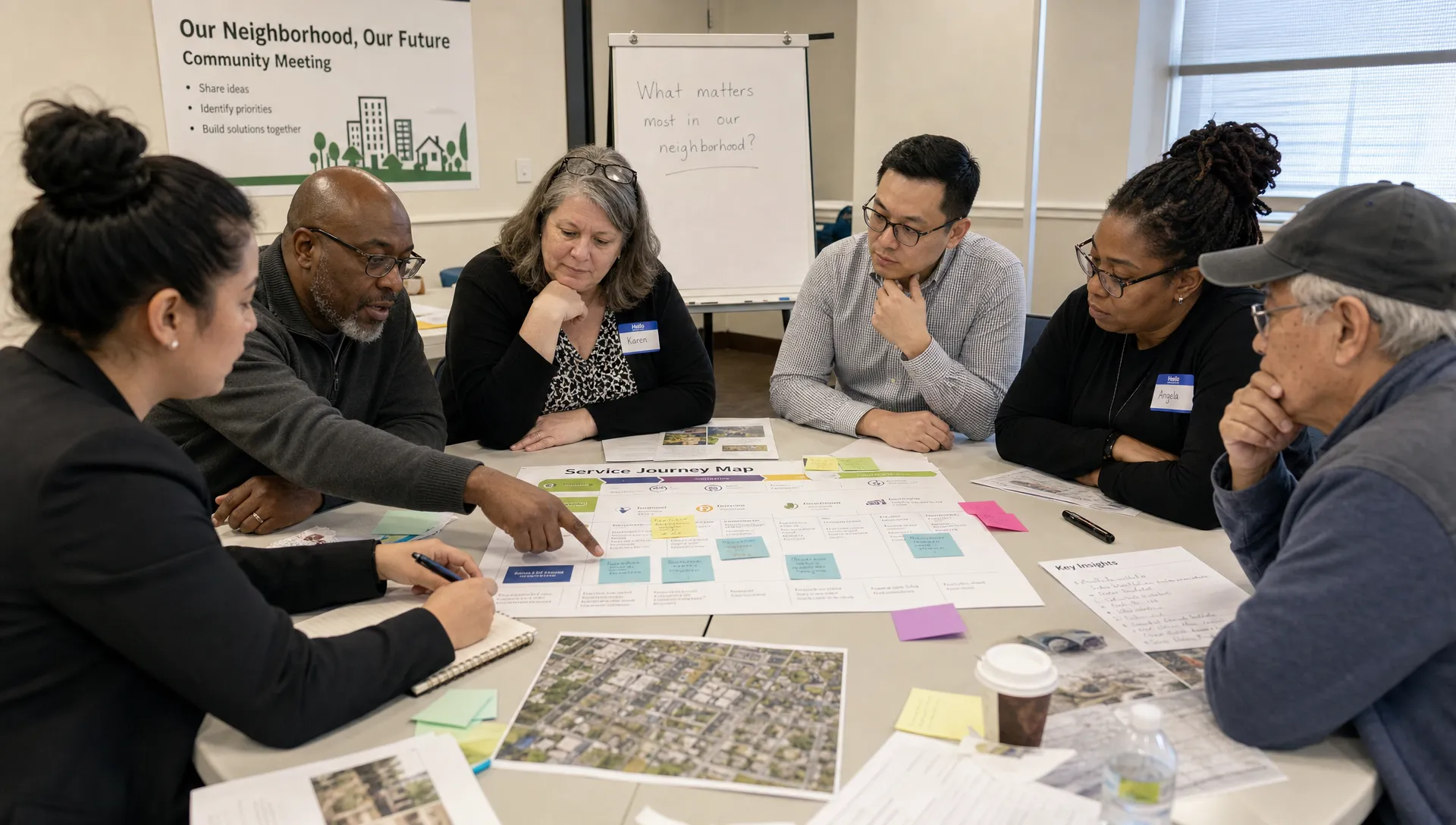
Discursive democracy helps reveal the problem. Deliberative democracy helps decide what to do about it.
Public services involve tradeoffs. Faster service may cost more. More fraud prevention may create more paperwork. A fully digital system may be convenient for some residents and exclusionary for others. A universal service may be simpler, while a targeted service may reach people with greater need.
Deliberative democracy gives citizens time, information and structure to weigh those tradeoffs together. Rather than asking people for instant reactions, it creates conditions for informed judgment. Participants can hear expert evidence, question officials, listen to one another and revise their views.
The OECD guidance on citizen participation processes emphasizes the importance of clarity, representativeness, transparency and impact. Those principles are essential for service design. If a city asks residents to help redesign a benefits application process, participants need to know what can actually change, what cannot change without legislation, what the budget allows and how the final choice will be made.
Deliberation is not a replacement for elected responsibility. It is a way to make elected and administrative responsibility more intelligent. Officials still make decisions, but they do so with a clearer understanding of public reasoning.
What citizens should be asked before a service is built
A common mistake is asking citizens whether they like a nearly finished service. By then, the most important choices have already been made.
A better approach asks citizens targeted questions at each stage. During discovery, the question is not, do you want a digital portal? It is, what are you trying to accomplish, and where does the current system stop you? During design, the question is not, do you prefer option A or option B? It is, what would each option make easier, harder, fairer or more risky? During review, the question is not, are you satisfied? It is, did the service help you complete the public task with dignity, clarity and reasonable effort?
Public institutions can use a simple participation brief before launching any service redesign.
| Design question | Why it matters |
|---|---|
| Who is most affected by this service? | Prevents participation from being captured by people who are interested but not directly affected |
| What decision is still open? | Builds trust by showing that public input can still influence the outcome |
| What evidence will citizens receive? | Makes participation informed rather than symbolic |
| How will minority concerns be recorded? | Protects against majority rule that ignores vulnerable groups |
| Who will explain the final decision? | Creates accountability and closes the participation loop |
This kind of structure also respects citizens' time. People are more likely to participate when they know the purpose, the timeline and the possible impact.
Public services should measure democratic quality and service quality together
A service can look successful on an internal dashboard while failing democratically. For example, a department may report that it processed more applications, but citizens may still experience the process as confusing or unfair. On the other hand, a participation process may attract many comments while failing to improve the service.
Better public service design measures both.
| Measurement area | Example indicators |
|---|---|
| Access | Completion rates, language availability, disability access, offline alternatives and drop-off points |
| Clarity | Error rates, repeated questions, appeal rates and user understanding of next steps |
| Fairness | Differences in outcomes across neighborhoods, income groups, age groups and other relevant demographics |
| Participation quality | Diversity of participants, quality of information provided, deliberation time and response transparency |
| Accountability | Published decision rationale, implementation timeline and evidence of changes made from public input |
These measures should not be hidden inside departmental reports. If citizens are expected to trust public services, they should be able to see how services are performing and how public input is shaping improvement.
This connects to the manifesto's call for public transparency and continuous democratic influence. The state should not merely collect taxes and issue instructions. It should show its work, listen continuously and make public reasoning part of public administration.
The role of a political movement in better service design
A political movement can do something that a single consultation process cannot: it can change expectations.
If citizens expect only occasional elections and occasional complaints, public institutions can keep participation at the margins. But if citizens begin to expect continuous civic participation, transparent service metrics and real influence over public systems, the standard changes.
This is where JustSocial's broader vision matters. The manifesto imagines a society moving toward a modern democratic culture, closer to a Cosmopolis, where citizens are not passive recipients of public policy but active participants in shaping it. In that vision, public services are not simply delivered to people. They are designed with people, reviewed by people and improved through the intelligence of the community.
The proposal for a permanent participation layer, explored in JustSocial's article on civic participation through a People's Branch, points in that direction. Whether a government adopts that exact model or another one, the principle is powerful: participation should be continuous, structured and tied to real decisions.
A political movement for better service design can advocate for practical reforms such as public participation standards, open service performance data, citizen testing before launch, deliberative panels for major redesigns, public explanations of rejected input and hybrid participation channels that combine online tools with in-person access.
That is not anti-government. It is pro-capacity. It asks government to become better at learning.
Guardrails for civic participation in service design
Civic participation can improve public services only if it is designed with safeguards.
First, participation must protect privacy. People should not have to expose sensitive personal information to help improve a housing, healthcare or welfare service. Aggregated data, anonymous testimony and careful facilitation can help.
Second, participation must be inclusive by design. If meetings happen only during working hours, workers and caregivers are excluded. If participation is digital only, people without reliable access are excluded. If technical documents are not translated into plain language, many residents are excluded before the conversation begins.
Third, participation must be honest about power. Citizens should know whether they are advising, co-designing, voting, testing or reviewing. Confusing these roles creates distrust.
Fourth, participation must include disagreement. Public service design is not about manufacturing consensus. It is about making conflicts visible enough that decisions can be justified.
Finally, participation must lead somewhere. If a public institution asks for input, it should publish what it heard, what changed, what did not change and why.
Frequently Asked Questions
What is civic participation in public service design? It is the involvement of citizens, service users and affected communities in defining problems, shaping options, testing services, reviewing results and holding institutions accountable for improvements.
How is this different from a public consultation? A consultation often asks for feedback at one moment. Civic participation in service design is continuous. It connects public input to discovery, design, deliberation, decisions, implementation and review.
Why does deliberative democracy matter for public services? Deliberative democracy helps citizens consider evidence and tradeoffs before making recommendations. This is important because service design often involves difficult choices about cost, access, speed, fairness and risk.
What does discursive democracy add? Discursive democracy makes public reasoning visible. It helps institutions learn from citizens' stories, arguments and concerns, instead of reducing participation to a simple vote or satisfaction score.
Can digital tools improve civic participation? Yes, if they are transparent, accessible, privacy-conscious and connected to real decisions. Digital tools should support democratic participation, not replace human judgment, public deliberation or offline access.
Designing public services with the people they serve
Better public service design is not just a management upgrade. It is a democratic necessity.
When people help shape the services that govern daily life, they become more than users of bureaucracy. They become participants in the state. That is the deeper promise of civic participation: not merely smoother forms or faster portals, but a society where public systems listen, learn and answer to the people they serve.
If that future matters to you, explore the JustSocial manifesto and consider joining the JustSocial political movement. Public services can be designed differently, but only if citizens demand a democracy that works between elections, not only during them.