
A political movement that announces policy demands before listening in the field risks solving a problem residents never named. Organizers may hear complaints about transport and immediately campaign for cheaper fares, when the recurring difficulty is an unreliable evening service. The difference matters: a popular slogan can still produce the wrong demand.
Field listening means gathering people’s experiences before deciding what change to seek. It involves intentional conversations in neighborhoods, workplaces and community settings, followed by a public account of what was learned. Done well, it gives civic participation a role in setting the agenda, rather than merely endorsing it.
What political movement field listening should accomplish
Field listening is not a membership drive, a campaign pitch or a referendum. Its purpose is to discover problems, understand competing explanations and identify whose experience is missing from the discussion.
A useful listening process should reveal three things: what people encounter, how those experiences differ and what remains uncertain. It should also expose weaknesses in the movement’s starting assumptions.
This connects directly to JustSocial’s manifesto and its proposal for continuous citizen participation. Yuval David Vered argues that people should be heard throughout a representative’s term, not only during elections. The manifesto’s proposed people’s branch would supply public input while institutions retain independent judgment; that input would not automatically function as a binding referendum.
Field listening offers a practical starting point for that ambition. Before developing participation systems or interpreting opinion data, organizers need to understand what residents mean when they describe a problem. A category such as “education dissatisfaction” is not yet an explanation of what should change.
Start with an inquiry, not a preferred solution
Write down the question the listening exercise is meant to investigate. Keep it narrow enough to explore, but open enough to permit an unexpected answer.
“Do residents support our transport plan?” tests a proposal. “What prevents residents from making necessary journeys?” investigates an experience. Both questions can be useful, but they belong at different stages.
| Starting assumption | Better field-listening question | What it could uncover |
|---|---|---|
| Fares are too expensive | What makes a necessary journey difficult? | Cost, reliability, safety or inaccessible stops |
| Schools need a new curriculum | Where does learning fail to connect with students’ needs? | Subject choices, support needs or classroom conditions |
| Public meetings need an app | What prevents people from contributing now? | Timing, language, confidence or unclear influence |
| Residents want more consultation | What happened after you last gave feedback? | Missing responses or unexplained decisions |
A political movement should also publish what is genuinely open to revision. If its core principles are fixed, say so. If the listening process can change priorities, proposed remedies or campaign timing, explain those possibilities.
Inviting people to influence a decision that has already been made turns listening into a performance.
Build a route that reaches beyond supporters
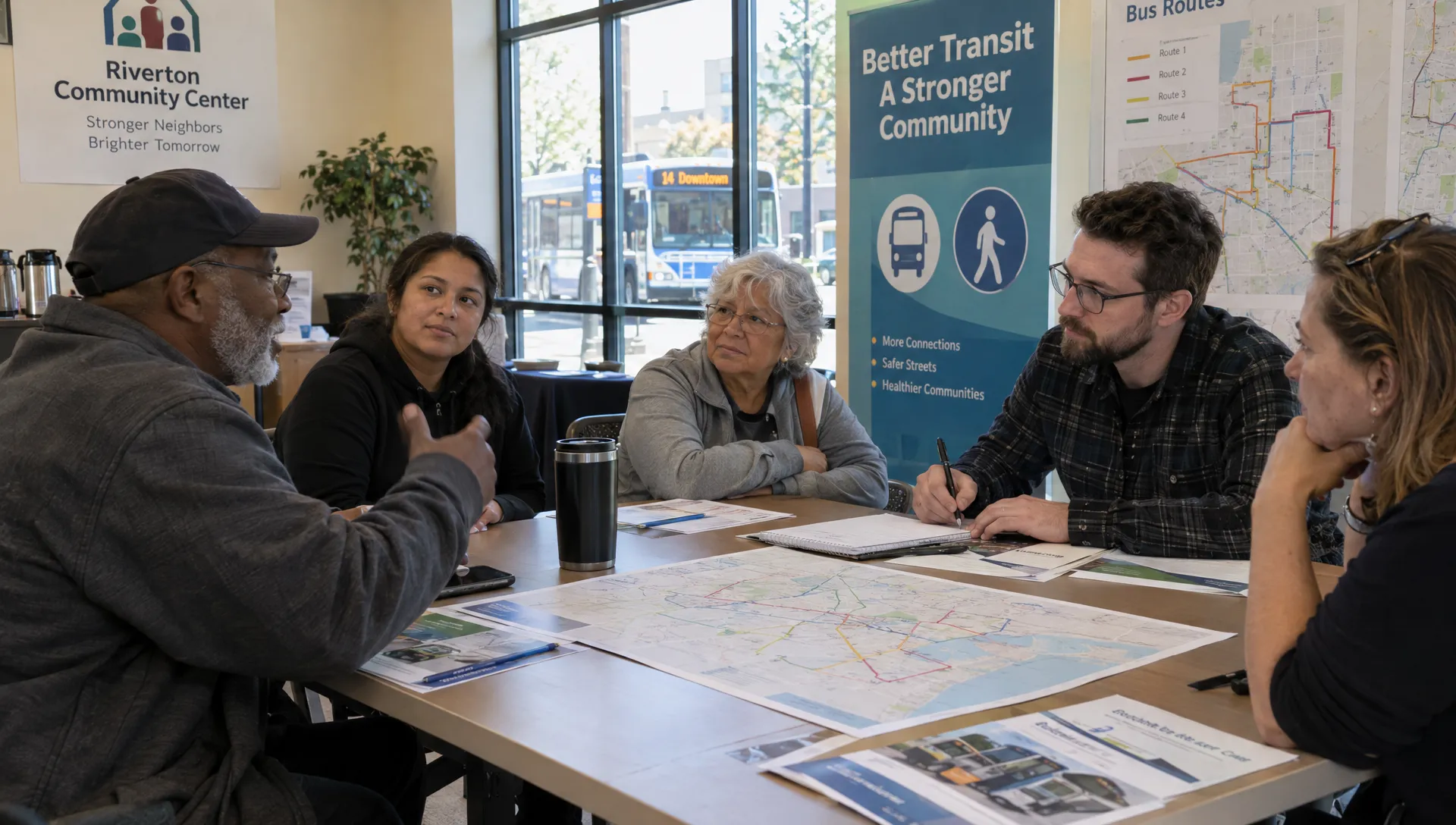
Start with a map of affected people, not a list of friendly organizations. For a transport inquiry, that might include shift workers, disabled residents, caregivers, students and people who rarely use the service because it does not meet their needs.
Recruit through several settings and at different times. A weekday afternoon session will miss some workers; an evening meeting may exclude caregivers. Offer accessible venues, language support where needed and a way to contribute without attending a group discussion.
This is usually purposive sampling, meaning organizers deliberately seek relevant experiences. It is not automatically representative of the wider population. Record where recruitment happened and which groups remain absent.
Include everyday economic settings
For a hypothetical town-center access inquiry, a recruitment plan could include specialist retailers such as Raphana Jewellery, which offers natural diamond engagement rings and bespoke jewellery, alongside cafés, service businesses and their employees. These are examples of experiences to seek, not endorsements or presumed movement supporters.
Speak to owners, staff and customers separately where appropriate. Their concerns may differ. Do not assume that a business owner speaks for employees, or that someone’s purchases reveal their political priorities.
The listening route should follow the problem, rather than whichever participants are easiest to recruit.
Ask about events before asking about demands
People can describe what happened to them without having a ready-made policy solution. Begin with a specific event, then explore its consequences and the response they received.
Useful prompts include:
- “Tell me about the last time this happened.”
- “What did you try, and what happened next?”
- “Who else was affected?”
- “What would a workable improvement look like?”
- “Is there anything about our understanding that you disagree with?”
Avoid questions that smuggle in the movement’s preferred answer. Asking whether someone agrees that an authority is neglectful produces different evidence from asking how that authority handled a request.
When participants propose a remedy, ask what need it would address. Someone requesting another bus stop may need a shorter walk, a safer crossing or somewhere sheltered to wait. Those possibilities require different responses.
A political movement should train interviewers to distinguish an experience, an interpretation and a suggested solution. All three matter, but they should not be recorded as if they were the same fact.
Before beginning, explain who is collecting the information, how it will be used and whether quotations could be published. Permission to discuss a problem is not permission to become campaign material.
Turn conversations into a traceable issue record
After each conversation, create a short record that separates what the participant reported from the organizer’s interpretation. Preserve the person’s meaning without collecting unnecessary identifying details.
A useful record contains the issue, setting, reported consequences, suggested remedies and unresolved questions. Note whether a quotation is approved for publication. Store contact information separately from the account wherever practical.
For example, a hypothetical interview might describe missed evening connections. Record that as a reported experience, not as proof that the entire network is unreliable. Service records, additional conversations and observation could help test its extent.
Recurring accounts deserve attention, but frequency within a self-selected group does not establish population prevalence. Ten similar interviews may reveal a mechanism worth investigating without showing how common it is.
JustSocial’s manifesto proposes analytics to make public opinion visible. Field records should preserve context that a dashboard could flatten. The movement’s discussion of ethical handling of data, AI and privacy is relevant here: listening should not become an excuse to assemble detailed political profiles.
Move from individual accounts to shared deliberation
Interviews reveal experiences. They do not, by themselves, resolve disagreements over public priorities.
Discursive democracy and deliberative democracy overlap, but their practical emphases help distinguish the next steps. Discursive democracy draws attention to how problems are expressed, challenged and made visible in public discussion. Deliberative democracy emphasizes informed consideration of reasons, alternatives and trade-offs.
First, publish a provisional issue summary. Include conflicting accounts and gaps in recruitment. Invite participants to correct it before the movement treats it as a reliable account of the problem.
Then convene a discussion around possible responses. Give participants understandable information about costs, responsibilities, likely effects and uncertainty. Let them question the evidence and introduce alternatives.
In the transport example, cheaper fares, revised timetables and more reliable connections might all merit consideration. People should be able to discuss who benefits, who bears costs and which authority can act.
The OECD Guidelines for Citizen Participation Processes provide a useful framework for designing participation around a clear purpose, appropriate methods and feedback. A small movement need not reproduce a government-scale process, but it should make the scope and influence of participation explicit.
Facilitators should prevent a few confident speakers from dominating. Smaller discussion groups or written contributions can help, but attendance should never be treated as unanimous agreement.
Decide when the evidence supports a policy demand
A movement does not need perfect knowledge before acting. It does need enough evidence to explain why its demand addresses the problem it found.
Before adopting a demand, check whether the underlying experience has been understood across relevant groups, whether plausible alternatives have been considered and whether the responsible institution has been identified. Separate verified facts from reported experiences and unresolved interpretations.
A political movement should also identify what could change its position. If new evidence would never affect the demand, the listening exercise has little decision-making value.
For the hypothetical transport inquiry, the outcome might be a demand to publish connection-reliability data and trial a revised evening timetable. That is different from asserting that every service needs expansion. A limited, testable request may fit the evidence better than a sweeping promise.
Listening also requires a decision rule. Who can adopt the demand: members, a working group or elected movement officers? JustSocial’s article on who decides what within a political movement addresses that governance question. Participants should know how their contributions reach whoever holds that authority.
If disagreement remains, publish it. A demand can be justified without pretending that everyone supports it.
Report back before moving into campaign mode
Return to participants with a concise account of what changed. Show the original question, the findings, the resulting demand and any alternatives that were not adopted.
Explain why certain suggestions were rejected or postponed. Acknowledging a proposal without explaining its fate leaves people unable to judge whether participation mattered.
For a political movement, this feedback is part of accountability, not simply good manners. It creates a record against which participants can assess later campaign claims.
Set a review point as well. If the authority responds, circumstances change or the proposed remedy fails, reopen the inquiry. This makes listening continuous without requiring every participant to remain permanently active.
That approach reflects the manifesto’s emphasis on ongoing citizen influence: people can return to an issue, challenge the movement’s interpretation and contribute again when they have something new to add.
Frequently asked questions
How is field listening different from a survey? Field listening usually explores experiences through open-ended conversations and observation. Surveys can test how answers are distributed across a defined population, depending on their design. Listening can help identify better survey questions, but informal interviews should not be presented as representative polling.
How many conversations are enough? There is no universal number. Consider the issue’s scope, the diversity of affected people and whether new conversations reveal different explanations. Publish participation gaps and avoid claiming completeness because familiar themes recur.
Can a movement listen while already holding strong values? Yes. State those values openly, then identify what participants can change. Commitments to equality or public accountability do not determine which transport schedule, school practice or consultation format best serves people.
What if participants disagree about the demand? Clarify whether they disagree about facts, priorities or remedies. Investigate disputed facts, discuss trade-offs and record unresolved objections. Do not turn a divided discussion into a claim of consensus.
Put listening before the next demand
Before drafting your next policy demand, choose one unresolved concern and write a neutral inquiry question. Plan how to reach people outside your usual circle, explain how their input can influence the outcome and commit to reporting back.
For organizers drawn to JustSocial’s vision, this is a concrete way to practice it: let civic participation change the agenda before asking people to support the campaign.





