A city council agenda can look routine until you notice a zoning change that affects your block, a proposed cut to a youth program, or a contract that will shape a public service for years. By the time Election Day arrives, that decision may already be settled. So, how can citizens participate in government besides voting? We can show up earlier, organize with others, use public information, and help shape the systems through which decisions are made.
Voting remains essential. It determines who holds public office and sets the broad direction of public policy. But democracy cannot rely on a single act every few years. A healthy democracy gives people meaningful ways to participate between elections, especially when public decisions affect their homes, schools, work, health, and communities.
How Can Citizens Participate in Government Besides Voting?
The answer starts with recognizing that government is not one distant institution. It is a network of local boards, public agencies, school districts, courts, state legislatures, and federal offices. Each has different rules, timelines, and opportunities for public participation. The most effective path depends on the issue and on where the decision is actually being made.
Follow the decision before it becomes final
Public decisions often move through predictable stages: a proposal is drafted, staff members review it, a committee discusses it, an agency collects comments, and elected officials take action. Citizens have the most influence when they understand that path early enough to join it.
Start by identifying the decision-maker. If a crosswalk is needed near a school, the city transportation department may matter more than a member of Congress. If a state agency is changing eligibility rules for a public benefit, an agency comment period may be the immediate opening. A clear question helps: Who has the authority, what is the timeline, and what evidence or public input can change the outcome?
Public meeting agendas, budgets, hearing notices, and agency calendars can make this process more visible. They are not always easy to read, and that is a real barrier. Still, learning to track one issue through a local institution can turn frustration into a practical civic habit.
Speak in the places where the public record is created
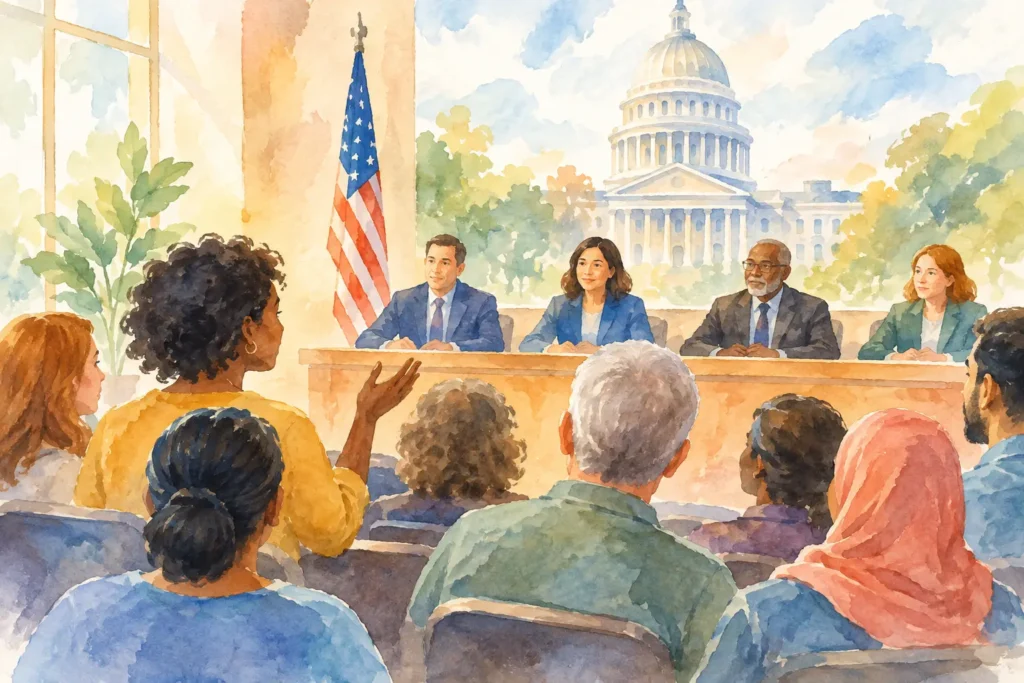
Public comment is more than a ceremonial microphone at the end of a meeting. Testimony at a hearing, a written comment on a proposed rule, or a letter submitted to a legislative committee becomes part of the record decision-makers are expected to consider.
The strongest comments are specific. Describe the problem, explain who is affected, and make a clear request. A parent might ask a school board to preserve bus service on a particular route. A nonprofit leader might explain how a funding delay disrupts services for older adults. A neighborhood coalition might ask for a traffic study before a development approval.
A single comment may not reverse a decision. But coordinated, informed input can change language, delay a harmful proposal, secure a public meeting, or put an overlooked concern into the official record. Written comments can also help residents participate when work schedules, disability, child care, or transportation make attendance difficult.
Serve on boards, commissions, and advisory groups
Many of the decisions that shape daily life are influenced by people who are not elected. Planning commissions, library boards, parks committees, tenant advisory councils, disability advisory groups, and school site councils can all create a direct route into public decision-making.
These roles require time, and some are more influential than others. Advisory bodies may only make recommendations, while appointed commissions can hold substantial authority. Before applying, ask what the group controls, how members are selected, how often it meets, and whether its recommendations receive public responses.
Service also raises an inclusion question. Government bodies often recruit people who already know how the process works. Communities are better represented when appointments include renters, young people, working parents, people with disabilities, immigrants, and residents who have firsthand experience with the systems under discussion. Participation should not be reserved for those with the most free time or the loudest access to power.
Organize around a shared public need
An individual can raise an issue. A group can sustain it. Organizing turns private experiences into a public case for action, whether neighbors are seeking safer streets, workers are advocating for stronger protections, or families are defending a local school program.
Effective organizing does not require a large organization at the start. It can begin with listening. Talk with people directly affected, gather stories and data, agree on a practical demand, and choose the public body that can act. Then keep showing up. A petition can demonstrate support, but it carries more weight when it is connected to meetings, testimony, follow-up, and a clear plan for accountability.
Coalitions also make participation more durable. Community groups, nonprofits, faith communities, tenant associations, and professional networks can share the labor of research, outreach, translation, child care, and meeting attendance. That shared capacity matters because public processes often favor people who can participate repeatedly.
Use public information to hold institutions accountable
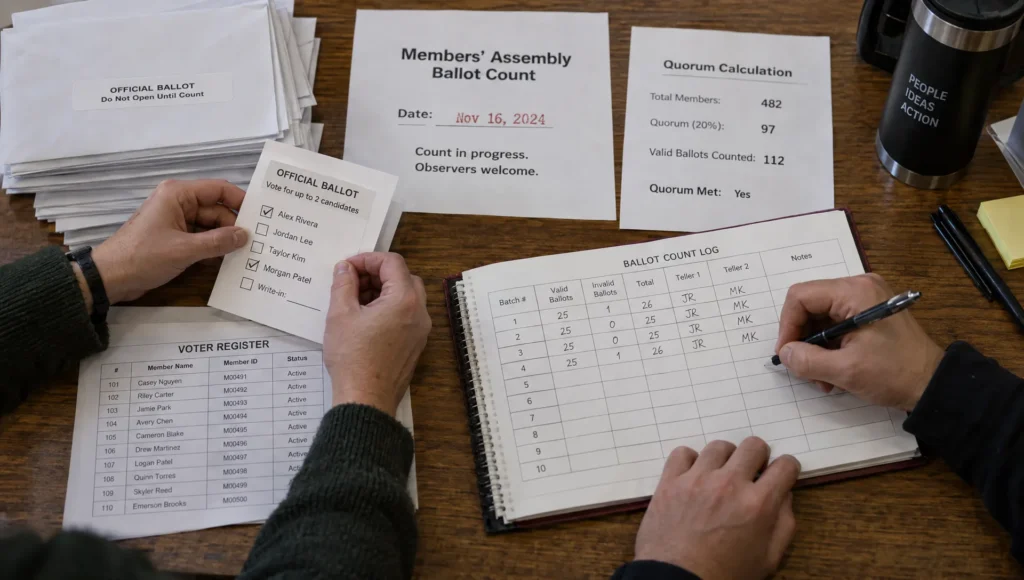
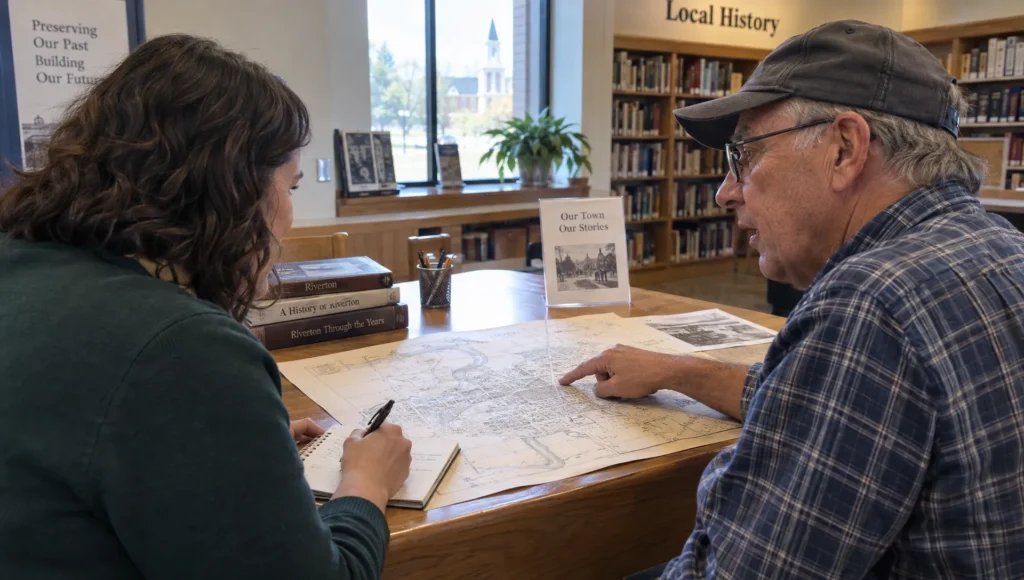
Budgets reveal priorities. Meeting minutes show what was discussed. Performance reports can show whether a program is reaching the people it was designed to serve. Public records laws give citizens another way to examine government action when important information is not readily available.
Accountability is not only about exposing wrongdoing. It is also about asking whether public promises produced public results. If a city allocates funds for affordable housing, residents can track where the money goes, how many homes are created, and who benefits. If a school district adopts a new safety policy, families can ask how its effects are measured.
This work takes care. Data can be incomplete, hard to interpret, or stripped of context. Public scrutiny should be accurate and fair, not a shortcut to suspicion. When citizens bring questions, documentation, and lived experience together, they create a stronger basis for change.
Help design solutions, not only react to them
Participation is often framed as saying yes or no to a proposal made by someone else. Communities can also help create the proposal. Participatory budgeting, resident design workshops, community benefit agreements, and citizen assemblies are examples of approaches that invite people into problem-solving earlier.
These processes are not automatically democratic just because they are open. A workshop held during work hours, a digital survey available only in English, or a budget vote without clear information can reproduce the same exclusions it claims to solve. Good participation includes accessible materials, multiple ways to contribute, transparent rules, and a public explanation of how input affected the final decision.
Digital tools can expand this work when they are treated as civic infrastructure rather than a replacement for community relationships. They can make agendas easier to understand, collect input over time, show the status of proposals, and give residents a visible record of what government heard and did. JustSocial supports this broader vision: democracy as an ongoing relationship in which people can contribute, deliberate, and see their participation matter.
Participation Needs Power, Not Just a Platform
Inviting people to comment is not the same as sharing decision-making power. Governments sometimes collect feedback after a choice has effectively been made, or they consult communities without explaining why their recommendations were rejected. That pattern creates understandable distrust.
Meaningful participation has three basic conditions. People need timely information, a genuine opportunity to influence an outcome, and a clear response from the institution. If officials cannot follow every recommendation, they should still explain the trade-offs and the reasons for their decision. Transparency does not guarantee agreement, but it makes public authority easier to evaluate.
Citizens also have responsibilities within this relationship. We should verify claims before sharing them, make room for neighbors with different experiences, and distinguish disagreement from bad faith. Democracy is not strengthened by louder conflict alone. It is strengthened when people can contest decisions openly while protecting one another’s right to belong.
Build a Civic Practice That Fits Your Life
No one can attend every meeting or track every policy issue. The goal is not constant political exhaustion. Choose one place where your voice can be useful: a school district, neighborhood association, public transit system, local nonprofit, or state policy area that affects your community.
Set a sustainable rhythm. Read one agenda each month. Attend one public meeting each quarter. Subscribe to updates from a local agency. Bring one neighbor into the process. Small, repeated actions build knowledge, relationships, and confidence over time.
When citizens participate beyond the ballot box, government becomes less of a distant force and more of a shared public responsibility. The next agenda item may seem small, but it may also be the place where your community learns that democracy can listen, respond, and belong to all of us.