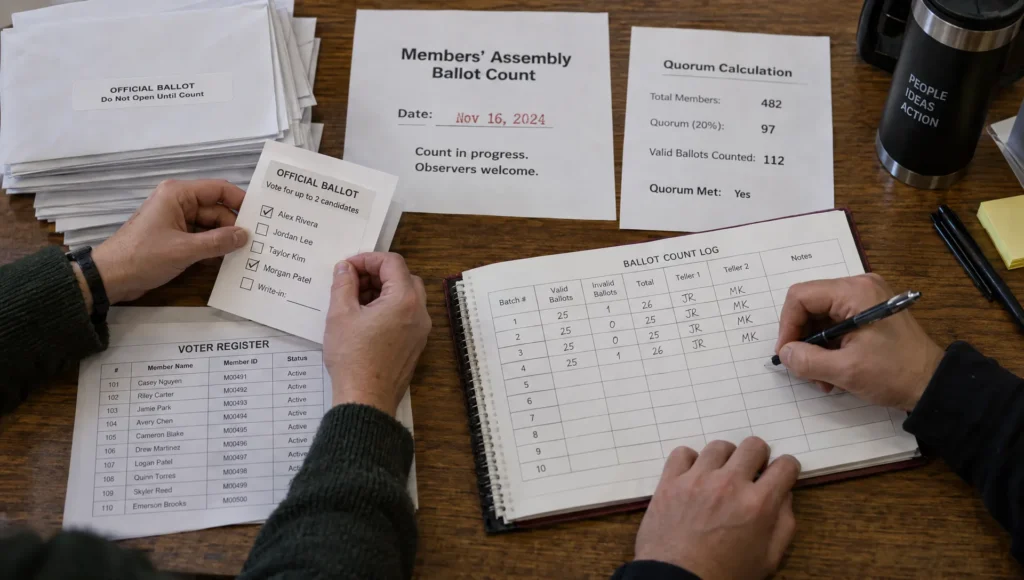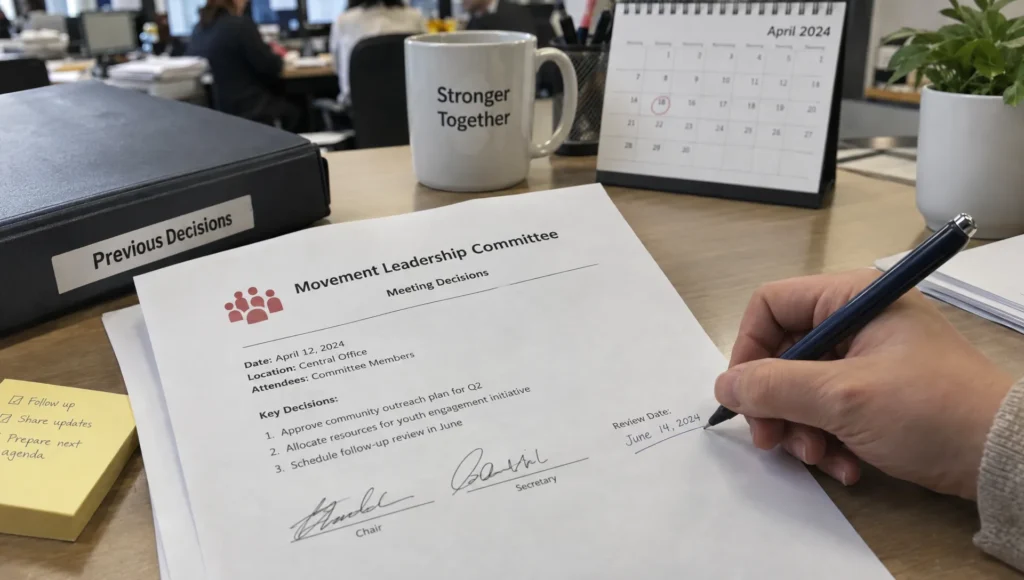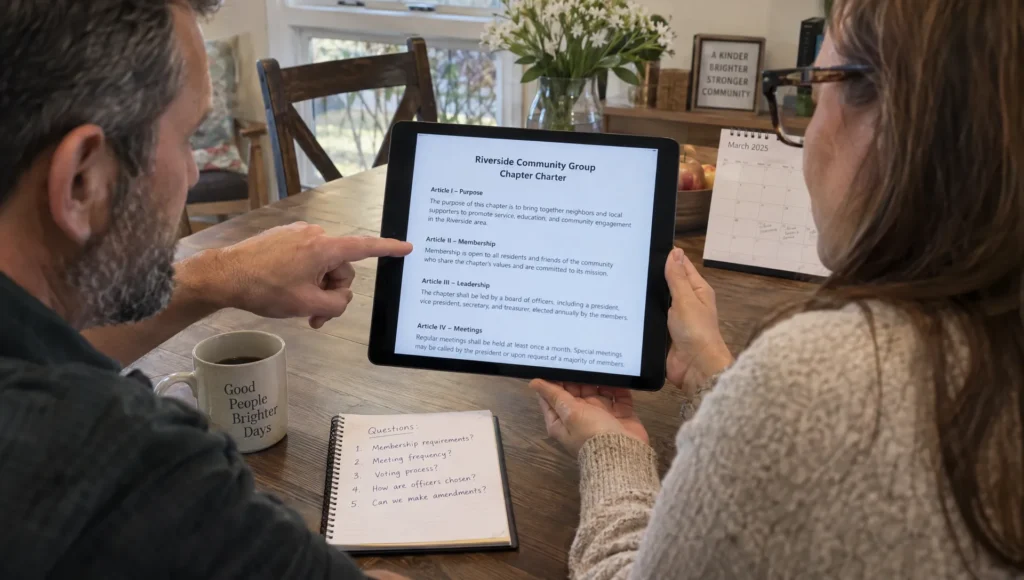
Civic participation often fails at the same point: citizens speak, institutions receive the input, and then nothing visible happens.
A resident signs a petition. A parent speaks at a school board meeting. A neighborhood group submits comments on zoning. Hundreds of people respond to a public consultation. Then the public record goes quiet. The decision may eventually appear, but citizens are left guessing whether their argument was read, whether it mattered, or whether the process was only ceremonial.
That silence is not a minor administrative flaw. It is one of the reasons people stop believing participation is worth their time.
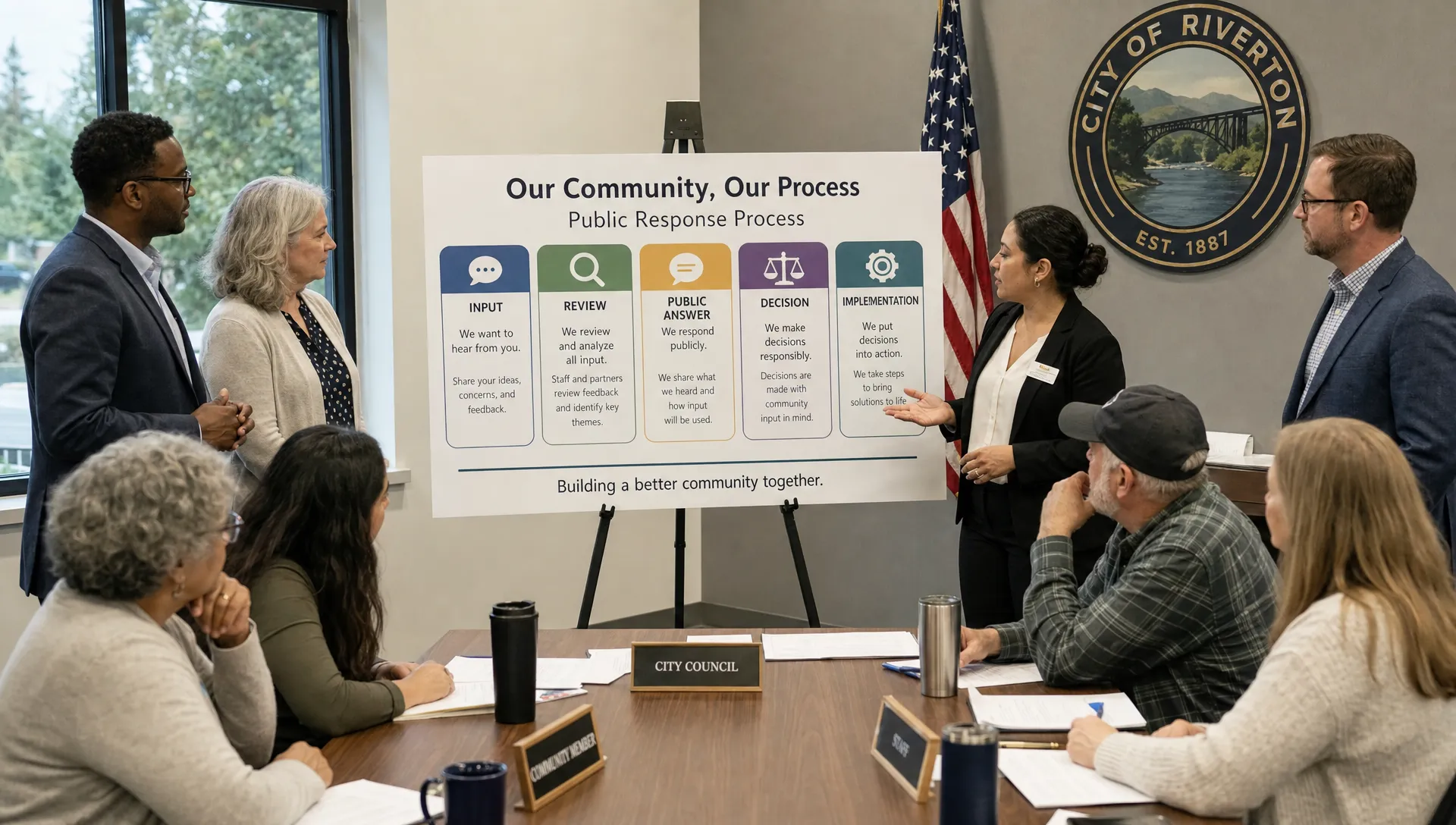
If civic participation is going to become a real part of modern democracy, not just a ritual between elections, public institutions need public response rules. These are clear obligations that require governments, agencies, committees, and public bodies to answer citizen input in structured, timely, and traceable ways.
The point is not that every public demand must become policy. Democracy is not government by whoever comments the loudest. The point is that public institutions should not be allowed to ask for citizen input and then provide no meaningful response. A democratic system that invites participation must also explain what it did with that participation.
That is the missing rule layer between public voice and public power.
What Are Public Response Rules?
Public response rules are the civic equivalent of a receipt, a reasoned answer, and a follow-up obligation.
They define what a public body must do after citizens participate. They answer questions such as:
- Who is responsible for reviewing the input?
- When must the public body respond?
- How will arguments be summarized?
- What happens when a proposal is accepted, modified, or rejected?
- Where can citizens see the decision trail?
- How will implementation be tracked after the decision?
Without those rules, civic participation becomes dependent on the goodwill, attention span, or political convenience of officials. With those rules, participation becomes part of the operating system of government.
This distinction matters deeply for a political movement that believes democracy should be continuous. In the JustSocial manifesto, Yuval D. Vered argues that citizens have been reduced to voters, taxpayers, and consumers. Public response rules are one practical way to reverse that reduction. They make it harder for the state to treat citizens as occasional ballot inputs and easier to treat them as ongoing participants in public life.
Participation Without Response Creates Democratic Exhaustion
Many citizens are not apathetic by nature. They are trained into apathy by systems that do not answer them.
When people participate repeatedly and see no visible effect, they learn a rational lesson: public input is symbolic. That lesson spreads quickly through communities. Residents tell each other that public hearings are performative, surveys are ignored, and consultations are already decided before they begin.
This creates democratic exhaustion. People may still care about public issues, but they stop using official channels. Some withdraw completely. Others move toward protest, outrage, or online hostility because those channels at least feel immediate.
That is a dangerous pattern. A democracy that does not build reliable pathways for normal participation eventually gets participation in more chaotic forms.
Public response rules reduce that exhaustion by making the system legible. Citizens may not always get the result they wanted, but they can see whether their argument entered the decision process. A transparent “no” with reasons is often healthier for democracy than silence.
Why Better Public Tech Is Not Enough on Its Own
Modern democracy needs better platforms, but software alone cannot fix civic participation.
A city can launch a beautiful consultation portal. A ministry can create an online voting platform. A parliament can livestream committees and publish documents. All of that matters, and JustSocial has already argued that civic participation needs better public tech. But even the best technology can become another comment box if institutions have no duty to respond.
This is where public response rules become essential. Technology can collect input, organize comments, verify identity, support deliberation, and show trends. Rules determine whether officials must do anything accountable with that information.
A digital democracy without response rules risks becoming a more efficient way to ignore people.
The same is true in other areas of public life. People expect practical, organized guidance when making decisions that affect their well-being. Someone trying to improve their physical health can use curated fitness and wellness resource hubs to compare information and choose a path. Civic life deserves at least the same clarity. Citizens should be able to understand where to participate, what rules govern the process, and what kind of public answer they can expect.
The Core Rules Every Participation Process Should Have
Public response rules should be simple enough for local governments to use, but strong enough to prevent symbolic participation. The following framework can apply to public hearings, online consultations, participatory budgeting, school governance, city planning, and national policy processes.
| Rule | What It Requires | Why It Matters |
|---|---|---|
| Decision owner | Name the official body or office responsible for the final decision | Prevents input from disappearing into bureaucracy |
| Decision question | State the actual decision being considered | Keeps participation focused on a real public choice |
| Response deadline | Publish when the institution must answer | Protects citizens from indefinite silence |
| Public summary | Summarize major arguments, evidence, and concerns | Shows that input was read and understood |
| Reasoned answer | Explain what was accepted, rejected, or modified | Turns participation into accountable governance |
| Minority record | Preserve significant dissenting views | Protects deliberative democracy from majority flattening |
| Implementation tracker | Show what happens after the decision | Connects civic participation to real-world outcomes |
| Review point | Set a date for evaluating results | Makes decisions part of a learning loop |
The goal is not to bury government in paperwork. The goal is to create a predictable public habit: if citizens take the time to participate, institutions take the time to answer.
Public Response Rules Strengthen Deliberative Democracy
Deliberative democracy depends on more than voting. It depends on people exchanging reasons, hearing competing claims, weighing evidence, and revising positions when persuaded.
But deliberation becomes weak when institutions treat public reasoning as background noise. If citizens explain their concerns and no one explains how those concerns affected the outcome, deliberation loses its public value.
Response rules give deliberation a destination. They tell participants that arguments will be categorized, summarized, and answered. They also encourage better participation because citizens know that evidence, reasoning, and practical proposals are more likely to be reflected in the public response than slogans alone.
This matters especially for complex issues such as education reform, housing, transportation, taxation, public safety, and climate policy. These issues cannot be solved by raw opinion polling. They require public reasoning. They require officials to hear not only what people want, but why they want it, what tradeoffs they accept, and what consequences they fear.
Public response rules help turn scattered input into a deliberative record.
Public Response Rules Also Improve Discursive Democracy
Discursive democracy focuses on the wider public conversation: hearings, media, civic platforms, community meetings, online debate, expert commentary, and everyday political speech.
In theory, democratic discourse should shape public judgment. In practice, it is often fragmented. Public hearings can become open microphones with no decision connection. Social platforms reward outrage over understanding. Officials can cherry-pick the voices that support their existing plans.
JustSocial’s writing on discursive democracy in public hearings points toward a better model: make public speech legible, structured, and tied to decision-making. Response rules are a natural extension of that idea.
A discursive system needs more than the right to speak. It needs public methods for listening.
Good response rules can require institutions to separate different kinds of input. Personal testimony, technical evidence, moral arguments, budget concerns, and implementation warnings should not be collapsed into one vague phrase such as “public feedback.” Each plays a different democratic role.
For example, a school district reviewing a curriculum change might receive comments from students, parents, teachers, researchers, and local employers. A strong response rule would require the district to summarize these groups separately, explain conflicts between them, and state how the final decision weighed each type of claim.
That is not bureaucracy. That is democratic seriousness.
Public Response Is Not the Same as Direct Obedience
One common objection is that public response rules could make government too reactive. What if officials feel forced to follow every public demand? What if the loudest group captures the process?
The answer is simple: response is not obedience.
A public body can listen carefully and still reject a proposal. It can explain that a demand is illegal, unaffordable, inequitable, impractical, or inconsistent with long-term public goals. It can also accept part of a proposal while rejecting another part.
The democratic failure is not disagreement. The democratic failure is unaccountable silence.
This distinction is central to continuous direct democracy. The JustSocial vision does not require every public signal to become an automatic referendum. The manifesto imagines citizens as a new branch of government whose opinions are continuously measured and considered, while representative, judicial, executive, and academic institutions remain independent. Public response rules help balance those principles. They allow the people to be heard continuously without turning every moment of public anger into instant policy.
In other words, response rules can make democracy more responsive without making it reckless.
What a Good Public Response Should Include
A useful public response does not need to be long. It needs to be clear, structured, and tied to the decision.
At minimum, a public response should include:
- The decision being made and the authority responsible for it
- The number and type of participation inputs received
- The strongest arguments for each major position
- The evidence or constraints the institution considered
- The decision, delay, or next step
- The reasons for accepting or rejecting major public proposals
- The implementation timeline if action is taken
- The next opportunity for review or participation
This kind of response changes the emotional tone of civic participation. Citizens no longer feel as if they are shouting into a void. Officials no longer have to rely on vague claims that they “heard the community.” The public record shows what was heard and how it was handled.
Local Government Is the Best Place to Start
Public response rules can begin locally because local decisions are often concrete, visible, and close to daily life.
A city can require response rules for zoning changes, street redesigns, school policies, budget priorities, public transportation updates, and community safety programs. A neighborhood can test structured participation before a municipality adopts it citywide. A school can use response rules for student and parent input.
Local participation also makes implementation easier to track. If residents ask for a safer crossing, the public response can show whether the city accepted the request, when the crossing will be reviewed, what budget is needed, and when residents can expect an update. This fits the broader idea that civic participation works best through visible decision loops, where input, decision, action, and review are connected.
The lesson is simple: democracy becomes more believable when people can see the loop close.
How a Political Movement Can Demand Response Rules
Public response rules will not appear automatically. Institutions rarely volunteer to become more accountable unless citizens demand it.
That is why this issue belongs at the center of a modern political movement. A movement for civic participation should not only ask people to speak. It should demand that public bodies answer.
A practical platform could call for response-rule legislation at municipal, state, and national levels. It could ask every public consultation to publish its decision owner, response deadline, public summary, and implementation tracker. It could require committees to connect testimony to final reports. It could require agencies to explain when public input changed a policy and when it did not.
This is not a partisan demand. It does not belong exclusively to left or right. Every citizen has an interest in knowing whether public institutions are listening honestly.
In the JustSocial frame, this is part of moving from the old industrial model of public life toward a technological and civic Cosmopolis, a society where citizens are not passive subjects of distant systems but active participants in shaping public decisions. Public response rules are one of the bridges between that philosophy and daily governance.
The Deeper Principle: The State Must Learn to Answer
The manifesto argues that modern public systems are still shaped by old industrial structures. Schools, bureaucracies, parties, and representative institutions often operate as if citizens must adapt to the system, not as if the system must learn from citizens.
Public response rules reverse that posture.
They say the state has a learning duty. When citizens participate, the institution must absorb, organize, answer, and update. It must build memory. It must show its reasoning. It must make disagreement visible instead of hiding it behind final decisions.
That is a more mature democracy. It respects expertise without silencing citizens. It respects representatives without allowing them to become deaf. It respects public emotion without letting emotion alone govern.
Most importantly, it treats civic participation as a relationship rather than an event.
Frequently Asked Questions
What are public response rules in civic participation? Public response rules are obligations that require public institutions to acknowledge, summarize, answer, and track citizen input after participation processes such as hearings, consultations, petitions, or online voting.
Do public response rules make citizen input legally binding? Not necessarily. They require institutions to respond with reasons, but they do not automatically force officials to adopt every public demand. The goal is accountable listening, not instant obedience.
How do response rules support deliberative democracy? They give public reasoning a visible destination. Citizens can see how arguments were understood, weighed, accepted, modified, or rejected, which makes deliberation more meaningful.
Can small towns or local agencies use public response rules? Yes. Local governments can start with simple templates: name the decision owner, publish the decision question, summarize input, provide a reasoned answer, and track implementation.
It Is Time to Make Public Listening Mandatory
Civic participation cannot survive on invitations alone. If governments ask citizens to speak, they must be required to answer.
Public response rules are not a technical detail. They are a democratic principle. They transform participation from noise into public memory, from frustration into accountability, and from isolated comments into continuous democratic influence.
For JustSocial, this is part of the larger mission: building a political movement for continuous direct democracy, citizen empowerment, and public systems that finally listen. The next stage of democracy should not only give people more ways to participate. It should give every citizen a clear right to see how the public system responded.