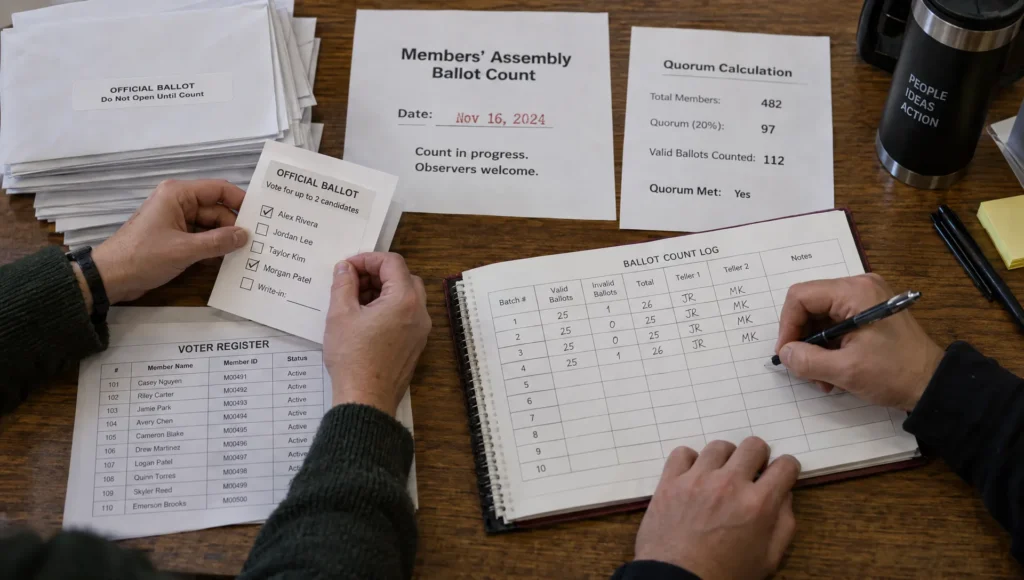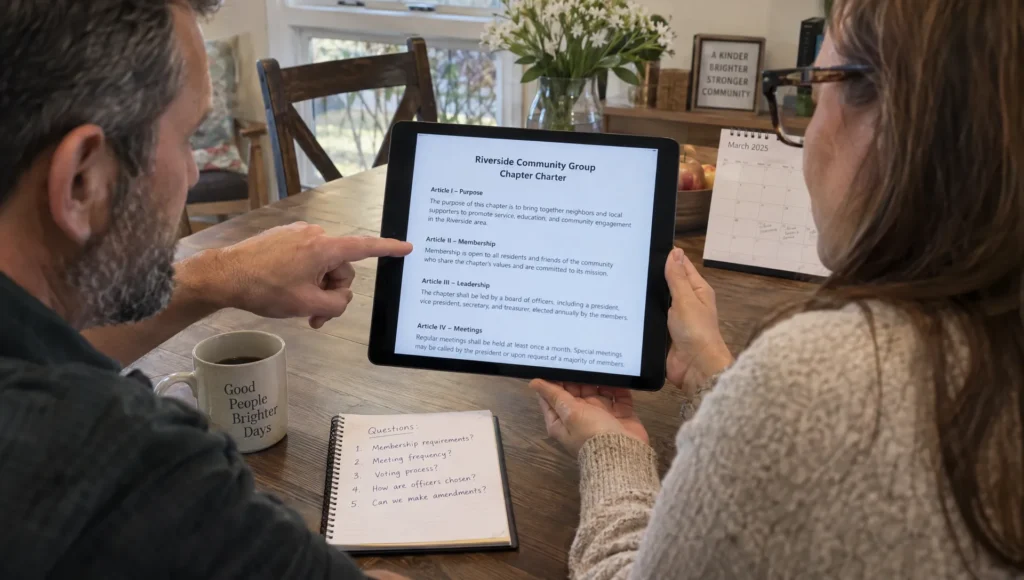
Civic apps often promise a simple upgrade to democracy: put participation on a phone, let people vote, comment, sign, and share, then call it engagement. The problem is that democracy is not only a user interface. If a civic app only recreates the comment section, the petition form, or the four-year ballot in digital form, it may increase activity without increasing public judgment.
That is where discursive democracy can improve civic apps. It treats democratic participation as an ongoing public conversation where citizens give reasons, hear counterarguments, revise positions, and see how institutions respond. Instead of asking only, “What do you support?” a discursive civic app also asks, “Why do you support it, what evidence matters, who is affected, and what should happen next?”
For JustSocial, this distinction is central. The JustSocial manifesto argues that citizens should not be reduced to voters, taxpayers, and consumers. Civic technology should help people weigh in continuously, transparently, and meaningfully on public life. Discursive democracy gives civic apps the missing civic layer between attention and action.
Why many civic apps underperform
Most civic apps are built around understandable goals: collect feedback, publish updates, run votes, map complaints, or mobilize people around campaigns. These are useful functions, but they often fail to create trust because they do not change the relationship between citizens and institutions.
A city may launch a consultation portal, yet residents still feel unheard. A campaign may collect thousands of signatures, yet no one knows which arguments persuaded anyone. A government may post committee recordings, yet the public cannot easily connect a statement, vote, document, and official response into a coherent memory.
The weakness is not only technical. It is democratic. Apps are frequently designed around transactions rather than public reasoning. They count clicks, comments, and votes, but they rarely structure the conversation in a way that helps citizens understand one another or helps public officials account for what they did with public input.
This is why civic participation can look busy while remaining shallow. People may be active, but the system still does not listen well.
Discursive democracy vs. deliberative democracy in civic app design
Discursive democracy and deliberative democracy are related, but they are not identical.
Deliberative democracy usually focuses on structured processes where people study an issue, discuss tradeoffs, and produce recommendations. Citizens’ assemblies, participatory budgeting workshops, and mini-publics are examples. The OECD has documented how deliberative processes can improve public decision-making when participants receive balanced information and institutions commit to responding.
Discursive democracy is broader and more continuous. It is about the everyday public sphere: news, comments, committee debates, community meetings, petitions, votes, campaigns, expert input, and institutional replies. It does not require every citizen to sit in a formal deliberative process. It asks civic systems to make public reasoning visible, organized, accountable, and connected to action.
For civic apps, this matters because most participation is not a one-time workshop. It is ongoing. Residents react to new laws, school policies, transit failures, budgets, court rulings, tax decisions, local planning, and national crises. A discursive civic app helps that everyday political speech become useful civic infrastructure.
| Model | Main focus | Civic app implication |
|---|---|---|
| Voting-first app | Preference collection | Users choose options, but reasons may remain hidden |
| Comment-first app | Open expression | Users speak freely, but signal is often buried in noise |
| Deliberative app | Structured judgment | Smaller groups study tradeoffs and produce recommendations |
| Discursive app | Continuous public reasoning | Citizens, experts, media, and officials build an auditable conversation around decisions |
The best civic apps can combine all four, but discursive democracy is the layer that makes the others more legitimate.
How discursive democracy improves civic apps
It turns comments into structured civic input
Open comment boxes are easy to build and hard to govern. They tend to reward speed, anger, repetition, and slogans. A discursive civic app can still allow free expression, but it should also help people sort their contributions into useful democratic categories.
For example, a user responding to a proposed school policy could label a contribution as a personal experience, factual claim, legal concern, budget objection, alternative proposal, or request for clarification. Other users could then engage with the type of contribution rather than treating every post as the same kind of speech.
This does not remove emotion from democracy. It gives emotion a path into public reasoning. A parent’s frustration, a teacher’s concern, and a student’s experience all matter, but a good app helps connect them to evidence, tradeoffs, and decisions.
It adds context before votes
Online voting platforms can collect preferences quickly, but voting without context can become a poll of first impressions. Discursive design adds learning before choice.
Before a user votes on a proposal, the app can show a short issue brief, the strongest arguments on each side, affected groups, budget implications, legal constraints, and official responsibilities. If the proposal has changed over time, the app can show why.
This is especially important for continuous direct democracy. If citizens are invited to participate more often, they need better civic information, not just more notifications. The goal is not to turn every resident into a full-time policy analyst. The goal is to make participation responsible enough to matter.
It connects news, dialogue, and action
A major idea in the JustSocial vision is that civic apps should not stop at awareness. The manifesto’s TakeAction concept imagines a news experience where citizens can move from an article to petitioning, contacting representatives, donating, volunteering, sharing, or otherwise acting.
Discursive democracy improves this model by adding a reasoning layer between news and action. A news story about housing, education, security, climate, or public spending should not only produce outrage or passive consumption. It should open a civic pathway: What happened? What are the competing explanations? Which institution is responsible? What actions are available? What arguments are citizens making? What response has the state given?
This connects closely with JustSocial’s broader work on discursive democracy for news, dialogue, and action, where journalism is treated as a starting point for civic understanding rather than the end of public attention.
It builds public memory instead of disposable feeds
A normal social feed forgets quickly. Yesterday’s debate disappears beneath today’s outrage. That is useful for attention markets, but harmful for democracy.
Civic apps should preserve public memory. If a committee discusses a bill, residents comment, experts submit evidence, officials respond, and a vote takes place, those pieces should remain connected. People should be able to trace how an issue moved from public concern to institutional action.
This is where concepts like rParliament in the JustSocial manifesto become important. Publishing recordings and documents is only the first step. The app should also connect clips, citizen comments, official votes, amendments, and outcomes. A civic app becomes more powerful when it can answer: Who argued what, based on what evidence, and what did the institution do afterward?

It makes moderation a democratic function
Moderation is often treated as a platform safety problem, but in civic apps it is also a legitimacy problem. If users believe moderation is arbitrary, partisan, or hidden, they will distrust the process.
Discursive democracy makes moderation more transparent. Rules should be public, consistently enforced, and tied to civic purpose. The aim is not to make debate soft or artificial. The aim is to protect the conditions for meaningful disagreement.
A discursive app can distinguish between strong criticism and harassment, between unpopular arguments and false claims, between satire and manipulation. It can also allow appeals and publish aggregate moderation reports without exposing private user data.
This is where democratic technology must be different from ordinary social media. A civic app should not optimize for maximum conflict. It should optimize for usable disagreement.
It makes identity meaningful without turning into surveillance
Identity matters in democracy. A student, parent, veteran, business owner, tenant, teacher, immigrant, or disabled resident may experience the same policy differently. The JustSocial manifesto proposes voluntary identity tagging so citizens can express how they are affected while preserving anonymity where needed.
That idea is powerful, but it must be handled carefully. Civic apps should use privacy-conscious design, data minimization, consent, strong cybersecurity, and clear boundaries between public reasoning and personal profiling. The goal is civic recognition, not surveillance.
A discursive civic app might show that a transportation proposal is supported by many commuters but opposed by residents near a construction area. It might show that a school reform is viewed differently by teachers, parents, and students. These patterns help institutions listen more precisely, as long as individuals remain protected.
This is also why political algorithms cannot be treated as neutral background machinery. Recommendation systems, ranking rules, and analytics dashboards shape what citizens see and what officials notice. JustSocial explores this challenge in its article on discursive democracy in the age of political algorithms, and civic apps should treat these systems as governable democratic infrastructure.
A practical discursive workflow for civic apps
The following workflow can help product teams, governments, and civic movements design apps that do more than collect noise.
| App stage | What the user does | What the institution must provide | Discursive improvement |
|---|---|---|---|
| Issue discovery | Finds a public issue or proposal | Clear description, responsible body, timeline | Users understand what is actually being decided |
| Context layer | Reads summaries and evidence | Balanced briefs, documents, data sources | Participation starts from shared facts |
| Public reasoning | Adds arguments, questions, experiences, or alternatives | Transparent rules and moderation | Speech becomes organized civic input |
| Preference layer | Votes, ranks, endorses, or objects | Clear voting method and eligibility rules | Preferences are connected to reasons |
| Institutional response | Sees what officials did | Explanation, decision record, next steps | Citizens can evaluate accountability |
| Public memory | Revisits the issue later | Archive of claims, evidence, votes, replies, and outcomes | Democracy learns over time |
This model can support neighborhood decisions, school communities, local budgeting, parliamentary transparency, campaign organizing, or national consultations. The scale changes, but the democratic logic remains the same.
What governments should demand from civic technology
If public institutions buy or build civic apps, they should not evaluate them only by registrations, downloads, or votes cast. Those metrics matter, but they are not enough.
A stronger civic app scorecard should ask whether the platform improves public reasoning and institutional accountability.
| Evaluation question | Why it matters |
|---|---|
| Are citizens shown balanced context before participating? | Better information improves the quality of input |
| Can users explain reasons, not only vote? | Reasons help officials understand tradeoffs |
| Are minority views preserved? | Democracy must hear more than the winning side |
| Is the decision timeline visible? | Transparency reduces suspicion and confusion |
| Are official responses required and archived? | Participation matters only if institutions answer |
| Are algorithms, ranking rules, and moderation policies explainable? | Hidden systems can distort civic attention |
| Is the app accessible to people with disabilities and low digital literacy? | Civic participation must not become a privilege |
Accessibility deserves special attention. Digital democracy should expand participation, not exclude people who struggle with technology, language, disability, or connectivity. The W3C Web Content Accessibility Guidelines offer a widely used framework for making digital interfaces more accessible. Civic apps should treat accessibility as a democratic requirement, not a design afterthought.
Why this matters for a political movement
A political movement that believes in citizen empowerment cannot rely only on slogans, viral posts, or election cycles. It needs civic infrastructure that lets people practice democracy continuously.
Discursive democracy helps a movement avoid two common traps. The first is pure populism, where the loudest or most emotional response is treated as the will of the people. The second is technocracy, where experts and officials make decisions while citizens are invited only to react afterward.
A discursive civic app creates a better relationship. Citizens bring lived experience, values, priorities, and consent. Experts bring evidence and professional judgment. Officials bring authority and responsibility. The app connects these roles in a transparent process that can be reviewed, criticized, and improved.
This is close to the manifesto’s image of a modern Polis at scale. The ancient Polis was intimate because citizens could feel the political community directly. Modern states are too large for that old form, but technology can restore some of its immediacy if it is designed for civic life rather than attention extraction.
The risks are real, but they are design problems and governance problems
Discursive civic apps are not automatically democratic. A poorly designed app can amplify misinformation, expose private identities, manipulate ranking, reward organized brigading, or create the illusion of participation while officials ignore the results.
That is why the governance of the app matters as much as the software. Rules must be public. Data use must be limited. Cybersecurity must be serious. Public officials must be required to respond. Independent oversight, including academic review where possible, can help keep the system honest.
The JustSocial manifesto argues for academia as a more formal democratic force, helping educate the public and hold institutions to higher standards. In civic app design, that could mean expert review of issue briefs, evaluation of participation quality, research into bias, and public audits of civic technology.
The point is not to worship technology. The point is to make technology serve a healthier social contract.
Frequently Asked Questions
What is discursive democracy in simple terms? Discursive democracy is a model of democracy where public conversation, reasoning, disagreement, and institutional response are central. It is not only about counting votes. It is about making the reasons behind public choices visible and accountable.
How can discursive democracy improve civic apps? It can improve civic apps by structuring comments, adding context before votes, preserving public memory, making moderation transparent, connecting participation to official responses, and helping citizens understand how their input affects decisions.
Is discursive democracy the same as deliberative democracy? No. Deliberative democracy often refers to structured discussions among selected or organized groups. Discursive democracy is broader and can include everyday civic conversation across apps, news, committees, campaigns, communities, and public institutions.
Can online voting alone create better democracy? Online voting can make participation easier, but it is not enough by itself. Without context, public reasoning, transparency, privacy safeguards, and institutional accountability, online voting may collect preferences without improving democratic judgment.
What should civic app builders prioritize first? Builders should prioritize trust: clear issue context, transparent rules, privacy protection, accessible design, structured input, visible decision timelines, and archived official responses. A civic app should prove that participation leads somewhere.
Build civic apps that actually listen
The next generation of civic apps should not simply digitize old political habits. They should help citizens become active participants in public reasoning, public memory, and public action.
That is the promise of discursive democracy: not louder politics, but more meaningful civic participation. Not endless feeds, but accountable dialogue. Not citizens reduced to occasional voters, but people recognized as continuous partners in shaping public life.
If that future matters to you, explore JustSocial and join the effort to build technology, ideas, and a political movement for continuous democratic participation.