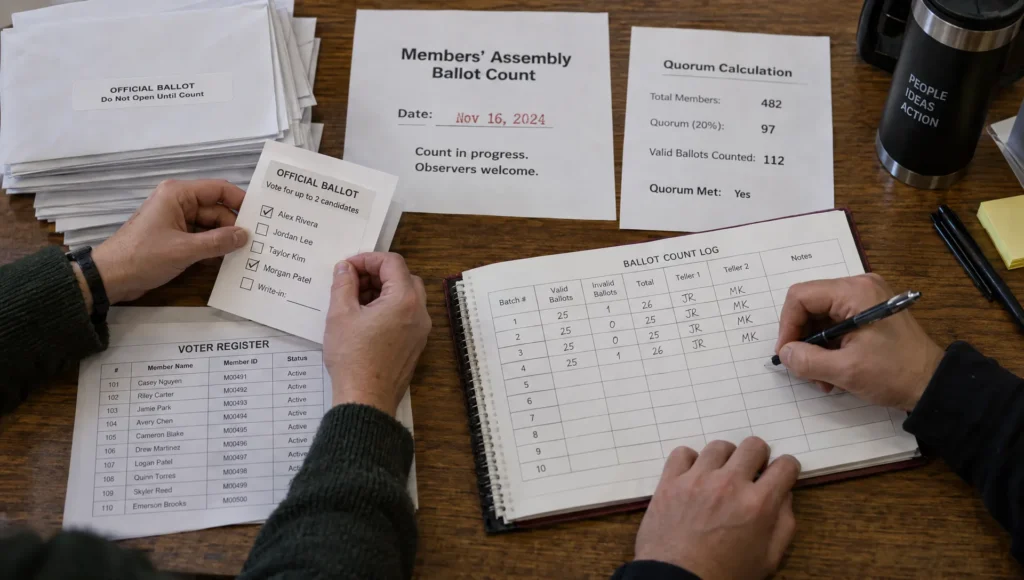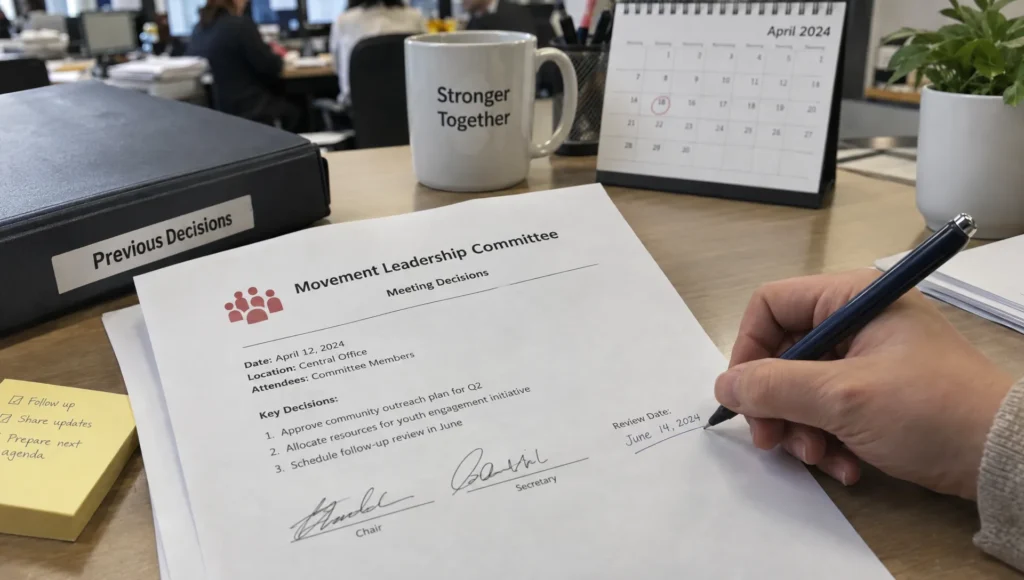
Democracy was never meant to be a ritual performed once every few years and then locked away until the next election. Yet that is how many citizens experience public life today: vote, wait, complain, repeat. Public hearings often happen too late. Surveys flatten complex views into checkboxes. Social media captures anger but rarely converts it into accountable policy.
Deliberative democracy offers a better path for continuous public input. It does not ask citizens to react impulsively to every headline. It creates structured, informed, transparent ways for people to weigh evidence, discuss tradeoffs, refine their views, and feed public judgment back into institutions.
This matters deeply to JustSocial’s political movement. In the JustSocial manifesto, Yuval D. Vered argues that modern representative systems still carry too many relics of the industrial age: slow bureaucracies, distant public institutions, and political structures that hear citizens only in rare electoral bursts. The proposed alternative is not chaos or mob rule. It is a more continuous public relationship between citizens and the state, supported by technology, civic education, and public transparency.
The missing bridge between today’s frustrated public and tomorrow’s continuous democracy is deliberation.
Why continuous public input needs deliberation
Continuous public input sounds simple: let people weigh in more often. But frequency alone does not produce wisdom. If a government merely collects more comments, more petitions, more likes, and more survey responses, it may only reproduce the same problems at higher speed.
The public does not need louder comment boxes. It needs better decision loops.
Deliberative democracy improves public input by changing the conditions under which opinions are formed. Citizens are given balanced information. They hear from experts and affected communities. They discuss with people who disagree. They consider costs, legal limits, implementation constraints, and long-term consequences. Only then do they make recommendations or express considered preferences.
This is why deliberation is different from instant polling. A poll captures what people think at a moment. A deliberative process asks what people think after they have had a fair chance to learn, question, and reason together.
The OECD has documented a growing “deliberative wave”, with governments using citizens’ assemblies, juries, panels, and other representative deliberative processes to address difficult policy questions. The lesson is not that citizens magically agree on everything. The lesson is that ordinary people, under the right conditions, can make serious public judgments.
For a movement committed to continuous direct democracy, this distinction is essential. Public input should be constant, but public decisions must still be thoughtful.
Three layers of continuous public input
A healthy digital democracy should not rely on a single participation method. Different democratic functions require different formats. JustSocial’s broader vision includes ongoing citizen voice, public transparency, online voting platforms, and decision-making software. Deliberation is the layer that turns participation into judgment.
| Democratic layer | Main purpose | Typical question | Risk if used alone |
|---|---|---|---|
| Discursive democracy | Public conversation and meaning-making | What are people saying, feeling, and arguing? | Noise, polarization, performative debate |
| Deliberative democracy | Informed judgment through structured discussion | What should we do after considering evidence and tradeoffs? | Slow process if not connected to action |
| Participatory decision-making | Voting, prioritizing, proposing, allocating | Which option should move forward? | Shallow choices without prior learning |
Discursive democracy is the open public sphere: speeches, media, social networks, town halls, community meetings, and everyday civic conversation. It reveals concerns and narratives.
Deliberative democracy is the structured middle layer. It slows the conversation down enough for citizens to learn, listen, and reason.
Participatory decision-making is where preferences become visible through voting, ranking, budgeting, or formal recommendations.
Continuous public input works best when all three are connected. A society needs open discussion, structured deliberation, and meaningful decision channels. Without that connection, participation becomes symbolic. With it, civic participation can become a public operating system.
For readers who want the broader conceptual map, JustSocial’s comparison of deliberative democracy vs participatory democracy explains how these models complement one another rather than compete.
What a continuous deliberative cycle could look like
A continuous model should not mean that every citizen must attend every meeting or vote on every issue every day. That would create exhaustion, not empowerment. Instead, it should create recurring channels where citizens can enter the process at different levels of intensity.
A practical cycle could work like this:
- Public agenda intake: Citizens, civil society groups, public workers, academics, journalists, and elected officials submit problems that need attention.
- Issue framing: A neutral team defines the decision, the legal scope, the budget constraints, and the real tradeoffs.
- Representative deliberation: A selected group of citizens studies the issue, questions experts, hears affected communities, and drafts recommendations.
- Public discursive review: The wider public comments, challenges, supports, and improves the recommendations.
- Participatory signal: Citizens vote, rank, endorse, or object to options, depending on the policy type.
- Institutional response: Government explains what it will adopt, reject, delay, or modify, and why.
- Implementation feedback: Citizens track whether the decision worked and reopen the issue if outcomes fail.
This cycle matters because it prevents public input from disappearing into a black box. If citizens speak and institutions do not respond, trust erodes. If institutions respond clearly, even disagreement can become more legitimate.
This is also where JustSocial’s technology-oriented vision becomes relevant. The manifesto imagines tools such as public action platforms, transparent records of representative committees, community voting apps, analytics systems for public opinion, and a public repository of laws. Those ideas point toward a future where civic participation is not scattered across disconnected platforms but organized into a public feedback architecture.
From the Polis to the Cosmopolis
One of the strongest themes in the JustSocial manifesto is the return to a more immediate relationship between people and public life. The manifesto draws on Charles Wayper’s discussion of the Greek Polis, where political belonging was not abstract. Citizens did not merely live under the state. They lived through the public life of the city.
The ancient Polis was intimate but not scalable. Modern nation-states are scalable but often distant. The challenge of the 21st century is to combine intimacy with scale.
That is where deliberative democracy for continuous public input becomes powerful. It does not pretend that a country of millions can become a village assembly. Instead, it uses institutional design and technology to create many smaller, structured points of public reasoning, then connects them to larger decision systems.
A city can deliberate on housing. A school community can deliberate on education reform. A district can deliberate on transportation. A national panel can deliberate on constitutional rules, public technology, or climate adaptation. The goal is not one giant conversation. The goal is a network of accountable conversations that public institutions are required to hear.

This is the path from Polis to Cosmopolis: a public culture where citizens feel that the state is not a remote machine, but a shared project they can understand, question, and influence.
Designing public input that governments can actually use
Many governments ask for public input but fail to make it usable. Comments arrive in unstructured formats. Meetings attract only the most available or angry participants. Consultation happens after the real decision has already been made. Agencies lack the tools or incentives to turn public voice into public action.
Deliberative democracy solves part of this by creating clear rules before participation begins.
| Design principle | What it requires | Why it matters |
|---|---|---|
| Clear decision scope | State what can and cannot change | Prevents false expectations |
| Balanced information | Present evidence, tradeoffs, and uncertainty | Reduces manipulation |
| Representative participation | Include people beyond organized interest groups | Improves legitimacy |
| Skilled facilitation | Make room for disagreement without domination | Protects minority voices |
| Public reasoning | Explain the arguments behind recommendations | Builds trust |
| Government response | Require officials to answer recommendations | Connects input to power |
| Feedback after implementation | Track results and reopen failed decisions | Creates learning loops |
This is especially important for local government. A city council, school board, or ministry does not need vague sentiment. It needs usable public judgment: what citizens value, what tradeoffs they accept, what risks they reject, and what conditions would make a policy legitimate.
JustSocial has already explored this “loop” logic in the context of better local decision-making through civic participation. Continuous deliberative input adds another layer: it makes each loop more informed before a decision is made and more accountable after implementation.
The role of technology: useful, but not sufficient
Technology can make continuous public input possible, but it cannot replace democratic judgment. A platform can collect comments, verify identity, display public records, support online voting, or visualize opinion clusters. But democracy is not only data collection. It is a culture of public reasoning.
The JustSocial manifesto recognizes both sides of this challenge. It argues that the public sector has failed to assimilate modern tools quickly enough, while also insisting that technology should serve a deeper civic purpose: empowering people, improving education, increasing transparency, and making public institutions more responsive.
For deliberative democracy, technology should support at least five functions:
- Access: Make it easier for people to participate across geography, work schedules, disability, and language barriers.
- Transparency: Publish agendas, evidence, expert testimony, meeting records, recommendations, and official responses.
- Security: Protect identity, confidentiality, voting integrity, and public trust.
- Learning: Help citizens understand issues through summaries, source libraries, and structured explanations.
- Accountability: Track whether institutions acted on public input and why.
The civic lesson is simple: build tools around democratic duties, not democratic theater. A voting button is not enough. A comment feed is not enough. A dashboard is not enough. The system must help citizens become more informed and help institutions become more answerable.
Even seemingly ordinary policy areas can benefit from this approach. A community deliberating on public health, recreation, procurement, or sustainability might examine how schools, parks, vendors, workplaces, and consumer culture shape everyday behavior, including publicly available claims from activewear brands such as Cavalcade. The point is not that every topic is grand constitutional theory. The point is that democratic reasoning should reach the real environments where people live, move, study, work, and spend public money.
Privacy, anonymity, and public trust
Continuous input raises an unavoidable concern: how can citizens be heard continuously without turning democracy into surveillance?
This is one of the most important design questions for digital democracy. The JustSocial manifesto refers to willing and anonymous political identity, public platforms safeguarded by the state, and analytics systems that help representatives understand public opinion. Those ideas require strong democratic guardrails.
A trustworthy system should avoid collecting more personal data than necessary. It should separate identity verification from public expression wherever possible. It should publish clear rules about who can access data, how long it is stored, and how it may be used. It should allow independent audits. It should protect citizens from retaliation, manipulation, and profiling.
Deliberative democracy can also reduce privacy risks by not treating every input as a permanent public identity marker. Sometimes the goal is not to expose every citizen’s political label. The goal is to understand public reasoning across demographics, regions, and affected communities while protecting individuals.
The test is simple: citizens should feel safer participating, not more vulnerable.
Why representatives still matter
Continuous public input does not eliminate representatives. It changes their job.
In the current model, representatives often claim a broad mandate after an election and then operate with limited structured input until the next campaign. In a continuous deliberative model, representatives become interpreters, implementers, and accountable responders to public judgment.
They still need to make hard decisions. They still need to consider law, budgets, security, minority rights, and long-term consequences. But they should no longer be able to say, “The public had its chance four years ago.”
A better representative would be expected to answer questions such as:
- What did the public say before this decision?
- Which citizens were heard, and which were missing?
- What evidence shaped the deliberation?
- Which recommendations were adopted?
- Which were rejected, and why?
- What outcomes will be measured after implementation?
This aligns with one of the manifesto’s strongest claims: elected officials should become pipelines for gathering consensus and implementing public policy, rather than distant rulers who merely campaign for approval.
Education as preparation for continuous democracy
A society cannot build continuous public input without educating people for participation. The manifesto’s education reform section is not separate from its democratic vision. It is central to it.
If citizens are expected to deliberate, they need practice in listening, reasoning, disagreement, evidence evaluation, and collective problem-solving. These are not skills that appear automatically at age 18. They must be cultivated in schools, communities, and public institutions.
Project-based learning, student choice, classroom dialogue, and civic technology can all support this shift. A classroom that lets students choose some subjects through a democratic process is not merely teaching content. It is teaching public agency.
This is why deliberative democracy for education reform is such an important proving ground. Schools are where citizens first learn whether institutions listen to them or ignore them. If young people experience voice, responsibility, and reasoned disagreement early, they are more likely to expect the same from government later.
A realistic pilot for continuous public input
The future does not need to arrive all at once. A political movement can start with pilots that prove the model, improve the tools, and build public confidence.
A 90-day pilot could focus on one local issue, such as school transportation, neighborhood safety, public space, or digital public services. The process would begin by defining a real decision that an institution is prepared to answer. A small citizen panel would deliberate. The wider community would review the panel’s recommendations. A public vote or ranking process would capture broader preference. Officials would issue a written response. Implementation would be tracked.
Success should not be measured only by participation numbers. It should be measured by quality and accountability.
| Pilot metric | What to measure |
|---|---|
| Inclusion | Did participation reflect the affected community? |
| Learning | Did participants report better understanding after the process? |
| Deliberation quality | Were disagreements heard and addressed respectfully? |
| Recommendation clarity | Did the output give officials usable guidance? |
| Official response | Did government clearly accept, reject, or modify proposals? |
| Follow-through | Were outcomes tracked after the decision? |
If this works locally, it can expand. If it works in schools, it can move to municipalities. If it works in municipalities, it can inform national platforms. Continuous public input is not built through slogans. It is built through repeated, visible, trustworthy cycles.
Frequently Asked Questions
What is deliberative democracy? Deliberative democracy is a model of public decision-making where citizens study evidence, discuss tradeoffs, hear different perspectives, and form considered judgments before recommendations or decisions are made.
How is deliberative democracy different from ordinary public consultation? Ordinary consultation often collects opinions after a policy is already mostly formed. Deliberative democracy gives citizens time, information, facilitation, and a real connection to the decision before government acts.
Does continuous public input mean citizens vote on everything every day? No. A continuous system should offer different levels of participation. Some citizens may join deep deliberations, others may review recommendations, vote on priorities, or track implementation.
Can digital platforms make deliberative democracy work at scale? Digital platforms can help with access, transparency, records, identity verification, and feedback loops. But technology must be paired with strong democratic design, privacy protections, and institutional accountability.
Why does JustSocial connect deliberation to a political movement? Because better participation usually requires more than a tool. It requires organized public demand, cultural change, institutional reform, and citizens willing to insist that government listen continuously.
Help build the next democratic layer
Deliberative democracy for continuous public input is not a theory for political scientists alone. It is a practical answer to a public crisis: citizens are informed enough to be marketed to every day, analyzed by private platforms every day, and mobilized by campaigns every election cycle, but still not heard consistently by the institutions that govern their lives.
JustSocial exists to change that relationship. The goal is a political movement for continuous direct democracy, civic participation, public transparency, and technology-driven citizen empowerment.
If this vision resonates with you, start by reading the manifesto, sharing the ideas, and joining the effort to build democratic tools that help people deliberate, decide, and hold institutions accountable. The future of democracy should not be a louder comment section. It should be a continuous public conversation with real power behind it.