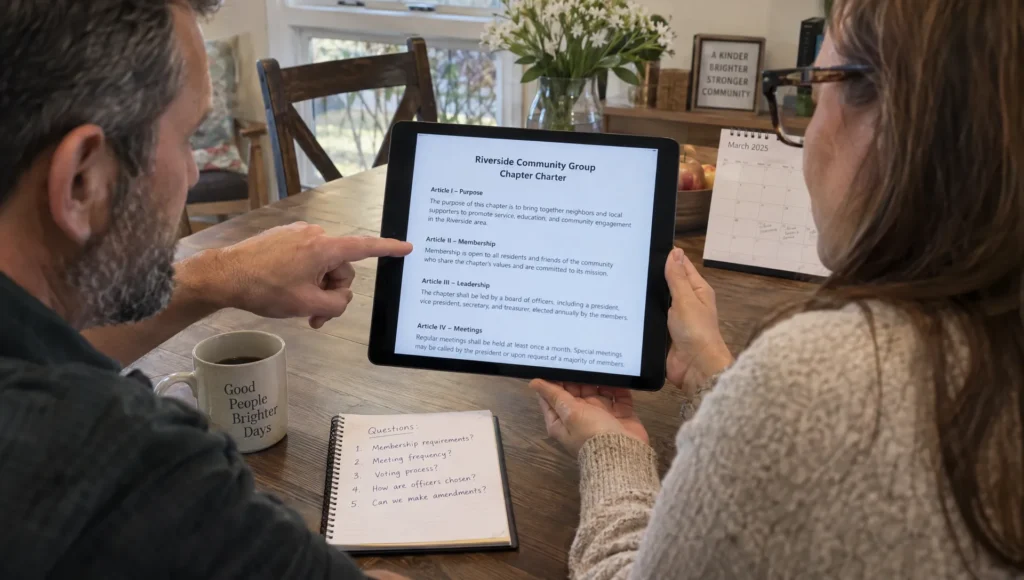
Democracy often asks citizens to wait. Wait for the next election. Wait for a committee hearing. Wait for a representative to notice a problem that people have been discussing for months or years. A political movement organizing for daily democracy begins with a different premise: citizens should not disappear between election days.
Daily democracy does not mean every public question becomes an instant referendum. It means civic participation becomes a normal part of public life, not an emergency behavior reserved for moments of anger. It means public opinion is gathered, discussed, refined, and acted on with enough regularity that institutions can no longer claim they did not hear.
This is one of the central ideas running through the JustSocial manifesto: modern society has inherited industrial-era public structures, while citizens now live inside a technological age capable of far more continuous participation. The challenge is not only to build better tools. The challenge is to organize people, habits, safeguards, and institutions around a new democratic rhythm.
Daily Democracy Is an Organizing Problem Before It Is a Software Problem
A platform can collect votes, comments, petitions, or policy preferences. But without a movement, those actions can become another feed, another poll, another place where people vent without influence. A political movement gives participation a purpose, a process, and a path into public decision-making.
The first organizing principle is simple: daily democracy must make participation useful. Citizens should know what question is being discussed, why it matters, what evidence is available, who is affected, what choices exist, and what happens after they contribute. If participation feels symbolic, people eventually leave. If participation produces visible outputs, people learn that public life belongs to them.
The second principle is that daily democracy must respect the difference between signal and decision. A daily civic signal can reveal what people experience, prefer, fear, or demand. A public decision still requires deliberation, accountability, legal review, budget review, and protection of rights. The point is not to replace all representative judgment with crowd reaction. The point is to make representative judgment answerable to a living public.
The third principle is continuity. Elections are episodic. Protests are episodic. Media cycles are episodic. A movement for daily democracy has to become durable enough to outlast all three. It needs local chapters, digital spaces, trained facilitators, issue dockets, public summaries, and repeatable routines.
The Three Layers: Civic Participation, Discursive Democracy, and Deliberative Democracy
Daily democracy works when three democratic layers reinforce one another. If one layer is missing, the whole system weakens.
Civic participation is the habit of taking part. It includes voting, commenting, attending meetings, signing petitions, volunteering, joining neighborhood groups, contributing expertise, and helping others understand public choices. It is the broadest layer because it invites ordinary citizens into public life.
Discursive democracy is the layer of public reasoning. It is where people explain, challenge, listen, narrate lived experience, and test ideas in conversation. A healthy movement needs discursive democracy because citizens are not only preference holders. They are meaning makers. They need spaces where public problems can be named in human language before they are converted into policy language.
Deliberative democracy is the structured layer. It asks citizens to weigh evidence, compare tradeoffs, hear affected communities, examine costs, revise proposals, and produce recommendations. It turns discussion into civic judgment.
| Layer | Core question | Movement output |
|---|---|---|
| Civic participation | Who is taking part, and how often? | Petitions, meeting attendance, volunteer activity, voting signals, community feedback |
| Discursive democracy | What are people saying, experiencing, and arguing? | Moderated discussions, public comment summaries, issue narratives, recurring concerns |
| Deliberative democracy | What should we recommend after weighing evidence and tradeoffs? | Citizen panels, policy briefs, ranked options, decision memos, implementation proposals |
A political movement that only mobilizes participation may become loud but shallow. A movement that only hosts discourse may become thoughtful but ineffective. A movement that only deliberates may become narrow and elitist. Daily democracy needs all three: broad participation, open public reasoning, and structured judgment.
Build a Democratic Rhythm, Not a Permanent Campaign
Most political organizing borrows its rhythm from elections. Identify supporters, persuade undecided voters, mobilize turnout, count the result, then begin again. Daily democracy needs a different clock.
A democratic rhythm should make it easy for citizens to know when to speak, when to listen, when to deliberate, when to decide, and when to audit outcomes. The movement becomes less like a campaign machine and more like civic infrastructure.
| Rhythm | Democratic function | Practical output |
|---|---|---|
| Daily | Lightweight civic participation | Issue signals, comments, local reports, questions submitted by citizens |
| Weekly | Discursive democracy | Moderated public threads, short summaries, recurring argument maps |
| Monthly | Deliberative democracy | Citizen assemblies, community panels, proposal reviews, public recommendations |
| Quarterly | Accountability | Progress reports, institutional responses, budget updates, transparency reviews |
| Yearly | Strategic renewal | Movement priorities, leadership review, civic education goals, technology audit |
This cadence also prevents burnout. Not every citizen will participate every day, and no serious movement should expect them to. Daily democracy means the door is open every day, the process is active every day, and public institutions can receive organized civic input every day.
Turning Supporters Into Civic Teams
A supporter is someone who agrees. A civic team is a group that can produce democratic value. The difference matters.
Many movements collect followers and then wonder why support does not become power. Daily democracy requires supporters to become small, trusted units that can research issues, host conversations, gather community input, summarize public concerns, and move proposals through a transparent process. JustSocial has already explored this operational shift in its article on turning supporters into civic teams.
A basic civic team can include five practical roles:
- Facilitator: Keeps meetings fair, focused, and accessible.
- Researcher: Collects evidence, comparable policies, budget context, and expert input.
- Community liaison: Brings in affected residents, local groups, and underrepresented voices.
- Transparency steward: Publishes summaries, sources, decisions, objections, and next steps.
- Technology operator: Maintains the team’s participation tools, forms, data hygiene, and archive.
These roles do not need to be professionalized from day one. They need to be clear enough that volunteers know how to contribute. A movement becomes powerful when ordinary citizens can join, learn the pattern, and repeat it in their own neighborhood, school, workplace, city, or national issue area.
From the Polis to the Cosmopolis: Scale Without Losing Intimacy
The JustSocial manifesto draws inspiration from the ancient Polis, not as nostalgia, but as a reminder that politics once felt immediate. The citizen was not merely a subject of distant systems. Public life was concrete, local, and personal. The manifesto’s larger vision, the Cosmopolis, asks whether modern technology can help restore that sense of civic intimacy at national and even global scale.
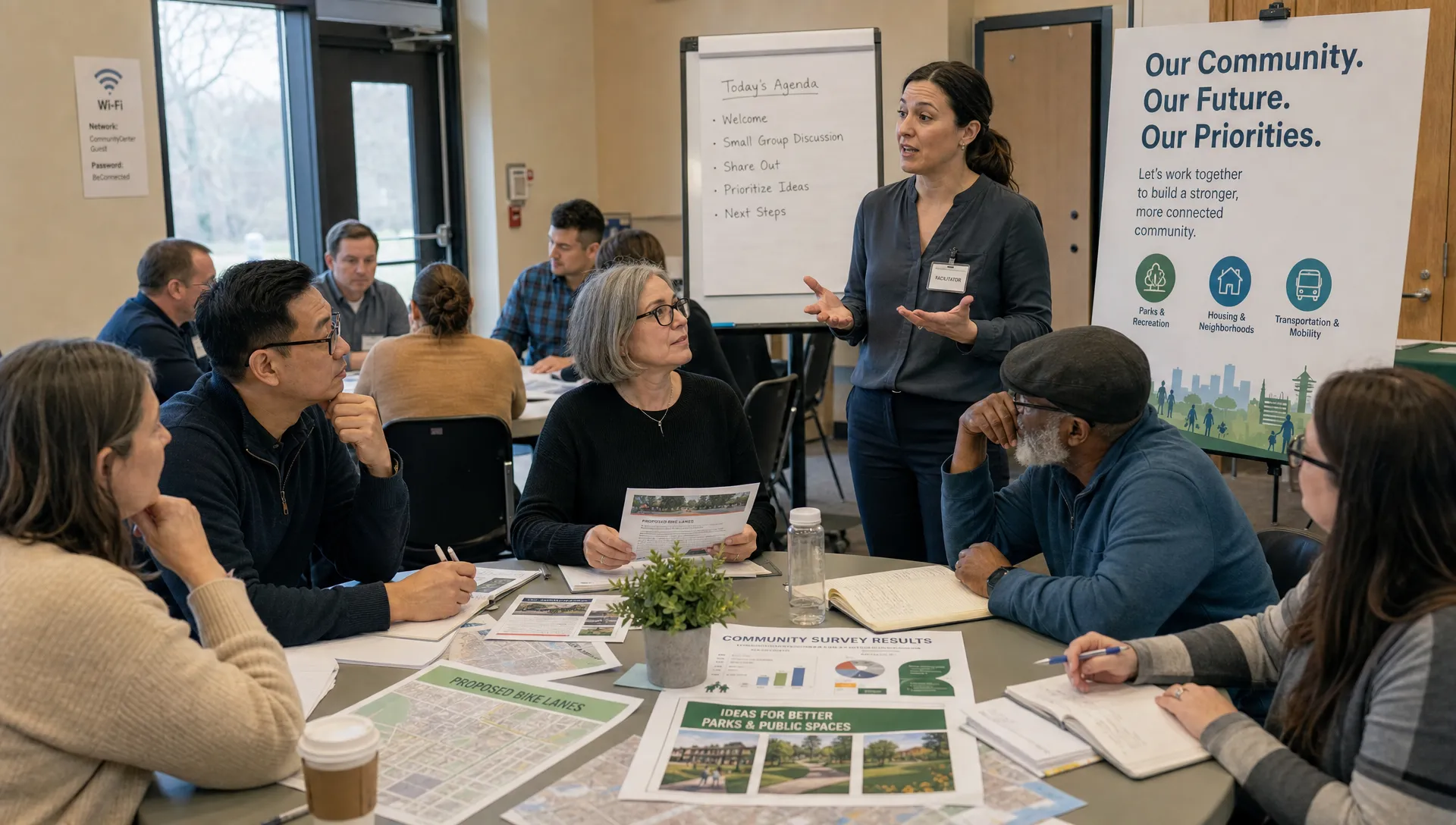
That is the deepest organizing challenge. Modern states are too large for every citizen to gather in one square, but they are not too large for structured participation. A movement for daily democracy can create many civic squares: local assemblies, digital forums, issue groups, school communities, diaspora circles, professional networks, and public panels. The goal is not one giant conversation. The goal is many connected conversations that produce usable civic intelligence.
This matters especially in societies shaped by migration, relocation, and mixed civic identities. People often move between countries, cities, languages, and legal systems, but they still need ways to belong and participate. Someone considering a move across borders needs practical orientation before making commitments, much like a newcomer to a city needs civic orientation before meaningful participation. For example, practical relocation guidance for Poland shows how useful clear decision support can be when life, place, and public systems intersect.
A daily democracy movement should learn from that clarity. New residents should know how their municipality works. Young people should understand how to contribute before they can formally vote. Diaspora communities should have channels for structured input where appropriate. Local citizens should be able to see which issues are open, which proposals are pending, and which institutions are responsible for responding.
Daily Democracy Needs Safeguards, Not Blind Faith in Technology
A political movement that uses technology for civic participation must be more serious about trust than the platforms that created today’s attention economy. The manifesto suggests ideas such as willing anonymous political identity, public civic platforms, analytics for public opinion, and strong cyber protection. Those ideas point toward a necessary balance: citizens should be heard consistently, but not turned into surveillance subjects.
Daily democracy must be designed around verified eligibility, public anonymity where appropriate, privacy protection, transparent methodology, and clear limits on how participation data can be used. It also needs safeguards against manipulation, bot activity, harassment, capture by organized minorities, and the silencing of dissent.
| Risk | Safeguard |
|---|---|
| Mob reaction replaces judgment | Separate daily signals from formal decisions and require deliberative review |
| Participation data becomes surveillance | Use privacy-by-design systems, minimal data collection, and strict access rules |
| Loud groups dominate | Weight outreach toward affected communities and publish participation gaps |
| Misinformation spreads | Require source trails, expert review, public corrections, and transparent moderation |
| Institutions ignore input | Publish response deadlines, official replies, and implementation tracking |
A key point from the JustSocial vision is that public opinion should be measured and taken seriously, while institutions remain responsible for law, rights, evidence, and long-term consequences. Daily democracy is not mob rule. It is a disciplined system for making the public continuously visible to power.
This is also where deliberative democracy becomes essential. Open discourse can reveal emotion, pain, urgency, and imagination. Deliberation can slow the process enough to ask: Who pays? Who benefits? Who might be harmed? What do we know? What do we still need to know? What would a fair compromise look like?
The Education Link: Citizens Are Formed Before They Vote
The manifesto connects political reform with educational reform for a reason. A society cannot expect thoughtful participation from adults if it trains children only to memorize, comply, and compete. Daily democracy requires civic confidence, media literacy, emotional regulation, basic policy understanding, and the ability to argue without dehumanizing opponents.
Schools can become early laboratories of civic participation. Students can vote on selected class topics, deliberate on school issues, produce research projects around public problems, and learn how to move from complaint to proposal. The point is not to politicize childhood. The point is to teach the habits of shared life.
A daily democracy movement should therefore organize with educators, parents, youth groups, and academic institutions. Academia can help translate evidence for public use, evaluate civic tools, audit deliberative processes, and raise the quality of public reasoning. In the JustSocial framework, this is not an accessory to democracy. It is part of the democratic architecture.
A 90-Day Organizing Sprint for Daily Democracy
A political movement can begin small without thinking small. The first goal is not to transform the state in three months. The first goal is to prove that citizens can participate in a more continuous, structured, and useful way.
For a broader strategic frame, JustSocial’s strategy for continuous democracy explains how participation promises, civic action pipelines, and transparent feedback loops can support long-term reform. At the organizing level, a 90-day sprint can look like this:
- Choose one public problem that people already care about and can understand without technical gatekeeping.
- Publish a clear participation promise that explains how citizen input will be collected, summarized, protected, and used.
- Open a public issue docket with background information, affected groups, known tradeoffs, and unanswered questions.
- Host weekly discursive sessions where citizens can share experiences, objections, and ideas.
- Run one monthly deliberative session with balanced materials, facilitation, and a written recommendation.
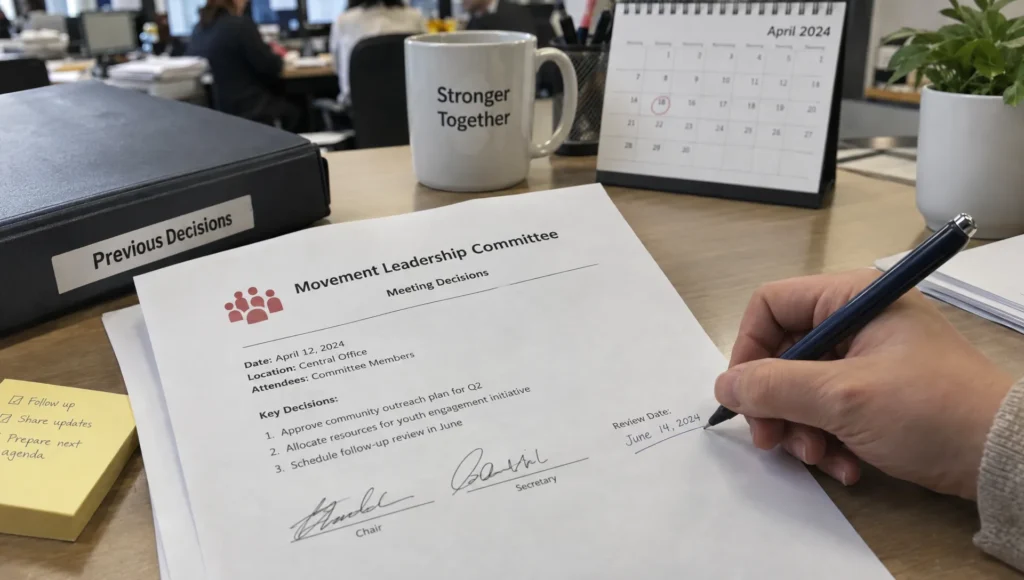
- Publish a decision memo that includes the strongest arguments for and against each option.
- Ask relevant officials, candidates, journalists, academics, or civic organizations to respond on the record.
- Review the process publicly, improve the method, and repeat with the next issue.
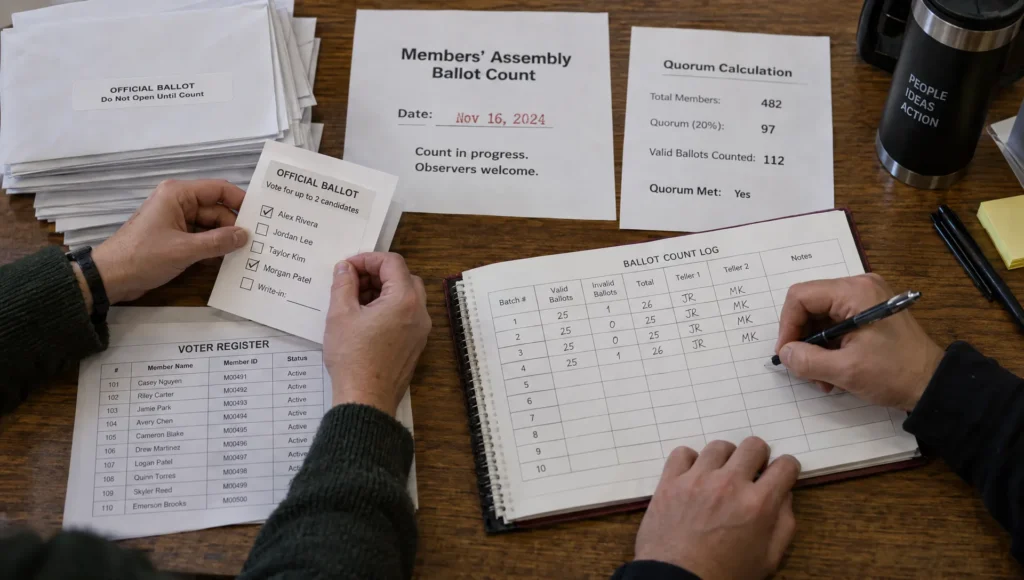
The repetition is the point. A one-off town hall may raise awareness. A repeated civic process creates democratic muscle.
What Success Looks Like
A movement for daily democracy should measure success differently from a traditional campaign. Donations, followers, and press mentions still matter, but they are not enough. The movement should ask whether public participation is becoming more informed, more inclusive, more actionable, and more trusted.
Useful indicators include the number of active civic teams, the diversity of participants, the quality of published summaries, the response rate from institutions, the number of proposals refined through deliberation, and the percentage of citizens who return after their first participation experience.
The ultimate test is cultural. Do people feel that public life is something they can enter? Do local institutions expect citizen input before decisions are finalized? Do representatives see themselves less as distant rulers and more as pipelines for public consensus and implementation? Do citizens become more than voters, taxpayers, and consumers?
If the answer begins to shift, the movement is doing more than campaigning. It is rebuilding the social contract.
Frequently Asked Questions
What is daily democracy? Daily democracy is the practice of making civic participation continuous, structured, and meaningful between elections. It gives citizens regular ways to raise issues, discuss tradeoffs, deliberate on proposals, and track institutional responses.
Is daily democracy the same as direct voting on every issue? No. Daily democracy can include voting signals, but it should not reduce every issue to instant majority rule. Serious public decisions still require deliberation, legal safeguards, budget review, minority protections, and accountable implementation.
Why does a political movement matter if the technology already exists? Technology can collect input, but a political movement creates trust, habits, training, local teams, public pressure, and institutional pathways. Without organizing, civic tools often become unused platforms or symbolic feedback channels.
How do discursive democracy and deliberative democracy work together? Discursive democracy gives people space to speak, question, argue, and tell the truth of their experience. Deliberative democracy structures that public input into evidence-based recommendations, tradeoff analysis, and decision-ready proposals.
Can young people participate in daily democracy? Yes, with clear boundaries. Young people can contribute to civic discussions, school-level democratic processes, youth consultations, and educational deliberation. Formal legal voting rights remain separate, but civic learning should begin long before adulthood.
Help Build the Habit of Self-Government
A political movement organizing for daily democracy is not asking citizens to care about politics every waking hour. It is asking society to stop treating public power as something citizens touch once every few years.
JustSocial’s vision is that people can be heard continuously, institutions can become more transparent, and technology can serve civic life instead of merely harvesting attention. That requires builders, organizers, educators, researchers, designers, moderators, public servants, and citizens willing to practice democracy as a daily habit.
If the old model reduces people to voters, taxpayers, and consumers, the new model must empower them as participants, deliberators, and co-authors of public life. The work begins wherever citizens decide that waiting is no longer enough.