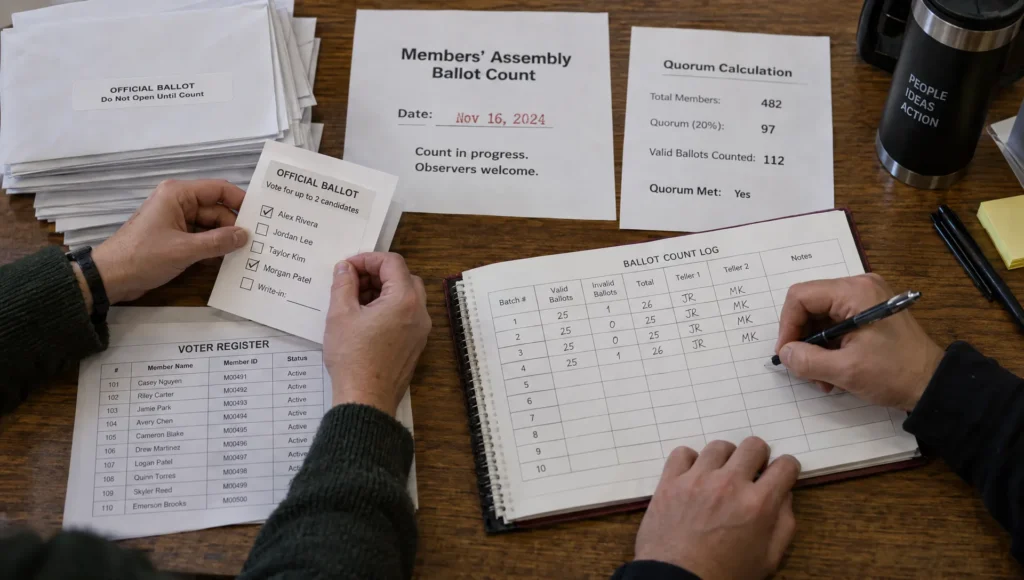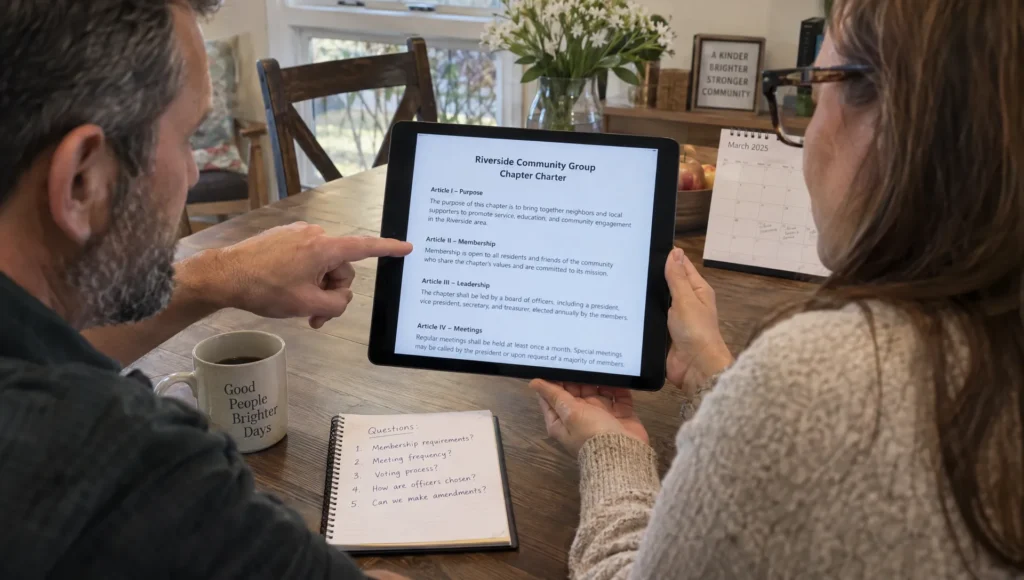
Most democracies still treat civic duty as a scheduled appointment: vote, pay taxes, obey the law, and wait for the next election. Those duties still matter. Voting is indispensable, taxes fund common life, and the rule of law protects everyone from arbitrary power. But in a society shaped by real time communication, public data, online communities, and fast moving crises, that older definition feels too thin.
The future of civic duty is not asking every citizen to become a full time politician. It is asking public life to become accessible, transparent, and responsive enough that ordinary people can participate continuously without sacrificing their work, family, or sanity. In that future, civic participation becomes less of a ceremonial act and more of a civic muscle: something citizens practice, institutions respect, and political movements organize into lasting power.
If you want a foundational definition before going deeper, JustSocial has a clear primer on what civic participation means and why it matters. This article takes the next step: what happens when civic participation becomes the center of civic duty itself?
From civic obligation to civic agency
The old civic duty model was built around scarcity. Information was scarce, official channels were slow, public meetings were local and limited, and elections were the most practical way to translate public will into government. Representative democracy made sense in that world because citizens could not practically participate in every decision.
That world has changed. Citizens now discuss policy daily, organize campaigns in hours, watch legislative hearings online when available, and use digital tools for everything from banking to medical appointments. Yet many public institutions still behave as if meaningful participation must be compressed into rare voting moments or occasional consultations.
This is one of the central tensions in the JustSocial manifesto. It argues that modern citizens are too often reduced to three roles: voter, taxpayer, and private consumer. That reduction is not only emotionally alienating. It wastes public intelligence. Teachers, parents, business owners, students, scientists, workers, civil servants, and local volunteers all hold knowledge that government needs, but the system rarely has structured ways to listen, measure, deliberate, and respond.
Civic duty, then, has to evolve from passive compliance into active agency. A citizen should not only ask, who should rule for me? A citizen should also ask, how can I help shape the decisions that rule my life?
Why the old model feels too thin now
Democratic frustration is not only about ideology. It is also about distance. Many people experience government as a remote machine that collects taxes, imposes rules, and speaks in press conferences, but rarely returns proof that citizen input mattered. That distance creates a vacuum. Into that vacuum flow cynicism, conspiracy thinking, performative outrage, and authoritarian promises of simple control.
Global democracy monitors have been warning about democratic decline for years. Freedom House continues to track pressure on political rights and civil liberties around the world, while the OECD Survey on Drivers of Trust in Public Institutions highlights how trust depends on government competence, integrity, openness, and responsiveness. These are not abstract values. They are practical conditions for civic life.
When people do not believe institutions listen, they stop treating participation as a duty. They treat it as a waste of time. When institutions do not explain how decisions are made, citizens assume the worst. When public debate rewards speed and anger more than evidence and reflection, civic participation becomes noise instead of power.
The solution is not to romanticize the public as always wise or to demonize representatives as always corrupt. The solution is to redesign the relationship. Civic duty should include channels for ordinary citizens to speak, learn, deliberate, vote, review evidence, and receive public explanations. Institutions should be independent enough to protect rights and long term interests, but responsive enough to prove that the people are not shouting into the void.
Discursive democracy and deliberative democracy as civic duty
Two ideas are especially important for the future of civic duty: discursive democracy and deliberative democracy.
Discursive democracy is the everyday layer of public reasoning. It is the conversations citizens have in communities, media, schools, workplaces, public forums, and digital spaces. At its best, it turns private frustration into public language. It asks people to explain, listen, challenge, revise, and connect their personal experience to shared problems.
Deliberative democracy is more structured. It asks citizens to weigh evidence, hear competing arguments, consider tradeoffs, and form judgements under fairer conditions than a comment thread usually provides. A deliberative process can include citizen assemblies, moderated forums, participatory budgeting sessions, local panels, or digital consultations designed around clarity and respect.
Civic participation connects both. Without discursive democracy, politics becomes technocratic and cold. Without deliberative democracy, politics becomes reactive and tribal. Without decision linkage, both can become symbolic.
| Democratic layer | What citizens do | What civic duty becomes |
|---|---|---|
| Discursive democracy | Discuss public issues, share lived experience, question narratives, and build common language | A duty to speak with reasons, not only reactions |
| Deliberative democracy | Study options, hear opposing views, evaluate evidence, and weigh consequences | A duty to think with others before demanding outcomes |
| Civic participation | Connect public input to institutions, campaigns, oversight, and decisions | A duty to help turn public voice into public action |
| Political movement | Organize people, tools, values, pressure, and leadership around a shared direction | A duty to build durable power, not only express temporary anger |
This is where the future of civic duty becomes practical. It is not enough to tell citizens to care more. Systems must make caring consequential.
The manifesto thread: from the Polis to the Cosmopolis
The JustSocial manifesto draws a line from the ancient Polis to a possible modern Cosmopolis. The Polis matters because it represents a political world in which citizens felt themselves to be members of public life, not distant subjects of a state. Its scale was small, its exclusions were real, and it cannot simply be copied. But it shows something modern democracies often lack: immediacy, belonging, and the sense that communal life is part of what it means to live fully.
The manifesto then asks a modern question: what if technology could recover some of that immediacy at national scale? Not by replacing institutions with mob rule, and not by reducing democracy to online polls, but by creating continuous channels through which people can register concerns, deliberate, vote in community contexts, follow committees, access public documents, and see how public opinion is measured.
That idea connects directly to civic participation and the new social contract. If the old social contract treated citizens as periodic voters and regular taxpayers, the next one should treat them as ongoing participants. The state should not merely govern over citizens. It should build public infrastructure that helps citizens govern with one another.
This is also why education appears so prominently in the manifesto. Civic duty is not born at age eighteen. It is learned through practice. If schools ask students to memorize systems they never experience, democracy becomes an exam topic. If schools let students deliberate, choose some shared priorities, evaluate evidence, and take responsibility for community decisions, democracy becomes a habit.
What the future of civic duty asks of citizens
A richer civic duty does not mean everyone must participate in everything. That would create exhaustion and privilege the people with the most free time. The future should make participation more continuous, but also more realistic. Citizens need many doors into public life, with different levels of effort and responsibility.
A modern citizen can practice civic duty in ways such as these:
- Stay informed enough to understand one public issue beyond headlines.
- Speak in reasons, not only slogans, especially when disagreeing.
- Join local or digital deliberation where decisions are actually pending.
- Track whether representatives and agencies explain their choices.
- Support transparency, privacy, and secure civic technology.
- Help a political movement, community group, or local initiative turn public concern into organized action.
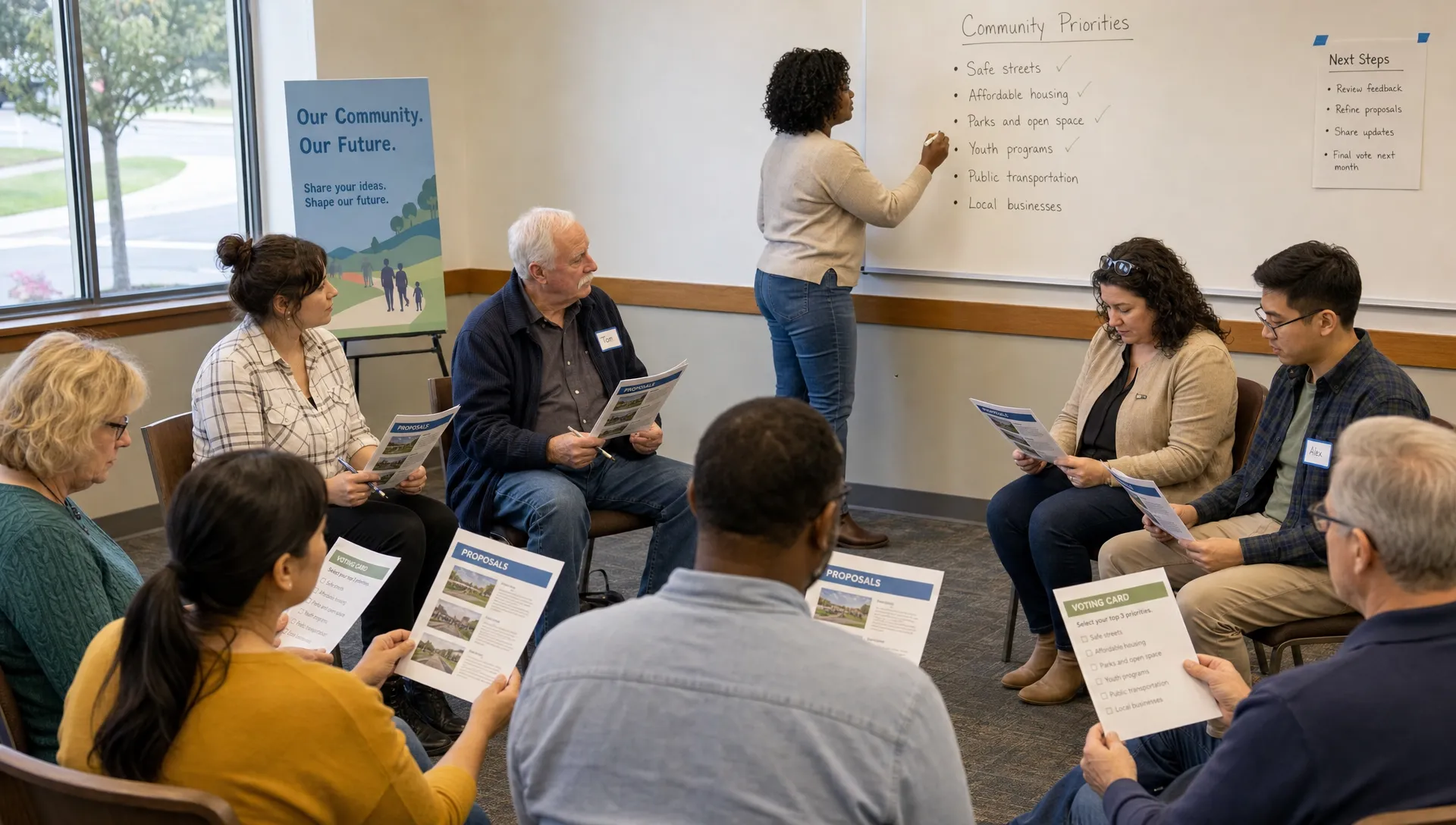
The deepest shift is psychological. Civic duty becomes less about being a spectator of power and more about being a steward of the public world. That stewardship can be small. It can be one hour a week, one local issue, one school committee, one public comment, one neighborhood meeting, one petition, one transparent campaign. But it should point toward influence.
What institutions and political movements must build
Citizens cannot carry the future of civic duty alone. If governments ask people to participate but provide no response, participation becomes unpaid emotional labor. If public agencies collect opinions but never show how those opinions shaped decisions, participation becomes theater. If digital platforms invite input without verification, privacy, security, or inclusion, participation becomes vulnerable to manipulation.
Institutions need to build participation as a loop. A real loop has a named decision, a clear timeline, accessible evidence, a fair way to contribute, public measurement of input, and an explanation after the decision. JustSocial has explored this standard through the idea of civic participation that actually changes decisions, where participation is judged by whether it can be traced to power.
Political movements also have a special role. A political movement can do what isolated citizens usually cannot: maintain pressure, create shared language, recruit volunteers, build tools, educate supporters, challenge institutions, and keep a long term vision alive. JustSocial positions itself in that space, as a movement focused on continuous civic participation, transparency, and technology enabled democratic engagement.
The point of an online voting platform, decision making software, or public transparency initiative should not be to create prettier surveys. The point should be to make government more responsive and citizens more capable. Civic technology should help people understand what is being decided, who is responsible, what options exist, what evidence matters, and how public input will be used.
That is also where business to government innovation can serve democracy. Public institutions should not lag decades behind the private sector in usability, analytics, accessibility, and digital service design. But democratic technology must be held to a higher standard than consumer technology. It must protect rights, include marginalized voices, resist manipulation, and produce public accountability rather than private addiction.
Guardrails against civic noise and digital populism
The future of civic duty needs guardrails. More participation is not automatically better if it is chaotic, exclusionary, unsafe, or disconnected from constitutional principles. A healthy democratic system must distinguish between listening to public opinion and surrendering every decision to instant majority pressure.
First, identity and privacy must be balanced. A civic platform may need to verify that a participant belongs to a relevant community, while still protecting anonymity where exposure could create fear or coercion. The manifesto points toward willing and anonymous political identity as one possible direction, but any implementation must be tested against serious security, legal, and ethical standards.
Second, deliberation must come before aggregation whenever possible. Counting preferences matters, but preferences are often unstable before people understand the issue. Good participation gives citizens time to learn, compare arguments, and revise their views.
Third, minority rights and independent institutions must remain protected. Public opinion should inform representatives, courts, agencies, journalists, and academic advisors. It should not become a weapon against due process, civil liberties, or unpopular groups.
Fourth, participation must be accessible. If only the loudest, wealthiest, angriest, or most digitally fluent citizens participate, the system will reproduce inequality. Civic duty should be supported by education, translation, disability access, simple design, and offline options where needed.
A practical standard for the next decade
The next decade of civic duty should be judged by a simple question: can an ordinary citizen see a path from concern to consequence?
If the answer is no, people will continue to retreat into private life or perform politics in spaces that do not decide anything. If the answer is yes, civic participation can become a normal part of adulthood, like managing finances, caring for health, or contributing to a workplace. Not constant, not all consuming, but recurring and meaningful.
A citizen who cares about housing, education, public transit, taxation, climate resilience, public safety, or digital rights should be able to find the relevant decision, understand the timeline, review the evidence, join a discussion, register a position, see aggregated public input, and receive an explanation of the final decision. That is not utopian. Technically, much of it is already possible. Politically, it requires pressure.
This is where civic duty meets the work of a political movement. The future will not arrive because institutions politely modernize themselves. It will arrive when citizens demand better channels, build better tools, support reformers, and refuse to accept a democracy that only asks them to appear every few years.
Frequently Asked Questions
Is civic participation the same as voting? No. Voting is one essential form of civic participation, but civic participation also includes deliberation, public comment, petitions, community organizing, oversight, volunteering, local problem solving, and engagement with public decisions between elections.
What is the difference between discursive democracy and deliberative democracy? Discursive democracy focuses on public conversation and the circulation of reasons across society. Deliberative democracy is more structured, asking citizens to weigh evidence, hear different views, and form considered judgements before decisions are made.
Does the future of civic duty require everyone to be political all the time? No. A healthier model should respect limited time and different levels of involvement. The goal is not constant political activity. The goal is meaningful access, so citizens can participate when an issue affects them or when they choose to take responsibility.
Can digital civic participation be safe? It can be safer if designed with verification, privacy protection, transparency, auditability, accessibility, and strong cybersecurity. Digital democracy should never mean careless data collection or unaccountable online polling.
Why does a political movement matter for civic participation? A political movement can turn scattered frustration into organized reform. It can build shared language, recruit volunteers, pressure institutions, support civic tools, and keep the demand for continuous participation alive.
Help build the next civic duty
The future of civic duty will not be defined only by laws or platforms. It will be defined by whether citizens believe they have the right and responsibility to shape public life continuously.
If that future speaks to you, read the JustSocial manifesto, share it with people who care about democracy, and consider how you can contribute as a supporter, volunteer, builder, organizer, or local initiator. Civic participation becomes real when people stop waiting for permission and start building the public world together.