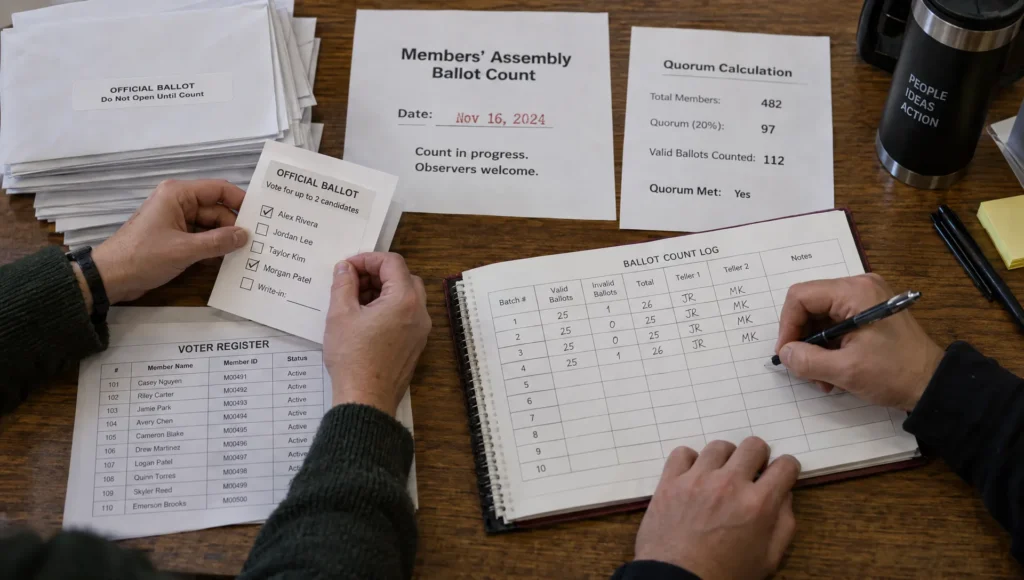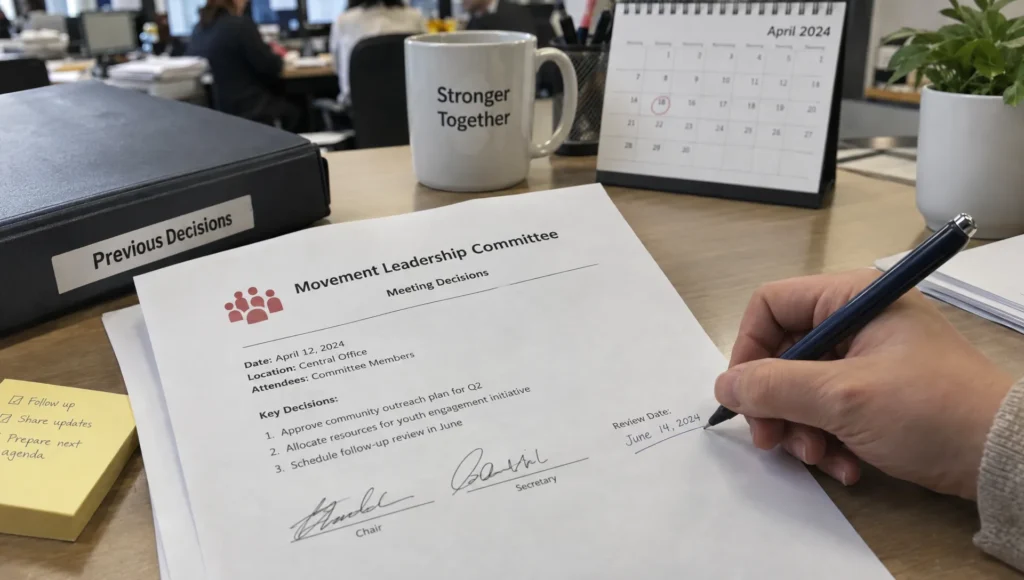
Long-term reform is not won by a single viral campaign, a single election cycle, or a single protest. Those moments can open a door, but they rarely build the room where new democratic habits, rules, and institutions can live.
A serious political movement strategy for long-term reform has to answer a harder question: how do ordinary people gain durable civic power, not just temporary visibility?
That question sits at the center of the JustSocial manifesto, which argues that modern societies are still operating with institutions inherited from the Industrial Revolution while citizens live inside a digital, networked, fast-moving world. The manifesto describes a citizen too often reduced to three roles: voter, taxpayer, and private consumer. Long-term reform begins by refusing that reduction.
The goal is not only to win attention. It is to build a political movement capable of turning civic participation into a daily democratic practice, connecting public discussion to deliberation, deliberation to action, and action to transparent institutional change.
Start with a reform horizon, not a campaign calendar
Most campaigns are designed around moments: a vote, a court ruling, a crisis, a scandal, a march, a fundraising deadline. Long-term reform requires a different structure. It needs a reform horizon, a clear view of how public power should operate years from now and how the movement will steadily move society in that direction.
For JustSocial, that horizon is continuous direct democracy: a culture where citizens can participate more consistently in public life, where representatives are expected to listen with precision, and where technology helps make public opinion, civic action, and institutional response more visible.
That does not mean every citizen votes on every issue every day. It means democracy stops being treated as a once-every-few-years ritual and starts becoming an ongoing relationship between people, representatives, public knowledge, and public institutions.
| Campaign mindset | Long-term reform mindset |
|---|---|
| Win the next moment | Build capacity across many moments |
| Mobilize supporters | Develop citizens as participants |
| Publish demands | Create repeatable decision processes |
| Measure attention | Measure trust, learning, participation, and follow-through |
| Treat technology as outreach | Treat technology as civic infrastructure |
The strategic shift is simple but demanding: a political movement must stop asking only how to gather support and start asking how to make democratic power usable.
Define the public doctrine in plain language
A movement built for long-term reform needs more than slogans. It needs a doctrine that ordinary people can understand, challenge, repeat, and improve. Without a doctrine, strategy becomes branding. With a doctrine, supporters can act coherently even when leadership is not in the room.
A practical reform doctrine should answer four questions:
- What is broken in the current democratic system?
- What new power should citizens gain?
- Which institutions must change first?
- What safeguards prevent reform from becoming manipulation, mob rule, or technocracy?
The JustSocial answer is not that representative democracy should disappear overnight. It is that representative democracy should be surrounded, corrected, and continuously informed by deeper forms of civic participation. The people should become a more visible branch of democratic life, while academia and public knowledge should help regulate, educate, and hold institutions to higher standards.
This matters because long-term reform movements often fail when they confuse dissatisfaction with direction. Many people can agree that politics feels broken. Fewer can agree on what should replace the broken parts. A clear doctrine gives the movement a shared language for reform without forcing every supporter to agree on every policy.
Make civic participation a habit, not an emergency response
Civic participation often spikes during crisis. People protest when institutions overreach. They vote when an election feels existential. They donate when a cause becomes urgent. These acts matter, but a democracy cannot rely only on emergency participation.
A long-term political movement has to design participation as a habit. That means giving people meaningful ways to contribute when there is no dramatic headline, no election countdown, and no immediate outrage.
Participation should exist at different depths. Some citizens will sign petitions, answer public surveys, or follow local decision updates. Others will join deliberative groups, organize community meetings, review public documents, or help draft policy proposals. A healthy movement does not shame lighter participation. It creates pathways from light participation to deeper responsibility.
A useful participation ladder might look like this:
- Attention: Citizens can easily understand what decision is being made, who is making it, and why it matters.
- Expression: Citizens can voice concerns, preferences, questions, and lived experience in structured public channels.
- Deliberation: Smaller groups examine tradeoffs, evidence, and competing values before forming recommendations.
- Action: Supporters contact representatives, volunteer, organize, fund, or build civic tools around a clear objective.
- Audit: Citizens track whether institutions responded, what changed, and what still remains unresolved.
This is where the movement moves from protest culture to civic infrastructure. It stops treating citizens as an audience and starts treating them as co-producers of public life.
Use discursive democracy to turn noise into public reason
Discursive democracy begins with the belief that public speech matters, but not all public speech is equally useful to democratic reform. Social media already gives people endless space to react. The missing layer is structured public conversation that helps society understand disagreement instead of simply amplifying anger.
The JustSocial manifesto speaks directly to this problem when it contrasts shouting into the void with gaining real and meaningful influence. A long-term reform strategy must create places where citizens can speak in ways that are visible, organized, and connected to public decisions.
Discursive democracy should help answer questions such as: What are people worried about? Which arguments are persuasive across political groups? Which communities are affected but unheard? Which claims are based on evidence, and which are based on fear or misinformation?
The goal is not to create a polite society where conflict disappears. Conflict is part of democracy. The goal is to make disagreement legible. A movement that can map public arguments, identify recurring concerns, and show representatives what people actually mean will build more legitimacy than one that only counts likes, shares, or crowd size.
Use deliberative democracy to turn discussion into judgment
Discursive democracy opens the conversation. Deliberative democracy slows it down enough to produce public judgment.
Deliberation asks citizens to do more than state preferences. It asks them to hear evidence, consider tradeoffs, question assumptions, and revise opinions when necessary. This is why citizens assemblies, citizens juries, participatory panels, and community deliberation processes have become important tools for democratic innovation. The OECD report Catching the Deliberative Wave documents how public authorities have increasingly used representative deliberative processes to involve citizens in complex policy questions.
For a long-term political movement, deliberative democracy provides a bridge between mass participation and responsible decision-making. It protects the movement from becoming purely reactive. It also protects institutions from pretending that public consultation is enough when citizens were never given time, information, or structure to think together.
| Democratic function | Discursive democracy | Deliberative democracy |
|---|---|---|
| Primary purpose | Surface public arguments and concerns | Produce informed public recommendations |
| Participation style | Broad, continuous, expressive | Smaller, structured, reflective |
| Best use | Mapping opinion, identity, and public narratives | Handling tradeoffs, priorities, and complex reforms |
| Main risk | Noise, manipulation, polarization | Capture, poor facilitation, limited representativeness |
| Strategic value | Shows what society is saying | Shows what citizens can conclude after learning together |
A movement that combines both can avoid two common failures: endless talk with no decision, and rushed decision-making with no public legitimacy.
Sequence reform across years, not weeks
Long-term reform needs sequencing. If a political movement tries to change everything at once, it burns out supporters, confuses the public, and gives opponents an easy target. If it changes too little, it becomes symbolic.
A practical reform sequence can move through four stages:
- Doctrine and trust: Publish the movement’s principles, define the problem, invite critique, and prove that the movement is serious about transparency.
- Local pilots: Test participation tools, community votes, public deliberation formats, and transparency practices in smaller settings where learning is faster.
- Civic infrastructure: Build repeatable systems for participation, documentation, moderation, security, public reporting, and volunteer coordination.
- Institutional adoption: Push municipalities, parties, agencies, schools, and legislatures to adopt the processes that have already proven useful in public.
This sequence connects directly to a key strategic principle: build before you scale. JustSocial has explored this idea in depth in its argument for movement infrastructure before mass growth, because a movement that scales without infrastructure often becomes dependent on charisma, outrage, or platform algorithms.
The work may feel slower at first. But slow infrastructure can create fast legitimacy later.
Technology must serve legitimacy, not replace it
Digital democracy can either deepen civic empowerment or create a more efficient form of manipulation. The difference is governance.
The JustSocial manifesto proposes concepts such as public action apps, parliamentary transparency tools, community voting systems, public analytics, identity features, legal repositories, and classroom AI. The strategic point is not that any single tool solves democracy. The point is that the public sector has failed to assimilate technology at the same speed as private life, leaving citizens with powerful consumer platforms but weak civic platforms.
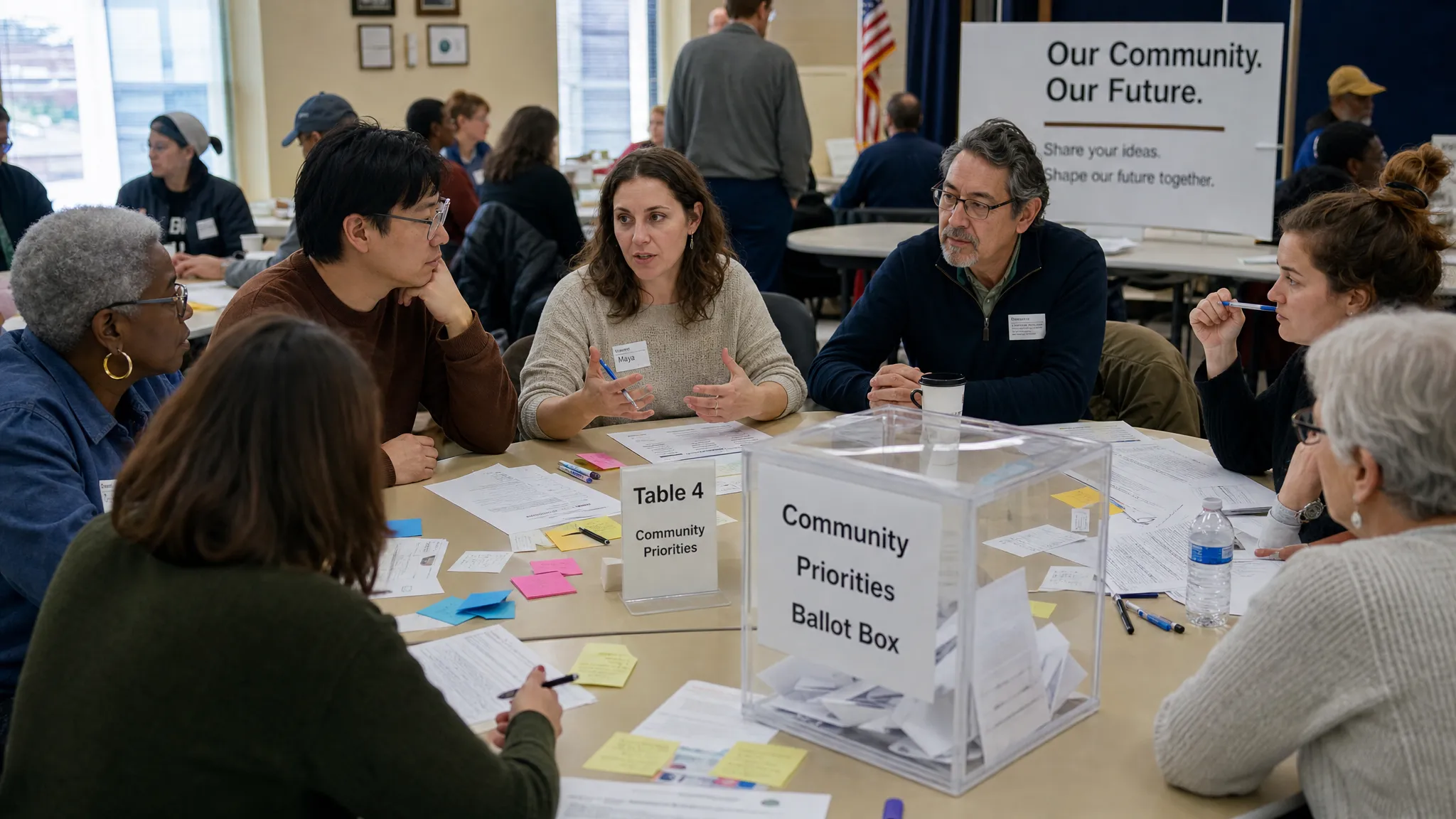
A long-term political movement should treat technology as democratic infrastructure only when it meets basic legitimacy tests. It should be accessible, secure, transparent, auditable, privacy-conscious, and connected to real public processes. If people can vote online but cannot see how outcomes are used, trust will collapse. If representatives receive public analytics but citizens cannot inspect the process, participation becomes extraction.
The best democracy tools do not ask citizens to trust a black box. They make the process visible enough that trust can be earned.
Treat transparency as a reform engine
Government transparency is often discussed as a moral value, and it is one. But for long-term reform, transparency is also an engine. It allows citizens to learn, journalists to investigate, academics to evaluate, and representatives to be held accountable.
A movement should push for transparency around public agendas, committee records, voting behavior, policy drafts, budgets, procurement, implementation timelines, and institutional responses to citizen input. The manifesto’s rParliament concept points in this direction: public documents, recordings, livestreams, and user-generated civic interpretation connected to actual committees and votes.
Transparency should not be limited to dumping documents online. A public record is only useful when people can find it, understand it, discuss it, and connect it to decisions. Long-term reform requires translation layers between institutional complexity and citizen understanding.
That translation layer is where civic technology, journalism, academia, and organized citizen teams can work together.
Build internal governance before external power
Every political movement risks becoming a smaller version of the system it criticizes. It can centralize power, hide decisions, reward loyalty over competence, or confuse the founder’s voice with the movement’s mission.
Long-term reform requires internal governance before external power. The movement should define how decisions are made, how money is reported, how leaders are selected, how conflicts are handled, how volunteers become trusted operators, and how strategy can change without losing the core mission.
This is especially important for a movement inspired by continuous democracy. If the movement demands transparency from the state but operates opaquely itself, opponents will notice and supporters will eventually feel it. The internal culture has to rehearse the public culture the movement wants to build.
One practical way to do this is to turn supporters into small civic teams with clear responsibilities, public outputs, and repeatable workflows. JustSocial has written about this operational shift in its guide to turning supporters into civic teams, which is essential for avoiding a movement where everyone agrees but nobody knows what to do next.
Develop metrics that respect democracy
Long-term reform needs measurement, but it must avoid reducing democracy to clicks. A movement can have high engagement and low trust. It can have many followers and no institutional influence. It can have online votes that look impressive but do not include the people most affected by the decision.
The right metrics should measure civic capacity, not just attention.
| Reform metric | What it helps reveal |
|---|---|
| Participation depth | Whether people move from awareness to meaningful contribution |
| Deliberation quality | Whether citizens engage evidence, tradeoffs, and opposing views |
| Inclusion | Whether affected communities are present, heard, and able to participate |
| Institutional response | Whether public bodies acknowledge, answer, or adopt citizen input |
| Transparency | Whether decisions, data, funding, and follow-up are visible |
| Trust over time | Whether the movement gains credibility beyond its original base |
The deeper objective is not maximum engagement. The objective is accountable civic power. A movement should be willing to ask whether its participation processes make citizens wiser, institutions more responsive, and public decisions more legitimate.
Create a coalition without becoming vague
Long-term reform requires a coalition broad enough to matter and disciplined enough to act. This is difficult because democratic reform attracts different groups for different reasons. Civic technologists may care about tools. Educators may care about schools. Local organizers may care about municipal responsiveness. Constitutional reformers may care about institutional design. Young citizens may simply want a voice that feels real.
A strong movement does not flatten those motivations. It organizes them around a shared minimum program.
For JustSocial, that shared program can be framed around continuous civic participation, transparent public institutions, deliberative public judgment, educational reform, and technology that empowers citizens rather than replacing them. People can disagree on tax policy, housing policy, defense policy, or school schedules while still agreeing that citizens deserve better ways to participate in shaping those decisions.
The coalition should be specific about process even when it remains pluralistic about policy. That is how a democratic reform movement avoids becoming another ideological tribe.
Guard against the four failures of long-term movements
A political movement strategy for long-term reform must plan for failure before failure arrives. Four risks are especially dangerous.
- Capture: Parties, donors, influencers, or internal elites may try to turn the movement into a vehicle for their own power.
- Burnout: Supporters may leave if every issue is treated as urgent and no work produces visible progress.
- Populism: Public participation may be misused to attack institutions rather than improve democratic legitimacy.
- Technocracy: Experts and software builders may design systems that are efficient but emotionally, socially, or politically disconnected from citizens.
The antidote is balance. Civic participation needs structure. Technology needs oversight. Deliberation needs public legitimacy. Leadership needs accountability. Reform needs emotion, but it also needs patience.
The long-term aim: from state as manager to state as civic partner
The manifesto’s use of the Greek Polis is not nostalgia for a small ancient city-state. It is a reminder that political life once felt immediate, intimate, and meaningful to citizens who experienced themselves as part of the public whole. The modern state is too large to recreate the Polis directly, and it should not recreate its exclusions. But modern technology can help recover part of its civic intensity at scale.
That is the promise of the Cosmopolis described in the manifesto: a modern democratic culture where people are not passive recipients of policy but active participants in public direction. In that culture, the state is not merely a manager of services. It becomes a civic partner that measures public opinion responsibly, invites participation continuously, protects democratic infrastructure, and learns from its citizens.
Long-term reform is ultimately a change in political identity. Citizens stop asking only who will rule over them and start asking how they can help govern together.
Frequently Asked Questions
What is a political movement strategy for long-term reform? It is a plan for building durable civic power over years, not just mobilizing people for one protest or election. It includes doctrine, participation systems, deliberation, transparency, technology, internal governance, and institutional adoption.
How does civic participation support long-term reform? Civic participation turns supporters into active contributors. When people can discuss, deliberate, act, and audit public decisions regularly, reform becomes a habit rather than an emergency response.
What is the difference between discursive democracy and deliberative democracy? Discursive democracy organizes broad public conversation so arguments, concerns, and identities become visible. Deliberative democracy brings citizens into structured processes where they study evidence, weigh tradeoffs, and form recommendations.
Can online voting platforms create direct democracy by themselves? No. Online voting can support democratic participation, but it needs legitimacy safeguards such as security, privacy, accessibility, auditability, transparent use of results, and connection to real public decision-making.
Why should a political movement focus on education? Long-term democracy depends on citizens who can reason, cooperate, question evidence, and participate responsibly. The JustSocial vision connects democratic reform with educational reform because civic capacity has to be learned and practiced.
Help build the next layer of democracy
If long-term democratic reform matters to you, the work begins before the next election and continues after it. Read the manifesto, discuss it critically, share it with people who care about public life, and consider how your skills could support a movement for continuous direct democracy.
JustSocial exists to help move democracy from occasional consent toward continuous civic empowerment. To learn more or get involved, visit JustSocial.io.