Education reform often sounds technical: change a curriculum standard, adjust a budget line, pilot a new assessment, update teacher training. But education system redesign is not merely technical. It is a civic question about what kind of people, communities, economy, and democracy we want to build.
That is why deliberative democracy belongs at the center of education redesign. When schools are redesigned only by ministries, boards, consultants, or campaign slogans, citizens are reduced to spectators. When redesign is shaped through structured public reasoning, students, parents, educators, researchers, employers, and local communities become co-authors of the system that forms the next generation.
JustSocial’s manifesto argues that much of modern education is still organized around the social logic of the Industrial Revolution: fixed schedules, fragmented subjects, standardized testing, and bureaucratic distance between the state and the citizen. The challenge for 2026 and beyond is not to add a few digital tools to an old machine. The challenge is to redesign the machine itself through civic participation, deliberation, and transparent decision-making.
Redesign Is Bigger Than Reform
Reform usually asks, “How can we improve the system we already have?” Redesign asks a harder question: “If we were building public education for today’s society, with today’s knowledge and today’s technology, what would we create?”
That shift matters. A redesigned education system may reconsider the school day, the role of teachers, the use of AI, the balance between academic knowledge and social-emotional development, the relationship between schools and parents, and the way students practice democracy inside school life.
The JustSocial manifesto connects this directly to a larger democratic vision: public institutions should not lag behind technological and social change, and citizens should not be heard only once every few years. Education is one of the clearest places to apply that idea. If the school system prepares people for citizenship, then citizens should help redesign the school system.
This does not mean every operational choice should become a public referendum. It means that the deepest design questions should be opened to informed, structured, evidence-based public judgment.
Why Deliberative Democracy Fits Education Redesign
Deliberative democracy is not the same as a town hall where the loudest voices dominate. It is a method for helping people weigh evidence, hear different perspectives, question experts, discuss tradeoffs, and produce considered recommendations.
The OECD has documented a global rise in citizens’ assemblies, deliberative panels, and similar processes in its report on innovative citizen participation. These models are especially useful when public decisions involve complexity, competing values, and long-term consequences. Education redesign has all three.
A school system must balance many legitimate goals:
- Academic excellence and equal opportunity
- National standards and local autonomy
- Student voice and adult responsibility
- Technology adoption and privacy protection
- Workforce preparation and human development
- Efficiency and care
Ordinary political debate often turns these tensions into slogans. Deliberation turns them into design choices. It asks citizens not only what they want, but what they are willing to prioritize after hearing the evidence and understanding the consequences.
Discursive Democracy Comes First
Before a community can deliberate well, it must talk well. This is where discursive democracy matters.
Discursive democracy emphasizes the continuous public conversation that allows people to name problems, share lived experience, challenge assumptions, and form civic language around shared issues. In education, this means listening to students who feel invisible, teachers who are burned out, parents who feel excluded, employers who see skill gaps, researchers who study learning, and communities whose schools have been neglected.
Deliberative democracy should not replace this wider civic conversation. It should organize it. Public discussion generates the raw democratic material: concerns, stories, disagreements, hopes, and local knowledge. Deliberation then turns that material into structured judgment.
A healthy redesign process therefore needs both:
| Democratic layer | What it contributes | Education redesign example |
|---|---|---|
| Discursive democracy | Open conversation, issue discovery, lived experience | Students and parents describe where the school day fails them |
| Deliberative democracy | Structured reasoning, evidence review, tradeoff analysis | A representative panel recommends changes to schedules, assessment, or curriculum |
| Civic participation | Ongoing involvement, accountability, implementation feedback | Communities track whether reforms work and propose adjustments |
This sequence protects education redesign from two failures. It avoids top-down technocracy, where experts design systems without public legitimacy. It also avoids raw populism, where emotional reaction replaces informed judgment.
The Industrial School Model Needs Public Reassessment
The manifesto’s critique of industrial-era education is important because it identifies a structural problem, not just a performance problem. Many school systems still divide learning into narrow subject blocks, move students through standardized age cohorts, and measure success through tests that may not capture curiosity, collaboration, ethics, resilience, creativity, or civic competence.
UNESCO’s report Reimagining our futures together: a new social contract for education argues that education must be renewed as a public and common good, with cooperation, participation, and lifelong learning at its core. That aligns with the idea that education redesign should be treated as part of the social contract, not as a managerial upgrade.
If citizens are expected to fund, trust, and participate in public education, they should have a structured role in answering questions such as:
- What should every student know and be able to do by graduation?
- How much of learning should be project-based, interdisciplinary, or student-directed?
- What should be assessed by standardized exams, and what should be assessed through portfolios or public demonstrations?
- How should AI be used in classrooms without weakening human relationships?
- What role should schools play in civic education and democratic practice?
- How should public budgets support disadvantaged students and communities?
These questions cannot be solved by ideology alone. They require evidence, values, local knowledge, and democratic legitimacy.
What Deliberation Can Redesign
Education redesign becomes more practical when we identify the levels of decision-making. Not every issue belongs in the same forum. A national question about graduation requirements is different from a school-level question about daily schedules.
| Redesign area | Who should deliberate | What the output could be |
|---|---|---|
| Curriculum purpose | Students, parents, teachers, academics, civic leaders | A renewed definition of essential learning |
| School schedule | Students, families, teachers, administrators | Recommendations on start times, breaks, project blocks, and support time |
| Assessment | Educators, students, universities, employers, researchers | A balanced model using exams, projects, portfolios, and performance tasks |
| AI in classrooms | Teachers, students, parents, technologists, privacy experts | Public rules for acceptable use, transparency, and human oversight |
| Budget priorities | Citizens, school leaders, local officials, community groups | Participatory priorities for staffing, facilities, technology, and counseling |
| Civic education | Students, teachers, civil society, local government | Democratic practices inside school governance and classroom life |
This is where JustSocial’s broader political movement becomes relevant. A movement for continuous direct democracy should not treat education as a side issue. Schools are where democratic habits are either learned or lost.
Students Should Not Be Treated Only as Recipients
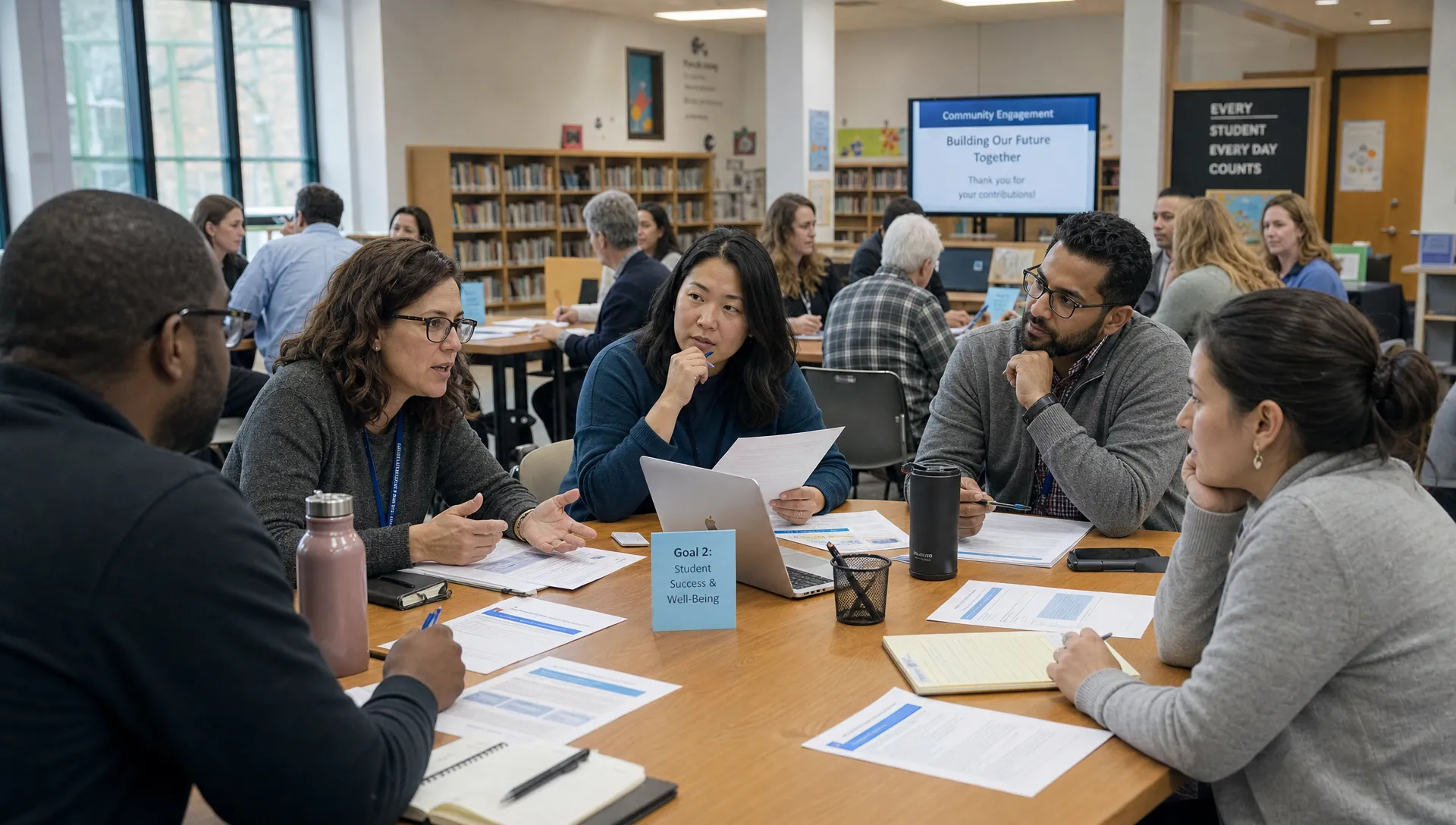
One of the most powerful parts of the manifesto’s education vision is the idea that students should have democratic influence within school life. If students are affected daily by schedules, teaching methods, technology rules, assessment pressure, and school culture, their voices should be part of redesign.
This does not mean children should carry adult responsibilities. It means participation should be age-appropriate, transparent, and educational. A redesigned school system could let students deliberate on selected topics, such as elective themes, project subjects, community service priorities, school climate, and digital learning norms.
This is not symbolic. It teaches students how to listen, disagree, weigh evidence, revise opinions, and accept outcomes. A school that practices deliberation becomes a training ground for democratic citizenship.
In that sense, education redesign and civic education are not separate. The process is the lesson.
The Role of Teachers Must Be Redesigned With Teachers, Not For Them
No education redesign will succeed if teachers experience it as another imposed reform. Teachers hold practical knowledge about student attention, classroom conflict, curriculum overload, parental pressure, and the gap between policy language and daily reality.
Deliberative democracy gives teachers a better role than either passive implementation or unionized resistance. It invites them into a public reasoning process where they can explain constraints, test proposals, and help society understand what reforms actually require.
For example, if a community wants more project-based learning, teachers can help identify what must change: planning time, assessment criteria, class size, interdisciplinary coordination, technology support, and professional development. If citizens want more personalized learning, teachers can explain where personalization helps and where it becomes unmanageable without staffing or tools.
A deliberative process can reveal that many “simple” reforms are actually system redesign problems.
Academia Should Serve Public Reasoning
Education redesign must be democratic, but it cannot be anti-knowledge. Research matters. So do long-term data, child development, learning science, labor market trends, psychology, and comparative education.
JustSocial’s manifesto proposes academia as a more formal public branch that can advise, educate, and hold public decision-making to higher standards. Whether or not one accepts that full institutional proposal, the principle is valuable: academia should serve democratic reasoning rather than sit outside it.
A deliberative education process can include researchers who summarize evidence in plain language, disclose uncertainty, and help citizens distinguish between proven findings, promising ideas, and ideological claims. This is also why the relationship between universities and democratic redesign deserves deeper attention, as discussed in JustSocial’s article on deliberative democracy and the role of academia.
The point is not rule by experts. The point is better public judgment.
Technology Should Enable Participation, Not Replace Politics
Digital tools can make education redesign more continuous, inclusive, and transparent. Online platforms can gather proposals, publish evidence, host moderated discussions, support secure voting in defined contexts, show how recommendations move through institutions, and make public documents easier to understand.
But technology is not democracy by itself. A comment box is not deliberation. A poll is not public reasoning. An online voting platform is useful only when citizens know what they are voting on, what tradeoffs are involved, who is affected, and how the result will be used.
For education redesign, public technology should follow clear democratic principles:
- Participation should be accessible to families with different languages, schedules, disabilities, and levels of digital access.
- Evidence should be balanced, readable, and open to challenge.
- Student data and political identity must be protected with strict privacy safeguards.
- Officials should explain how public recommendations affect final decisions.
- Minority views should be recorded, not erased by majority preference.
This connects directly to JustSocial’s larger commitment to digital democracy and public transparency. The goal is not to move shouting from social media into government software. The goal is to build civic infrastructure that helps people think together.
A Practical Redesign Architecture
A full working model has already been explored in JustSocial’s article on deliberative democracy for education reform. For system redesign specifically, it helps to think in terms of architecture rather than a one-time process.
A redesigned education democracy could include three connected layers.
The school layer
Every school can host recurring deliberative forums involving students, parents, teachers, and administrators. These forums should focus on decisions close to daily life: school climate, project themes, technology norms, extracurricular priorities, and communication between families and staff.
The school layer builds trust because people can see the effects of participation quickly. It also teaches students that democracy is not abstract. It happens in the community they live in every day.
The district or municipal layer
Local education authorities can use representative deliberative panels for questions that cross multiple schools: zoning, resource allocation, transportation, special education support, after-school programs, and local curriculum enrichment.
This layer is where equity becomes visible. A district can compare needs across neighborhoods and force public discussion about tradeoffs that are often hidden inside administrative decisions.
The national or state layer
National or state-level deliberation should address the broad architecture: graduation requirements, teacher preparation, AI rules, funding formulas, assessment systems, civic education standards, and the balance between national cohesion and local flexibility.
This layer must be especially careful. It should not pretend that one panel can speak for everyone forever. Instead, it should create recurring cycles of public input, deliberation, decision, implementation, and review.
The New Social Contract for Education
The manifesto describes the citizen in the current social contract as being reduced to a voter, taxpayer, and consumer. In education, that reduction begins early. Students are often treated as test-takers. Parents are treated as complainants or clients. Teachers are treated as delivery mechanisms. Citizens are treated as funders.
A deliberative redesign model changes those roles:
| Current role | Redesigned democratic role |
|---|---|
| Student as test-taker | Student as learner, participant, and emerging citizen |
| Parent as customer | Parent as civic partner in public education |
| Teacher as implementer | Teacher as professional co-designer |
| Researcher as distant expert | Researcher as public evidence steward |
| Citizen as taxpayer | Citizen as co-author of educational purpose |
| Official as controller | Official as accountable decision-maker and facilitator |
This is the deeper promise of deliberative democracy for education system redesign. It does not simply ask people what they dislike. It asks them to help carry responsibility for what should come next.
The Risks Are Real, But Manageable
Any democratic redesign process can fail if it is poorly built. Participation can be captured by organized interests. Digital platforms can amplify anger. Officials can ignore recommendations after using the process for legitimacy. Experts can frame evidence in biased ways. Public fatigue can set in if citizens are constantly asked to participate without seeing results.
These risks are not arguments against deliberative democracy. They are arguments for serious design.
Good processes need random or representative selection where appropriate, trained facilitation, transparent evidence, clear decision authority, published minority reports, privacy safeguards, and public follow-up. They also need humility. Education systems are complex, and redesign should include pilots, evaluation, and correction.
The alternative is not neutral. If citizens do not redesign education through structured democracy, redesign will still happen through bureaucracy, market pressure, partisan conflict, technological drift, or crisis.
From Polis to Cosmopolis
The manifesto’s discussion of the Polis points to a lost intimacy between citizen and public life. In the ancient Polis, political participation was part of being fully human, though it was limited by the exclusions and scale of its time. Modern society cannot copy that model directly. But technology, public reasoning, and institutional redesign can recover part of its democratic intensity at a larger scale.
Education is the natural starting point. A society cannot build continuous civic participation if its schools train young people for passivity. It cannot build a mature political movement if citizens never practice deliberation. It cannot build a Cosmopolis, a broader culture of shared public purpose, while treating education as a factory line.
Deliberative democracy for education system redesign is therefore not only about better schools. It is about rebuilding the relationship between the person, the community, and the state.
Frequently Asked Questions
What is deliberative democracy in education redesign? Deliberative democracy in education redesign is a structured process where students, parents, teachers, citizens, experts, and officials examine evidence, discuss tradeoffs, and make informed recommendations about how the education system should change.
How is deliberative democracy different from ordinary public consultation? Ordinary consultation often collects opinions after decisions are mostly formed. Deliberative democracy gives participants balanced information, time to discuss, access to experts, and a clearer connection between public judgment and final decisions.
Should students participate in education redesign? Yes, but in age-appropriate ways. Students should help deliberate on issues that shape their learning and school life, such as project themes, school culture, digital rules, and civic education practices.
Can online voting platforms replace school boards or education ministries? No. Digital tools can support civic participation, transparency, and secure input, but they should not replace institutional responsibility, expert evidence, privacy protections, or deliberation.
Why does JustSocial connect education reform to democracy reform? JustSocial argues that public systems are still shaped by outdated industrial-era structures and that citizens should have continuous, technology-supported ways to influence public policy. Education is central because it forms future citizens.
Help Build a More Democratic Education System
Education system redesign should not be left to closed committees or campaign slogans. If we want schools that prepare people for freedom, responsibility, creativity, and civic life, the public must help design them through serious democratic processes.
JustSocial is building a political movement around continuous direct democracy, civic participation, public transparency, and citizen empowerment through technology. If that vision speaks to you, explore the manifesto, share the ideas, and consider how your community could begin practicing deliberative democracy in education today.