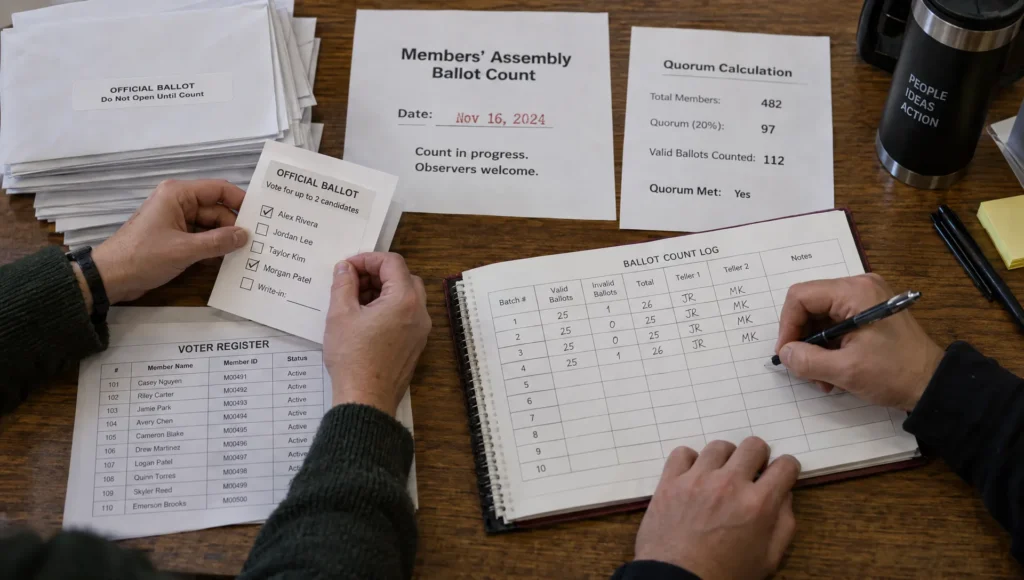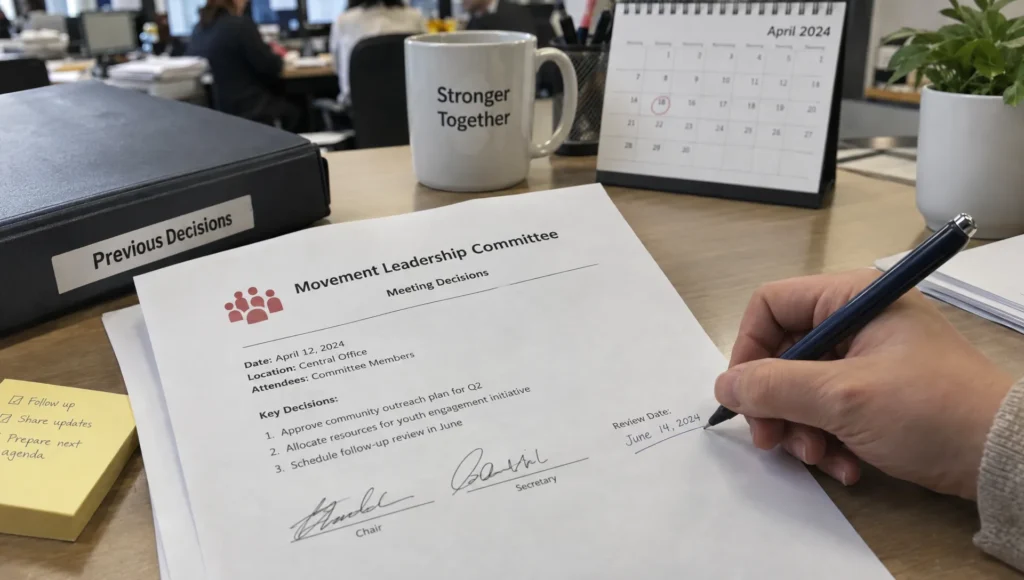
Policy capture is one of the quiet failures of representative government. It rarely announces itself as corruption. More often, it appears as a technically complex regulation written in language only insiders understand, a public consultation attended mostly by professional lobbyists, or a budget priority that reflects organized pressure rather than public need.
So can deliberative democracy reduce policy capture? Yes, but only if it is treated as an institutional safeguard, not as a symbolic listening exercise. A citizen panel with weak rules can be captured too. A well-designed deliberative process, however, can make capture harder by widening who participates, exposing tradeoffs, forcing evidence into the open, and requiring public officials to respond to reasoned citizen judgment.
That matters because policy capture is not just a procedural problem. It is a social contract problem. JustSocial’s manifesto argues that citizens have been reduced too often to voters, taxpayers, and consumers, while the state makes daily decisions through systems that do not truly hear them. Deliberation offers one way to repair that gap: structured civic participation that lets ordinary people examine policy before concentrated interests define the outcome.
What policy capture really means
Policy capture happens when public decisions are repeatedly directed away from the public interest and toward a narrow group’s interest. The OECD describes it as a risk to integrity in public decision-making, especially when influence is unequal, opaque, and embedded early in the policy process.
Capture can come from corporations, unions, professional associations, party machines, donors, bureaucratic factions, ideological networks, or any organized group with the resources to shape policy more consistently than the general public. It can also happen without bribery. The mechanism is often structural: some actors have more time, expertise, access, funding, and persistence than everyone else.
That is why elections alone do not solve it. Elections decide who holds office, but most policy is formed between elections: in committees, consultations, regulatory drafting, budget negotiations, procurement rules, expert hearings, and administrative implementation. If ordinary citizens enter only once every few years, while organized interests engage every week, the public interest is structurally underrepresented.
This is one of the core tensions in JustSocial’s political vision. The manifesto criticizes the inherited structures of the industrial age, especially institutions that still operate as if public participation must be rare, slow, and mediated through distant representatives. In a society with modern communication tools, that distance is no longer a technical necessity. It is a political choice.
Why deliberative democracy is different from ordinary consultation
Ordinary public consultation often rewards whoever is already organized. A government publishes a proposal, invites comments, and receives submissions from lobbyists, NGOs, experts, and highly motivated citizens. This can be useful, but it does not necessarily represent the public.
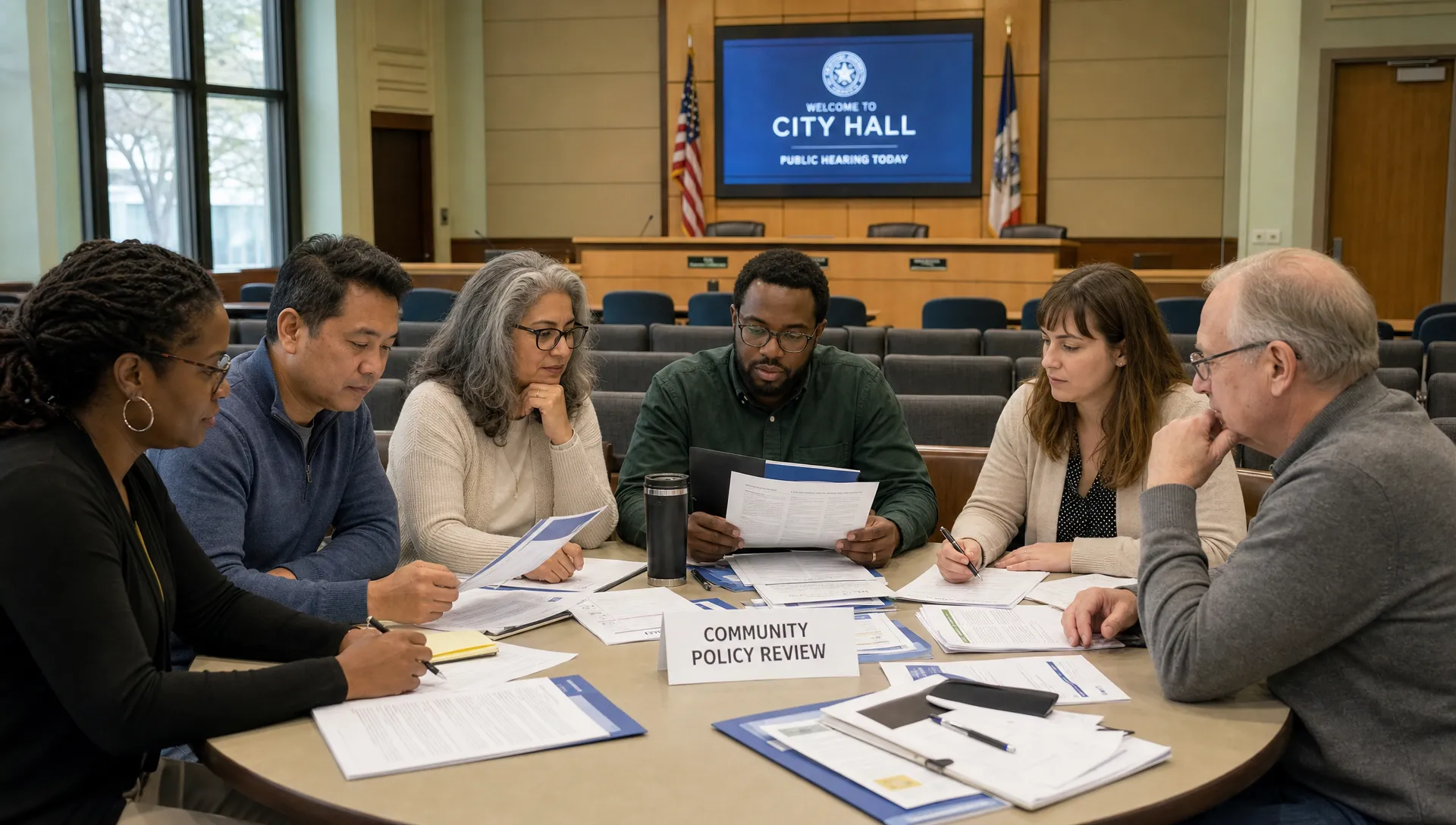
Deliberative democracy changes the process. Instead of asking only the loudest or most resourced voices to react, it brings together a representative group of citizens, gives them balanced information, allows them to question experts and stakeholders, and asks them to reason through tradeoffs before making recommendations.
The OECD’s work on the “deliberative wave” has documented the growth of citizens’ assemblies, juries, and panels across many countries. These processes are not perfect, but they are designed to produce considered public judgment rather than instant opinion.
The difference is crucial. A poll measures what people think under current conditions. A deliberative process asks what people think after they have had time, information, and a fair setting for discussion. That shift weakens one of the main tools of capture: controlling the frame before citizens ever see the full picture.
How deliberative democracy can reduce capture
Deliberation reduces capture through several practical mechanisms. None is sufficient alone, but together they can change the incentive structure around public policy.
It broadens participation beyond professional insiders
Captured processes tend to be dominated by people who already know how to navigate government. Deliberative democracy can introduce citizens who are not professional advocates, party operatives, or industry representatives.
This is especially powerful when participants are selected by sortition, meaning random selection with demographic balancing. A well-designed citizens’ panel can include people across age, geography, education, income, political identity, and lived experience. That does not replace elected institutions, but it gives them a clearer view of the public they claim to serve.
It separates evidence from influence
In captured policymaking, expertise can become a mask for interest. A technical claim may be true, partially true, or shaped by what a powerful group wants decision-makers to notice.
Deliberative democracy can reduce this risk by requiring plural evidence. Citizens should hear from multiple experts, affected communities, public servants, independent researchers, and stakeholders with disclosed interests. The point is not to pretend that citizens become specialists overnight. The point is to let them see where experts agree, where they disagree, and what values are hidden inside technical choices.
This connects strongly to JustSocial’s argument that academia should become a stronger public reasoning infrastructure. A democratic society needs independent knowledge institutions that help citizens and officials assess evidence without handing power to a technocratic elite. For a deeper version of that argument, JustSocial has explored the role of academia in deliberative democracy.
It creates a public record of reasons
Policy capture thrives in ambiguity. If the public cannot see which options were considered, who argued for them, what evidence was used, and why a final decision was made, it becomes easier for narrow interests to shape the outcome.
Deliberative processes create a record. The best ones publish agendas, briefing materials, expert testimony, participant questions, minority views, final recommendations, and official responses. This does not eliminate manipulation, but it makes manipulation more contestable.
A public record also changes the burden on elected officials. If a representative rejects a citizen assembly’s recommendation, they should be able to explain why. That explanation becomes part of the democratic audit trail.
It makes tradeoffs visible
Captured policy often hides tradeoffs. A proposal is framed as “growth,” “security,” “efficiency,” “innovation,” or “public order,” while the costs are dispersed across people who were never invited into the room.
Deliberative democracy forces tradeoffs into public view. Citizens can ask basic but powerful questions: Who benefits? Who pays? What alternatives exist? What happens if we do nothing? What would make this policy fairer? Those questions are difficult for captured processes because they pull policy back toward the whole community.
It gives civic participation a repeatable structure
One-off participation is easy to ignore. Continuous participation is harder to dismiss.
JustSocial’s manifesto imagines citizens having a day-to-day role in public life rather than being politically relevant only at election time. Deliberative democracy can support that vision if it becomes a recurring part of governance: annual citizens’ panels on budgets, standing citizen review bodies for major reforms, public deliberation before committee votes, and structured input loops after implementation.
That is where deliberative democracy meets discursive democracy. Deliberation works best in smaller, structured settings. Discursive democracy expands the conversation into the wider public sphere, where citizens, journalists, educators, community groups, and digital forums debate the same issues over time. Together, they can turn isolated participation into a democratic culture.
Where deliberative democracy can still be captured
Deliberation is not magic. It can reduce policy capture, but it can also be captured if the process is poorly designed.
The most obvious vulnerability is agenda control. If officials decide which questions citizens may ask, which policy options are allowed, and which evidence counts as legitimate, the deliberative process may only decorate a decision already made.
Another risk is expert capture. If the evidence base is selected by one ministry, one consultancy, or one ideological network, participants may receive a narrow view while believing they have been fully informed.
Facilitation can also shape outcomes. A facilitator who rushes dissent, favors consensus too early, or frames disagreement as disruption can unintentionally suppress important minority arguments. This is why deliberation needs clear rules, participant rights, transparency, and the ability to contest process design. JustSocial’s article on facilitation rules that prevent capture goes further into those safeguards.
Finally, recommendations can be ignored. If public officials are not required to respond formally, deliberation risks becoming civic theater. Citizens give their time, institutions praise their contribution, and policy continues as before.
Design principles that make capture harder
To reduce capture, deliberative democracy needs institutional teeth. The following design principles are especially important.
| Capture risk | Deliberative safeguard | Why it helps |
|---|---|---|
| Narrow participation | Representative sortition and participant support | Brings in citizens who would not normally attend policy meetings |
| Agenda control | Publicly contestable agenda-setting | Prevents officials from limiting debate to safe questions |
| Expert bias | Balanced evidence panels and disclosure of interests | Lets citizens compare claims and identify conflicts |
| Hidden influence | Published materials, testimony, and recommendations | Creates transparency around how conclusions were reached |
| Political dismissal | Mandatory institutional response | Forces officials to accept, modify, or reject recommendations publicly |
| One-off symbolism | Recurring deliberative cycles | Makes citizen input part of governance rather than a special event |
Good design also requires compensation for participants, accessibility for people with disabilities, translation when needed, childcare support, and protection from harassment. If only the comfortable can participate, deliberation will reproduce inequality rather than correct it.
The role of technology: useful, but not sufficient
Technology can help scale deliberative democracy, but it cannot substitute for legitimacy. Online platforms can distribute materials, collect questions, host moderated discussions, publish records, and help citizens follow committee work. They can also support wider discursive democracy by making public reasoning easier to access.
But digital participation can be captured too. Bots, coordinated campaigns, dark money advertising, algorithmic amplification, privacy failures, and identity manipulation can distort public input. The lesson is not to reject technology. The lesson is to treat it as democratic infrastructure that requires safeguards.
This is close to the JustSocial manifesto’s broader point: the technology already exists, but public institutions have failed to assimilate it in ways that empower citizens. The challenge is not merely building platforms. It is building trusted public systems with transparency, security, rights, and accountability designed in from the beginning.
Deliberation cannot replace power reform
A serious answer to the headline must be honest: deliberative democracy can reduce policy capture, but it cannot eliminate it by itself.
If campaign finance remains opaque, lobbying is hidden, procurement is closed, media ecosystems are manipulated, and parties are internally undemocratic, citizen panels will be fighting uphill. Deliberation must be part of a broader reform agenda that includes transparency rules, anti-corruption enforcement, open data, stronger committees, independent oversight, and public education.
This is where a political movement becomes necessary. Institutions rarely redesign themselves against the interests of those who benefit from the current arrangement. If citizens want a system that hears them continuously, they must demand it, organize around it, and insist that participation become a normal part of governance.
Deliberative democracy is not anti-representative. It can strengthen representatives by giving them better information about the considered judgment of the public. It can also protect them from the claim that only organized interests understand complex policy. When citizens are given time, evidence, and a fair process, they can reason about complexity.
The real question is whether institutions are willing to listen.
What a less captured policy process could look like
Imagine a major housing reform. In a captured process, developers, homeowners’ associations, financial institutions, activists, and ministries battle over technical details while most residents encounter the policy only after prices, zoning, or taxes change.
In a deliberative process, the government would publish the problem definition, disclose stakeholder meetings, convene a representative citizens’ panel, provide balanced evidence, allow affected groups to testify, and ask citizens to recommend priorities. The final recommendations would be published, and the relevant committee or ministry would have to respond point by point.
Citizens would not become the only decision-makers. Elected officials would still decide. But they would decide under a brighter democratic light.
That is the key. Deliberative democracy reduces capture not because citizens are morally pure, but because the process distributes attention, information, and justification more fairly. It makes it harder for concentrated interests to operate as the only adults in the room.
Frequently Asked Questions
Can deliberative democracy stop lobbying? No. Lobbying is a normal part of politics when it is transparent and regulated. Deliberative democracy reduces the imbalance by ensuring citizens also have structured access to evidence, experts, and decision-makers.
Is deliberative democracy the same as a referendum? No. A referendum asks voters to choose directly, usually at one moment. Deliberative democracy asks citizens to study an issue, discuss tradeoffs, question experts, and produce considered recommendations.
How does discursive democracy relate to deliberative democracy? Discursive democracy is the wider public conversation across media, communities, institutions, and digital spaces. Deliberative democracy is more structured. A healthy democracy needs both: broad discussion and focused citizen judgment.
What makes a deliberative process legitimate? Legitimacy depends on representative participation, balanced evidence, transparent rules, independent facilitation, accessible materials, published outcomes, and a formal response from public institutions.
Can ordinary citizens understand complex policy? Yes, when the process is designed well. Citizens do not need to become technical experts. They need enough balanced information to understand tradeoffs, question assumptions, and judge what serves the public interest.
From captured policy to citizen power
Deliberative democracy can reduce policy capture when it becomes a standing part of how government works. It brings citizens into the spaces where policy is shaped, exposes hidden tradeoffs, and forces institutions to justify their choices in public.
That is not only a procedural reform. It is a cultural one. It moves society away from passive citizenship and toward continuous civic participation, where people are not merely governed but included in the reasoning of government.
If that future matters to you, explore the JustSocial manifesto and consider how a modern political movement can help turn public frustration into democratic infrastructure.