Democratic renewal does not begin with a better campaign slogan. It begins with a better civic habit: people expecting their public voice to matter between elections.
That is the gap a serious political movement must address. Many citizens are asked to vote once every few years, then watch public decisions move through distant institutions, party negotiations, committee rooms, media narratives, and social platforms that reward outrage more than understanding. The result is not only frustration. It is democratic muscle loss.
The JustSocial manifesto names this problem clearly: modern public life too often reduces the citizen to a voter, taxpayer, and private consumer. Democratic renewal should do the opposite. It should make citizens visible, educated, heard, and capable of shaping public life on a continuous basis.
This does not mean every public decision should become an instant online referendum. It means building a civic culture where civic participation, discursive democracy, and deliberative democracy work together. A political movement for democratic renewal should not only win arguments. It should create new ways for people to participate responsibly, transparently, and repeatedly.
The democratic problem these ideas must solve
Democracy is under pressure across the world. Freedom House has documented years of global decline in political rights and civil liberties, with flawed elections, polarization, corruption, and violence weakening public trust. The lesson for movement builders is uncomfortable but necessary: elections are essential, but elections alone are not enough to sustain a democratic culture.
When civic energy has nowhere useful to go, it often becomes apathy, protest without follow-through, or social media anger. A healthy democratic society needs more than occasional voting. It needs practical channels where citizens can learn, speak, listen, deliberate, organize, and see whether public institutions responded.
A political movement for democratic renewal should therefore focus on infrastructure, not only ideology. It should ask: what can a normal citizen do this week to understand an issue, influence a decision, collaborate with neighbors, or hold institutions accountable?
| Democratic layer | Core question | What it contributes |
|---|---|---|
| Civic participation | Can ordinary people take part regularly? | Inclusion, agency, and public ownership |
| Discursive democracy | Can people reason together in public? | Better public understanding and legitimacy |
| Deliberative democracy | Can citizens weigh tradeoffs with evidence? | Informed judgment on complex issues |
| Political movement | Can participation become organized power? | Pressure, continuity, and reform capacity |
These layers are strongest when they reinforce each other. Participation without discussion can become noise. Discussion without structure can become endless commentary. Deliberation without movement pressure can become a report that officials ignore. Movement energy without democratic norms can become factional power seeking.
The goal is to connect them into a living democratic practice.
Political movement ideas for democratic renewal
1. Build neighborhood civic participation circles
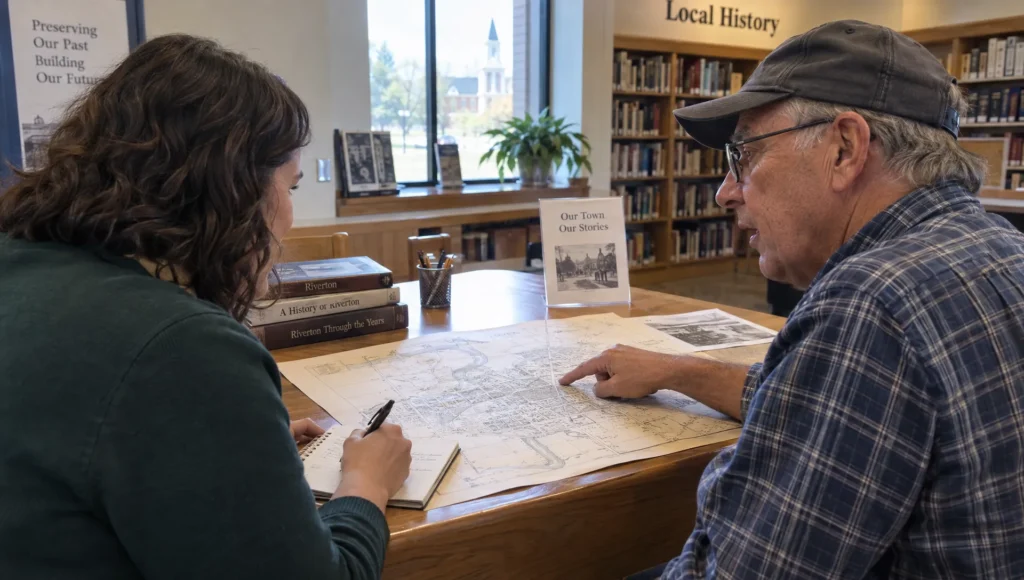
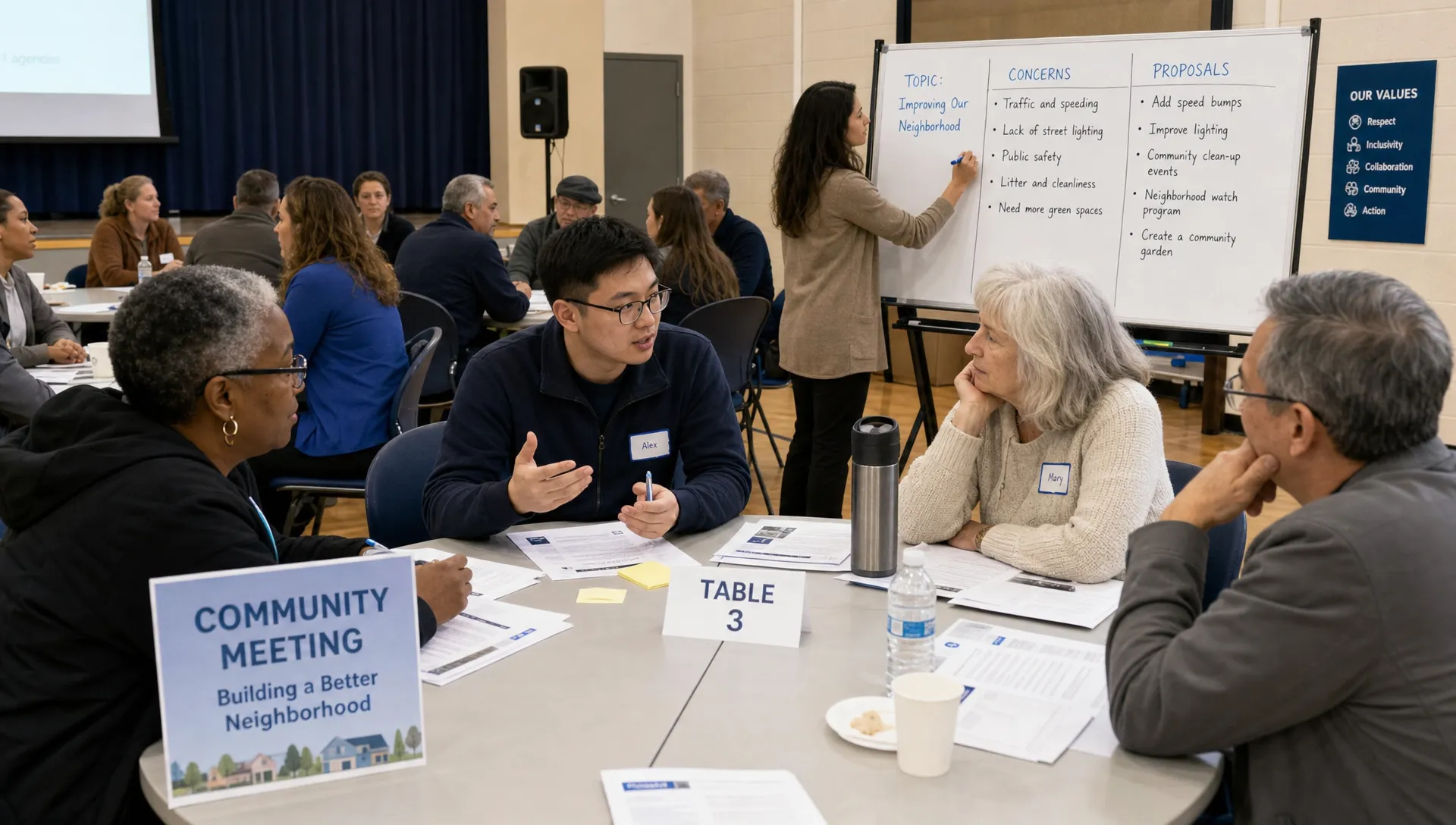
The simplest democratic renewal idea is also one of the most powerful: create regular local participation circles. These can operate in neighborhoods, schools, districts, workplaces, religious communities, or local associations. Their purpose is not to imitate a televised debate. Their purpose is to make public life concrete again.
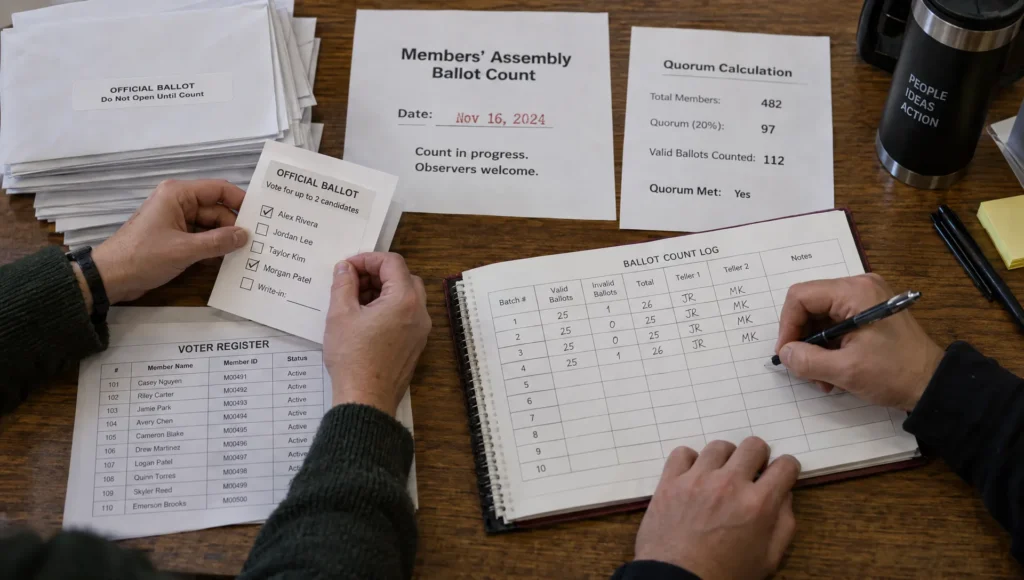
A participation circle might meet once a month around one public issue: transportation, school safety, housing, local business regulation, public parks, policing, climate resilience, or municipal budgeting. The format should be simple: a short evidence brief, a moderated discussion, a ranking of concerns, and a public summary sent to relevant officials.
This connects directly to the manifesto’s longing for a modern version of the Polis, where citizenship is not a remote legal status but a lived practice. The ancient Polis was small and exclusionary by modern standards, so it cannot be copied. But its civic intensity can be translated into modern, inclusive formats.
The political movement idea here is not just to host meetings. It is to normalize the expectation that public questions belong to citizens before they belong to parties.
2. Create discursive democracy spaces that improve public reasoning
Discursive democracy focuses on the quality of public conversation. It asks whether people can form, challenge, revise, and explain political views in a shared public space. This matters because democracy is not only about counting preferences. It is also about how preferences are shaped.
Most social media platforms are poorly designed for this. They reward speed, identity signaling, conflict, and emotional escalation. A political movement for democratic renewal should experiment with platforms and public forums that reward clarity, evidence, respectful disagreement, and public learning.
A discursive democracy space could include issue pages with plain language summaries, citizen arguments grouped by theme, expert context, public questions for officials, and transparent moderation rules. Instead of burying disagreement, it should organize disagreement so people can understand the strongest version of opposing views.
This reflects one of the manifesto’s central insights: technology already exists to let people participate more continuously. The missing piece is not only software. It is civic design. A public platform should not simply collect reactions. It should help a society think.
3. Use deliberative democracy for hard tradeoffs
Some issues cannot be solved by quick polling. Budgets involve tradeoffs. Education reform involves competing values. Public health, climate adaptation, tax policy, and constitutional reform all require time, evidence, and careful judgment.
That is where deliberative democracy becomes essential. Citizen assemblies, citizens’ juries, and deliberative panels bring a representative group of people together to learn from evidence, question experts, discuss with one another, and produce recommendations. The OECD has described this as a deliberative wave, documenting how public institutions have used representative deliberative processes in many countries and policy areas.
A political movement can begin using deliberative formats before the state officially adopts them. It can run local citizen panels on school policy, municipal development, digital privacy, or public spending. It can publish the process, the evidence, the disagreements, and the final recommendations.
The point is not to replace elected representatives. It is to raise the democratic standard. If a small group of citizens can study an issue deeply and produce a serious recommendation, officials should at least explain how they considered it.
4. Make public records readable, searchable, and socially visible
Participation becomes shallow when citizens cannot see what government is doing. A democratic renewal movement should treat transparency as a daily public service, not a ceremonial promise.
The manifesto imagines tools such as a public record of parliamentary committees, live streams, recordings, documents, and a structured repository of state laws. This idea can begin locally. A movement can build public pages for city council votes, school board decisions, committee agendas, procurement contracts, and proposed regulations.
The key is usability. A 200 page PDF hidden on a government website is technically public but practically invisible. Democratic transparency means citizens can find the record, understand the context, share relevant sections, and connect decisions to the officials responsible for them.
This is where public transparency supports both civic participation and discursive democracy. People argue better when they can point to the same record.
5. Build civic action pipelines from attention to influence
One of the most important movement ideas in the manifesto is the transformation of public attention into public action. Instead of reading a news story, getting angry, and moving on, citizens should be able to take meaningful next steps.
A civic action pipeline can guide people from issue awareness to practical influence. A citizen sees a public problem, reads a reliable summary, joins a structured discussion, supports a petition, contacts representatives, volunteers locally, donates to a relevant initiative, or tracks whether an institution responded.
This is especially important because modern politics wastes enormous civic energy. People care, but they often do not know what to do next. A political movement can become valuable by reducing that friction.
A good pipeline should answer five questions clearly:
- What happened?
- Who has authority to act?
- What options are being proposed?
- What can citizens do now?
- How will the outcome be tracked?
That final question matters. Without outcome tracking, civic participation becomes emotional release. With outcome tracking, it becomes democratic pressure.
6. Redefine representatives as accountable translators
Democratic renewal should not pretend that representatives are unnecessary. Large societies need institutions, expertise, negotiation, and continuity. But representatives should not behave as distant rulers who ask for permission only during campaigns.
A better model is the representative as an accountable translator of public judgment. Representatives should listen continuously, explain tradeoffs, publish reasons for decisions, and show where citizen input affected their choices. When they disagree with public opinion, they should say why clearly and respectfully.
This matches an important nuance in the manifesto: public opinion should be precisely measured and taken into consideration, but government institutions should still retain judgment and independence. That balance is crucial. Continuous participation should inform government, not turn complex decisions into impulsive reaction contests.
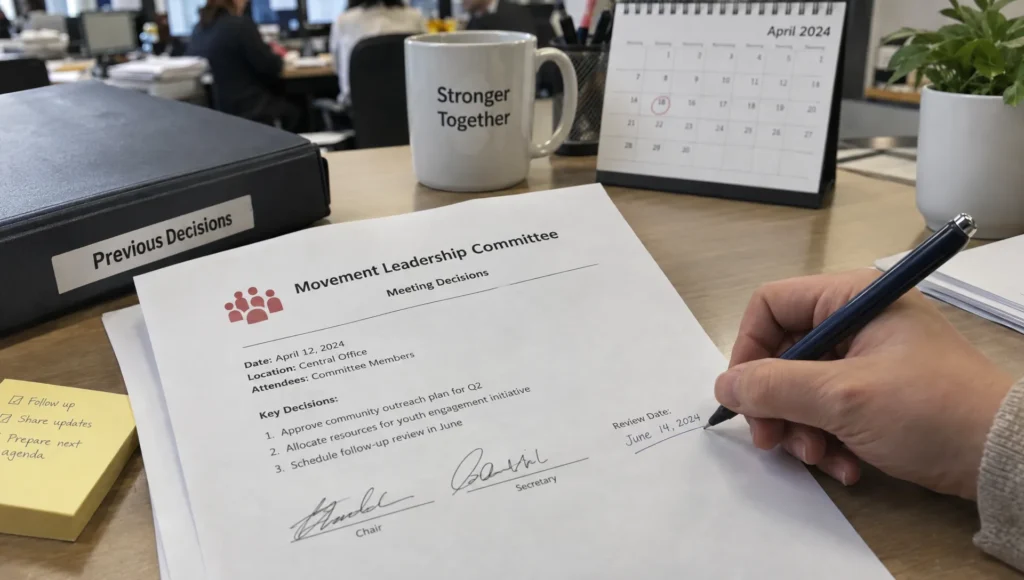
A political movement can push for practical norms: monthly public reasoning reports, open issue logs, public explanations for major votes, and structured constituency deliberations before controversial decisions.
7. Treat democratic education as renewal infrastructure
No political movement can renew democracy if people are never taught how to participate in it. Civic participation is a skill. So are listening, disagreement, evidence evaluation, coalition building, public speaking, and compromise.
The manifesto’s education reform section argues against the industrial model of schooling and imagines more holistic, participatory learning. This has direct democratic meaning. Schools should not become propaganda centers for any party or movement, but they should become places where students practice public life.
A classroom can use democratic methods without becoming partisan. Students can help choose project topics, deliberate on class norms, evaluate public problems, build proposals, and reflect on minority viewpoints. They can learn how to disagree without dehumanizing one another.
This is not a side issue. If democracy requires capable citizens, then democratic education is part of the civic infrastructure.
8. Create public evidence councils connected to academia
The manifesto proposes academia as a more independent public force, one that helps regulate public life through knowledge, standards, and education. A political movement can translate that idea into public evidence councils.
These councils would not decide policy. Instead, they would clarify evidence. For example, when a city debates housing policy, an evidence council could summarize what is known, what is uncertain, which claims are misleading, and which tradeoffs citizens should consider.
This is different from technocracy. Experts should not replace citizens. But citizens deliberate better when evidence is accessible, contested claims are clarified, and uncertainty is honestly explained.
A movement that builds bridges between academia, civil society, journalists, and local communities can strengthen both discursive democracy and deliberative democracy.
9. Design digital participation with democratic safeguards
Technology can expand civic participation, but it can also damage democracy if it is built carelessly. Online voting platforms, community ballots, public identity tools, and opinion analytics must be designed around trust, privacy, inclusion, and accountability.
The manifesto points toward willing and anonymous civic identity, public analytics, community voting, and secure digital participation. Those ideas are powerful, but they must be paired with strict safeguards. Citizens should never have to choose between being heard and being surveilled.
| Design principle | What it prevents | What it enables |
|---|---|---|
| Privacy by design | Surveillance and political intimidation | Safer participation |
| Transparent rules | Hidden manipulation | Public trust |
| Independent audits | Fraud and platform capture | Verifiable legitimacy |
| Accessibility | Digital exclusion | Broader civic participation |
| Human moderation | Abuse and harassment | Healthier discursive democracy |
| Deliberation before major decisions | Impulsive mass reaction | More responsible judgment |
The democratic test for technology is not whether it is impressive. The test is whether it helps citizens participate with dignity, security, and real influence.
How to test these ideas without waiting for national reform
A political movement does not need to wait for full constitutional change before practicing democratic renewal. It can begin with pilots.
A 90 day local pilot could focus on one issue, one community, and one public output. The goal is not perfection. The goal is to prove that citizens can move from frustration to structured influence.
| Timeframe | Movement task | Public output |
|---|---|---|
| Days 1 to 30 | Choose one issue, recruit participants, gather documents | A public issue map |
| Days 31 to 60 | Host discursive forums and collect questions | A citizen question log |
| Days 61 to 90 | Run a deliberative panel and publish recommendations | A public action plan |
After the pilot, the movement should measure what happened. How many people participated? Were they diverse across age, background, and viewpoint? Did people change their understanding? Did officials respond? Did the process produce a practical proposal?
For organizers who want a broader operational structure, JustSocial’s political movement playbook for democratic reform offers a wider framework for turning democratic principles into movement practice.
What democratic renewal must avoid
Democratic renewal can fail if it becomes only aesthetic. A movement can use the language of participation while still centralizing power, staging symbolic consultations, or treating citizens as an audience.
It can also fail through technological overconfidence. Digital tools are useful, but democracy is not an app. Democracy is a relationship between people, institutions, knowledge, rights, responsibilities, and trust. Tools should serve that relationship.
Finally, renewal must avoid contempt for ordinary citizens. Some will argue that people are too uninformed, emotional, or divided to participate more directly. But the answer to weak civic capacity is not permanent exclusion. The answer is better education, better information, better formats, and repeated practice.
The strongest political movement ideas are not built on the fantasy that citizens are always wise. They are built on the belief that citizens become wiser when democracy gives them serious work to do.
Frequently Asked Questions
What is a political movement for democratic renewal? A political movement for democratic renewal is an organized effort to improve how democracy works, not only by winning elections but by expanding civic participation, transparency, public reasoning, and institutional accountability.
How is deliberative democracy different from civic participation? Civic participation includes many ways citizens can act, such as voting, volunteering, petitioning, attending meetings, or joining campaigns. Deliberative democracy is a more structured process where citizens study evidence, discuss tradeoffs, and produce informed recommendations.
What does discursive democracy add to political reform? Discursive democracy focuses on the quality of public conversation. It helps citizens explain, challenge, and refine political ideas in ways that can improve understanding and legitimacy before decisions are made.
Can technology really help democratic renewal? Yes, but only if it is designed with privacy, accessibility, transparency, and accountability. Technology can help people participate more often, but it should never replace human judgment, public education, or institutional safeguards.
Help build a politics people can actually participate in
Democratic renewal is not a fantasy if movement builders treat civic participation as infrastructure. The work is cultural, technological, educational, and institutional at the same time.
JustSocial exists to advance that shift: a future where citizens are not reduced to occasional voters, but empowered as continuous participants in public life. If these political movement ideas resonate with you, explore JustSocial, share the vision, and help turn democratic renewal into a living practice.