Government procurement often looks like a technical back-office function, but it is one of the clearest places where public power becomes real. A budget line turns into a school meal contract. A policy promise becomes a public health platform. A transit plan becomes vehicles, routes, shelters, maintenance schedules and service standards.
That is why civic participation can improve government procurement. Residents, frontline workers, civil society groups and affected businesses often know where public services fail before those failures appear in official reports. When governments build structured participation into procurement, they can buy what people actually need, reduce waste and make contract delivery easier to monitor.
This does not mean every contract should become a popularity contest. Procurement must remain fair, lawful and professionally managed. Civic participation works best when it shapes the public need, the service outcomes, the evaluation priorities and the oversight process, while procurement professionals still manage competition, scoring and compliance.
Procurement is a democratic issue, not just an administrative one
The World Bank estimates that public procurement accounts for roughly $13 trillion in annual global spending. That makes procurement one of the most powerful tools governments have. It shapes markets, public services, labor standards, infrastructure, technology adoption and public trust.
Yet the public rarely sees procurement until after the most important choices have already been made. A department identifies a need, procurement officers turn it into a request for proposals, vendors submit bids, evaluators score them and the public hears about the decision after award. By then, the central question has often passed: did the government ask for the right thing in the first place?
The JustSocial manifesto argues that the current social contract too often reduces citizens to voters, taxpayers and private consumers. Procurement is one of the places where this reduction is most visible. People fund the contract, live with the service and absorb the consequences of failure, but they are rarely invited to define the problem.
A more democratic procurement culture would treat citizens as evidence holders and public value partners. It would ask: what are people experiencing, what outcomes matter, what tradeoffs are acceptable and how will the public know whether the contractor delivered?
The distance problem in traditional procurement
Many procurement failures begin before a tender is published. The language of the contract may already be too narrow, too vendor-shaped or too detached from lived experience. This is especially common when governments buy complex services, public technology, housing support, transportation systems, education tools or community health programs.
Without civic participation, procurement can suffer from predictable blind spots:
- The problem is framed around departmental convenience rather than resident outcomes.
- Specifications repeat legacy workflows instead of asking whether the service should change.
- Evaluation criteria reward polished paperwork more than public value.
- Accessibility, privacy, language access and frontline usability are discovered too late.
- Contract monitoring depends on internal reports while service users struggle in silence.
None of these problems prove bad faith. Often, public servants are working under pressure, with limited staff, old systems and legal caution. Civic participation helps by widening the evidence base before money is committed.
This is where procurement connects to broader public budget transparency. A published budget tells people what government plans to spend, but people also need to understand how that spending becomes contracts, deliverables and measurable results. The JustSocial article on civic participation for public budget transparency makes this point from the budget side; procurement is the next step in the same chain of accountability.
Where civic participation improves the procurement cycle
Civic participation is not one activity. It can support different phases of procurement in different ways. The key is to match the form of participation to the decision being made.
| Procurement phase | Civic participation question | How it improves procurement | Guardrail |
|---|---|---|---|
| Needs assessment | What problem are people actually experiencing? | Prevents buying the wrong solution | Include affected groups, not only loud groups |
| Market research | What capabilities or service models should government explore? | Helps avoid outdated requirements | Keep vendor engagement open and documented |
| Requirements design | What must the service achieve for users? | Improves accessibility, usability and relevance | Avoid vendor-specific language |
| Evaluation criteria | What public values should carry weight? | Aligns scoring with outcomes, not just price | Publish criteria before bids are reviewed |
| Implementation | Is the contractor delivering in real conditions? | Detects service failures early | Use clear reporting channels and response duties |
| Renewal or re-tender | Did the contract solve the problem? | Builds institutional learning | Compare public feedback with performance data |
The biggest gain comes at the front of the process. Once specifications are locked and bids are submitted, participation becomes harder because fairness rules limit what can change. Governments that want meaningful participation should begin before procurement documents are drafted.
Discursive democracy and deliberative democracy do different jobs
Civic participation in procurement needs both discursive democracy and deliberative democracy.
Discursive democracy is about open public reasoning. It gives people room to describe problems, contest assumptions and introduce language that officials may not use. In procurement, this matters because the words in a tender can determine who bids, what gets built and what success means.
For example, a city may think it needs a new complaint management system. Residents may explain that the real issue is not complaint logging, but the lack of follow-up, confusing categories, poor language access and no visible timeline for resolution. That public discussion changes the procurement problem from “buy software” to “build an accountable service response system.”
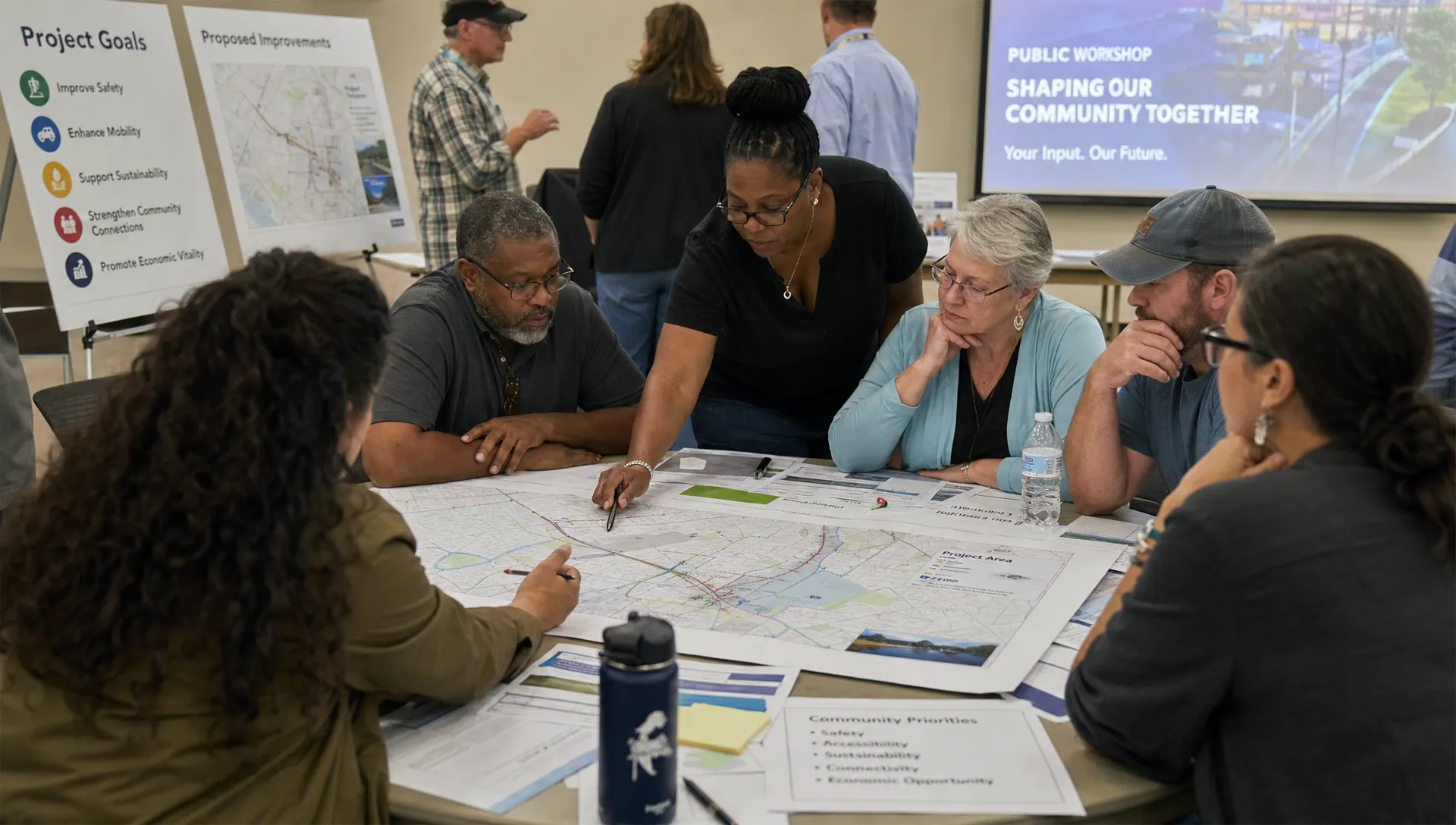
Deliberative democracy has a different role. It is more structured. A representative group of residents, service users, frontline staff and subject matter participants can review evidence, hear tradeoffs and produce recommendations. Deliberation helps governments move from raw input to usable guidance.
A discursive process may surface hundreds of stories. A deliberative process can turn those stories into ranked public outcomes, such as faster response times, disability access, multilingual support, data privacy or lower lifecycle costs. Procurement teams can then translate those outcomes into requirements, service levels and evaluation criteria.
The combination is powerful. Discursive democracy keeps procurement grounded in public experience. Deliberative democracy helps convert that experience into choices a government can legally and practically use.
A participatory procurement loop governments can use
A practical model does not need to be complicated. It needs to be visible, time-bound and connected to actual procurement decisions. Governments can start with a simple participation loop for major public-facing contracts.
- Publish the procurement intent in plain language: Before drafting the tender, explain the problem, the expected budget range if it can be shared, the affected communities and the decision timeline.
- Open a public evidence window: Invite residents, service users, frontline workers, civil society groups and local businesses to submit experiences, barriers, risks and desired outcomes.
- Run a deliberative review: Convene a balanced group to examine the evidence, discuss tradeoffs and recommend public value priorities.
- Create a procurement traceability note: Show how public input influenced the statement of work, mandatory requirements, evaluation weights or performance measures.
- Run the formal competition fairly: Keep supplier questions, scoring and negotiations within the normal procurement process, with equal treatment for bidders.
- Publish delivery commitments after award: Share the winning contractor’s public-facing obligations, reporting schedule and feedback channels.
- Close the loop after implementation: Report what was delivered, what changed because of public feedback and what will be improved in the next procurement.
The traceability note is especially important. People do not need government to accept every suggestion, but they do need to see whether participation mattered. If an idea is rejected, the government should explain why. If an idea is accepted, the public should be able to find it in the procurement documents or contract management plan.
What citizens should and should not decide
The main objection to civic participation in procurement is that it could undermine fairness. That risk is real if participation is informal, opaque or captured by special interests. It is also manageable.
Participation should shape public value and lived requirements. It should not allow private lobbying, hidden vendor influence or mid-process changes that favor one bidder. A clean division of roles protects both democracy and procurement integrity.
| Decision area | Appropriate public role | Procurement authority role |
|---|---|---|
| Problem definition | Describe lived experience and service gaps | Validate need, scope and legal authority |
| Public value priorities | Rank outcomes and tradeoffs | Convert priorities into criteria and requirements |
| Accessibility and usability | Test assumptions and identify barriers | Write enforceable standards and service levels |
| Supplier selection | Provide input only through approved channels | Score bids according to published criteria |
| Contract monitoring | Report experience and service failures | Enforce contract terms and manage remedies |
| Future improvement | Review outcomes and recommend changes | Decide renewal, re-tender or redesign options |
This approach also protects citizens. They should not be asked to do unpaid technical work or carry legal responsibility for procurement decisions. Their contribution is democratic evidence: what people need, what they experience and what they consider legitimate use of public money.
Technology can make participation continuous, but it must be designed carefully
Digital tools can make participatory procurement more consistent. Online consultation platforms, community voting tools, public comment systems, committee archives and contract dashboards can help governments gather input and show how decisions develop over time.
But technology does not solve the democratic problem by itself. A platform that collects comments without decision links only creates a larger inbox. A voting tool without identity protection, accessibility and clear rules can deepen distrust. An open data portal that publishes unreadable documents does not create transparency.
Good civic technology should support three things in procurement: inclusion, traceability and oversight. Inclusion means people can participate across language, ability, schedule and digital access differences. Traceability means public input can be followed into procurement choices. Oversight means people can monitor delivery after award, not only comment before the contract is signed.
For governments buying participation platforms or public decision tools, the procurement process itself must reflect democratic standards. JustSocial’s civic tech procurement buyer’s guide addresses this from the buyer side, including legitimacy, inclusion and transparency considerations.
Open data can also help. The Open Contracting Data Standard gives governments a structured way to publish procurement and contracting data across the full lifecycle. When paired with public explanation, it helps citizens see not only who won a contract, but how the process moved from need to tender to award to delivery.
Civic participation can improve vendor markets too
Participatory procurement is not only good for citizens. It can also improve the market.
When governments define needs poorly, strong vendors may avoid bidding because the tender looks unrealistic, outdated or over-prescriptive. Smaller vendors, social enterprises and local providers may be excluded by requirements that have little to do with performance. Incumbents benefit because they already understand the internal logic of the agency.
Public input can help procurement teams write clearer outcome-based requirements. Instead of specifying a rigid process, government can define what must improve for users. That can open space for better proposals, innovation and more honest pricing.
Participation can also reveal hidden costs. A cheaper contract may be expensive if it increases staff workload, excludes disabled users, creates data risks or pushes residents into repeated in-person visits. Citizens and frontline workers often see these costs early because they pay them in time, stress and reduced access.
This aligns with a central argument in the JustSocial political movement: public institutions should not lag behind society’s technological and civic capacity. The public sector can be a more competent buyer, funder and shaper of useful technology, but only if it listens continuously to the people who live with its decisions.
From procurement compliance to procurement legitimacy
Compliance asks whether the government followed the rules. Legitimacy asks whether the public can understand, contest and trust the decision. Government procurement needs both.
A contract can be legally compliant and still fail the public. It can satisfy internal checklists while producing a service people cannot use. It can save money on paper while shifting costs to families, small businesses or frontline staff. Civic participation helps procurement teams see those risks before they become contract failures.
This is not anti-expertise. Procurement professionals, lawyers, auditors, engineers and program managers remain essential. The point is that expertise should be connected to public experience rather than insulated from it.
In that sense, participatory procurement is a practical expression of a larger democratic idea. People should not be asked to wait four years to express whether public systems work. They should have structured ways to influence decisions as those decisions are formed, funded, purchased and reviewed.
Frequently Asked Questions
Does civic participation slow down government procurement? It can slow procurement if added late or handled informally. When built into the planning stage, it can save time by reducing rework, complaints, poor requirements and implementation failure.
Can citizens legally influence procurement decisions? In many systems, citizens can influence needs assessment, service priorities, public value criteria and contract oversight. Supplier scoring and award decisions must remain within the formal procurement rules of the jurisdiction.
What is the difference between discursive democracy and deliberative democracy in procurement? Discursive democracy opens public reasoning and surfaces many perspectives. Deliberative democracy uses a structured group process to review evidence, discuss tradeoffs and produce recommendations that procurement teams can use.
How can governments prevent participation from being captured by interest groups? They should publish clear rules, recruit diverse participants, document all input, disclose conflicts of interest and keep vendor engagement separate from citizen engagement where required.
What type of contract is best for a first participatory procurement pilot? Start with a visible public-facing service such as waste collection, transit access, school services, public health support or a digital service platform. The project should affect enough people to justify participation, but not be so urgent that input cannot be used.
Build procurement that listens
Government procurement can either reproduce distance between citizens and the state or become a practical channel for civic participation. The difference is design: public input must be early, structured, visible and connected to real decisions.
JustSocial is a political movement promoting continuous democratic participation, public transparency and citizen empowerment through technology. If you believe public money should be spent with the people, not merely for them, explore JustSocial.io and help build a more responsive public sector.