Election victories matter. They can stop dangerous policies, open institutional doors, and give reformers the legal authority to act. But if a political movement defines success only as winning seats, it risks becoming another campaign machine in a system that many citizens already experience as distant, extractive, and unresponsive.
The deeper goal is not simply to replace one group of officials with another. It is to change the relationship between citizens and public power. That means building civic participation into daily life, creating public spaces for discursive democracy, practicing deliberative democracy before and after campaigns, and making institutions listen in ways that citizens can actually verify.
This is the difference between a movement that wins an election and a movement that changes political culture.
Why election wins are an incomplete goal
Modern representative systems ask citizens to compress years of needs, fears, priorities, and values into occasional ballots. Elections are essential, but they are also blunt instruments. They tell us who won authority, not what citizens think about every major public decision that follows.
In the JustSocial manifesto, Yuval D. Vered describes the current citizen role as being reduced to three functions: voter, taxpayer, and private consumer. That critique matters because it names the democratic emptiness many people feel. They are asked to fund the state, obey the law, and vote periodically, but they are rarely given a continuous role in shaping public policy.
That gap helps explain why political frustration can remain high even after elections are held. Freedom House noted in its Freedom in the World 2024 report that global freedom declined for the 18th consecutive year. The lesson is not that elections are useless. The lesson is that democratic health cannot be measured by election day alone.
Election-only politics creates several weaknesses:
- It turns participation into a rare event instead of a public habit.
- It rewards emotional mobilization more than sustained problem solving.
- It allows leaders to claim a mandate without maintaining active public consent.
- It leaves citizens dependent on parties, media cycles, and protest moments to be heard.
A healthier political movement treats elections as one milestone inside a much larger democratic project.
Goal 1: Make civic participation normal between elections
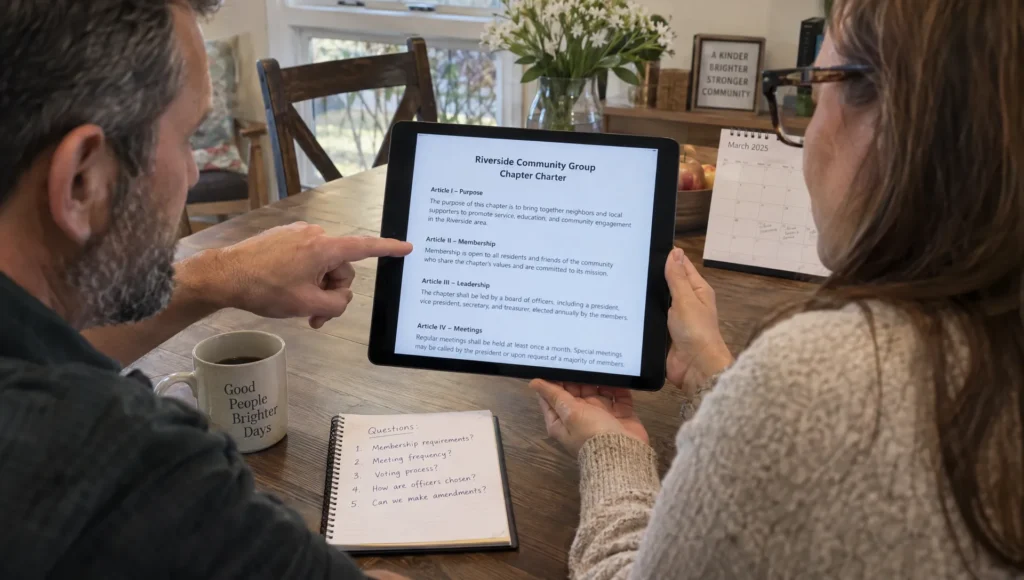
The first goal beyond winning is to make civic participation routine, low-friction, and meaningful. Not every citizen needs to become a full-time activist. In fact, a movement that demands constant intensity from everyone will burn people out. The better goal is to create many small doors into public life.
A citizen should be able to weigh in on a school issue, review a local budget proposal, support a petition, comment on a public hearing, join a deliberation group, or track how a representative responded to community priorities. These actions should not feel like heroic acts of resistance. They should feel like normal parts of belonging to a political community.
This connects directly to the manifesto's vision of a modern Polis, not as nostalgia for ancient city-states, but as a reminder that political life can feel immediate. The Greek Polis was intimate because citizens could see their relationship to public decisions. The modern challenge is scale. A movement goal should be to restore that sense of closeness without sacrificing rights, privacy, pluralism, or complexity.
Civic participation is not just turnout. It is the repeated experience of being asked, being heard, and seeing how public input affected the next step.
Goal 2: Build discursive democracy, not just message discipline
Most campaigns are trained to speak. They develop slogans, talking points, speeches, and ads. A reform movement must also learn how to listen.
Discursive democracy is the democratic value of public conversation itself. It asks what people are saying, why they are saying it, where disagreement exists, and which concerns are being ignored. It does not assume that every online comment is wise or that every opinion should become policy. It treats public speech as civic evidence that needs to be organized, protected, challenged, and understood.
This is where many movements fail after they grow. They become good at broadcasting identity, but weak at absorbing complexity. They know what their supporters chant, but not what their communities are wrestling with. They know what gets engagement, but not what should be debated with care.
The manifesto's proposed concepts, such as public-facing tools for petitions, representative records, community ballots, and policy-linked discussion, point toward a discursive layer of democracy. The real goal is to turn scattered civic noise into usable public knowledge.
Good discursive democracy needs safeguards. It should protect citizens from harassment, make manipulation harder, distinguish lived experience from evidence claims, and preserve disagreement instead of flattening it into artificial consensus. The point is not to make everyone sound the same. The point is to make public disagreement visible enough that institutions cannot pretend it does not exist.
Goal 3: Practice deliberative democracy before asking for power
Discursive democracy helps a movement hear what citizens think and feel. Deliberative democracy goes further. It asks what citizens conclude after they have time, information, competing arguments, and a structured process for weighing tradeoffs.
The OECD has documented the rise of representative deliberative processes such as citizens' assemblies, citizens' juries, and panels. These models matter because they show that ordinary people can handle complex public questions when the process is designed with seriousness.
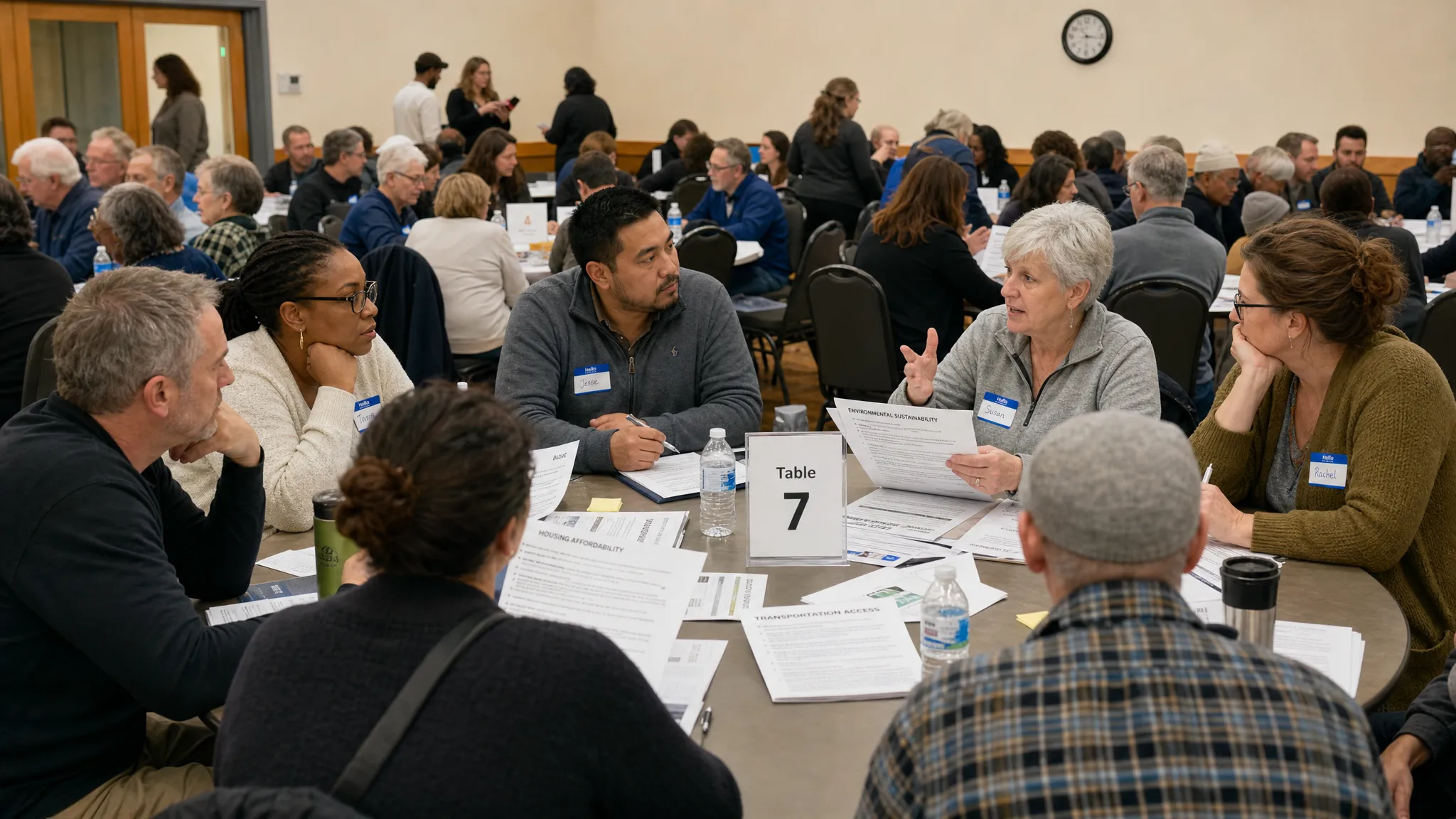
A political movement does not need to wait until it holds office to practice deliberation. It can convene local assemblies, publish issue briefs, invite expert testimony, record minority opinions, and ask members to revise proposals after hearing opposing arguments. This builds a different kind of legitimacy. The movement is no longer saying, trust us because we are your side. It is saying, trust the process because you can inspect how we reached a conclusion.
| Democratic layer | Core question | Best output | Movement goal |
|---|---|---|---|
| Civic participation | Who wants to be involved, affected, or informed? | Engagement signals and local priorities | Easy, recurring ways to take part |
| Discursive democracy | What are people saying, fearing, proposing, and contesting? | Mapped arguments and visible disagreement | Public forums that synthesize conversation |
| Deliberative democracy | What should citizens recommend after evidence, tradeoffs, and dialogue? | Reasoned recommendations | Citizen panels, assemblies, and policy juries |
The order matters. Participation without discourse becomes shallow. Discourse without deliberation becomes endless talk. Deliberation without participation becomes elite consultation. A serious movement needs all three.
Goal 4: Make transparency useful, not ceremonial
Transparency is often treated as a document dump. A government publishes PDFs, meeting minutes, or budget files, then declares itself open. But citizens cannot use information that is impossible to find, interpret, compare, or connect to decisions.
A political movement should set a higher goal: public memory that ordinary citizens can navigate. Committee discussions, voting records, draft laws, amendments, public comments, budgets, procurement decisions, and implementation updates should be organized so people can follow an issue from proposal to outcome.
This goal appears throughout the JustSocial vision, especially in the idea of making representative committees, recordings, documents, and votes publicly accessible and socially discussable. The democratic value is not spectacle. It is traceability. Citizens should be able to ask who proposed something, who objected, what evidence was used, what changed, and what happened afterward.
A separate JustSocial article on political movement tactics beyond protests and elections explores more operational ways to build this kind of civic power. Here, the strategic point is simpler: transparency should help citizens act, not merely reassure them that files exist somewhere.
Goal 5: Redefine representatives as accountable conduits
A movement that only aims to win office can easily reproduce the old model: leaders speak, citizens react, and decisions flow downward. A deeper goal is to change what representation means.
The manifesto argues that elected officials should become more like pipelines for gathering consensus and implementing public policy. That is a provocative image, but it captures an important democratic shift. Representatives should not be treated as heroic substitutes for the people. They should be accountable conduits between public reasoning and institutional action.
This does not mean every public preference automatically becomes law. Democracies need rights, constitutional limits, expert input, and protection for minorities. But it does mean representatives should be expected to show their listening work. If they reject a popular proposal, they should explain why. If they accept a community priority, citizens should be able to track implementation. If they campaign on participation, they should create participation once in power.
The goal is not obedience to polls. It is accountable judgment.
Goal 6: Educate for self-government
Political movement goals should include civic education, not as a classroom slogan, but as a public capacity. If citizens are expected to help govern, they need practice in asking questions, comparing evidence, understanding institutions, speaking across disagreement, and revising views.
This is one of the strongest connections between JustSocial's political vision and its educational reform argument. The manifesto criticizes industrial-age schooling for fragmenting learning and failing to prepare young people for modern civic life. It imagines students having more democratic agency inside the school week, including the ability to help choose certain subjects through a democratic process.
That idea is bigger than education policy. It suggests that democracy must be learned by doing. A society cannot tell adults to participate thoughtfully if it trains children to be passive recipients of decisions. Civic participation should begin as a habit of voice, responsibility, and shared problem solving.
For a movement, this changes the meaning of success. Winning a ministry, council, or legislative seat is not enough if the public remains too alienated to use its power. The movement should leave behind citizens who are more capable than before.
Goal 7: Build institutions that survive charismatic leaders
Charisma can launch a movement, but it cannot be the movement's foundation. If everything depends on one candidate, one founder, one viral speaker, or one outrage cycle, then the movement is fragile.
A stronger goal is institutional continuity. Can the movement keep listening after a campaign ends? Can local groups deliberate without central permission? Can public commitments be tracked when attention moves elsewhere? Can newcomers understand the mission without needing personal access to insiders?
This is why JustSocial often frames democratic reform as civic infrastructure, not just campaign strategy. A long-term political movement strategy has to build habits, tools, standards, and public expectations that outlast any one election.
The test is simple: if a leader leaves, does the democratic practice remain?
A better scorecard for movement success
Movements need measurable goals, but they often measure what is easiest: donations, followers, rallies, votes, and seats. Those metrics matter, but they do not tell the whole story. A movement that seeks democratic reform needs a broader scorecard.
| Goal beyond election wins | Signal of progress | Why it matters |
|---|---|---|
| Habitual civic participation | More citizens take small, recurring civic actions between elections | Democracy becomes a lived practice, not a rare event |
| Strong discursive democracy | Public concerns are mapped, summarized, and connected to decisions | Institutions can no longer ignore complex public opinion |
| Serious deliberative democracy | Citizens produce reasoned recommendations after evidence and dialogue | Policy gains legitimacy beyond slogans |
| Useful transparency | People can trace proposals, debates, votes, and outcomes | Public power becomes inspectable |
| Accountable representation | Officials explain how public input shaped their choices | Representation becomes a relationship, not a blank check |
| Civic education | Citizens gain the skills to participate responsibly | The movement strengthens society, not only itself |
| Institutional continuity | Processes survive leadership changes and campaign cycles | Reform becomes durable |
This kind of scorecard changes incentives. Instead of asking only whether a movement captured power, it asks whether the movement redistributed democratic capacity.
The deeper goal: from spectatorship to shared ownership
The JustSocial manifesto moves from the Polis to the Cosmopolis, from the intimate political community of the past to a possible modern culture where citizens regain meaningful influence at scale. That vision is ambitious, and it should be debated carefully. Any technology-supported democracy must take privacy, security, exclusion, manipulation, and institutional abuse seriously.
Still, the core moral claim is difficult to dismiss: people should not be treated as spectators in the societies they fund, obey, defend, and inhabit.
A political movement that goes beyond election wins does not abandon elections. It puts them in their proper place. Elections choose public authority. Civic participation keeps that authority connected. Discursive democracy makes public experience visible. Deliberative democracy turns disagreement into reasoned judgment. Transparency lets people inspect power. Education prepares citizens to use freedom well.
Winning office can begin reform. But the real victory is a public that no longer waits four years to matter.
Frequently Asked Questions
What goals should a political movement have besides winning elections? A political movement should aim to build civic participation, strengthen public trust, improve transparency, practice deliberative democracy, create durable local organization, and make representatives accountable to citizens between elections.
How is civic participation different from campaigning? Campaigning is usually focused on persuasion before a vote. Civic participation is broader and more continuous. It includes public discussion, local problem solving, policy feedback, community deliberation, and tracking whether institutions respond.
What is the difference between discursive democracy and deliberative democracy? Discursive democracy focuses on public conversation, expression, disagreement, and meaning. Deliberative democracy uses structured processes where citizens review evidence, consider tradeoffs, hear different perspectives, and produce reasoned recommendations.
Can a movement practice deliberative democracy before it wins power? Yes. Movements can run local assemblies, policy circles, public hearings, member deliberations, and citizen panels before holding office. Doing so helps test ideas, build trust, and show how the movement would govern.
Why does JustSocial connect political reform with education? JustSocial's manifesto argues that citizens need the habits and skills of self-government. Education matters because democracy is not only a system of institutions. It is also a culture of participation, responsibility, and shared reasoning.
Help build democratic goals that last
If you believe a political movement should do more than win the next election, JustSocial invites you to explore a broader vision for continuous civic participation and democratic reform.
Start with the manifesto, share the ideas, challenge them, and consider how your community could practice participation, discourse, and deliberation now. The future of democracy will not be built only by candidates. It will be built by citizens who refuse to remain spectators.
Visit JustSocial.io to learn more and take part.