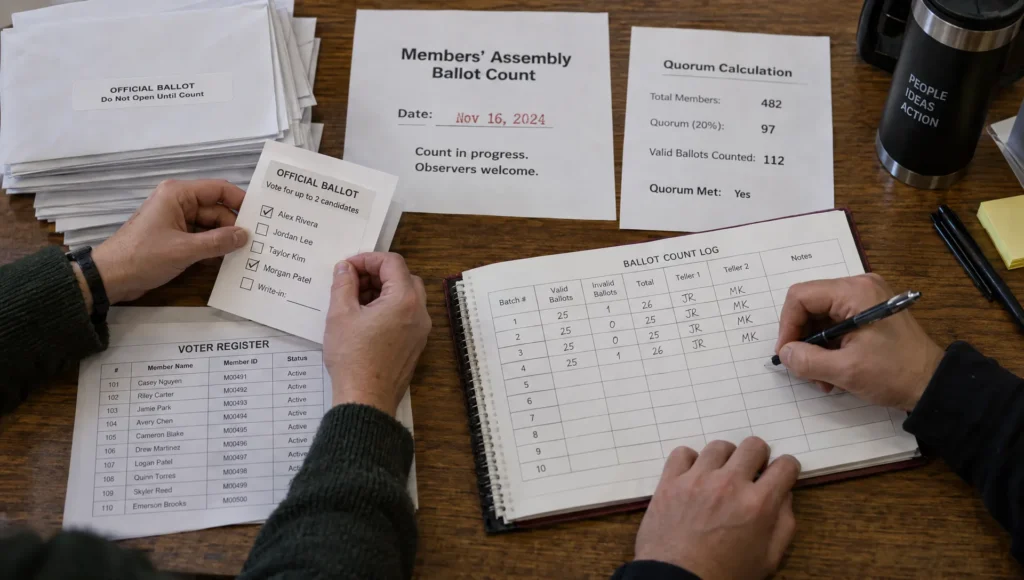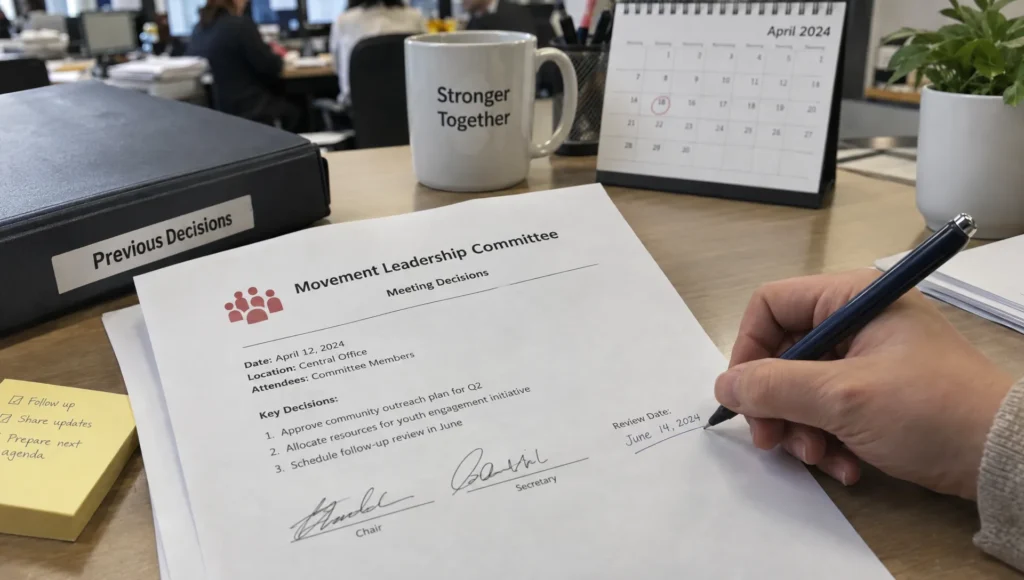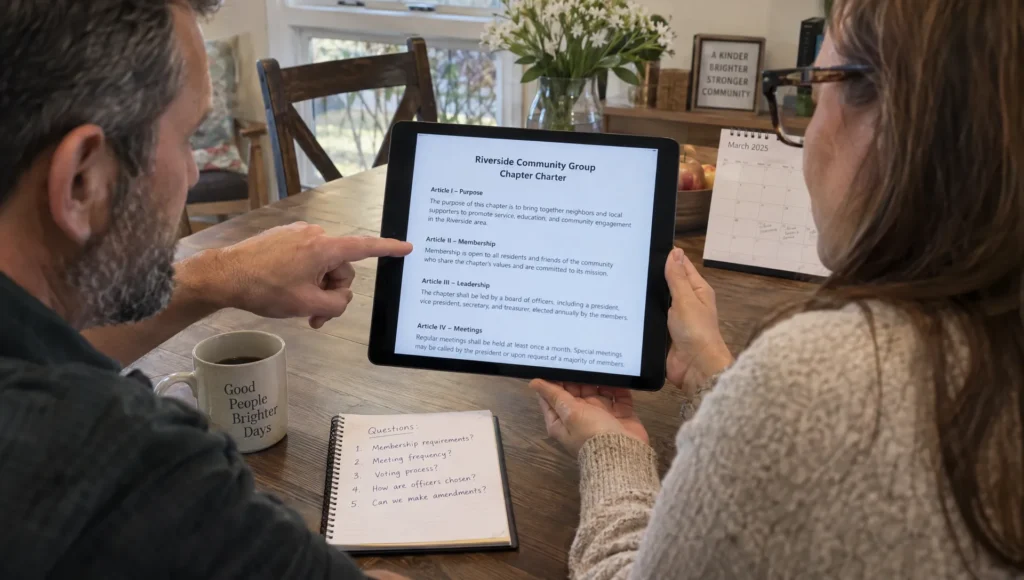
Petitions and protests matter. They reveal urgency, concentrate public attention, and remind leaders that citizens are not passive recipients of policy. Many democratic breakthroughs began with people signing names, filling streets, refusing silence, and forcing institutions to look at what they preferred to ignore.
But civic participation cannot end there.
A petition is often a snapshot of demand. A protest is often a visible act of pressure. Both can be powerful, but neither automatically creates a durable way for citizens to help frame problems, weigh tradeoffs, shape policy, monitor implementation, and correct mistakes. If democracy is only loud at moments of crisis, then the public remains mostly outside the machinery of government.
The next stage of civic participation is not less passionate. It is more continuous, more organized, more deliberative, and more connected to decisions. That is the democratic future JustSocial argues for: citizens who are not reduced to voters, taxpayers, and consumers, but empowered as ongoing participants in public life.
Petitions and protests are signals, not systems
Petitions and protests are democratic signals. They tell representatives, agencies, courts, journalists, and the wider public that something deserves attention. They can shift narratives, expose injustice, and make political inaction costly.
Yet signals need systems around them. Without a participation system, public energy often fades after the news cycle moves on. Officials may acknowledge public anger without changing policy. Movements may gather signatures without a path into committee rooms, budget processes, procurement decisions, or local implementation.
This is why modern civic participation must ask a harder question: what happens after people speak?
If the answer is only “leaders should listen,” the structure remains weak. Listening is important, but democracy needs mechanisms that make listening measurable. Citizens need to know where a decision is being made, who has authority, what evidence is being considered, when input is useful, and how public reasoning changed the outcome.
A healthy democracy turns civic expression into civic influence.
The missing layer between outrage and policy
Most citizens are invited into politics too late. By the time a policy reaches a formal vote, its assumptions, legal language, budget implications, and institutional alliances may already be settled. Public consultation then becomes a ritual rather than a meaningful exchange.
Civic participation beyond petitions and protests must happen earlier. It belongs at the agenda-setting stage, when public problems are defined. It belongs during deliberation, when tradeoffs are weighed. It belongs during implementation, when citizens can see whether promises become reality. It belongs after implementation, when outcomes are evaluated.
That is why decision-connected participation is different from generic engagement. It does not simply ask people to “get involved.” It asks where public input can alter the path of a real decision. JustSocial has explored this idea in more practical terms in its article on civic participation tied to real decision points, because participation becomes more serious when it is attached to authority, timing, evidence, and follow-through.
The missing layer is not another comment box. It is an ongoing civic infrastructure that lets people move from reaction to contribution.
From civic expression to civic influence
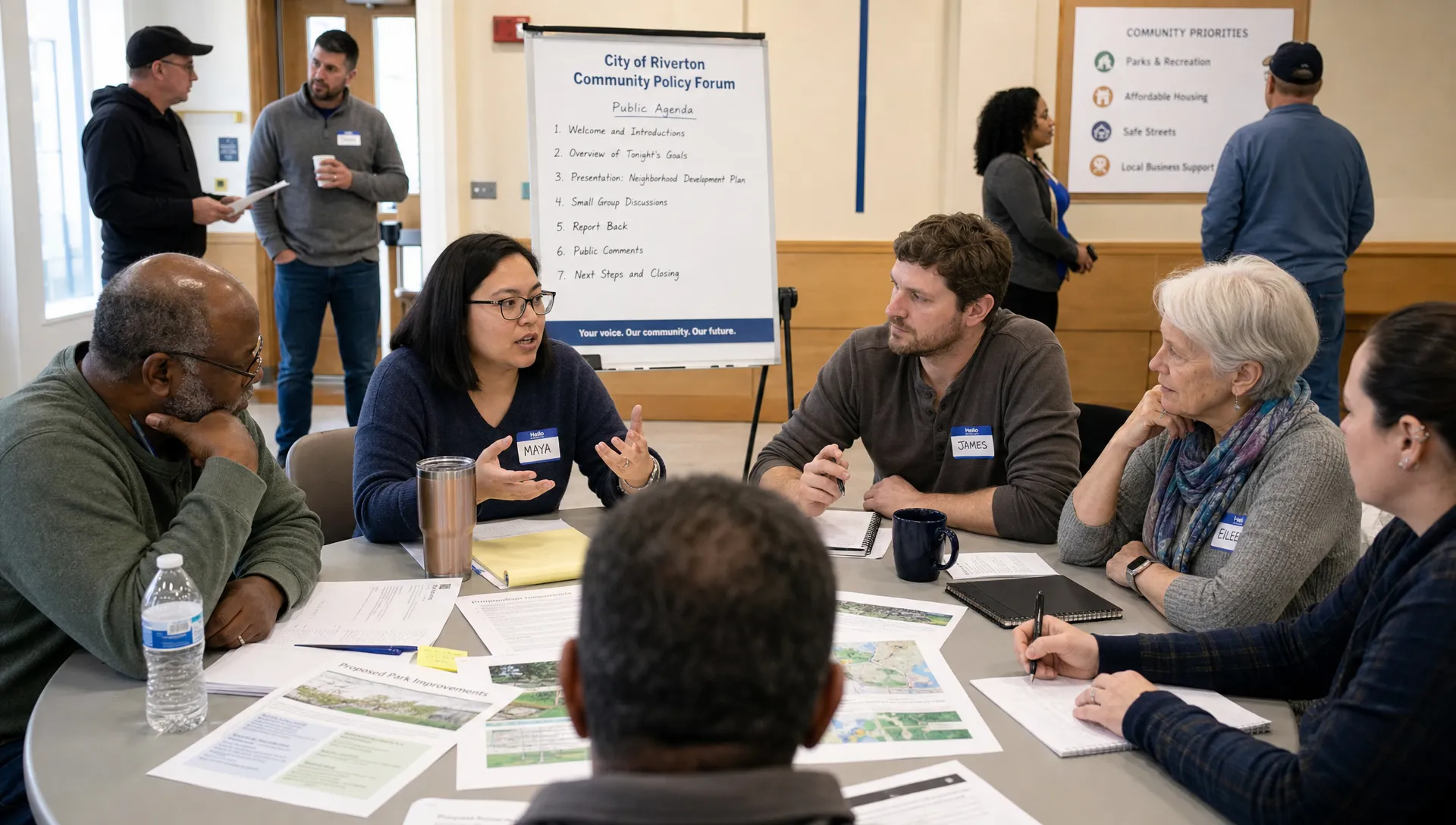
To move beyond petitions and protests, citizens and movements need a wider vocabulary of participation. Not every public act has the same purpose. Some acts raise awareness. Others build knowledge, shape options, test consensus, or hold institutions accountable.
| Form of participation | What it adds beyond protest | Best used when |
|---|---|---|
| Public deliberation | Helps citizens weigh tradeoffs and hear opposing arguments | A policy has multiple legitimate options |
| Citizen evidence gathering | Brings lived experience, local data, and practical knowledge into public debate | Officials lack ground-level context |
| Participatory budgeting | Gives residents a direct role in allocating part of a public budget | Communities need visible, accountable choices |
| Committee monitoring | Tracks what representatives actually say and do in formal settings | Decisions are being made in public institutions |
| Civic technology platforms | Scales input, transparency, and feedback across large populations | Participation needs to be continuous and searchable |
| Citizen audits | Reviews whether public promises were implemented | Trust depends on follow-through |
This broader model does not replace petitions or protests. It gives them somewhere to go. A protest can open the door, but deliberation, monitoring, and structured input keep the door from closing again.
Why deliberative democracy matters
Deliberative democracy begins with a simple but demanding idea: citizens should not only state preferences, they should reason together. In a deliberative process, people hear evidence, encounter competing values, ask questions, revise assumptions, and search for options that can survive public scrutiny.
This matters because many political issues are not simple popularity contests. Housing, education, public safety, transportation, taxation, climate adaptation, and digital rights all involve tradeoffs. A public that is only polled may say what it wants in isolation. A public that deliberates can confront costs, conflicts, and long-term consequences.
The OECD has documented the growth of representative deliberative processes, including citizens’ assemblies, citizens’ juries, and panels used by governments to gather informed public judgment. These processes are not perfect, and they are not a substitute for democratic rights. But they show that ordinary citizens can handle complexity when institutions give them time, information, and a serious mandate.
Deliberative democracy also challenges the insulting assumption that the public is too ignorant to participate. People are often excluded from meaningful decisions, then blamed for lacking policy expertise. A better system educates citizens through participation itself. As the JustSocial manifesto reflects through the idea of the Polis, political life can be formative. Civic participation is not only a way to influence government. It is a way for citizens to become more capable together.
Why discursive democracy matters too
Deliberation is structured reasoning. Discursive democracy is the broader democratic conversation that shapes how a society understands itself. It includes public narratives, media debates, community meetings, classrooms, social networks, local associations, and everyday arguments about what is fair, possible, and urgent.
This layer matters because decisions are rarely made from raw facts alone. They are shaped by language, identity, emotion, memory, trust, and moral imagination. Before a policy can win support, people need shared words for the problem. Before citizens can deliberate productively, they need a public culture where disagreement does not immediately become dehumanization.
Discursive democracy asks whether people can speak, be heard, respond, and revise. It asks whether the public sphere rewards manipulation or understanding. It asks whether political movements are merely mobilizing anger or helping citizens build a common reality.
This is where civic participation becomes cultural. A society cannot vote its way out of every fracture if its people cannot talk across difference. Petitions count names. Protests count bodies. Discursive democracy builds meaning.
Technology can scale participation, but trust must come first
The JustSocial vision is rooted in a central claim: the tools needed for more continuous participation already exist, but public institutions have not fully adapted them for democratic life. Social platforms, analytics systems, cloud storage, secure identity, AI, and possibly blockchain-based verification have transformed private markets. Government often remains slower, more opaque, and less responsive.
But digital democracy should not mean careless digitization. An online voting platform, a public consultation portal, or a civic analytics dashboard only strengthens democracy if it earns trust. Otherwise, technology can simply make manipulation faster and alienation more efficient.
A serious civic technology stack needs clear principles:
- Participation must be accessible to people with different schedules, abilities, languages, and levels of digital comfort.
- Identity and eligibility must be protected without exposing citizens to intimidation or surveillance.
- Public input must be traceable at the process level, even when individual privacy is preserved.
- Algorithms used to sort, cluster, or summarize opinion must be transparent enough to challenge.
- Digital participation must connect to real institutions, not float as symbolic feedback.
- Offline participation must remain available, because democracy cannot depend only on screens.
This is also why the idea of a People’s Branch is so important. If citizen input remains informal, leaders can ignore it whenever it becomes inconvenient. If participation becomes a recognized layer of governance, then public opinion, deliberation, and civic data can be gathered, safeguarded, and considered in a more accountable way.
The point is not to turn every issue into a permanent referendum. Some decisions require expertise, rights protection, constitutional limits, and elected responsibility. The point is to make public judgment continuously visible, so representatives and institutions cannot pretend the people are absent between elections.
Civic participation as public learning
One of the most powerful ideas in the JustSocial manifesto is that political reform and educational reform belong together. A society that wants continuous democracy must raise people who know how to participate in it.
Today, many citizens are expected to become politically mature after years of schooling that rarely gives them real democratic responsibility. Students may learn about institutions, but they often have little experience setting agendas, weighing evidence, negotiating differences, or seeing how collective decisions affect shared life.
Civic participation beyond petitions and protests begins earlier than adulthood. A classroom that lets students choose some topics through democratic discussion is not just being flexible. It is teaching self-government. A school that uses project-based learning to investigate local problems is not just modernizing pedagogy. It is preparing citizens to connect knowledge with public action.
This does not mean turning children into partisan actors. It means teaching the habits democracy requires: listening, asking better questions, distinguishing evidence from rumor, understanding minority concerns, and accepting that shared decisions carry shared responsibility.
If the Polis taught the citizen, as the manifesto’s discussion of Greek civic life suggests, then a modern Cosmopolis must do the same at scale. Education is not separate from democracy. It is the human infrastructure that makes democracy possible.
What citizens can do beyond signing and marching
A person does not need to wait for a perfect platform or a new constitution to practice deeper civic participation. The shift can begin locally and practically.
Choose one public issue that affects your daily life: a dangerous crossing, a school policy, a housing shortage, a public transit gap, a local budget priority, a digital privacy concern. Then move beyond expressing support or opposition. Learn where the decision sits. Is it municipal, regional, national, administrative, judicial, or budgetary? Identify the next formal moment when input matters.
Then gather context. Speak with affected residents, not only people who already agree with you. Read the public documents. Ask what tradeoffs officials claim to face. Find examples from other communities. Turn frustration into a proposal that can be evaluated.
Finally, create a feedback loop. Submit the proposal. Attend or watch the relevant meeting. Record what officials said in response. Share a clear summary with neighbors. If the answer is no, ask what evidence would change it. If the answer is yes, monitor implementation.
This is slower than a viral post, but it is more powerful. It treats citizenship as a craft.
For people who want a broader overview of participation between formal elections, JustSocial’s essay on what civic participation looks like between elections helps frame the same challenge: democracy should be a continuous relationship, not a brief transaction at the ballot box.
What political movements must build
A political movement that wants real democratic renewal cannot only gather supporters. It must build participation capacity.
That means helping people understand institutions without worshiping them. It means translating public procedures into plain language. It means creating spaces where disagreement is productive rather than performative. It means developing democracy tools that connect citizens to decisions, not just to slogans.
A movement for continuous direct democracy also has to resist two temptations. The first is pure populism, where “the people” are invoked as a single voice and complexity is dismissed as betrayal. The second is technocracy, where experts and systems manage participation so tightly that citizens become data points rather than political agents.
The better path combines citizen empowerment, public reasoning, technological transparency, and institutional responsibility. That is the space JustSocial is trying to occupy as a political movement: not anti-government, but anti-detachment; not anti-representation, but opposed to representation that stops listening; not anti-technology, but committed to technology that serves democratic life.
The JustSocial manifesto calls for a future in which citizens have an integral day-to-day role in democracy and the state has a duty to measure, safeguard, and respond to public participation. That is the deeper meaning of civic participation beyond petitions and protests. It is not a request to be heard once. It is a demand to be structurally included.
The democratic future is continuous
The old model asks citizens to wait. Wait for elections. Wait for representatives. Wait for official consultations. Wait for permission to speak. Then, when frustration erupts, the same system acts surprised that people take to the streets.
A continuous democracy would work differently. It would treat public opinion as a living reality, not a campaign-season resource. It would let citizens deliberate before decisions harden. It would make committees, budgets, and implementation easier to monitor. It would use technology to widen participation while protecting rights and privacy. It would educate people for democratic life from an early age.
Petitions and protests will always have a place. Sometimes they are necessary. Sometimes they are the only moral response to institutional failure. But they should be part of a larger democratic ecology, one that includes deliberation, discourse, civic technology, public learning, and accountable decision-making.
The future of civic participation is not merely louder democracy. It is deeper democracy.
Frequently Asked Questions
Is civic participation beyond petitions and protests meant to replace voting? No. Voting remains essential, but it is not enough by itself. Continuous civic participation gives citizens ways to shape agendas, evaluate options, and monitor outcomes between elections.
What is the difference between deliberative democracy and discursive democracy? Deliberative democracy focuses on structured public reasoning around decisions. Discursive democracy refers to the broader public conversation where citizens form meanings, narratives, identities, and shared understanding.
Can online voting platforms make democracy more direct? They can help, but only if they are secure, accessible, transparent, and connected to legitimate institutions. Digital tools should strengthen democratic accountability, not replace rights, expertise, or constitutional safeguards.
Why are petitions and protests not enough? They are powerful signals, but they do not automatically create policy change. Lasting influence requires follow-up mechanisms such as deliberation, decision tracking, public evidence, implementation monitoring, and institutional accountability.
How can someone start participating more deeply? Start with one issue, identify where the decision is made, gather evidence from affected people, submit a specific proposal, and track the official response. The goal is to create a loop between public input and public action.
Join the movement for continuous democracy
If you believe citizens should have more than occasional influence, JustSocial invites you to explore a new model of civic participation built around continuous direct democracy, transparency, and public empowerment.
Read the manifesto, share the ideas, start local conversations, volunteer your skills, or support the movement. Democracy should not be something people visit every few years. It should be something we build together, every day.