Public committees are where democratic decisions become real. A campaign promise may sound clear on a stage, but policy is usually shaped in quieter places: hearings, working groups, procurement committees, budget committees, education committees, planning boards, and regulatory sessions.
That is why civic participation for committee transparency is not a side issue. It is the difference between a public that watches government from a distance and a public that can follow, question, and influence the decisions made in its name.
For JustSocial, this connects directly to a core argument in the movement’s manifesto: citizens should not be reduced to voters, taxpayers, and consumers. They should be able to weigh in continuously, understand public decisions as they unfold, and hold representatives accountable with real information, not vague impressions.
Why committee transparency matters more than political theater
Modern politics often rewards the visible moment: the election rally, the viral clip, the dramatic floor speech. Committees are less glamorous, but they are often more consequential. They decide which bills move forward, which public problems receive attention, which experts are heard, which documents enter the record, and which compromises become law.
If citizens only see the final vote, they miss the actual path of power. They may know who supported a bill, but not who rewrote it. They may see a budget line, but not the assumptions behind it. They may hear that “stakeholders were consulted,” but not whether citizens, independent experts, or affected communities had meaningful access.
Committee transparency gives the public a way to inspect the democratic supply chain. It asks: where did this decision come from, what evidence shaped it, who influenced it, and what happened to public objections?
This is also why livestreaming alone is not enough. A three-hour hearing posted online may technically be public, but it is not truly transparent if citizens cannot find the relevant section, identify the documents being discussed, understand the amendments, or trace the decision afterward. As JustSocial has argued in its broader discussion of civic participation through public committees and livestreams, access must become usable if it is going to become democratic.
From open doors to decision receipts
Committee transparency should not be measured by whether a meeting was technically open. It should be measured by whether a citizen can reconstruct the decision.
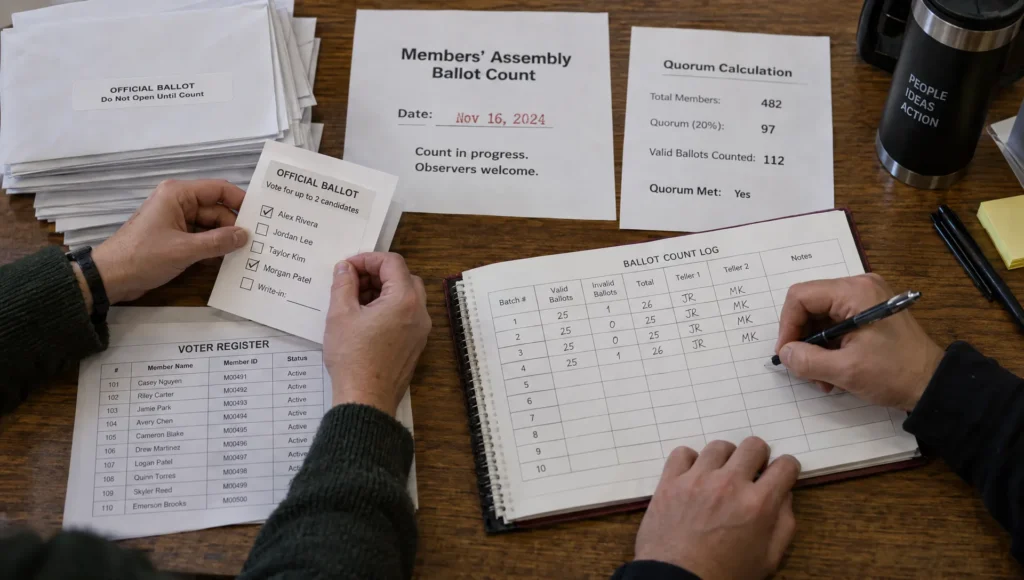
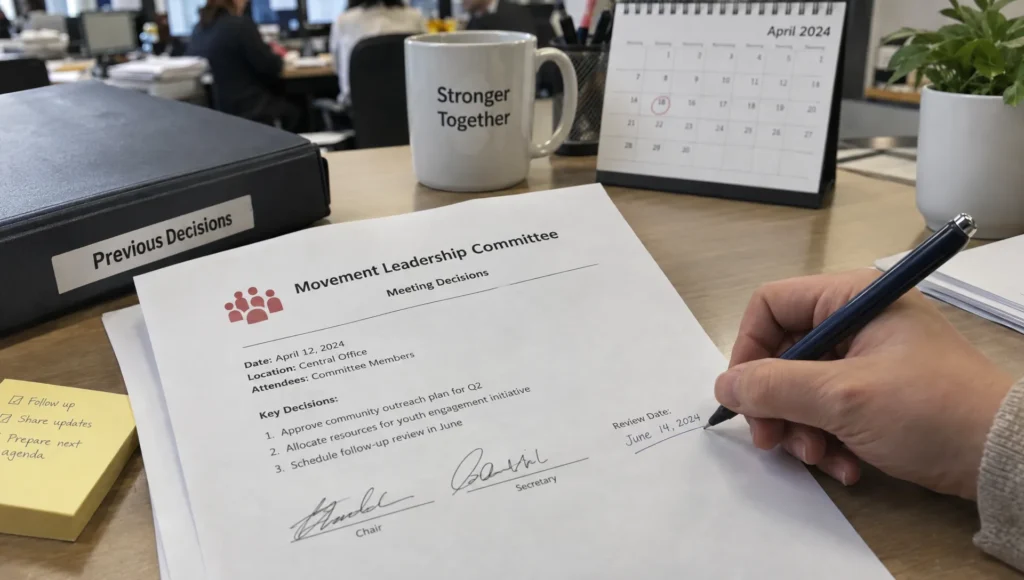
A useful standard is the “decision receipt.” After every meaningful committee action, the public should be able to see what was proposed, what evidence was used, what alternatives were considered, who participated, what changed, and what happens next.
| Transparency layer | What citizens should be able to answer | Minimum public record |
|---|---|---|
| Agenda transparency | What is being discussed and why now? | Agenda, topic summary, sponsor, relevant deadlines |
| Evidence transparency | What information is shaping the discussion? | Reports, data sources, legal opinions, expert submissions |
| Participation transparency | Who spoke, submitted input, or lobbied? | Speaker list, written comments, stakeholder disclosures |
| Deliberation transparency | What arguments were made and challenged? | Transcript, recording, searchable timestamps, amendment history |
| Outcome transparency | What changed because of the committee? | Vote record, revised text, next steps, implementation owner |
This kind of record does not require citizens to become full-time political observers. In fact, it does the opposite. It respects their time by making public information searchable, structured, and connected.
A parent should be able to follow an education committee decision that affects their child’s school. A small business owner should be able to understand a licensing rule before it is finalized. A neighborhood resident should be able to see why a planning change moved forward. A journalist should be able to compare what officials said in committee with what they later claim in public.
The citizen’s path through a transparent committee
Committee transparency works best when it supports participation before, during, and after the meeting.
Before the meeting, citizens need notice that is early enough to matter. Posting an agenda a few hours before a hearing turns participation into a privilege for insiders. A transparent committee should publish plain-language summaries, key documents, deadlines for public input, and clear instructions for testimony or written submissions.
During the meeting, citizens need more than a video feed. They need a clear agenda flow, speaker identification, references to the documents under discussion, and a way to submit questions or reactions through official channels. Not every comment can be read aloud, but every submission should enter a traceable public record.
After the meeting, transparency becomes accountability. The committee should publish what happened, what changed, which votes were taken, what input was accepted or rejected, and why. If public participation disappears into a black box, people learn that engagement is symbolic. If they can see how their input was considered, they are more likely to participate again.
This is where civic participation becomes cumulative. Each meeting creates a public memory. Each record helps citizens understand future decisions. Each traceable response builds trust, even when people disagree with the final outcome.
Technology can make committee transparency usable
The JustSocial manifesto imagines tools such as an rParliament-style public record, where committee documents, recordings, live streams, and user-generated civic discussion are connected to specific votes and public bodies. That vision matters because committee transparency is not just about publication. It is about navigation.
A modern committee record should be searchable by topic, representative, bill, agency, location, vote, amendment, and public concern. Citizens should be able to move from a final law back to the committee debate that shaped it. They should be able to compare promises with records. They should be able to see recurring patterns, such as which groups are routinely heard and which are routinely absent.
AI can help, if it is used carefully. Dense PDFs, lengthy hearings, and legal language create barriers for ordinary citizens. Tools that help people understand complex materials can reduce that barrier. For example, an AI reading companion such as unrav.io can help citizens reframe long documents, articles, PDFs, or videos into clearer explanations, which is valuable when public records are technically available but hard to understand.
Still, technology must support transparency, not replace it. Official records should remain auditable. Summaries should link back to source documents. Algorithms used in public participation systems should be explainable. Citizens should not be asked to trust a black box in order to inspect another black box.

What should be public by default?
A serious transparency standard begins with a simple rule: public work should be public by default, with narrow exceptions for legitimate privacy, security, and legal concerns.
Not every document can be open in full. National security, personal medical data, minors’ information, active investigations, and certain procurement details may require protection. But exceptions should be specific, documented, and reviewable. “Internal process” should not become a universal excuse for secrecy.
For most committees, the default public package should include:
- Meeting agenda and plain-language topic summary.
- Draft bills, policy proposals, amendments, and supporting documents.
- Names and affiliations of invited speakers and expert witnesses.
- Written public submissions, with reasonable privacy protections.
- Livestream, recording, transcript, and searchable timestamps.
- Vote records, attendance, conflicts of interest, and next steps.
- A post-meeting explanation of how public input was considered.
The final item is especially important. Many governments publish information but fail to close the loop. Real transparency requires response. If 2,000 citizens submit objections to a proposal, the committee should explain how those objections were categorized, reviewed, and addressed. The public may not get everything it wants, but it deserves to know whether it was heard.
Committee transparency needs deliberative and discursive quality
Transparency is not only an information problem. It is also a conversation problem.
In a discursive democracy, public reasoning matters. Citizens do not merely register preferences. They exchange arguments, challenge assumptions, and form opinions in relation to others. Committee records should therefore preserve the reasoning behind decisions, not just the result.
In a deliberative democracy, institutions must create conditions for thoughtful judgment. That means giving people access to evidence, time to respond, and a fair process for weighing competing claims. A committee that invites public comments but ignores every inconvenient argument is not deliberative. It is performative.
This is where civic participation should be evaluated beyond turnout. Did affected communities know about the meeting? Were opposing views represented? Were expert claims tested? Did public comments influence amendments? Were minority concerns recorded? Were officials forced to answer direct questions?
These questions matter because participation without quality can become noise. Transparency without deliberation can become data dumping. Democracy needs both access and reason-giving.
A People’s Branch approach to committees
One of the most important ideas in the JustSocial worldview is that citizens should have a more continuous role in government, not just a periodic vote. The proposed “People’s Branch” is a way to imagine civic input as a permanent democratic layer, one that gathers public opinion, structures participation, and makes government more responsive without eliminating representative institutions.
Committee transparency is one practical place to begin. A People’s Branch approach would not require every citizen to vote on every clause of every bill. Instead, it would create reliable channels for public input, public measurement, and public oversight.
A transparent committee system could show representatives what citizens think before a hearing, during deliberation, and after a decision is implemented. It could cluster public concerns by location, demographic group, topic, or policy impact while protecting individual privacy. It could also give journalists, researchers, and civil society groups better tools to analyze whether committees are serving the public or serving insiders.
This vision is explored further in JustSocial’s article on civic participation through a People’s Branch, and committee transparency is one of its most natural applications.
How citizens can push for committee transparency now
Citizens do not need to wait for a full democratic redesign before demanding better committee practices. Small reforms can create real pressure.
Start by choosing one committee that affects a concrete issue you care about: education, housing, transportation, policing, health, planning, environment, taxation, or digital rights. Follow its agenda for a month. Identify whether documents are posted in advance, whether recordings are searchable, whether public input is acknowledged, and whether outcomes are explained.
Then ask for specific improvements. Broad demands like “be more transparent” are easy to ignore. Concrete demands are harder to dismiss. Ask for agendas seven days in advance. Ask for searchable transcripts. Ask for amendment histories. Ask for public comment summaries. Ask for conflict-of-interest disclosures. Ask for a written response explaining how citizen submissions were handled.
Journalists can help by reporting on committee processes, not just final votes. Civil society organizations can create public trackers. Technologists can prototype tools that organize records and make hearings easier to navigate. Academics can evaluate deliberative quality and identify participation gaps. Local communities can build watch groups around specific committees.
The goal is not to turn every citizen into a procedural expert. The goal is to make democratic procedure visible enough that ordinary people can intervene when it matters.
The risks of fake transparency
Governments can appear transparent while still avoiding accountability. This is why citizens should watch for common failure patterns.
A committee may publish documents too late for meaningful response. It may stream meetings without transcripts or timestamps. It may invite public comments without showing whether they were reviewed. It may bury amendments in confusing file names. It may hold key negotiations outside the public meeting and use the committee as a formality.
There is also a risk that transparency becomes a weapon. Public exposure can lead to harassment, intimidation, or performative outrage. That is why committee transparency must be paired with moderation rules, privacy protections, anti-harassment norms, and serious civic education.
The point is not to create a political arena where everyone screams louder. The point is to build a public record where power has to explain itself.
Committee transparency as a cultural shift
The manifesto’s image of the Polis is useful here. In the ancient Greek sense described there, civic life was immediate and meaningful because citizens felt the political community as part of daily life. Modern states are too large and complex to recreate that world directly, but technology gives us a way to recover part of its intimacy.
Committee transparency can make the state feel less remote. It can turn “the government” into visible people, documents, arguments, meetings, and decisions. It can show citizens where to intervene. It can help representatives listen more precisely. It can make participation less theatrical and more useful.
That is the deeper promise of civic participation for committee transparency. It is not only about cleaner records. It is about changing the relationship between citizen and state.
A citizen who can follow a decision is harder to manipulate. A public that can trace influence is harder to ignore. A committee that must explain itself is less likely to serve only the powerful. And a democracy that listens continuously is better prepared to renew itself.
Frequently Asked Questions
What does committee transparency mean? Committee transparency means that the public can see and understand how committee decisions are made, including agendas, documents, testimony, amendments, votes, and follow-up actions.
Why is civic participation important for committee transparency? Civic participation turns transparency from passive publication into active accountability. Citizens can question evidence, submit input, track influence, and demand explanations for decisions.
Are livestreams enough to make committees transparent? No. Livestreams help, but they are not enough without agendas, documents, transcripts, timestamps, searchable records, amendment histories, and clear post-meeting outcomes.
Should every committee document be public? Most committee materials should be public by default, but narrow exceptions may be needed for privacy, national security, minors’ data, active investigations, or legally sensitive information.
How can ordinary citizens start participating? Choose one committee connected to an issue you care about, follow its agenda, review the available records, submit specific comments, and ask for decision receipts that explain how public input was handled.
Help build a more transparent democracy
Committee transparency is one step toward a broader democratic future: continuous participation, public accountability, and technology that helps citizens understand and influence the state they live in.
JustSocial is building a political movement around that future. If you believe democracy should listen between elections, explore the movement, share the ideas, volunteer your skills, or support the work at JustSocial.io.