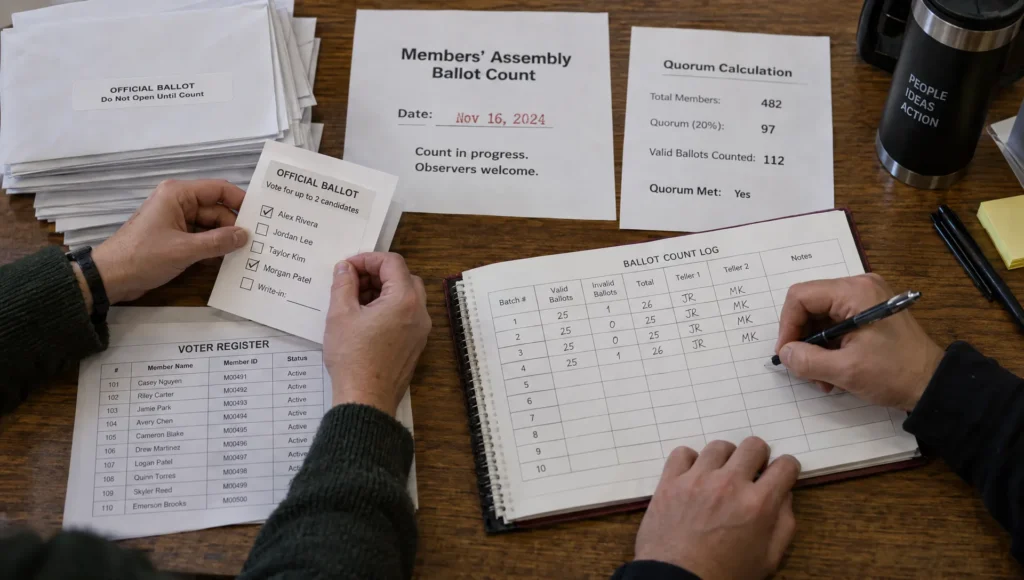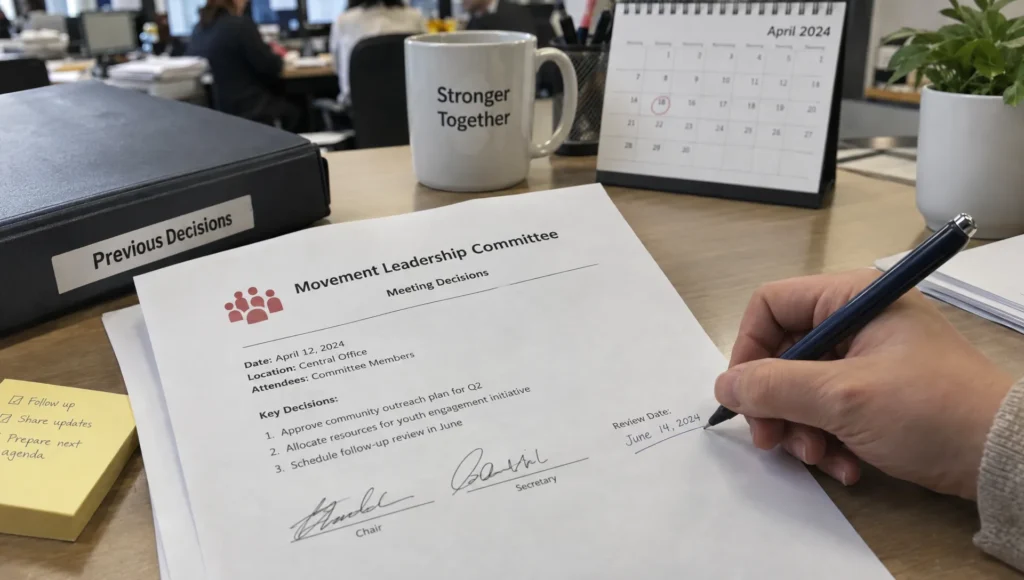
Public technology is usually treated as something governments buy, configure, and announce. Citizens are then expected to adapt to it, whether it works well or not. That model is backward.
If public tech is meant to serve public life, civic participation should shape it from the beginning. Citizens should help define the problems, test the tools, challenge the assumptions, and evaluate whether the technology actually improves democracy, transparency, education, services, and public trust.
This is not only a user experience issue. It is a democratic issue. A bad public platform can hide decisions, exclude people, simplify complex choices into empty surveys, or turn participation into symbolic theater. A well-designed public platform can make public reasoning visible, help communities deliberate, and give institutions a clearer picture of what people need.
That is why the future of public tech cannot be separated from the future of civic participation.
Public tech is not neutral infrastructure
A voting portal, a public consultation website, a committee livestream archive, a school feedback system, a digital identity layer, a budget transparency dashboard, or a civic discussion platform all carry political assumptions.
They answer questions such as:
- Who gets to speak?
- Who gets verified?
- What kind of input counts?
- How are minority views preserved?
- Can citizens see what happened after they participated?
- Are public officials required to respond?
- Is the system designed for one-time feedback or continuous influence?
These questions are not technical afterthoughts. They decide whether technology supports democracy or merely digitizes bureaucracy.
JustSocial’s manifesto argues that many public structures still operate as relics of the Industrial Revolution, while private technology has advanced far faster. The public sector often adopts tools late, partially, or without democratic imagination. The deeper problem is not that governments lack software. It is that the public rarely helps govern the purpose, rules, and accountability of that software.
The shift we need is simple to state and difficult to implement: public tech should be treated as a civic institution, not just an IT project.
From using public tech to shaping public tech
Most citizens encounter public technology only after key decisions have already been made. A city launches an app. A ministry opens a portal. A parliament uploads documents. A school sends parents into a platform. By then, participation is reduced to adoption, complaint, or avoidance.
Civic participation should happen earlier and continue longer.
Citizens can shape public tech across the full lifecycle:
| Stage of public tech | How civic participation can shape it | Democratic value |
|---|---|---|
| Problem definition | Residents describe the real-life friction they face before a tool is proposed | Prevents solving the wrong problem |
| Design | Users help test language, flows, accessibility, and trust signals | Makes tools usable for more people |
| Governance | Communities debate rules for privacy, moderation, verification, and data retention | Makes power visible |
| Implementation | Pilot groups test whether the system works in real public settings | Reduces expensive failures |
| Evaluation | Citizens compare promises with measurable outcomes | Creates accountability after launch |
| Iteration | Public feedback becomes part of the roadmap | Keeps technology responsive |
This matters because public technology is often judged by procurement milestones: launched, delivered, compliant, integrated. Democracy requires a different scorecard: understood, trusted, accessible, accountable, and capable of improving decisions.
A platform that collects thousands of comments but changes nothing is not a democratic success. A smaller process that clearly links public input to a decision, explains tradeoffs, and publishes what changed may be far more meaningful.
That is why civic participation must shape not only the interface, but the institutional process behind the interface.
Discursive democracy: making public talk legible
Public tech should not simply collect opinions. It should help society understand itself.
Discursive democracy focuses on the quality of public communication. It asks whether public talk is open, reasoned, evidence-aware, and capable of being heard by decision-makers. In practice, this means public tech should make civic discussion more legible without flattening it into shallow metrics.
A democratic platform should help people see:
- What arguments are being made
- Which evidence is being cited
- Where communities disagree
- Which concerns are repeated across groups
- Which questions remain unanswered
- How officials respond to public reasoning
This connects directly with JustSocial’s idea of public analytics for democracy. In the manifesto, analytics systems are imagined not as tools for manipulation, but as ways to help public officials, journalists, and citizens understand opinion patterns more precisely. That idea is powerful, but it also carries responsibility. Public analytics must be transparent, privacy-conscious, and designed to illuminate public reasoning rather than exploit behavior.
A civic participation platform should never treat citizens as data points alone. It should preserve the human arguments behind the data.
This is where public tech can learn from private digital products while rejecting the worst habits of the attention economy. The goal is not to maximize engagement at any cost. The goal is to improve public understanding and decision quality.
Deliberative democracy: designing for better judgment
Discursive democracy helps public reasoning become visible. Deliberative democracy goes a step further by creating conditions where people can weigh options, hear opposing views, consider evidence, and refine their judgments.
The OECD has documented the growth of deliberative processes such as citizens’ assemblies and citizens’ juries, noting their value in tackling complex policy issues when designed with representation, information, and clear mandates. These processes show that ordinary people can engage deeply with public questions when the structure respects their time and intelligence.
Public tech can support deliberative democracy, but only if it is designed for depth, not just speed.
A deliberative civic platform might include background materials, expert summaries, moderated discussion, visible tradeoffs, minority reports, and clear decision timelines. It should slow down certain decisions when complexity requires it. It should help people move beyond reacting to headlines and toward understanding consequences.
This is especially important for issues like education reform, public budgets, transportation, digital identity, policing, housing, and public health. These are not questions that can be solved by a like button. They require structured participation.
In JustSocial’s manifesto, the proposed educational reforms include democratic choice inside the classroom and more holistic learning supported by technology. That same principle applies to civic life. People do not become capable participants by being ignored for years and then asked to vote once. They become capable participants by practicing public reasoning in systems that invite them to learn, question, decide, and revisit decisions.

The missing link: participation must affect real decisions
Many public consultations fail because citizens cannot see the path from input to outcome. People are asked for feedback, but the decision window is unclear. The decision owner is unnamed. The rules are vague. The final explanation arrives late, if it arrives at all.
That creates cynicism. Not because people are apathetic, but because they learn that participation often has no consequence.
A better model would make the decision link explicit. Before asking people to participate, institutions should publish:
- The decision being shaped
- The authority responsible for the decision
- The timeline for public input
- The evidence already available
- The parts of the decision still open to change
- The method for summarizing public input
- The obligation to explain the final decision
This is why JustSocial has argued that civic participation should connect to decisions that can actually change. Public tech should make that connection easier to verify. If the tool cannot show how participation influenced the process, it risks becoming a digital suggestion box.
For public tech teams, this means the most important feature may not be a comment box. It may be the public record of responsibility.
Civic participation can improve procurement
One of the least glamorous but most important places citizens can shape public tech is procurement.
Governments often buy technology through processes that ordinary citizens never see. Requirements are written internally, vendors respond, contracts are awarded, and the public discovers the result only after launch. By then, the tool may already reflect assumptions that do not match community needs.
Participatory procurement does not mean every citizen votes on every vendor. It means the public has structured ways to influence requirements, evaluate usability, and define success.
For example, before a city buys a public consultation platform, residents could help define accessibility needs, language requirements, privacy expectations, transparency standards, and reporting formats. Civil society groups could review whether the tool will work for people with limited time, limited digital access, or low trust in government. Public officials could then turn those insights into procurement requirements.
This would make technology vendors compete not only on cost and features, but on democratic quality.
The result would be a healthier market for public tech. Companies would know that public legitimacy matters. Governments would be less likely to buy impressive-looking systems that fail in real communities. Citizens would understand that shaping public technology is part of shaping public power.
Public committees need better civic interfaces
One of the strongest ideas in the JustSocial manifesto is that public committee work should be far more visible. In many democracies, committees are where policy becomes real. They hear experts, revise laws, question officials, and shape budgets. Yet their work is often hard to follow unless someone already understands the system.
Livestreaming is useful, but raw video is not enough. A three-hour recording with no searchable transcript, no agenda markers, no linked documents, and no public explanation is transparency in form but not in function.
Public tech can turn committee work into civic infrastructure by adding searchable archives, summaries, source documents, public annotations, representative voting records, and clear links between hearings and later decisions. This is closely related to the argument for civic participation through public committees and livestreams, where visibility becomes meaningful only when people can understand and use what they see.
Imagine a committee page where a citizen can watch a debate, read the bill, see proposed amendments, review expert testimony, submit a structured question, follow the final vote, and later check whether implementation matched the promise. That is not futuristic. The technical components already exist. The missing ingredient is political will and civic pressure.
This is exactly where a political movement can help. It can translate scattered frustration into specific demands for public interfaces that make government understandable.
Privacy, security, and trust cannot be optional
If civic participation is going to shape public tech, citizens must also shape its guardrails.
Public platforms may involve identity, voting, political preferences, location, demographic data, or sensitive personal stories. Mishandling that information can endanger people and destroy trust. This is especially true in polarized societies, authoritarian contexts, or communities with a history of surveillance and discrimination.
Good public tech needs privacy by design, security by design, and democratic oversight by design. It should minimize unnecessary data collection, explain what is collected, protect anonymity where appropriate, and distinguish clearly between binding votes, advisory input, public comments, and private civic identity.
The NIST Privacy Framework offers a useful reference point for organizations thinking about privacy risk management. But technical frameworks are not enough. Citizens should be able to challenge data practices, audit public claims, and demand independent review.
JustSocial’s manifesto imagines citizens identifying voluntarily and anonymously in ways that allow public opinion to be measured while protecting individuals. That balance is difficult, but it is the right debate to have in public. The answer should not be blind trust in government or blind trust in vendors. It should be institutional design that assumes power must be checked.
From the Polis to the Cosmopolis
The manifesto’s reflection on the Greek Polis is not nostalgia for a small ancient city-state. It is a reminder that democracy once felt immediate. Citizens could experience the state as something close enough to touch, argue with, and help direct.
Modern nation-states are far larger and more complex. The old Polis cannot simply be copied. But public tech gives us a chance to recover some of its democratic intimacy at scale.
That is the promise behind the idea of the Cosmopolis: a society where people are not reduced to voters, taxpayers, and consumers, but are continuously connected to public life. In that vision, technology does not replace politics. It makes politics more participatory, more transparent, and more responsive.
The danger is that technology can also do the opposite. It can centralize power, automate exclusion, hide accountability, and create the illusion of participation. The difference depends on whether civic participation shapes the tools or merely reacts to them.
A democratic society should not ask, “What can this platform make citizens do?” It should ask, “What kind of public life should this platform help citizens build?”
How citizens can start shaping public tech now
Civic participation does not have to wait for a national reform package. Citizens, workers, community groups, educators, local officials, and technologists can begin with practical steps.
Start by asking better questions whenever a public platform is proposed. Who designed it? What problem is it solving? Who was consulted? How will accessibility be tested? What data is collected? How will public input affect decisions? What happens after launch?
Then move from complaint to specification. Instead of saying “the system is bad,” describe the missing democratic requirement. For example: “Every consultation should publish a decision owner and response deadline,” or “Every committee livestream should include searchable transcripts and linked documents.” Specific demands are harder to dismiss.
Finally, build pilots where possible. A neighborhood, school, municipality, union, or civic group can test small participation systems before demanding national adoption. JustSocial’s work on how a political movement can build civic tech pilots points in this direction: start with a real participation problem, design a transparent process, learn from use, and turn the pilot into evidence for broader reform.
Public tech becomes democratic when people treat it as something they have the right to shape.
Frequently Asked Questions
What is public tech? Public tech refers to digital tools used for public services, democratic processes, transparency, participation, education, administration, and government accountability. It includes platforms for consultations, voting, committee records, public data, digital identity, and civic communication.
How can civic participation improve public tech? Civic participation helps define real problems, test usability, set privacy expectations, improve accessibility, create accountability, and ensure that technology supports decisions people can understand and influence.
What is the difference between discursive democracy and deliberative democracy? Discursive democracy focuses on making public conversation visible, reasoned, and meaningful. Deliberative democracy focuses on structured processes where people study evidence, discuss tradeoffs, and refine judgments before decisions are made.
Should citizens vote directly on every technology decision? Not necessarily. Civic participation does not mean every technical choice becomes a mass vote. It means citizens have structured influence over goals, rules, safeguards, evaluation, and the public values embedded in the technology.
Why does a political movement matter for public tech? A political movement can turn scattered frustration into organized demands, pilots, standards, and pressure for reform. Public tech will not become democratic by accident. It needs citizens who insist that technology serve public life.
Help build public tech worthy of democracy
Civic participation can shape public tech only if citizens claim that role. The tools already exist. The harder task is building the political culture, public pressure, and institutional responsibility to use them well.
JustSocial is a political movement working toward continuous direct democracy, citizen empowerment, and public transparency through technology. If this vision speaks to you, explore the JustSocial manifesto, share it with others, and consider how your skills, community, or local institution could help build the next layer of democratic public tech.