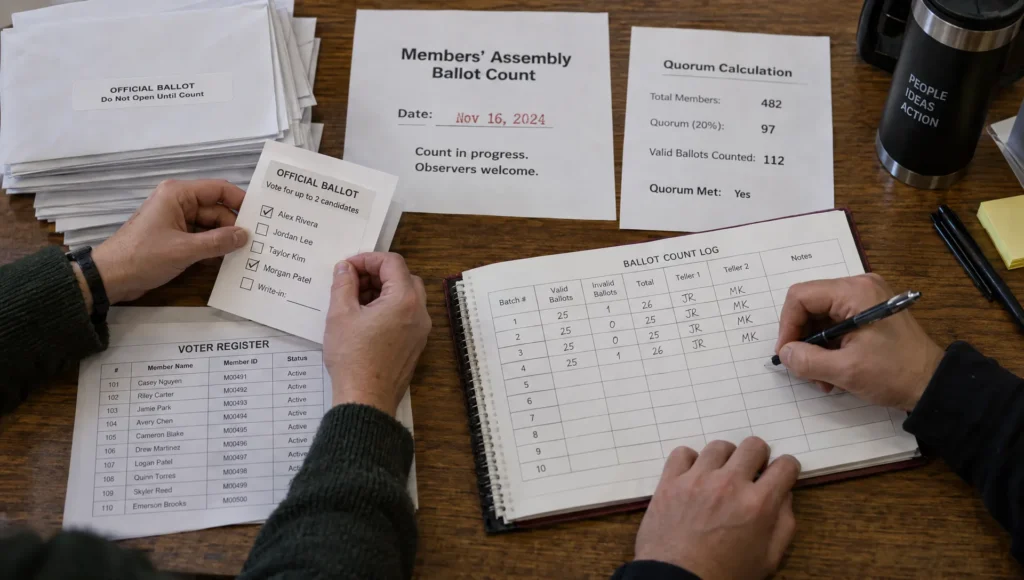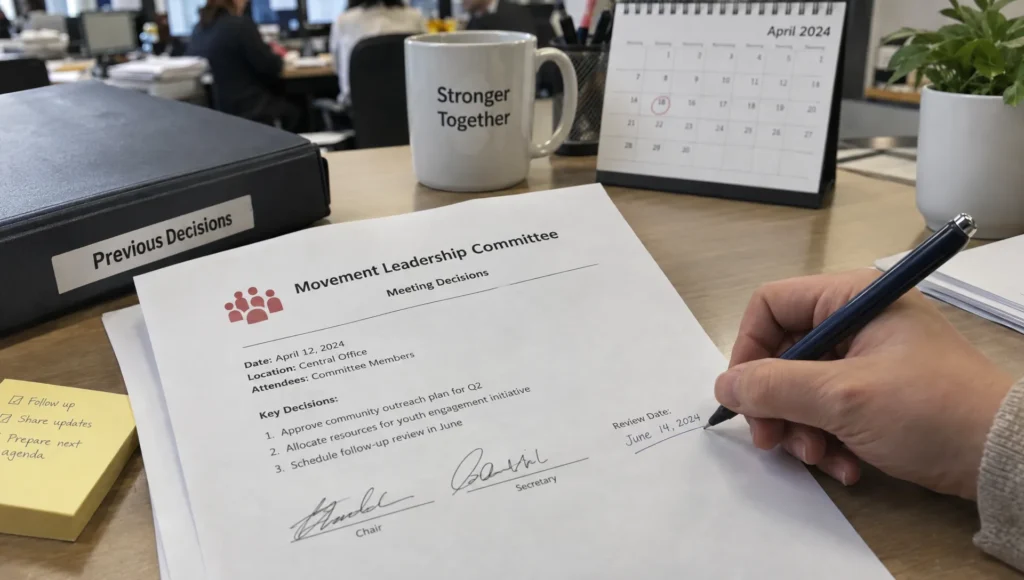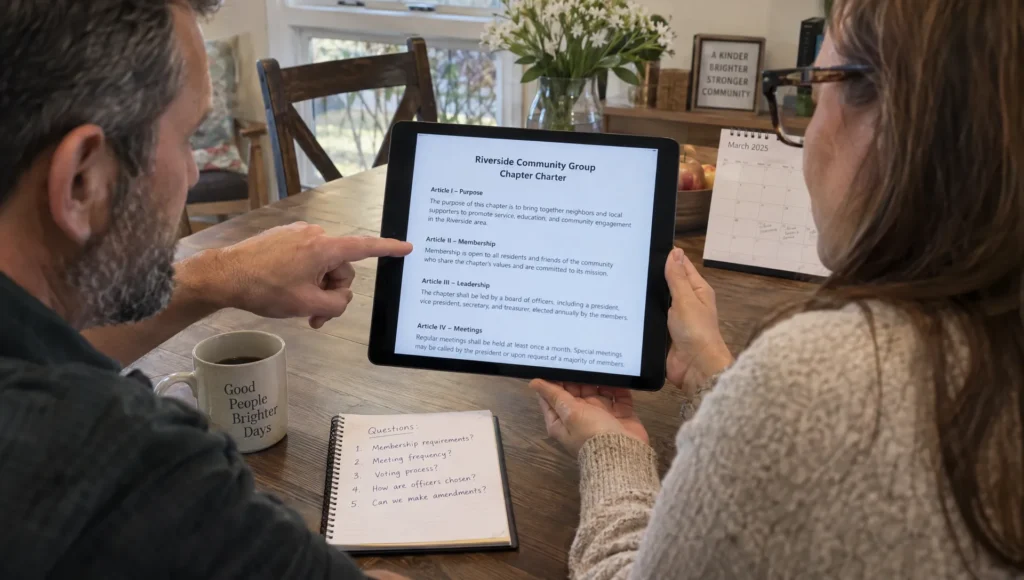
Most citizens do not lose influence only on election day. They lose it in the weeks and months between elections, when public committees meet, agendas move, amendments appear, budgets change, and oversight either happens or quietly disappears.
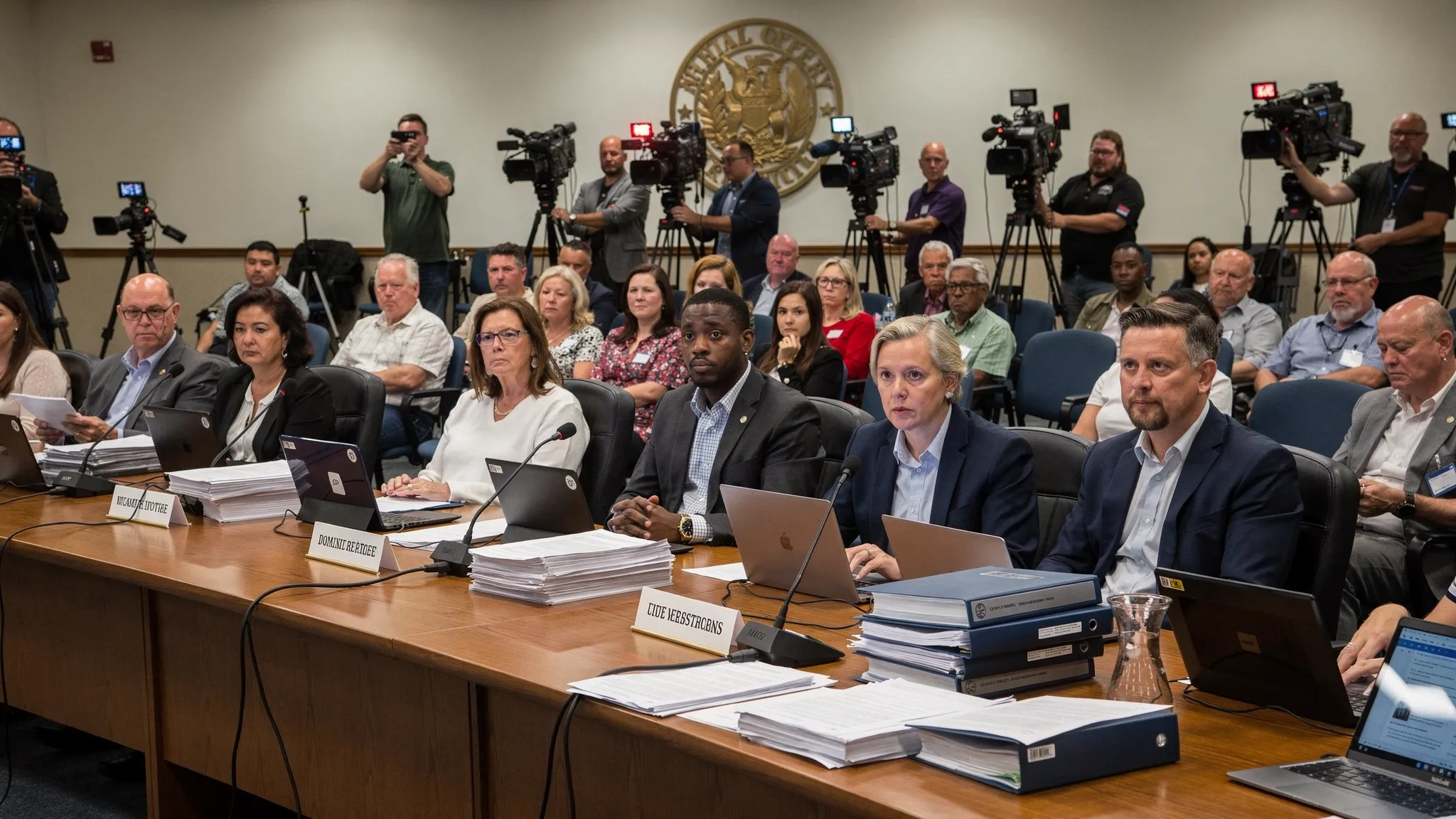
That is why public committees and livestreams deserve more attention in any serious conversation about civic participation. A committee room may look technical or procedural, but it is often where political reality is shaped before the public sees the final vote. If those rooms are closed, poorly documented, or impossible to follow, citizens are reduced to reacting after the fact. If they are livestreamed, archived, searchable, and connected to public input, they can become one of the most practical entry points for continuous democratic life.
This is also why JustSocial’s manifesto, The Face of Democracy, proposes tools like rParliament, a civic infrastructure concept for publishing committee documents, livestreams, recordings, and citizen interaction around representative activity. The deeper point is not simply to put cameras in rooms. It is to make public decision-making visible, understandable, contestable, and connected to citizen voice.
Why public committees are the hidden engine of democracy
Most people understand elections. Fewer understand committees. Yet committees are where many of the most important democratic functions happen.
A public committee may review legislation, question ministers, examine local budgets, hear expert testimony, investigate failures, supervise procurement, or prepare decisions for a council or parliament. In a city, that might mean transport routes, school policy, zoning, housing, policing, or environmental permits. At the national level, it may mean taxation, defense oversight, healthcare reform, digital rights, education, and constitutional questions.
When committee work is opaque, several democratic failures follow. Citizens cannot see who shaped a proposal. Journalists must rely on leaks or summaries. Interest groups with access gain disproportionate power. Representatives can perform accountability in public while negotiating the real outcome in private. Most importantly, citizens cannot learn how government actually works.
Public committees should therefore be treated as civic classrooms as well as decision forums. This connects directly to the JustSocial view that the state should not merely administer people from above, but educate and empower them to participate. A livestreamed committee, with clear documents and follow-up, teaches citizens the language of public power. It shows how claims become evidence, how evidence becomes options, and how options become law or policy.
Livestreaming is necessary, but not enough
Livestreams are a major improvement over closed rooms, but raw video alone does not create meaningful civic participation. A three-hour recording with poor audio, no agenda, no transcript, no timestamps, and no visible outcome is technically public but practically inaccessible.
A participation-grade livestream should do more than broadcast. It should help citizens understand what decision is being discussed, what evidence is being used, who is speaking, what alternatives are on the table, and what happens next.
| Weak transparency | Participation-grade transparency |
|---|---|
| A livestream link appears shortly before the meeting | Agenda, documents, and decision questions are published in advance |
| Video disappears or is hard to find later | Recordings are archived with stable links and timestamps |
| Citizens hear speeches but cannot trace evidence | Claims link to documents, expert testimony, and public data |
| Comments become noise or outrage | Input is structured by claim, reason, evidence, and request |
| Officials say they “listened” | A response memo explains what was accepted, rejected, or deferred |
| No one tracks the result | Implementation is followed through a public tracker |
This distinction matters because democratic legitimacy does not come from visibility alone. It comes from inspectability. Citizens need to be able to inspect the process, not only watch it pass by.
Committees as a bridge between discursive democracy and deliberative democracy
Public committees sit at an important intersection between discursive democracy and deliberative democracy.
Discursive democracy is about the public conversation: how issues are framed, which voices are heard, what language is used, what claims circulate, and what society considers legitimate. Livestreamed committees can strengthen this layer because they give citizens shared reference points. Instead of arguing only from headlines or party slogans, people can refer to the same hearing, the same testimony, and the same public record.
Deliberative democracy is more structured. It asks citizens, representatives, experts, and stakeholders to reason through evidence, weigh tradeoffs, and produce decision-ready recommendations. Committees can support this layer when they publish issue packs, invite balanced testimony, summarize public input fairly, and connect deliberation to official decisions.
A healthy democratic system needs both. Without discursive democracy, deliberation becomes elite and detached from public meaning. Without deliberative democracy, public discourse becomes endless noise with no decision quality. Public committees and livestreams can connect the two by moving from open public attention to structured reasoning and then to visible outcomes.
A practical model for committee-based civic participation
To make committee livestreams useful, governments, cities, schools, public agencies, and civic groups can adopt a simple participation model. It does not require a constitutional revolution to begin. It requires discipline, public artifacts, and a duty to respond.
1. Publish the real decision before the meeting
Every committee page should begin with a plain-language decision statement. Citizens should not have to decode procedural language to understand what is at stake.
A useful decision statement answers four questions: What is being decided? Who has authority? When will the decision happen? How can public input affect the result?
This prevents participation theater. If a committee is only gathering information, say so. If the committee can amend a proposal, say so. If public input is advisory, say so. Citizens can accept limits more easily than they can accept hidden rules.
2. Release a committee pack in advance
A committee pack should include the agenda, relevant documents, prior decisions, budget implications, legal constraints, stakeholder positions, and a short glossary. For complex issues, it should include an evidence summary and a clear list of open questions.
This is where academia can play a constructive role, one of the manifesto’s more important institutional ideas. Experts should not replace citizens, but they can help make public knowledge usable. Universities, research institutes, and independent reviewers can prepare balanced briefs, uncertainty notes, and tradeoff summaries that help citizens and representatives deliberate more honestly.
3. Livestream with accessibility built in
A livestream should be accessible by default. That means clear audio, captions, interpretation when needed, mobile-friendly viewing, and an archive for people who cannot watch live. Accessibility is not a cosmetic feature. If only well-connected, highly educated, or politically obsessed citizens can follow the process, participation will reproduce inequality.
The meeting page should also show speaker names, roles, agenda items, and timestamps. A citizen should be able to jump directly to the testimony, amendment, or exchange that matters to them.
4. Structure public input instead of collecting noise
Open comment boxes often reward speed, anger, repetition, or organized flooding. A better approach is to ask for structured input.
For example, citizens can be asked to submit: “My claim is,” “My reason is,” “My evidence or experience is,” and “My request to the committee is.” This simple format improves public reasoning without censoring viewpoints. It also makes it easier for staff, journalists, researchers, and civic volunteers to synthesize public input.
For a political movement, this is especially important. Movements should not only mobilize supporters to flood meetings. They should help people produce better public arguments, clearer evidence, and more usable proposals.
5. Create a public synthesis after the meeting
After each committee meeting, the public should receive more than a recording. The committee should publish a synthesis note that explains the main claims raised, evidence cited, disagreements identified, unanswered questions, and next steps.
The synthesis should not pretend that everyone agreed. Minority views, uncertainty, and unresolved tradeoffs should be visible. In divided societies, trust is often built not by forcing consensus, but by showing that disagreement was accurately recorded.
6. Require a response memo
A response memo is the democratic receipt. It tells citizens whether their input affected the committee’s work.
A strong response memo explains which recommendations were adopted, which were rejected, which were deferred, and why. It names constraints, such as legal limits, budget limits, conflicts with prior commitments, or evidence gaps. This does not guarantee that citizens get what they want, but it guarantees that public reasoning is treated seriously.
7. Track implementation
Many participation processes fail at the last step. People speak, officials respond, a decision is announced, and then everyone loses track of whether anything changed.
Every committee decision should connect to an implementation tracker. The tracker should show responsible owners, deadlines, status updates, budget movements, and public documents. Civic participation becomes real when citizens can follow the chain from testimony to decision to action.
How livestreams can support a People’s Branch in practice
The JustSocial manifesto imagines “the people” as a new branch-like democratic force, not as a replacement for representative institutions, but as a continuous source of public opinion, oversight, identity, and civic judgment. Committee livestreams are one of the most realistic early building blocks for that vision.
A People’s Branch does not have to begin as a formal constitutional body. It can begin as a disciplined civic practice around existing institutions. Citizens can monitor committees, summarize meetings, build evidence indexes, tag recurring issues, and publish public receipts. Over time, this creates a civic memory that government itself often fails to maintain.
In the manifesto’s rParliament concept, committee documents, livestreams, recordings, and user-generated content would be connected to specific committees and votes. That matters because political attention is usually fragmented. A clip goes viral, a scandal erupts, a hashtag trends, and then the record disappears. A committee-centered public archive keeps attention tied to the actual decision surface.
This is how technology should serve democracy: not by replacing judgment, but by organizing public memory.
The role of AI in committee transparency
AI can help make committee livestreams more usable, but it must be governed carefully. Safe uses include transcription, translation, topic tagging, document search, summary drafts, accessibility support, and detection of repeated or coordinated submissions. Risky uses include opaque ranking of citizen input, automated truth judgments, hidden personalization, or replacing human deliberation.
The rule should be simple: AI may assist public understanding, but it should not secretly decide what counts as important. Any AI-generated summary should be labeled, reviewable, correctable, and linked back to the original record.
This requires production discipline. If a public body or civic organization uses AI to process committee recordings, translate testimony, or generate draft summaries, it needs governance over models, workflows, permissions, and costs. The same operational mindset behind controlled AI production environments, such as Virtuall, is relevant here: democratic AI workflows should be managed, auditable, and accountable rather than improvised.
Safeguards for public committee livestreams
Transparency is not absolute. Some committee work may involve personal data, minors, national security, active investigations, or sensitive welfare cases. The goal is not reckless exposure. The goal is proportional transparency.
A credible committee livestream policy should include clear safeguards:
- Privacy protection: Redact personal information, protect vulnerable participants, and offer anonymous or pseudonymous input when appropriate.
- Security exceptions: Define narrow conditions for closed sessions, especially for defense, security, or legally protected material.
- Accessibility standards: Provide captions, language access, plain-language summaries, and offline routes for participation.
- Anti-manipulation rules: Detect spam, disclose organized campaigns when relevant, and separate mass mobilization from deliberative synthesis.
- Appeals and corrections: Let citizens challenge inaccurate summaries, broken links, missing documents, or unfair moderation.
- Archival stability: Preserve recordings, documents, and response memos with stable public links.
These safeguards protect participation from becoming either chaos or surveillance. Citizens should not have to choose between being unheard and being overexposed.
What a political movement can do before government agrees
A political movement does not need to wait for perfect laws or official platforms. It can model the democratic infrastructure it wants to see.
A movement can choose one city council, school board, parliament committee, or agency board and create a public committee watch project. Volunteers can track agendas, attend or watch meetings, publish plain-language summaries, build issue pages, request missing documents, and ask representatives for response memos.
The key is to avoid becoming just another outrage channel. The movement should publish receipts, not only reactions. It should produce artifacts that others can inspect and reuse.
| Movement action | Democratic value | Public output |
|---|---|---|
| Track committee agendas | Helps citizens find decision windows | Weekly decision calendar |
| Summarize livestreams | Makes meetings understandable | Timestamped meeting notes |
| Build evidence pages | Improves discursive democracy | Source-linked issue pack |
| Convene small deliberations | Improves decision quality | Options memo |
| Ask for official responses | Creates accountability | Response request log |
| Track implementation | Keeps pressure after the vote | Public follow-through tracker |
This is a practical path from protest to institution-building. It also reflects the manifesto’s argument that elected officials should become better pipelines for public consensus, not distant rulers who hear from citizens only during campaigns.
The cultural shift: from spectators to participants
The Greek Polis, discussed in the JustSocial manifesto through Charles Wayper’s writing, was not just a territory. It was a way of life in which public affairs were close enough to feel real. Modern states are vastly larger and more complex, but technology gives us a chance to recover some of that civic intimacy without pretending we can return to ancient city-states.
Public committee livestreams can help make the state less abstract. Citizens can see not only final speeches, but the actual work of governing. They can watch questions asked, evidence challenged, amendments proposed, and tradeoffs exposed. Over time, this changes the citizen’s role from spectator to participant.
That shift is emotional as much as procedural. People disengage when they feel that public life is sealed off from them. They re-engage when they can see a path from attention to understanding, from understanding to input, and from input to visible response.
A 30-day starter pilot for any community
For a local civic team, the first version can be simple.
Choose one committee. Create a public page for it. Publish the meeting schedule, agenda links, recordings, documents, and plain-language summaries. For each meeting, identify the real decision, collect structured citizen input, publish a synthesis, ask officials for a response, and track what happens next.
Do this for three or four meetings before expanding. The point is not to build a giant platform immediately. The point is to prove the loop: public record, public reasoning, public response, public follow-through.
Once the loop works, technology can scale it. Without the loop, technology only scales confusion.
Frequently Asked Questions
How do public committee livestreams improve civic participation? They let citizens see where decisions are shaped, not only where final votes happen. When paired with agendas, documents, archives, structured input, and response memos, livestreams help citizens understand, influence, and monitor public decisions.
Is livestreaming enough to make government transparent? No. Livestreaming is only the first layer. Real transparency requires searchable archives, evidence links, plain-language summaries, public input channels, decision rationales, and implementation tracking.
How does this relate to deliberative democracy? Committees can support deliberative democracy by publishing balanced evidence, inviting structured testimony, weighing tradeoffs, and producing decision-ready options. Livestreams make that reasoning visible to the wider public.
How does this relate to discursive democracy? Livestreams give the public a shared factual reference point for debate. Instead of arguing only through slogans or fragments, citizens can discuss actual committee exchanges, evidence, and decisions.
Can sensitive committee meetings still be protected? Yes. A good transparency policy includes narrow exceptions for privacy, national security, minors, legal restrictions, and other sensitive matters. The standard should be proportional transparency, not reckless exposure.
What can citizens do if their government does not livestream committees? Start by requesting agendas, minutes, recordings, and response memos. If possible, organize a civic team to attend meetings, publish summaries, build evidence pages, and track implementation publicly.
Help build public decision-making people can actually see
Civic participation becomes stronger when the public can follow the real work of government. Public committees and livestreams are not a side issue. They are a practical foundation for a more continuous, transparent, and participatory democracy.
JustSocial exists to help move that idea from theory to practice, through civic tools, public transparency, community participation, and a political movement focused on empowering citizens with technology. If you believe committee rooms should become visible civic spaces, not hidden corridors of power, explore the manifesto, share the idea, volunteer your skills, or help build the next prototype for democratic participation.