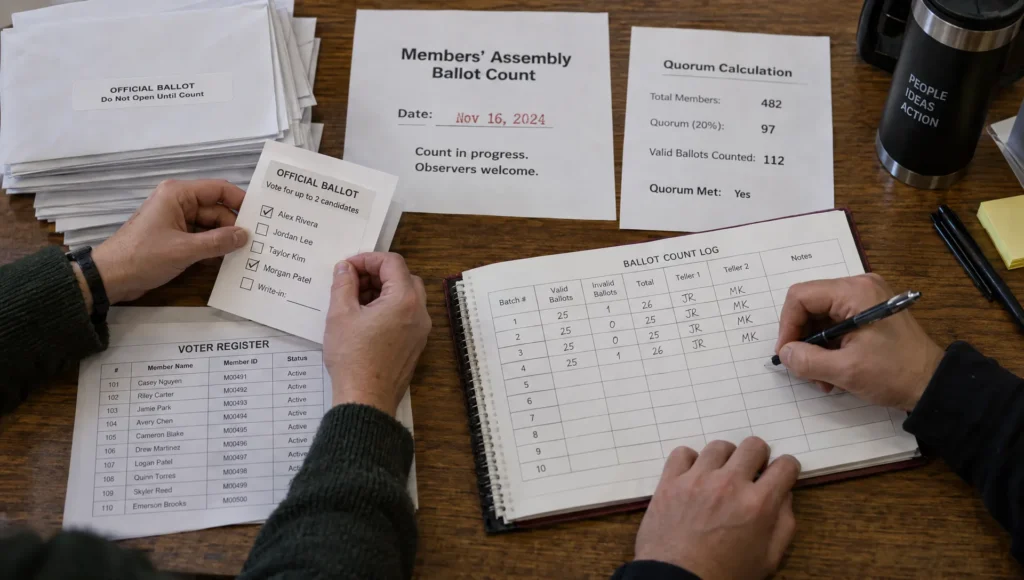
Most citizens are counted intensely on election night, then faintly for the rest of the political cycle. Their vote becomes a number in a column, their tax payments become entries in a budget, and their daily experience of public systems often becomes background noise.
That is the central democratic problem behind civic participation today. The question is not only whether people are allowed to speak. In many democracies, people speak constantly, in elections, protests, petitions, comments, town halls, and online arguments. The deeper question is whether they are counted in a way that public institutions can see, measure, answer, and act upon.
Civic participation, understood this way, is not a polite civic hobby. It is a claim of membership. To participate is to say: my life is affected by public decisions, so my judgment must have a trace in the public process. The right to be counted does not mean every citizen gets their preferred policy every time. It means citizens should not disappear between elections, behind party lists, bureaucratic routines, or media noise.
What the right to be counted means
The right to be counted begins with a simple idea: a citizen is not only a voter, a taxpayer, or a consumer. A citizen is a continuing participant in the social contract.
In representative systems, the formal count usually happens through ballots. That count matters. Voting remains one of the most powerful tools citizens have, and no serious democratic reform should treat it casually. But voting is a narrow count. It compresses complex people into a periodic choice between candidates or parties, often every few years. It rarely captures what citizens think about a specific education policy, budget priority, public health decision, policing practice, infrastructure plan, or technology regulation.
A meaningful right to be counted includes four democratic expectations:
- Access: People must have practical ways to participate, not only theoretical rights that require time, money, legal knowledge, or insider status.
- Recognition: Public systems must know that input came from real affected communities, while protecting privacy and preventing coercion.
- Continuity: Participation must exist between elections, not only during campaign seasons.
- Response: Institutions must show what they heard, what they did, and why they chose one path over another.
This is why civic participation should be judged not by volume alone, but by linkage. A million angry comments may reveal public frustration, but if no institution is required to read, categorize, deliberate, respond, or explain, then citizens have produced noise in a void. A smaller process that is transparent, inclusive, and connected to a decision can be more democratic than a louder process that changes nothing.
Why elections are necessary, but not enough
Elections are the foundation of modern representative democracy, but they were never designed to carry the full weight of public judgment in a technologically connected society. The public now communicates daily. Institutions still often listen occasionally.
That gap helps explain why many citizens feel politically powerless even when they live under democratic constitutions. They can vote, yet they cannot easily see how their lived experience enters the machinery of government. They can protest, yet the response may depend on crowd size, media attention, and political convenience. They can write to representatives, yet they may receive a template response, if any response comes at all.
The decline in democratic trust is not only a mood. Freedom House has reported a long global decline in political rights and civil liberties, including damage caused by flawed elections and armed conflict. Different countries face different risks, but the pattern points to a shared challenge: if democracy is reduced to periodic competition for power, it becomes easier for political actors to claim a mandate while ignoring the public between ballots.
The solution is not to abolish representation. It is to surround representation with better ways of listening, measuring, deliberating, and responding. In other words, the vote should not be the only moment when the citizen becomes visible.
Discursive democracy, deliberative democracy, and the count that matters
To understand the right to be counted, it helps to separate two related ideas: discursive democracy and deliberative democracy.
Discursive democracy is about the public conversation. It values speech, disagreement, storytelling, criticism, identity, and the formation of public meaning. It is the arena where citizens define problems, challenge official narratives, expose blind spots, and create political language. Without discourse, politics becomes a closed administrative process.
Deliberative democracy is about structured judgment. It asks people to consider evidence, hear opposing views, weigh trade-offs, and revise opinions when they encounter better arguments. It is less about who can shout the loudest and more about whether a public decision can survive reasoned scrutiny.
Healthy civic participation needs both. Discursive democracy without deliberation can become endless outrage. Deliberative democracy without open discourse can become an elite workshop detached from the public. The right to be counted requires a bridge between them: citizens must be free to express what they see and feel, and institutions must create serious pathways for turning that expression into public reasoning and accountable decisions.
The OECD’s work on deliberative citizen participation has documented how citizens’ assemblies, panels, and other representative deliberative processes can improve public decision-making when they are well designed. But these processes should not remain rare democratic experiments. They point toward a larger principle: people are capable of judgment when the system treats them as capable.
| Democratic layer | What it counts | What it misses if used alone |
|---|---|---|
| Elections | Aggregate political choice and authority to govern | Specific issue preferences, minority concerns, and changing public priorities |
| Discursive democracy | Public voice, narratives, criticism, and social meaning | Structured trade-offs, evidence review, and decision linkage |
| Deliberative democracy | Informed judgment after discussion and reflection | Wider public energy if participation is too limited or disconnected |
| Continuous civic participation | Ongoing public input across issues and communities | Legitimacy if privacy, inclusion, and institutional response are weak |
The manifesto’s challenge: from being ruled to being counted
The JustSocial manifesto frames this challenge in historical terms. It argues that many public systems still carry the shape of the Industrial Revolution: centralized, slow, bureaucratic, and built for a world where communication was limited. Meanwhile, citizens live in a technological reality where information, coordination, learning, and social organization can happen continuously.
The manifesto’s critique is not simply that government is inefficient. It is that the social contract has become too thin. A citizen is born into a state, moves through an education system they barely influence, enters a workforce, pays taxes, and is then asked to choose representatives at long intervals. In that arrangement, political life becomes something done to people, not with them.
JustSocial’s answer is continuous direct democracy, not as a sudden replacement of all institutions, but as a new layer of civic power. The manifesto imagines a society where citizens can weigh in on public affairs regularly, where public opinion is measured with more precision, where government transparency is normal, and where representatives are expected to treat public input as a living democratic signal.
This connects to the manifesto’s use of the Greek Polis. In the Polis, political belonging was immediate. The citizen was not merely under the state, but part of a shared civic life. The modern nation-state is too large to recreate the ancient city-state directly, but the manifesto’s point is that technology changes the scale problem. A modern Cosmopolis would not copy Athens. It would seek the same intimacy of membership at a scale made possible by digital democracy tools, public transparency, and structured civic engagement.
What must be counted in civic participation
If the right to be counted becomes a real democratic principle, governments and civic platforms must count more than yes-or-no preferences. A society is not a spreadsheet of opinions. Counting must respect complexity while still producing usable signals.
This is why metrics matter. JustSocial has argued that democracies need civic participation metrics beyond turnout, including inclusion, discursive quality, deliberative quality, and institutional responsiveness. That approach fits the right to be counted because it asks whether participation is broad, thoughtful, fair, and connected to outcomes.
| What should be counted | Why it matters | Democratic risk if ignored |
|---|---|---|
| Who had access to participate | Inclusion determines legitimacy | Decisions may reflect only organized, wealthy, or highly available groups |
| What reasons citizens gave | Public reasoning is richer than polling | Leaders may reduce citizens to raw sentiment |
| How views changed after deliberation | Learning is part of democratic judgment | Institutions may mistake first reactions for considered positions |
| Which issues citizens prioritize | Agenda-setting is a form of power | Public institutions may answer questions citizens are not asking |
| Whether government responded | Participation needs accountability | Consultation becomes symbolic and citizens disengage |
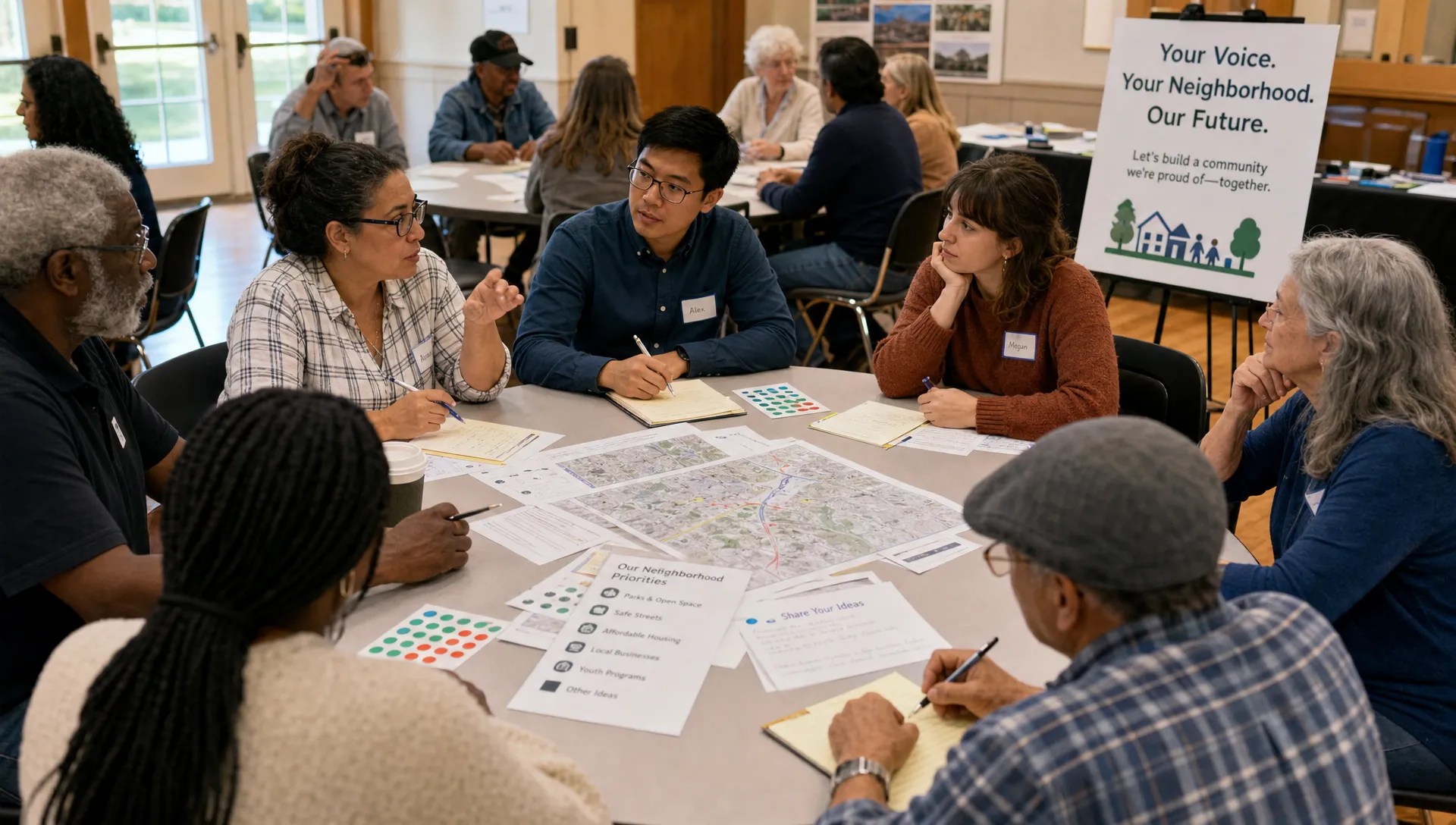
The right to be counted also requires humility from institutions. Public input should influence decisions, but it should not automatically replace legal rights, constitutional protections, expert evidence, or minority safeguards. A democracy that counts people well must also protect people well. Majority opinion is important, but it is not the whole of justice.
Technology can help, but design decides whether it empowers
Digital tools can make civic participation more continuous, accessible, and measurable. Online voting platforms, community decision-making software, public record repositories, and civic analytics can help citizens participate without needing to attend every meeting in person or understand every bureaucratic channel.
But technology is not automatically democratic. A platform can empower citizens, or it can surveil them. It can clarify public opinion, or it can manipulate emotion. It can increase transparency, or it can create a black box where the public is counted by systems it cannot inspect.
For digital democracy to support the right to be counted, it needs strong design principles:
- Privacy by design: Citizens must be able to participate without fear that political identity will be exposed, sold, or used against them.
- Verifiability: Processes should be auditable so people can trust that inputs were recorded and reported accurately.
- Accessibility: Participation tools must work for people with different languages, abilities, schedules, and levels of technical comfort.
- Anti-manipulation safeguards: Systems must resist bots, coordinated harassment, fraud, and attention gaming.
- Public transparency: Citizens should see how participation data is summarized, interpreted, and used.
- Institutional linkage: A platform matters only if public bodies are required to acknowledge and answer what it reveals.
This is where JustSocial’s movement-oriented approach matters. Technology can provide democracy tools, but the democratic question is institutional: who owns the process, who audits it, who must respond, and how citizens can challenge it.
Blockchain, analytics, cloud storage, and AI can all play roles, as the manifesto suggests. Yet none of them should be treated as magic. The core democratic upgrade is not the software itself. It is the decision to treat citizens as permanent participants in governance.
Why this requires a political movement
The right to be counted will not appear because a better app exists. Public power rarely changes shape without organized demand. That is why civic participation is also the work of a political movement.
A political movement gives isolated frustration a shared direction. It turns “no one listens” into a program for institutional change. It asks citizens, technologists, educators, public servants, and representatives to build a democracy where listening is not optional and participation is not decorative.
JustSocial’s proposal for a permanent People’s Branch is one way to describe that institutional shift. The idea is that public participation should not depend on the goodwill of whoever holds office. It should be a recognized layer of government, with processes, rights, safeguards, and responsibilities.
This does not need to be a left-wing or right-wing idea. The right to be counted serves any citizen who has ever felt misrepresented, ignored, patronized, or reduced to a demographic category. It can support local communities that want better schools, parents who want a say in education, workers affected by regulation, entrepreneurs navigating public systems, minorities seeking recognition, and taxpayers asking where public money goes.
The democratic promise is simple: if the state claims authority over citizens, citizens deserve a continuous, protected, and measurable role in shaping the state.
How citizens can practice the right to be counted now
Even before institutions change, citizens can act in ways that make participation more concrete. The goal is to move from expression alone to traceable influence.
Start by choosing one public issue where your life experience gives you real knowledge. It may be transportation, housing, school policy, public safety, healthcare access, digital privacy, local budgeting, or public transparency. Follow the responsible institution, learn when decisions are made, and identify the formal moments when input is accepted.
Then participate with evidence and a clear ask. A public comment that says “this is wrong” may be emotionally true, but a comment that explains the problem, names the affected group, offers a practical alternative, and asks for a written response is harder to ignore.
Finally, organize with others around accountability. Ask public bodies to publish summaries of citizen input. Ask representatives how public feedback changed their position. Ask campaigns whether they support continuous civic participation between elections. Ask civic technology builders how they protect privacy and prevent manipulation.
Being counted is not passive. It is a democratic habit, a design challenge, and a political demand at the same time.
Frequently Asked Questions
What does “the right to be counted” mean in civic participation? It means citizens should have ongoing, accessible, and accountable ways to influence public decisions. It does not mean every opinion becomes policy, but it does mean public institutions should record, consider, and answer citizen input in a visible way.
How is deliberative democracy different from discursive democracy? Discursive democracy focuses on open public conversation, including criticism, identity, values, and storytelling. Deliberative democracy focuses on structured discussion where people weigh evidence, trade-offs, and competing arguments before forming judgment.
Can online voting platforms create direct democracy by themselves? No. Online voting platforms can support direct democracy, but they need legal legitimacy, privacy protections, auditability, accessibility, and clear institutional links. Without those safeguards, digital participation can become symbolic or unsafe.
Does continuous civic participation replace elected representatives? Not necessarily. It can make representatives more responsive by giving them better public signals between elections. The goal is to prevent representatives from treating election results as a blank check for years of disconnected decision-making.
Why does JustSocial describe this as a political movement? Because the tools alone are not enough. A real shift toward continuous direct democracy requires public pressure, institutional reform, civic education, and citizens willing to demand a stronger role in governance.
Join the work of being counted
The right to be counted is not only an idea to admire. It is a system to build.
JustSocial exists to promote continuous direct democracy, citizen empowerment, and technology-driven tools for participation and transparency. If you believe civic participation should mean real influence between elections, explore JustSocial.io, read the manifesto, and consider how your skills, community, or public voice can help move democracy from occasional permission to continuous participation.
A democracy that counts its citizens only once every few years is using an old political instrument in a new technological age. The next step is to build institutions that count people continuously, carefully, and publicly, because being governed should also mean being heard, measured, and answered.