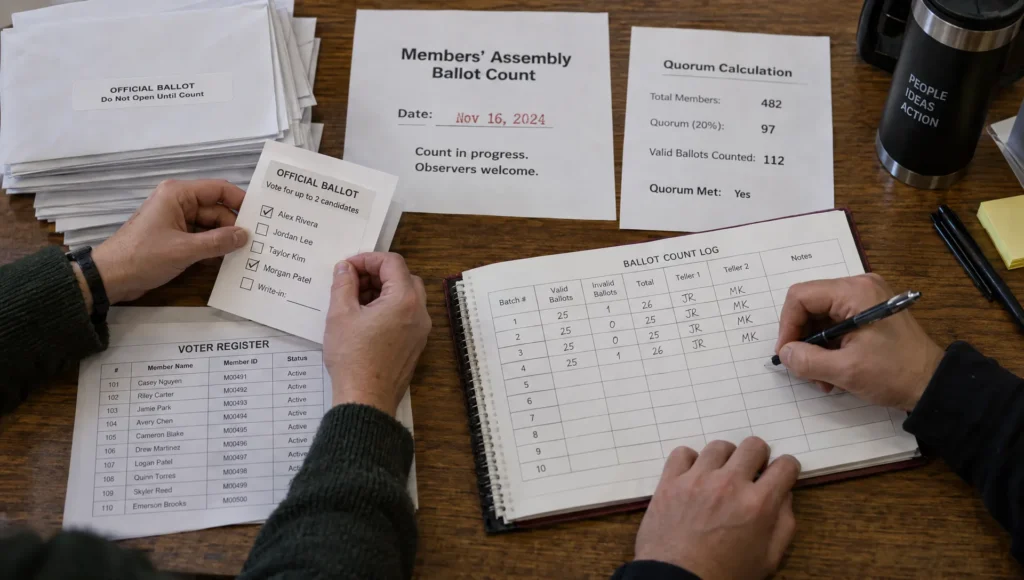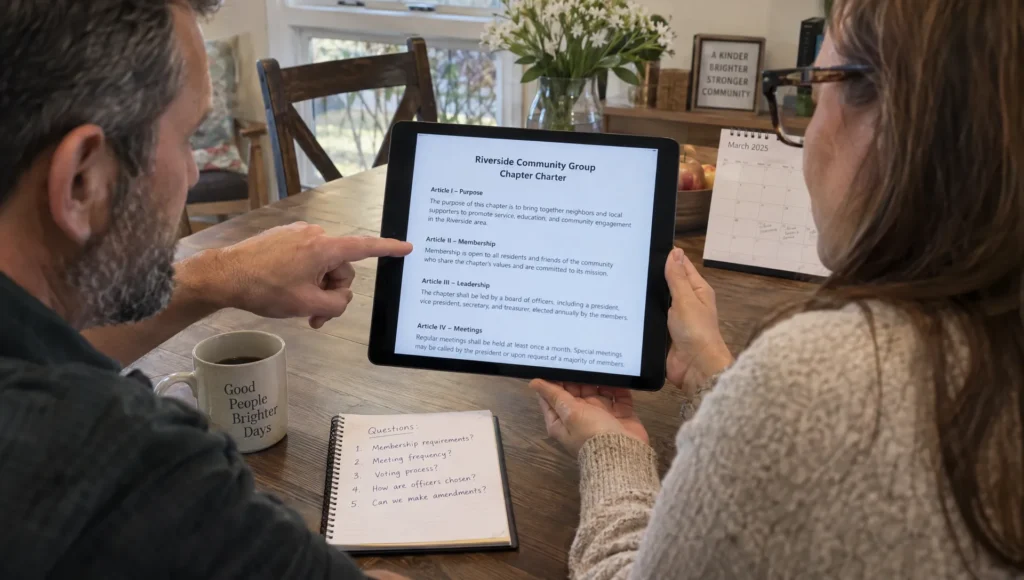
A law can be public without being transparent. A bill can appear on an official website, a committee can stream a hearing, and a legislature can publish the final vote, while citizens still have no clear way to understand who shaped the text, which evidence mattered, why objections were rejected, or how amendments changed the original purpose.
That is the gap discursive democracy is built to close.
Discursive democracy does not treat public speech as background noise around lawmaking. It treats speech, evidence, disagreement, and official response as part of the lawmaking record itself. If deliberative democracy asks how people can reason together, discursive democracy asks how that reasoning becomes visible, traceable, and consequential inside institutions.
For JustSocial, this connects directly to a larger political movement for citizen empowerment. In the JustSocial manifesto, Yuval D. Vered argues that modern citizens are too often reduced to voters, taxpayers, and consumers, when technology could allow them to become active participants in public life. Transparent lawmaking is one of the most practical places to begin.
Why publication alone is not transparency
Many governments already publish laws, calendars, minutes, transcripts, committee videos, and roll-call votes. That matters. But publication is only the first layer of transparency.
The deeper question is whether the public can follow the path from problem to proposal, from proposal to amendment, from amendment to vote, and from vote to real-world outcome. Without that path, citizens see fragments. They may know what passed, but not why. They may know who voted yes or no, but not which arguments were considered. They may testify at a hearing, but never discover whether their testimony changed anything.
The OECD Recommendation on Open Government defines open government around transparency, integrity, accountability, and stakeholder participation. Transparent lawmaking needs all four. It is not enough to open a document archive. A legislature must show how civic participation enters the decision-making process and where institutional judgment begins.
In other words, transparency is not just access to files. It is access to reasoning.
What discursive democracy means for lawmaking
Discursive democracy belongs to the wider family of democratic ideas that take public reasoning seriously. It overlaps with deliberative democracy, but it is not identical.
Deliberative democracy usually focuses on structured discussion among participants who learn, debate, and produce recommendations. Citizens' assemblies, juries, and panels are common examples. Discursive democracy is broader. It asks how public reasoning circulates across society, media, expert institutions, legislatures, committees, agencies, and civic platforms.
For lawmaking, that difference matters.
| Democratic model | Core question | Typical setting | Value for lawmaking |
|---|---|---|---|
| Deliberative democracy | What would informed people recommend after balanced discussion? | Citizens' assemblies, panels, juries, public forums | Produces considered public judgment on complex issues |
| Discursive democracy | How do reasons, evidence, objections, and responses move through public institutions? | Bills, committees, hearings, civic platforms, legislative records | Makes the chain of reasoning visible and accountable |
| Representative democracy alone | Who has the authority to decide? | Elections, parties, legislatures, ministries | Provides legal authority, but often hides the reasoning process |
The point is not to replace elected representatives with comment sections. Nor is it to turn every law into a daily referendum. A discursive model keeps institutions responsible for judgment while requiring those institutions to show their work.
That is where transparent lawmaking becomes more than a slogan. It becomes a civic architecture.
Transparent lawmaking as a chain of reasoning
A good lawmaking process should work like a public chain of custody for ideas. When a proposal moves from one stage to the next, the public should be able to see what changed, who changed it, and why.
| Stage of lawmaking | Opaque habit | Discursive democracy alternative |
|---|---|---|
| Problem definition | A bill appears with vague political framing | A public problem statement explains the harm, affected groups, legal context, and policy goal |
| Evidence gathering | Sources are mentioned selectively or not at all | Evidence is logged, cited, challenged, and updated in a shared public record |
| Public input | Citizens speak, submit comments, or protest without a clear response path | Civic participation is categorized by claim, evidence, lived experience, and objection |
| Committee review | Debate happens in fragments across video, minutes, and private negotiations | Committee reasoning is summarized with links to documents, testimony, and proposed changes |
| Amendments | Text changes without enough explanation | Every amendment includes a sponsor, rationale, affected clauses, and response to relevant objections |
| Final vote | The public sees the result | The public sees the result plus the unresolved tradeoffs lawmakers accepted |
| Implementation | Attention moves to the next political fight | Agencies report whether the law achieved its stated purpose |
This is not bureaucratic decoration. It is democratic memory. Without it, public debate becomes episodic. With it, citizens can return to the record and ask better questions: Did the law address the original problem? Were affected communities heard? Did lawmakers ignore contrary evidence? Did implementation match the promise?
The discursive lawmaking stack
Transparent lawmaking needs repeatable practices, not only good intentions. A discursive system can be built around a few institutional layers.
A public decision docket
Every bill should begin with a public decision docket. This is a living page that explains the problem, the proposed legal change, the responsible lawmakers, the affected agencies, the current stage, the next decision point, and the deadline for public input.
This prevents a common failure of civic participation: people are asked to react to legislation after the real choices have already been made. A docket moves attention upstream, where public reasoning has a better chance to shape the frame.
An evidence and argument register
A transparent lawmaking process should distinguish between evidence, values, predictions, lived experience, and political preference. All of these matter, but they are not the same.
For example, a parent describing how a school policy affects their child is offering civic knowledge. A researcher citing a longitudinal study is offering empirical evidence. A business owner warning about compliance costs is offering practical risk analysis. A lawmaker arguing that freedom should outweigh efficiency is making a values claim.
Discursive democracy does not flatten these into a single pile of comments. It organizes them so lawmakers and citizens can see the real shape of the disagreement.
Structured civic participation
Civic participation is often treated as a volume metric. How many comments were submitted? How many people attended? How many likes, shares, signatures, or emails were generated?
Volume can matter, but it is not the same as public reasoning. A discursive process should ask what arguments emerged, which communities were represented, which claims were repeated, which claims were new, and which evidence was contested.
This is where technology can help, if it is used carefully. Digital tools can cluster themes, identify repeated concerns, and make large-scale participation more legible. But final summaries should be auditable, challengeable, and open to correction. Citizens should not have to trust a black box to know how their voices were interpreted.
Traceable amendments and public receipts
Amendments are where lawmaking often becomes hardest to follow. A few words can change who benefits, who pays, who is regulated, or who is excluded.
A discursive model would require each amendment to carry a public explanation. The explanation should connect the amendment to a problem, a piece of evidence, a public objection, a legal constraint, or a political compromise. JustSocial has explored this idea through public receipts for civic speech, which turn public participation into a visible record of acknowledgement, synthesis, decision, and follow-up.
The receipt does not need to say that every citizen got what they wanted. It needs to show that the institution heard, understood, and answered.
Post-enactment review
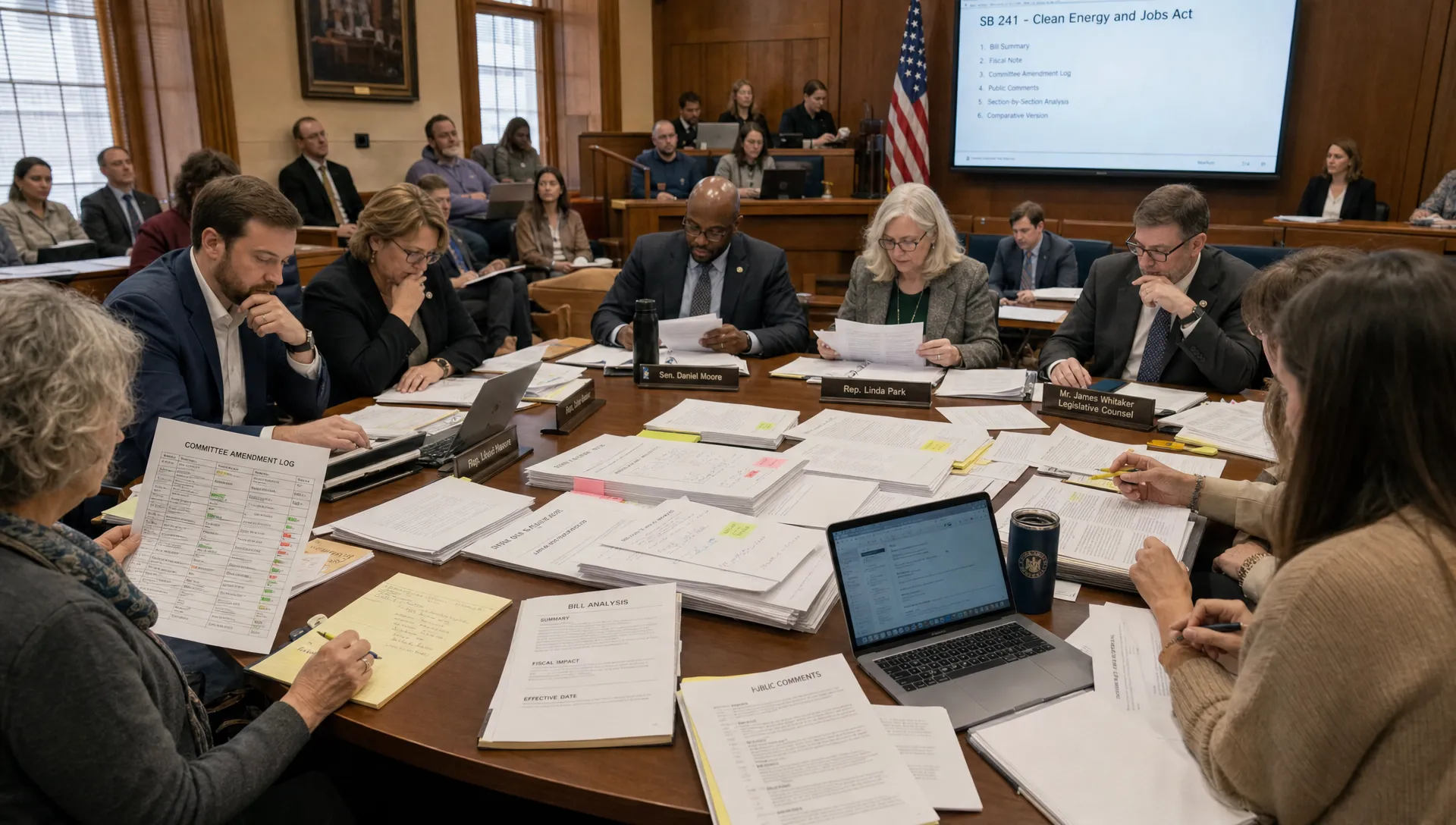
A law is not transparent if accountability ends at passage. Every major law should include a review plan tied to its original purpose. If the bill claimed to reduce delays, improve safety, expand access, or cut costs, then implementation should be measured against that claim.
This is also where academia can play a stronger role. The JustSocial manifesto imagines academia as an independent branch that can compile advisories, educate the public, and hold representatives to higher standards of evidence. In transparent lawmaking, universities and independent researchers could help review whether laws achieved their stated goals, while remaining open to public challenge and debate.
From livestreams to law ledgers
One of the strongest ideas in the JustSocial manifesto is that many tools needed for a more participatory public sector already exist. Social platforms, analytics systems, cloud storage, AI language models, and possibly blockchain-based confidentiality tools are not science fiction. The issue is institutional adoption and democratic design.
The manifesto sketches concepts such as rParliament, a system for registering documents, livestreams, and recordings of representative committees at city, state, and national levels. That idea fits naturally with transparent lawmaking. A committee livestream is useful, but a livestream connected to documents, amendments, claims, votes, and citizen responses is far more powerful. JustSocial has also argued for redesigning public committee livestreams as discursive civic spaces, rather than passive broadcasts.
Another manifesto concept is a Git-style repository for state laws. This is one of the clearest technical metaphors for transparent lawmaking. In software, version control allows people to see what changed, who changed it, when it changed, and why. Laws deserve at least that level of public traceability.
Imagine a legal repository where every bill has a version history. Citizens could compare drafts, track amendments, read explanations, see related public input, and understand how a final statute differs from the original proposal. Journalists could investigate influence more efficiently. Lawyers could interpret legislative intent with better evidence. Citizens could stop arguing from rumor and start arguing from the public record.
The Declaration on Parliamentary Openness has long emphasized that parliamentary information belongs to the public and should be complete, timely, accurate, and accessible. Discursive democracy adds the next layer: parliamentary reasoning should be accessible too.
How to include citizens without turning lawmaking into polling
A common objection to more civic participation is that citizens are busy, emotional, uninformed, or vulnerable to manipulation. Sometimes the objection is sincere. Sometimes it is a convenient excuse for keeping power concentrated.
Discursive democracy offers a better answer than either elite control or raw populism. It does not say that every public comment is equally informed. It says every public claim should be processable, answerable, and situated in a transparent record.
This distinction is crucial. A citizen can contribute lived experience without being a legal expert. A small business owner can identify compliance burdens that policymakers missed. A student can describe how an education bill feels from inside a classroom. A researcher can test whether those experiences reflect a wider pattern. A lawmaker can still make the final decision, but should explain how these contributions were weighed.
The JustSocial manifesto uses the ancient Greek Polis as a symbol of intimate civic belonging, where public life was not remote from everyday life. Modern states are too large to recreate the Polis in its original form. But digital infrastructure can restore some of its immediacy. The goal is not constant noise. The goal is meaningful contact between citizen and state.
Safeguards for transparent lawmaking
Discursive democracy will fail if it becomes another performative layer. It needs safeguards from the beginning.
| Risk | Why it matters | Safeguard |
|---|---|---|
| Participation theater | Citizens speak, but institutions ignore them | Require official response records and amendment rationales |
| Privacy harm | Civic identity data can expose or intimidate citizens | Use privacy-by-design systems, minimal data collection, and clear consent rules |
| Manipulated discourse | Bots, coordinated campaigns, or paid influence distort the record | Verify participation channels while protecting lawful anonymity where needed |
| Expert capture | Technical language excludes ordinary citizens | Require plain-language summaries and public challenge windows |
| Majority domination | Large groups can drown out minority experience | Separate volume from substance and highlight affected communities |
| AI distortion | Automated summaries can misread or erase important claims | Make summaries auditable, cite source comments, and allow corrections |
| Security failure | Lawmaking infrastructure becomes a target | Treat civic platforms as critical public infrastructure |
The privacy point deserves special attention. Transparent lawmaking does not mean every citizen must expose every political belief. The manifesto discusses willing and anonymous political identity, which points toward a hard but necessary balance: institutions need trustworthy civic signals, while citizens need protection from surveillance, retaliation, and social coercion.
What a political movement can demand now
Transparent lawmaking will not emerge automatically. Officials who benefit from opacity rarely volunteer to make their reasoning easier to audit. That is why this is political movement work.
Citizens, civic organizations, journalists, technologists, and reform-minded lawmakers can begin with practical demands:
- Every bill should have a public decision docket before major debate begins.
- Every committee agenda should identify the specific decisions under consideration.
- Every amendment should include a plain-language rationale and version comparison.
- Every public hearing should produce a synthesis of major claims, not only a transcript.
- Every major bill should have an evidence register with sources and contested claims.
- Every final vote should link to the reasoning record, not only the bill text.
- Every enacted law should include a review date tied to its stated goals.
- Every civic technology used in lawmaking should be auditable, privacy-protective, and publicly governed.
None of these demands requires abandoning representative democracy. They require representatives to become more visible, more responsive, and more honest about the tradeoffs they choose.
That is the heart of discursive democracy for transparent lawmaking: not rule by noise, but rule through public reason.
Frequently Asked Questions
Is discursive democracy the same as voting on every law? No. Discursive democracy focuses on the public exchange of reasons, evidence, objections, and responses. It can support voting, but its main purpose is to make institutional reasoning visible and accountable.
How is discursive democracy different from deliberative democracy? Deliberative democracy usually emphasizes structured discussion among selected or self-selected participants. Discursive democracy looks at the wider public record, including how arguments move through media, committees, civic platforms, expert advice, amendments, and official decisions.
Would transparent lawmaking slow government down? It may slow some rushed decisions, which can be healthy. But clear dockets, version histories, and public records can also reduce confusion, repeated disputes, and post-passage mistrust.
Can citizen input be meaningful if most people are not policy experts? Yes, if the process distinguishes between different kinds of contribution. Citizens can provide lived experience, local knowledge, values, warnings, and priorities. Experts can test claims and provide evidence. Lawmakers must then explain their judgment.
What is the first reform a legislature should adopt? Start with amendment traceability. If citizens can see exactly how a bill changed, why it changed, and which arguments influenced the change, the entire lawmaking process becomes easier to scrutinize.
Help make lawmaking visible
JustSocial exists to advance a future where citizens are not reduced to occasional voters and passive observers. Transparent lawmaking is one step toward that future: a public system where civic participation is heard, institutional reasoning is visible, and democracy becomes a daily practice rather than a periodic ritual.
If this vision resonates with you, explore JustSocial, read the manifesto, share the ideas, and consider how your own community could demand a clearer, more accountable lawmaking process.