Livestreaming a public committee is often treated as transparency by default. A camera is turned on, a meeting is broadcast, and the institution can say the public had access.
But access is not the same as influence. A three-hour committee livestream filled with procedural language, missing documents, unclear votes, and no response channel may technically be public, yet still leave citizens powerless. The democratic question is not only, “Can people watch?” It is, “Can people understand, respond, compare claims, and see whether their input affected what happened next?”
That is where discursive democracy becomes practical. For public committee livestreams, discursive democracy means designing the livestream as a structured civic space, not as passive video content. It turns committee broadcasts into a living record of public reasoning: what was proposed, who argued what, what evidence was used, what citizens asked, and what decision-makers did afterward.
This article outlines a practical model for making committee livestreams useful for civic participation, accountable governance, and the kind of continuous democracy described in JustSocial's manifesto, The Face of Democracy.
Why public committee livestreams matter
Committees are where much of public life is shaped before the public notices. Budgets are examined, regulations are drafted, education policies are debated, procurement questions are raised, and executive agencies are questioned. By the time an issue reaches a final vote, many options have already been filtered out.
That makes committee livestreams one of the most important democratic interfaces in modern government. They are not just recordings. They are a window into agenda setting, evidence selection, institutional priorities, and accountability.
Yet many livestreams fail citizens in predictable ways. They are difficult to find. They lack plain-language agendas. Documents are not linked to the exact discussion. Transcripts arrive late or not at all. Comments, if enabled, become chaotic and disconnected from the official process. Clips circulate on social media without context. Citizens watch, react, and move on, while the institution continues as before.
The JustSocial manifesto argues that the public sector still carries relics of older institutional designs while private technology has normalized searchable feeds, analytics, cloud storage, collaboration tools, and real-time interaction. Public committee livestreams are a clear example: the technology to create meaningful public visibility exists, but the civic process is often missing.
What discursive democracy adds to livestreams
Discursive democracy focuses on the quality of public discourse: who gets to speak, what frames are recognized, how reasons are exchanged, how evidence is surfaced, and how public meaning is formed. It is not the same as letting everyone shout in a chat box. It is also not the same as final voting.
For livestreams, discursive democracy adds structure around public speech so that contributions become legible, comparable, and reusable. A good discursive livestream does three things:
- It makes the committee's real decision visible before the meeting begins.
- It gives citizens formats for reasoned, evidence-linked input during and after the meeting.
- It produces public artifacts that show what was heard, what was ignored, and what happens next.
This matters because livestreams can either become political theater or democratic infrastructure. Without structure, a livestream may amplify the loudest voices, reward viral outrage, and make public participation feel pointless. With structure, it can help citizens, journalists, researchers, and representatives share a common record.
The JustSocial connection: from rParliament to the People’s Branch
In JustSocial's manifesto, Yuval D. Vered proposes rParliament as an app that would register documents, livestreams, and recordings of every representative committee at country, state, and city levels. The concept is not merely about watching politicians. It is about connecting each piece of video, comment, document, and user-generated content to a specific committee or vote.
That is exactly the discursive challenge. A democracy cannot depend on isolated moments of outrage. It needs structured civic memory.
The manifesto also proposes a “People’s Branch” of government: a standing democratic layer where citizens can express identity, opinion, and public judgment continuously, while institutions remain independent but required to measure and consider public opinion. Committee livestreams are a natural building block for that idea. They can become the place where the public sees government reasoning in real time and where government sees public reasoning in return.
The larger vision is not to replace elected officials with comment sections. It is to make representatives more precise listeners. A livestream designed for discursive democracy says: public reasoning should be visible, searchable, contestable, and connected to decisions.
A practical model: the discursive livestream stack
A public committee livestream should be designed as a process with stages. The video itself is only one layer. The democratic value comes from what happens before, during, and after the broadcast.
| Stage | Discursive function | Public artifact |
|---|---|---|
| Before the livestream | Clarify the real decision, agenda, evidence, and participation rules | Decision page, agenda, evidence shelf, participation promise |
| During the livestream | Let citizens follow, annotate, question, and compare claims in a structured way | Timestamped notes, moderated questions, claim cards |
| After the livestream | Convert discussion into public memory and accountability | Transcript, synthesis memo, response log, implementation tracker |
| Handoff to deliberation | Move from broad public discourse to smaller structured judgment | Options memo, unresolved questions, minority reports |
| Follow-through | Show whether the committee acted, delayed, rejected, or revised | Decision rationale, vote record, progress updates |
This stack is simple, but it changes the meaning of a livestream. Instead of being a one-way broadcast, it becomes a civic record that can feed deliberative democracy, oversight, journalism, public education, and future political action.
Before the livestream: publish the decision, not just the agenda
Most agendas tell people what will be discussed. That is not enough. Citizens need to know what is actually at stake.
A discursive livestream should begin with a public decision page. The page should explain, in plain language, the decision owner, the decision window, what options are currently on the table, what constraints exist, and what kind of public input is useful.
For example, instead of listing “transportation committee hearing on route optimization,” the page should say: “The committee is considering whether to reduce, redesign, or preserve three bus routes during the next budget cycle. Public input is needed on service impacts, alternatives, and tradeoffs by June 15.”
That small change transforms passive viewing into meaningful civic participation. People can prepare relevant comments, gather evidence, and understand whether the meeting is informational, advisory, or decision-making.
The pre-livestream page should include a participation promise. This is a short statement explaining how public input will be used. If comments will only be summarized, say so. If the committee must respond to the top recurring concerns, say so. If input will not affect the decision, do not pretend otherwise.
Transparency without an honest participation promise creates distrust. Discursive democracy depends on knowing the rules before the room starts speaking.
During the livestream: structure public input without silencing disagreement
The live layer is where many institutions get nervous. Open comments can become abusive, repetitive, manipulated, or legally risky. The solution is not to remove public input altogether. The solution is to moderate by process rather than viewpoint.
A useful livestream comment format might ask citizens to submit input in a simple structure: claim, reason, evidence, request. This does not force everyone to sound academic. It simply helps separate emotion, evidence, and action.
A citizen could write: “Claim: the proposed bus cut will isolate seniors near Oak Street. Reason: the nearest remaining stop is a 25-minute walk. Evidence: city map and senior center attendance records. Request: delay the vote until an accessibility analysis is published.”
That is far more useful than “This committee does not care about people.” The anger may be legitimate, but the structured version gives decision-makers, journalists, and other citizens something to examine.
Livestreams should also support timestamped annotation. When a committee member cites a statistic, citizens should be able to attach a question to that moment. When an expert presents testimony, the transcript should link to the supporting document. When a contradiction appears, it should be marked for follow-up instead of disappearing into the stream.
Moderation should be transparent. If a comment is hidden because it violates a rule, the rule should be cited. If a thread is closed because it is repetitive, the existing synthesis should be linked. The goal is not to sanitize politics. It is to keep disagreement usable.
After the livestream: publish receipts while memory is fresh
A livestream without post-meeting artifacts is like a courtroom with no record. People may have watched, but democratic memory disappears.
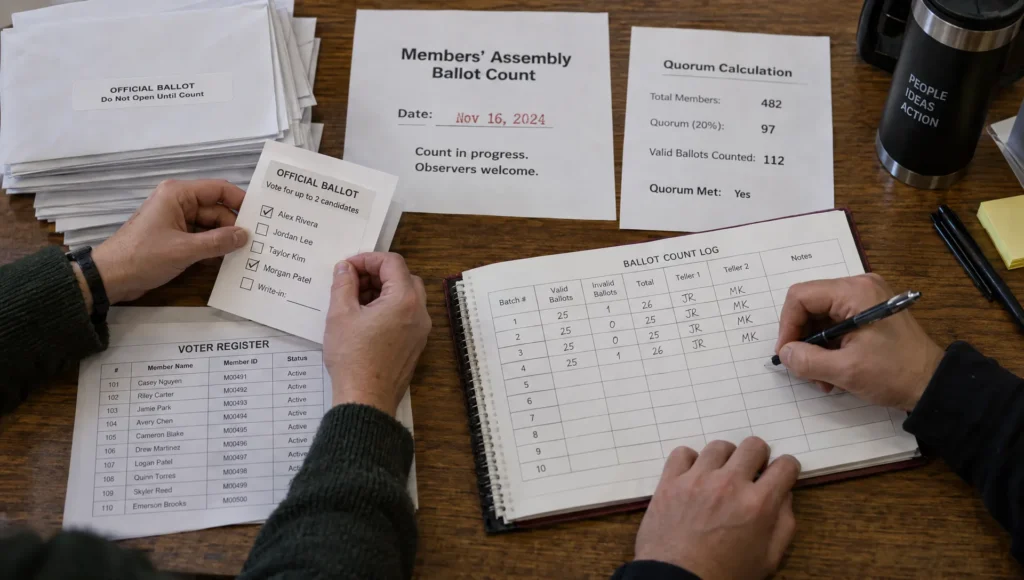
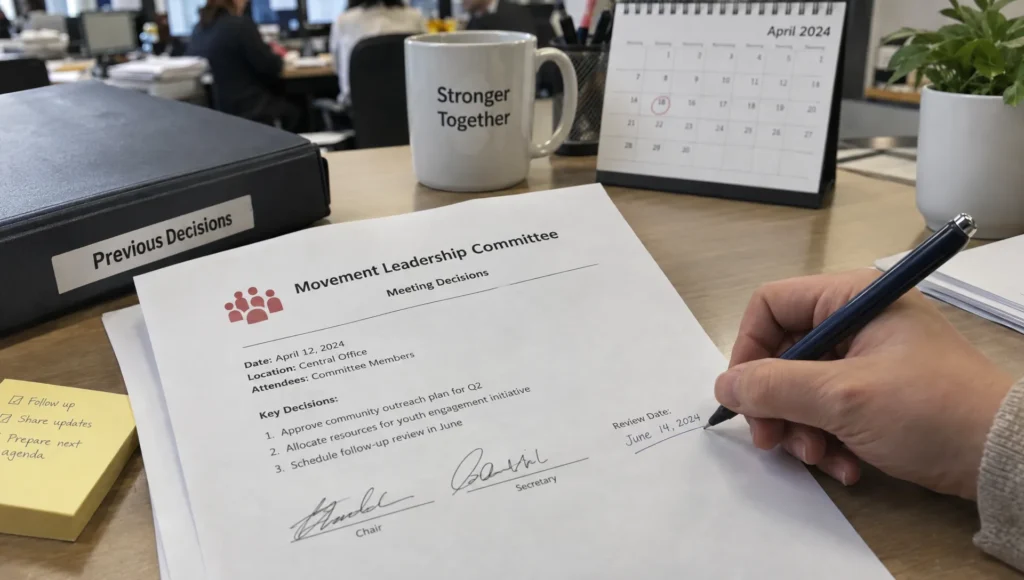
Within a reasonable time after the committee meeting, institutions should publish a transcript, a chaptered recording, a document index, a summary of major public claims, and a response log. The response log is especially important because it shows whether public input was acknowledged, corrected, rejected, or converted into further inquiry.
This is where public trust is built. Citizens do not need every official to agree with them. They do need to know that public reasoning entered the institutional record.
The minimum post-livestream package should include:
- A searchable transcript with timestamps.
- A list of documents discussed during the meeting.
- A synthesis of major public arguments and recurring concerns.
- A correction log for factual disputes raised during or after the stream.
- A decision note explaining what happens next.
- A follow-up tracker for assigned actions, deadlines, and responsible offices.
This fits the JustSocial idea of public “receipts.” A receipt is not propaganda. It is an inspectable record that lets outsiders verify process, evidence, and follow-through.
How livestreams feed deliberative democracy
Discursive democracy and deliberative democracy should work together, but they are not identical.
A livestream is usually too large, fast, and uneven to produce careful public judgment by itself. It is better understood as the discursive layer: it surfaces frames, stories, concerns, facts, disagreements, and questions. Deliberative democracy comes next, when a smaller and more structured group examines the evidence, weighs tradeoffs, and produces decision-ready options.
For example, a committee livestream may reveal five recurring concerns about a housing proposal: affordability, neighborhood density, parking, displacement, and environmental impact. A deliberative group can then take those concerns into a structured process, compare evidence, consult experts, and produce an options memo.
The livestream widens the public voice. Deliberation deepens the public judgment.
This division protects democracy from two opposite failures. One failure is elite decision-making that ignores public experience. The other is raw majoritarian reaction that never slows down to examine tradeoffs. A healthy process uses livestreams to open the public sphere, then uses deliberation to make civic input more rigorous.
Design safeguards for public committee livestreams
Public livestreams create risks. People may be harassed for speaking. Organized groups may flood the comments. Officials may cherry-pick convenient input. AI-generated comments may overwhelm moderators. Sensitive testimony may be exposed without consent.
These risks are real, but they are not arguments against public participation. They are arguments for better institutional design.
A discursive livestream should use safeguards such as privacy-by-design, proportionate identity checks, clear moderation rules, anti-spam controls, accessibility requirements, and appeal mechanisms. High-stakes input may require stronger eligibility checks, while low-stakes questions may allow anonymous or pseudonymous participation.
This connects to another JustSocial manifesto theme: technology should empower citizens without turning the state into a surveillance machine. The public should be heard, but not unnecessarily exposed. The state should measure public opinion, but not exploit identity data. Civic technology must therefore separate eligibility, public expression, moderation, and analytics wherever possible.
Accessibility is also a legitimacy issue. Captions, transcripts, multilingual summaries, mobile-friendly pages, screen-reader compatibility, and offline alternatives are not cosmetic. If only the most digitally fluent citizens can participate, the livestream will distort public opinion.
The operational workflow: committees need civic production teams
A good livestream is not only a technical event. It is a civic production workflow.
Committees need roles: agenda owner, document librarian, accessibility lead, moderator, fact-shelf editor, synthesis writer, and follow-through tracker. A small city committee may combine roles. A parliament may need dedicated teams. A political movement running a shadow public process may use volunteers.
The key is to treat democratic transparency as work that must be assigned, tracked, and completed. For administrative coordination, teams that already live inside Google Workspace might use a Google Workspace project management tool to track tasks like publishing agendas, assigning transcript review, preparing synthesis notes, and monitoring response deadlines. Sensitive civic data still requires separate governance and security decisions, but ordinary workflow discipline matters.
This is one of the manifesto's strongest practical insights: the public sector should adopt useful technological habits faster. Not every democratic problem is solved by software, but many democratic failures persist because no one owns the workflow.
Metrics that show whether livestreams are working
A livestream should not be judged by views alone. A viral clip may increase attention without improving civic participation. A small livestream with strong artifacts may do more for democracy than a massive stream with no follow-through.
Public institutions and movements should track metrics that reflect discursive quality and decision linkage.
| Metric | What it reveals | Why it matters |
|---|---|---|
| Agenda clarity | Whether citizens understood the real decision | Prevents symbolic participation |
| Evidence availability | Whether claims can be checked | Reduces misinformation and confusion |
| Structured input rate | How much input used claim, reason, evidence, request | Improves usability of public comments |
| Response coverage | How many recurring public concerns received a response | Shows whether officials listened |
| Transcript publication time | How quickly the public record became searchable | Supports journalism and oversight |
| Follow-through completion | Whether promised actions were completed | Converts transparency into accountability |
| Accessibility coverage | Whether captions, transcripts, language access, and alternate channels existed | Protects equal civic participation |
These metrics do not require ideological agreement. They ask a simpler question: did the process make public reasoning more visible, fair, and consequential?
Example: redesigning a committee livestream for a school budget vote
Imagine a school board finance committee is livestreaming a discussion about reducing after-school programs.
In the ordinary model, the agenda says “budget adjustment discussion.” Parents discover the livestream late. Comments flood in. Some people accuse the board of harming children. Others demand fiscal discipline. The meeting ends, clips circulate, and the final vote happens two weeks later with little shared understanding.
In a discursive model, the committee publishes a decision page one week earlier. It states the budget gap, the affected programs, the legal constraints, and the possible options. It links to enrollment data, cost tables, transportation data, and prior program evaluations. Parents, teachers, students, and taxpayers can submit structured input before and during the livestream.
During the stream, moderators group questions by theme: student safety, working parents, special education impacts, fiscal alternatives, staffing, and equity. Timestamped questions are linked to the relevant discussion. The board does not have to answer every comment live, but it commits to a response memo.
After the stream, a transcript and synthesis memo are published. The response memo explains which concerns changed the proposal, which were rejected, and which require more evidence. If the final decision cuts programs anyway, the public can still see the rationale, tradeoffs, and accountability trail.
That is not utopia. It is basic democratic hygiene.
What a political movement can do without waiting for permission
A political movement does not need to control government to improve public committee livestreams. It can model the standard it wants institutions to adopt.
A movement can create public watch pages for important committee meetings, summarize agendas in plain language, build evidence shelves, host structured comment collection, publish synthesis notes, and send decision-ready questions to officials. It can also compare committees against a livestream transparency scorecard and praise institutions that improve.
This is aligned with JustSocial's broader approach: build civic capacity, not just campaign attention. A movement that publishes better records than the institution creates public pressure without relying only on outrage. It also trains citizens to participate continuously.
The risk is becoming a partisan clipping machine. A movement should therefore separate advocacy from recordkeeping. It can clearly label opinion, preserve context around clips, publish correction logs, and allow dissenting summaries when internal disagreement remains.
Discursive democracy does not require neutrality about values. It requires honesty about process.
The deeper goal: make public life concrete again
In the manifesto's discussion of the Greek polis, public life is described as immediate, concrete, and meaningful. Citizens did not experience the state as a distant abstraction. They experienced it as communal life.
Modern states are too large to recreate the ancient polis directly, and we should not romanticize its exclusions. But technology can help restore some of its civic intimacy at scale. Public committee livestreams are one place to begin. They can make the state visible in its actual working form: agenda by agenda, question by question, vote by vote.
The goal is not endless meetings. It is not government by comment section. It is a public sphere where citizens can see how power reasons, where officials can see how citizens reason, and where both are connected by records that survive the news cycle.
That is the practical promise of discursive democracy for public committee livestreams.
Frequently Asked Questions
What is discursive democracy in the context of public committee livestreams? Discursive democracy means designing livestreams so public reasoning becomes structured, visible, and useful. It includes clear agendas, evidence links, moderated questions, transcripts, synthesis notes, and public responses.
Is a livestream enough to make a committee transparent? No. A livestream helps, but real transparency requires context, searchable records, linked documents, public input rules, and follow-through. Otherwise, citizens can watch without understanding or influencing anything.
How is this different from deliberative democracy? Discursive democracy opens and structures the public conversation. Deliberative democracy takes selected issues into a deeper process where participants weigh evidence and tradeoffs to produce decision-ready recommendations.
Should public committee livestreams allow anonymous comments? Sometimes. Low-stakes questions may allow anonymous or pseudonymous input, while high-stakes participation may require stronger eligibility checks. The key is to balance safety, inclusion, accountability, and privacy.
Can a political movement use this model even if government refuses to cooperate? Yes. Movements can create shadow evidence shelves, structured watch pages, synthesis memos, and public scorecards. This can improve civic participation while pressuring institutions to publish better records.
Help build the infrastructure for continuous democracy
Public committee livestreams should be more than passive broadcasts. They should become civic infrastructure: searchable, structured, accessible, and connected to real decisions.
JustSocial exists to advance that kind of continuous direct democracy through public transparency, civic technology, and citizen empowerment. If you believe committee work should be visible and public input should leave a trace, explore the manifesto, share the idea, or contribute your skills as a developer, designer, product thinker, researcher, organizer, or civic volunteer.
The future of democracy will not be built by livestreaming power alone. It will be built by making power answerable to a public that can see, reason, respond, and follow through.