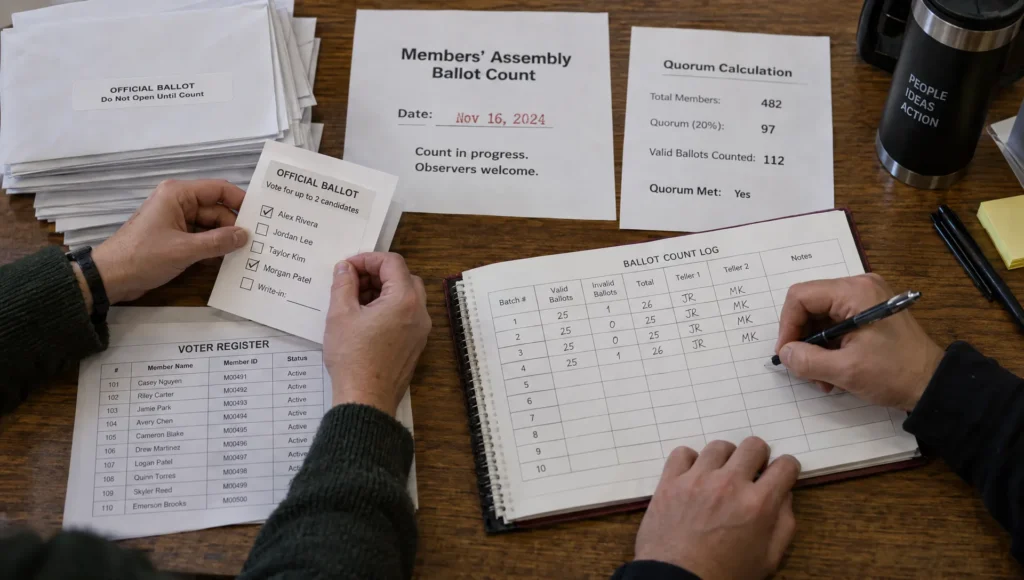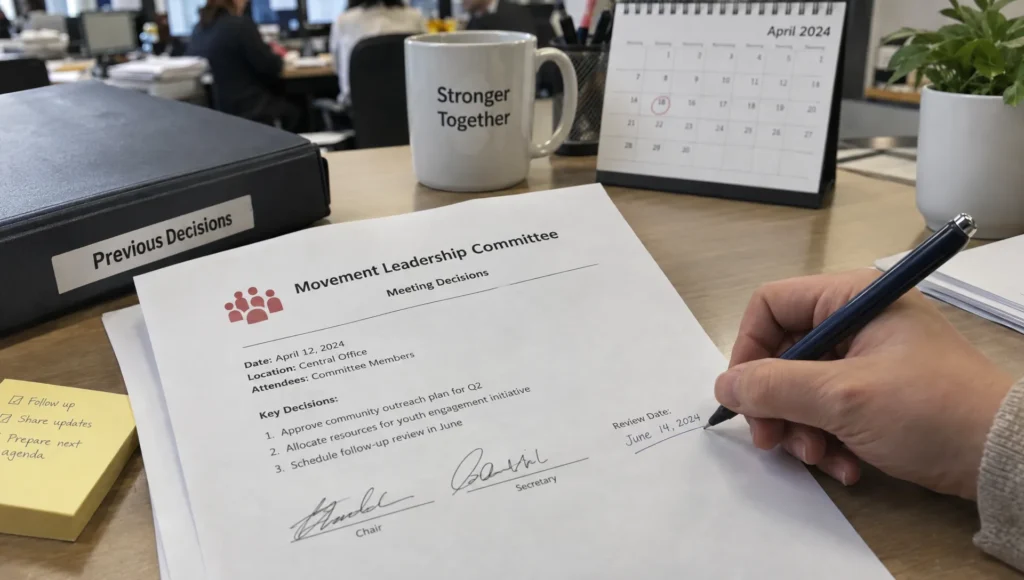
Civic tech adoption is rarely blocked by a lack of software. It is blocked by a lack of trust, legitimacy, clear public purpose, and daily habits of participation.
A political movement that wants communities or governments to adopt civic technology should not behave like a startup trying to push a product into the market. It should behave like a democratic reform builder: prove usefulness, protect citizens, create visible feedback loops, and make participation feel meaningful enough to repeat.
That distinction matters. A platform can be downloaded in minutes, but civic participation is a social practice. People need to understand why they are being asked to participate, what happens with their input, who is accountable, and whether the process is worth their time.
JustSocial’s manifesto argues that modern public systems still carry many relics of the Industrial Revolution while citizens already live inside a digital society. The challenge is not merely to digitize old politics. The challenge is to build a more continuous, participatory public life where technology helps people be heard between elections, not only during them. That is the lens through which civic tech adoption should be approached.
Adoption starts with a democratic promise, not a feature list
Many civic tech projects begin with features: voting, comments, dashboards, petitions, committee archives, public forums, or analytics. Features matter, but they do not create adoption by themselves.
The first tactic is to define a participation promise.
A participation promise answers a simple question: if a citizen gives time, attention, knowledge, or judgment to this process, what will happen next?
For example, a city consultation platform that says “share your opinion” is weak. A platform that says “the top five community priorities will be reviewed in a public committee meeting, with written responses published within 30 days” is stronger. The difference is not technical. It is institutional.
A political movement should push every civic tech initiative to publish its participation promise before launch. That promise should be specific enough for citizens to judge whether the process respected them afterward.
Strong participation promises usually include:
- The public decision or issue being addressed
- Who can participate and under what rules
- How input will be reviewed, summarized, and protected
- What officials, organizers, or institutions commit to do next
- When the public will receive a response or outcome report
This connects directly to the manifesto’s argument that citizens should be more than voters, taxpayers, and consumers. Civic tech adoption becomes meaningful only when the citizen is treated as a continuous participant in public life.
Choose problems people already feel
A movement should not begin with abstract democratic theory, even when theory is important. Adoption grows faster when civic technology is attached to public problems people already recognize.
Instead of launching a broad “democracy platform,” start with a concrete issue such as school transportation, neighborhood safety, public budgets, local environmental complaints, housing policy, classroom priorities, or municipal service delays. People are more likely to try a new civic tool when it helps them act on something they already discuss at home, in parent groups, at work, or in community chats.
This is where a political movement can use its organizing power. Movements hear grievances before institutions do. They know which issues are emotionally real, which communities feel ignored, and where public frustration has no structured channel.
A good adoption tactic is to map civic pain points before selecting technology. Ask what people are already trying to do without effective tools. Are they trying to understand a policy? Coordinate action? Compare proposals? Contact representatives? Track promises? Vote on community priorities? Follow committee work?
Once the need is clear, technology can serve the process instead of dominating it.
For a deeper look at involving citizens before public systems are designed, JustSocial has argued that civic participation should shape public tech from the beginning rather than being added after launch.
Build a trust stack before asking for scale
Civic tech touches sensitive questions: identity, political preference, community conflict, public money, and institutional accountability. Adoption will stall if citizens suspect that participation can be manipulated, ignored, exposed, or weaponized.
A political movement should therefore build a trust stack before it tries to scale.
The trust stack is the set of visible protections that make participation feel safe and legitimate. It is not only cybersecurity. It is also governance, communication, and public accountability.
| Trust layer | Adoption question it answers | Practical tactic |
|---|---|---|
| Purpose clarity | Why are we using this tool? | Publish the issue, decision scope, and expected output |
| Process rules | Is the process fair? | Show eligibility, moderation, deadlines, and appeal rules |
| Privacy protection | Am I safe participating? | Explain what data is collected, why, and who can access it |
| Identity integrity | Are participants real? | Use appropriate verification without exposing unnecessary personal data |
| Transparency | Will results be hidden or spun? | Publish summaries, raw non-sensitive data where possible, and response reports |
| Accountability | Who must act afterward? | Name responsible bodies, timelines, and follow-up obligations |
The manifesto’s technology section raises the tension clearly: public participation systems may need identification, anonymity, analytics, and strong safeguards at the same time. Movements should not dismiss that tension. They should make it central to adoption.
Citizens do not need every technical detail, but they do need plain-language explanations. If a platform uses anonymized participation, say what that means. If moderation exists, publish the rules. If officials can see aggregated data, explain what they can and cannot see.
Trust is not a slogan. It is a design requirement.
Combine discursive democracy and deliberative democracy
A common adoption mistake is choosing between open discussion and structured decision-making. Civic tech needs both.
Discursive democracy gives people room to speak, challenge, explain, comment, and form public meaning together. It is the messy but necessary layer of democratic expression. People need spaces where they can react to events, share lived experience, test arguments, and discover that others have similar concerns.
Deliberative democracy adds structure. It slows the conversation down enough for evidence, tradeoffs, expert input, minority perspectives, and reasoned recommendations to matter. It turns noise into judgment.
A political movement should use discursive spaces to surface issues and deliberative spaces to refine them.
For example, an open community platform might reveal that many parents are concerned about school schedules. A deliberative process can then bring parents, teachers, students, administrators, and experts into a structured review of options. The output might be a public recommendation, a ranked list of tradeoffs, or a formal proposal for a local authority.
The OECD has documented the growing use of deliberative processes in public decision-making, especially through citizens’ assemblies and panels. Its report on the “deliberative wave” notes that well-designed processes can help public authorities address complex policy problems by giving representative groups of citizens time, information, and facilitation to reach considered judgment. That lesson should guide civic tech adoption: open participation is powerful, but it becomes stronger when connected to structured deliberation.
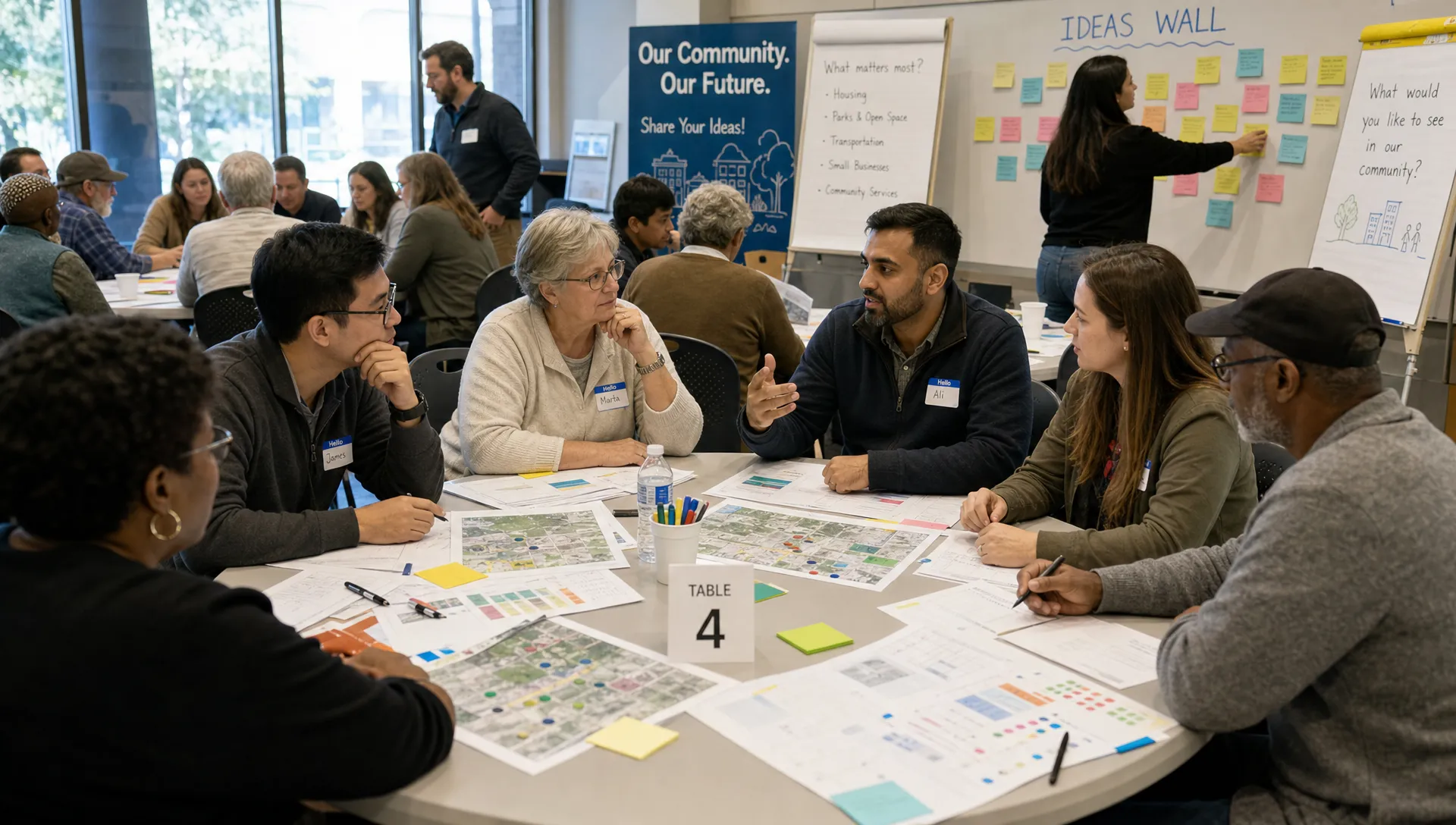
Create small public victories
Adoption grows when people see that participation changes something. Not everything. Not immediately. But something visible.
A political movement should design early civic tech efforts around small public victories. These are concrete outcomes that prove the tool is not symbolic.
A small public victory might be a published response from a city official, a revised school policy, a public archive of committee materials, a community budget priority added to an agenda, or a transparent comparison of citizen proposals.
The key is to close the loop. If people participate and then hear nothing, adoption declines. If they see a visible result, even a partial one, they are more likely to return.
This is especially important because many citizens have learned to treat participation as performance. They sign petitions, comment online, attend meetings, or vote, but rarely see how their input moved through the system. Civic tech should reverse that pattern.
A simple public loop can work like this:
- Citizens submit input on a defined public issue
- Organizers summarize the input and publish the summary
- A responsible institution reviews the summary in a public setting
- The institution publishes what it accepted, rejected, or postponed
- Citizens can respond to the outcome and track next steps
This is not complicated, but it is often missing. A political movement can make this loop a non-negotiable standard for adoption.
Recruit institutions without surrendering independence
Civic tech adoption usually needs institutional contact. Governments, schools, public agencies, unions, professional associations, universities, and community organizations all hold pieces of legitimacy, data, authority, or access.
But a political movement must be careful. If it becomes fully dependent on official approval, reform can be slowed, softened, or buried. If it refuses all institutional cooperation, it may remain outside the places where decisions are made.
The tactic is constructive pressure.
Constructive pressure means building tools, evidence, and public demand in a way that invites institutions to participate while making inaction visible. A movement can say: here is the public issue, here is the participation process, here is the citizen input, here is the transparent report, and here is the institution that now needs to respond.
This approach fits the manifesto’s view of representatives as pipelines for gathering consensus and implementing public policy. The goal is not to humiliate public officials for its own sake. The goal is to make listening operational.
Movements can also partner with universities or civic researchers to improve legitimacy. Academic involvement can help with methodology, bias reduction, evaluation, and public education. That echoes the manifesto’s proposal that academia should play a stronger independent role in public life.
Make adoption local before making it national
National civic tech visions are inspiring, but adoption is often local first. People learn democratic habits in places they can see: classrooms, neighborhoods, parent committees, city councils, professional communities, and local campaigns.
This is why a political movement should treat local adoption as a proving ground. A neighborhood process can test whether people understand the participation promise. A school community can test whether students and parents feel respected. A city district can test whether public officials respond to citizen input.
Local adoption also reduces risk. If the process fails, the lesson is contained. If it succeeds, the movement gains a story, data, and a model that can travel.
The manifesto’s idea of a modern Cosmopolis is ambitious, but ambitious systems need humble beginnings. Continuous civic participation cannot be declared into existence. It has to be practiced repeatedly at human scale.
JustSocial has explored this practical side in its guide to building civic tech pilots, where the emphasis is on proving democratic value through real public issues rather than abstract demonstrations.
Design for the busy citizen
Civic tech often fails because it is designed for the already-engaged. The same people who attend meetings, read policy documents, and follow political news will use it. Everyone else stays away.
A movement that wants adoption must design for the busy citizen: the parent between shifts, the student on the bus, the worker with ten minutes at night, the small business owner who cannot attend a weekday hearing, the citizen who cares but does not speak in political language.
This requires simplicity without condescension. Civic tools should make the issue understandable, show the stakes, offer different levels of participation, and avoid forcing every person into the same time commitment.
A citizen might participate by reading a short neutral brief, voting on priorities, submitting lived experience, joining a deliberative session, reviewing an official response, or volunteering to help summarize public input. Not every person needs to do everything.
This matters for civic participation because democracy should not reward only those with free time, professional confidence, or institutional fluency. If civic tech reproduces existing participation gaps, it has failed the democratic test.
Use movement teams as adoption bridges
Technology adoption is social. People often try new civic tools because someone they trust explains why it matters.
A political movement should train small civic teams to serve as adoption bridges. These teams can help communities understand the process, answer basic questions, collect feedback, support accessibility, and document barriers.
The best adoption teams are not only marketers. They are stewards of democratic quality. They watch for confusion, exclusion, bad faith behavior, unclear rules, and broken feedback loops. They help translate between citizens, organizers, technologists, and institutions.
A useful team might include a community organizer, a policy researcher, a facilitator, a technical volunteer, and a communications lead. The exact roles can vary, but the function is the same: make participation easier, safer, and more consequential.
This also prevents a common civic tech mistake: assuming that the platform is the movement. It is not. The platform is infrastructure. The movement is the human network that gives it purpose and pressure.
Measure adoption by democratic value, not vanity metrics
Downloads, registrations, and page views can be useful, but they do not prove democratic adoption. A platform can attract attention while failing to influence public life.
A political movement should measure adoption through democratic value. That means tracking whether participation is broad, informed, trusted, and connected to decisions.
Useful adoption metrics include:
- Return participation rate across multiple issues
- Diversity of participants compared with the affected community
- Number of public decisions connected to citizen input
- Time between participation and institutional response
- Percentage of processes with published outcome reports
- Citizen trust in the process before and after participation
- Number of proposals improved through deliberation
These metrics are harder than vanity metrics, but they are more honest. They also help a movement resist the temptation to become just another attention machine.
The manifesto criticizes the way political culture often reduces people to periodic voters and consumers. Measuring democratic value is one way to avoid repeating that pattern in digital form.
Avoid the three adoption traps
Civic tech adoption can be damaged by three recurring traps.
The first is the spectacle trap. This happens when a movement uses technology mainly to generate attention, outrage, or symbolic participation. It may grow quickly, but citizens eventually realize that nothing changes.
The second is the bureaucracy trap. This happens when institutions adopt civic tech as a controlled consultation layer with no real influence. The interface looks modern, but the power structure remains untouched.
The third is the purity trap. This happens when reformers refuse imperfect progress because the first version is not the full democratic vision. Ambition is necessary, but adoption requires iteration.
A strong political movement avoids all three. It seeks attention, but connects attention to action. It works with institutions, but demands accountability. It holds a large vision, but builds through practical steps.
The adoption roadmap for movements
A political movement can use the following roadmap to move from idea to adoption without losing democratic integrity.
| Phase | Main goal | Movement tactic | Proof of progress |
|---|---|---|---|
| Listen | Identify real civic needs | Map public pain points and ignored communities | A clear issue with affected participants |
| Promise | Define legitimacy | Publish the participation promise and process rules | Citizens know what will happen next |
| Protect | Build trust | Clarify privacy, identity, moderation, and accountability | Participants feel safe enough to engage |
| Discuss | Surface public meaning | Use discursive democracy to gather stories and arguments | Concerns and proposals become visible |
| Deliberate | Improve judgment | Use structured deliberative democracy for tradeoffs | Recommendations become more informed |
| Respond | Close the loop | Require public answers from organizers or institutions | Outcomes are published and traceable |
| Repeat | Build habit | Run the process again on another issue | Participation becomes normal, not exceptional |
This roadmap does not require a perfect national platform on day one. It requires disciplined democratic practice.
Civic tech adoption is cultural reform
The deepest lesson for any political movement is that civic tech adoption is not only technical adoption. It is cultural reform.
People must learn that their voice can enter a public process and return as visible influence. Institutions must learn that listening is not a favor. Technologists must learn that democratic legitimacy is not the same as user engagement. Organizers must learn that anger can mobilize people, but only structure can keep them involved.
That is why the manifesto’s emphasis on leaving behind industrial-era social structures is so relevant. The future of democracy will not be built by copying old public meetings into digital forms. It will be built by creating continuous, transparent, and participatory systems that make public life feel close again.
The ancient Polis mattered because citizens experienced political life as immediate. Modern societies are too large and complex to recreate that world directly, but civic technology can help recover part of its intimacy: the feeling that public life is not somewhere else, controlled by someone else, spoken in a language no one else can enter.
A political movement can make that future adoptable by starting with trust, proving value locally, combining open discourse with structured deliberation, and insisting that participation must lead somewhere.
That is how civic tech becomes more than software. It becomes democratic muscle memory.
Frequently Asked Questions
What is the most important tactic for civic tech adoption? The most important tactic is creating a clear participation promise. Citizens need to know what issue they are influencing, how their input will be used, who is responsible for responding, and when outcomes will be published.
How can a political movement build trust in civic technology? A movement can build trust by publishing process rules, protecting privacy, explaining identity verification, making moderation transparent, showing how results are summarized, and closing the loop with public response reports.
Why do discursive democracy and deliberative democracy matter for adoption? Discursive democracy allows broad public expression, while deliberative democracy helps citizens weigh evidence, tradeoffs, and proposals more carefully. Civic tech adoption is stronger when both forms work together.
Should civic tech adoption start locally or nationally? Local adoption is usually more practical at the beginning. Schools, neighborhoods, municipalities, and community groups offer visible problems, faster feedback, and lower-risk opportunities to prove democratic value.
How should movements measure civic tech adoption? Movements should measure democratic value, not only registrations or traffic. Useful indicators include repeat participation, diversity of participants, institutional response time, published outcomes, and whether citizen input affected real decisions.
Help build the next layer of democratic participation
JustSocial is a political movement working toward continuous civic participation, transparent public systems, and technology that helps citizens be heard between elections. If that vision speaks to you, read the JustSocial manifesto, share it with others, and consider how your skills, community, or institution could help turn democratic participation into daily practice.