A parliament can be technically public and still feel closed to the people it claims to represent. Debates may be televised, bills may be uploaded, and voting records may exist somewhere online, yet most citizens still encounter parliament as a distant institution that speaks in procedure, party discipline, and last-minute headlines.
That gap is where civic participation becomes essential. An open parliament is not simply a parliament that publishes information. It is a parliament designed so citizens can see what is happening, understand what is at stake, deliberate before decisions are made, and trace whether public input influenced the final outcome.
This is the democratic upgrade JustSocial argues for in its broader vision: moving from citizens as periodic voters to citizens as continuous participants in public life. The JustSocial manifesto frames this as part of a necessary break from outdated industrial-era institutions toward a more participatory, technology-enabled political culture.
What an open parliament should actually mean
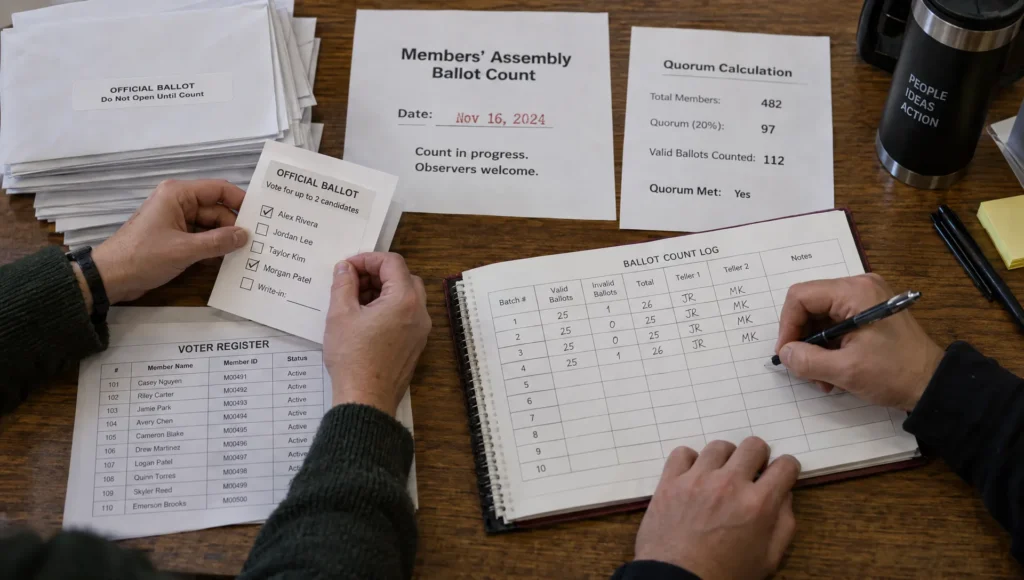
The phrase “open parliament” is often reduced to transparency: livestreams, published minutes, accessible agendas, and voting records. Those things matter. Without them, citizens cannot monitor power. But openness cannot stop at observation.
A genuinely open parliament should answer four democratic questions:
- Can citizens know what parliament is doing before the decision is already made?
- Can they understand the issue without needing legal or procedural expertise?
- Can they contribute arguments, evidence, and lived experience in a structured way?
- Can they see how representatives responded to public input?
If the answer to those questions is mostly “no,” then parliament is open only in the narrowest sense. It is visible, but not participatory. It is documented, but not accountable. It allows citizens to watch power, but not meaningfully engage with it.
That distinction matters because representative democracy is under pressure worldwide. The problem is not only that people distrust politicians. It is that many citizens no longer believe public institutions are built to hear them between elections. When participation is limited to voting every few years, public frustration has nowhere constructive to go. It spills into outrage, apathy, conspiracy, or permanent campaign warfare.
An open parliament should transform that energy into structured civic participation.
From spectators to participants
Modern parliaments were designed for a slower political age. Citizens could vote, read newspapers, join parties, attend meetings, or send letters to representatives. Today, people discuss public issues every hour through digital networks, but parliamentary systems rarely know how to receive that public intelligence responsibly.
This creates a strange mismatch. Society has become highly networked, but parliament often remains procedurally isolated. Citizens can comment endlessly on social media, yet those comments rarely become evidence within legislative deliberation. Communities can identify local problems quickly, yet parliamentary agendas may move according to party priorities, lobbying pressure, or bureaucratic inertia.
Civic participation for a more open parliament means building a bridge between public conversation and legislative action. Not every citizen comment should become law. Not every online vote should override representative judgment. But public input should be visible, organized, and taken seriously enough that representatives must respond to it.
A useful way to think about this is the difference between access and influence.
| Open parliament layer | What citizens need | Why it matters |
|---|---|---|
| Information access | Agendas, bills, amendments, votes, committee records, and plain-language summaries | Citizens cannot participate in what they cannot see or understand |
| Discursive participation | Public spaces to discuss issues, ask questions, and compare arguments | Democracy depends on public reasoning, not only individual preference |
| Deliberative participation | Structured forums where diverse citizens weigh evidence and trade-offs | Better decisions require listening, learning, and changing minds |
| Institutional response | Public explanations of how input was accepted, rejected, or modified | Participation loses legitimacy when it disappears into a void |
| Accountability trail | Searchable records connecting proposals, debates, votes, and outcomes | Citizens need to audit the path from promise to policy |
This is where JustSocial’s idea of continuous direct democracy becomes relevant. The point is not to abolish representative institutions overnight. It is to surround them with a living civic layer so elected officials can no longer claim to represent the public while operating in near-total detachment from it.
For a deeper exploration of that institutional layer, JustSocial’s article on civic participation through a People’s Branch develops the idea of permanent public participation as part of government itself.
Discursive democracy: the public conversation parliament should hear
A more open parliament begins with discursive democracy, the democratic value of public reasoning through discussion, argument, disagreement, and persuasion. In a healthy democracy, citizens are not just preference holders. They are participants in a shared conversation about what should be done.
The difficulty is that today’s public conversation is fragmented. Some of it happens on social platforms optimized for attention rather than understanding. Some happens in closed messaging groups. Some happens in professional policy spaces inaccessible to ordinary citizens. Some happens in protests, podcasts, comment sections, town halls, classrooms, and community organizations.
Parliament usually hears only a filtered version of this conversation. Media headlines amplify conflict. Lobbyists package interests. Party strategists measure public mood through polls. But the deeper discursive layer, the reasons people hold their views, the lived experiences behind policy demands, and the trade-offs citizens are willing to accept, often remains invisible.
An open parliament should make public discourse legible without turning democracy into mob rule. That requires civic technology designed for democratic purpose, not just engagement metrics.
For example, citizens should be able to follow a bill and see:
- The core question the bill is trying to solve
- The strongest arguments for and against it
- The communities most affected by it
- The evidence submitted by experts, civil society, and citizens
- The changes made during debate
- The final vote and each representative’s explanation
This would make parliament less like a remote theater and more like a public reasoning system. Citizens would not need to become full-time political professionals to understand the work of legislation.
The JustSocial manifesto connects this to the ancient idea of the Polis, where political life was immediate, meaningful, and tied to citizenship itself. Modern states are far larger than Greek city-states, but technology gives us a way to recover some of that civic intimacy at scale. The goal is not nostalgia. It is a modern Cosmopolis: a society where public life becomes participatory again.
Deliberative democracy: slowing down enough to decide well
Discursive democracy broadens the public conversation. Deliberative democracy adds structure, time, and responsibility. It asks citizens to do more than react. It asks them to weigh evidence, listen to people unlike themselves, consider consequences, and form judgments that can survive scrutiny.
This matters because open parliament cannot mean instant polling on every question. Some issues are too complex for yes-or-no reactions. Tax policy, education reform, constitutional design, national security oversight, climate adaptation, housing, and public health all require trade-offs. People may begin with strong opinions, then shift after hearing evidence or encountering another community’s reality.
The OECD’s landmark report on innovative citizen participation and deliberative institutions documented the rise of citizens’ assemblies, juries, panels, and other deliberative processes across democratic systems. These models are not perfect, but they show that ordinary citizens can handle complex public questions when given time, balanced information, and a fair process.
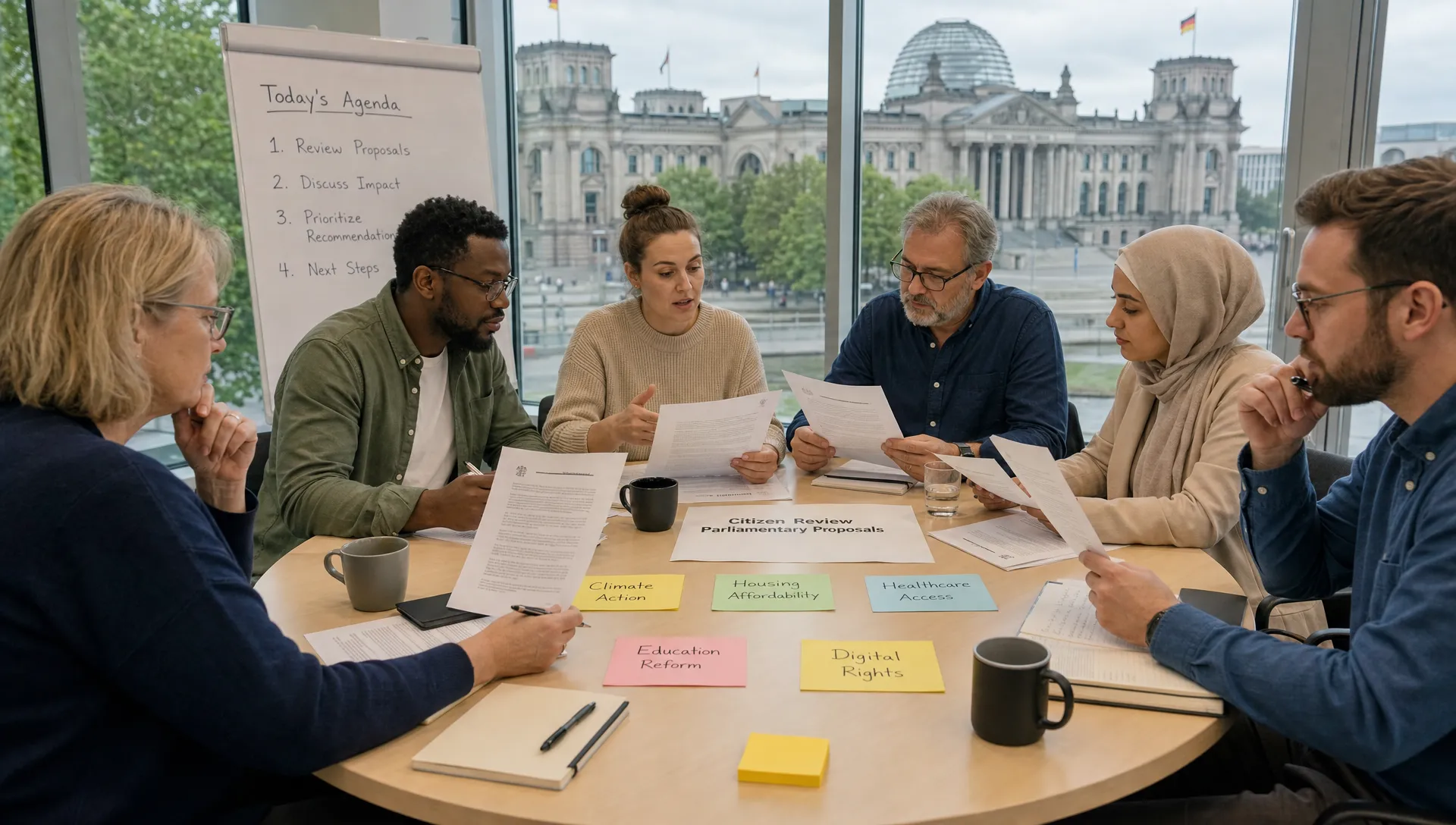
Parliament should use deliberative methods more directly. A legislative committee considering a major reform could convene a representative citizen panel before final votes. A budget committee could ask residents to deliberate on spending priorities. An education committee could include students, parents, teachers, employers, and researchers in a structured process before changing curricula.
This is especially aligned with JustSocial’s call for educational reform and citizen empowerment. A society that expects people to participate must also educate people for participation. Civic participation is not only a political function. It is a learned civic capacity.
Why transparency alone is not enough
Transparency is necessary, but it can become symbolic if the public cannot use it. A parliament can publish thousands of documents and still remain functionally closed if those documents are impossible to navigate.
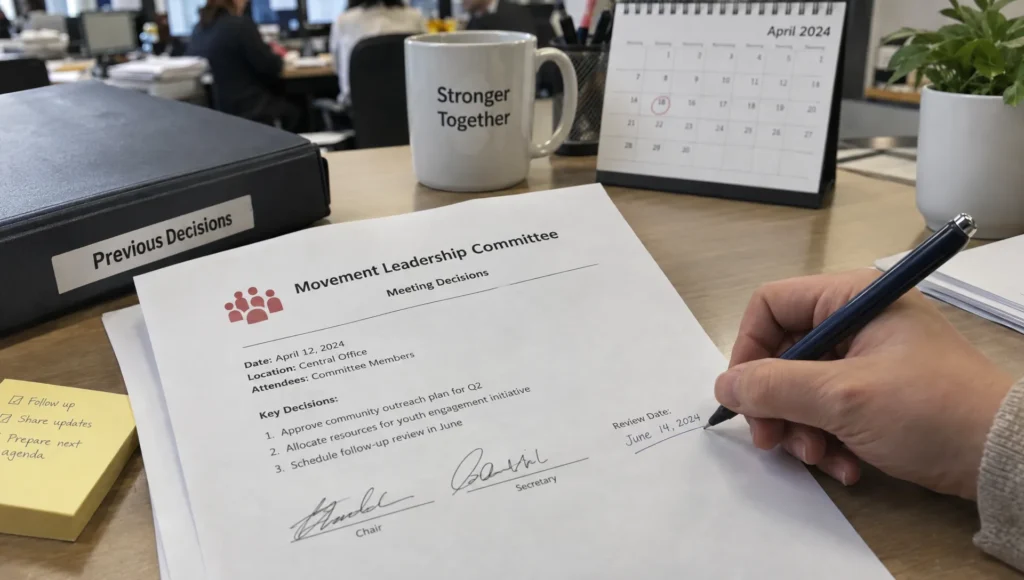
This is one reason committee work matters so much. Much of the real shaping of policy happens before the dramatic final vote. Amendments, expert testimony, coalition negotiations, and procedural decisions often determine what legislation actually becomes. JustSocial has addressed this in its writing on civic participation for committee transparency, emphasizing that the public must be able to follow the spaces where policy is genuinely formed.
But a more open parliament should go even further. It should create an accountability trail across the entire legislative lifecycle.
Imagine if every bill had a public digital record that worked more like a transparent project repository than a static PDF archive. Citizens could see the original proposal, every amendment, who introduced each change, which arguments supported it, which evidence was cited, which public comments were considered, and how each representative voted.
The JustSocial manifesto even suggests a “Git repository with all state laws recorded, organized and cross-referenced.” That idea is powerful because law is not merely text. Law is a living public codebase. If citizens are governed by it, they should be able to inspect how it changes.
This does not require parliament to surrender expertise. It requires parliament to expose process. Experts would still advise. Representatives would still decide. Courts would still interpret. But the path from public problem to public law would become easier to audit.
The role of technology in a more open parliament
Technology cannot save democracy by itself. Poorly designed platforms can make civic life worse by rewarding anger, manipulation, surveillance, or shallow participation. But democratic technology, built with the right safeguards, can help parliament become more open than any paper-based institution could be.
The Global Parliamentary Report 2022, published by the Inter-Parliamentary Union and UNDP, emphasizes that public engagement is becoming central to parliamentary effectiveness and legitimacy. The challenge is not whether parliaments should engage the public. The challenge is how to do it in ways that are inclusive, trusted, and meaningful.
A civic participation platform for an open parliament should be designed around democratic safeguards:
- Verified civic identity with strong privacy protections
- Options for anonymous public input where appropriate
- Clear rules against manipulation, bots, and coordinated deception
- Accessibility for people with disabilities, language barriers, and limited digital literacy
- Public auditability of processes, not exposure of private citizen data
- Independent oversight, including academic and civil society review
This connects directly to JustSocial’s proposal for technology-enabled participation, including public social platforms, analytics that help representatives understand public opinion, and secure systems that allow citizens to weigh in continuously. The most important design principle is that technology should serve democratic judgment, not replace it.
A one-click online voting platform may be useful for some community decisions. But national policy requires more than impulse. The better model is a participation ecosystem: open information, public discussion, structured deliberation, secure voting when appropriate, and transparent response by institutions.
Representatives should become better listeners, not weaker leaders
One common objection to deeper civic participation is that it will weaken representatives. If citizens are constantly weighing in, what are elected officials for?
The answer is that representatives should become better democratic processors. Their role should shift from isolated decision-makers to accountable interpreters, facilitators, and implementers of public will, constitutional principles, expert knowledge, and long-term responsibility.
This is not a small change. It challenges the culture of modern party politics, where representatives often behave as loyal agents of party leadership rather than as active channels between the public and the state. In the JustSocial manifesto, elected officials are described as needing to become more like pipelines for gathering consensus and implementing public policy. That is a provocative framing, but it captures the direction of reform: less ruling class, more public service.
An open parliament would not require representatives to follow every majority opinion blindly. Sometimes leadership means explaining why a popular demand is unconstitutional, harmful, unaffordable, or based on false information. But representatives should have to explain that reasoning publicly, in relation to the civic input they received.
That is the key difference. In a closed parliament, public opinion can be ignored without a trace. In an open parliament, disagreement with the public must be reasoned, visible, and accountable.
Civic participation as the foundation of a political movement
A more open parliament will not emerge from software alone. It requires a political movement committed to changing expectations. Citizens must stop accepting the idea that democracy is mainly a ritual of election day. Reformers must demand institutions that treat public input as a normal part of governance. Technologists must build tools that respect privacy, complexity, and human dignity. Educators must prepare people to participate well.
This is where JustSocial’s movement perspective matters. The manifesto is not just a product proposal. It is a cultural argument: the public sector has fallen behind the technological and social reality of modern life, and citizens must demand a democratic upgrade.
That movement can begin with practical demands:
- Every parliamentary agenda should be published early in plain language
- Every bill should have a public explanation of purpose, impact, cost, and trade-offs
- Every amendment should be traceable to its sponsor and reasoning
- Every major reform should include structured citizen deliberation before final passage
- Every representative should publish explanations for consequential votes
- Every public input process should show what was considered and why it mattered or did not matter
These demands are not radical in spirit. They are democratic common sense. What makes them transformative is applying them continuously, across the full life of parliament.
What citizens can do now
Most citizens cannot redesign parliament tomorrow. But civic participation begins before institutional reform is complete. A citizen who wants a more open parliament can start by choosing one issue, following its legislative path, and organizing others around it.
Track the relevant committee. Read the bill summary if one exists. Compare what representatives say publicly with how they vote. Ask for plain-language explanations. Share verified information with your community. Join or create deliberative spaces where people are expected to give reasons, not just slogans.
If you want a broader set of entry points, JustSocial’s guide to civic participation in a representative democracy offers practical ways to influence public decisions between elections.
The deeper point is this: open parliament is not a favor granted by politicians. It is a democratic standard citizens must learn to expect. Once enough people expect it, organize around it, and build tools for it, closed parliamentary culture becomes harder to defend.
Frequently Asked Questions
What is civic participation in parliament? Civic participation in parliament means citizens can engage with legislative work beyond voting in elections. It includes following bills, submitting input, joining public deliberation, monitoring representatives, and holding institutions accountable for how decisions are made.
How is an open parliament different from a transparent parliament? A transparent parliament publishes information. An open parliament goes further by making that information understandable, participatory, and connected to institutional response. Transparency lets citizens see. Openness helps citizens influence and audit.
What is the difference between deliberative democracy and discursive democracy? Discursive democracy focuses on broad public conversation, argument, and exchange of ideas. Deliberative democracy uses structured processes where citizens examine evidence, hear different perspectives, and form considered judgments on public issues.
Does civic participation replace elected representatives? No. Civic participation should make representatives more accountable and better informed. Representatives may still make final decisions, but they should be expected to listen, explain, and show how public input was considered.
Can digital democracy be safe and trustworthy? It can be, but only with serious safeguards. Systems need privacy protection, identity verification where necessary, anti-manipulation rules, accessibility, transparent governance, and independent oversight. Technology should strengthen democratic judgment, not reduce politics to impulsive clicks.
Help build the open parliament democracy needs
A more open parliament is not just an administrative reform. It is a shift in power, from citizens as spectators to citizens as continuous participants in public life.
JustSocial exists to promote that shift through continuous direct democracy, civic technology, public transparency, and citizen empowerment. If this vision resonates with you, explore the movement, read the manifesto, share the ideas, and consider how your skills or community can help build the next democratic layer.
The future of parliament should not be closed rooms with occasional broadcasts. It should be a living public institution, visible, understandable, deliberative, and answerable to the people every day.