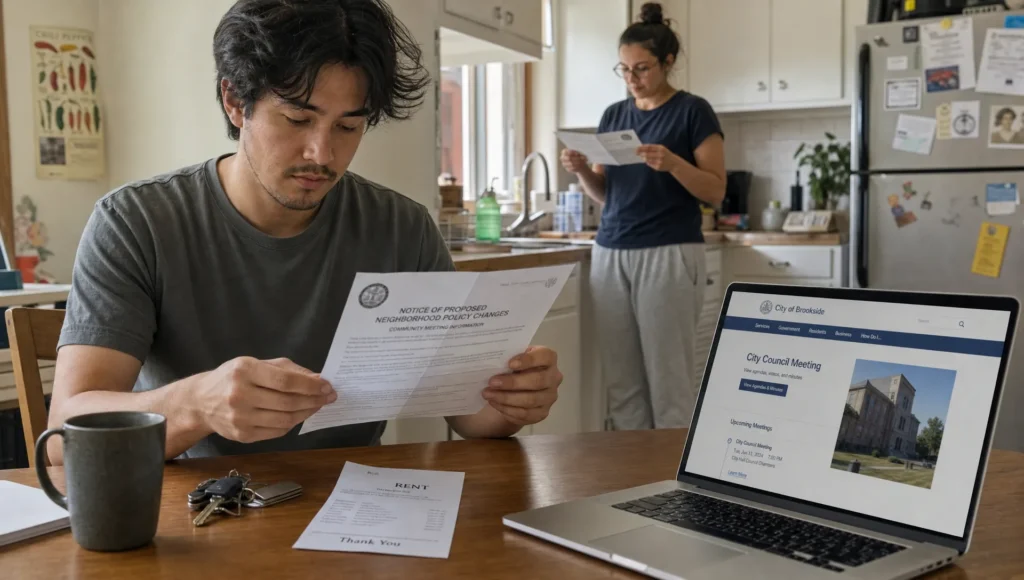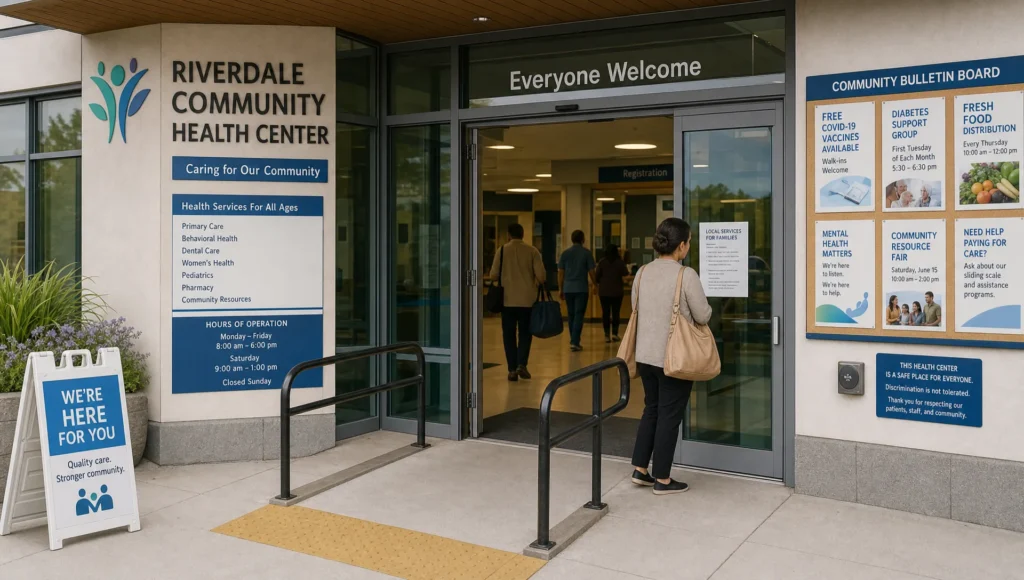
Emergency preparedness is usually treated as a technical duty: stockpiles, sirens, shelters, evacuation maps and command centers. Those matter, but civic participation is the part that determines whether plans fit the people who must follow them. A community cannot improvise trust during a wildfire, missile attack, flood, cyber incident or public health emergency. It has to build trust before the emergency arrives.
For a political movement like JustSocial, this is not a side issue. Emergency readiness is a test of whether democracy works between elections, when citizens need information, influence and clear channels for action. Preparedness should not reduce people to passive recipients of instructions. It should help them become informed partners in the safety of their neighborhood, school, workplace and city.
Why civic participation belongs in emergency preparedness
Most emergency plans fail at the point where they meet real life. A shelter may exist, but residents may not know how to reach it. A government may publish instructions, but the language may not fit the community. A hospital may have a surge plan, but nearby caregivers, volunteers and transport providers may not be integrated into it.
That gap is democratic as much as logistical. Citizens carry information that institutions often miss: who needs medication refrigeration, which roads flood first, which families lack cars, where elders live alone, which local groups can mobilize food and which rumors spread fastest.
The Sendai Framework for Disaster Risk Reduction 2015-2030 explicitly calls for all-of-society engagement in reducing disaster risk. In plain terms, preparedness improves when public institutions, civil society, businesses, researchers and residents plan together.
JustSocial’s manifesto argues that industrial-era public systems still ask people to participate rarely, indirectly and too late. Emergency management often repeats that pattern. Citizens are consulted after the plan is written or contacted only when danger is already present. The alternative is continuous participation: a public that helps shape preparedness before the siren sounds.
Civic participation before a crisis: the missing preparedness layer
The strongest role for civic participation is before an emergency, when there is still time to deliberate, educate and redesign systems. This is where communities can turn lived experience into public knowledge.
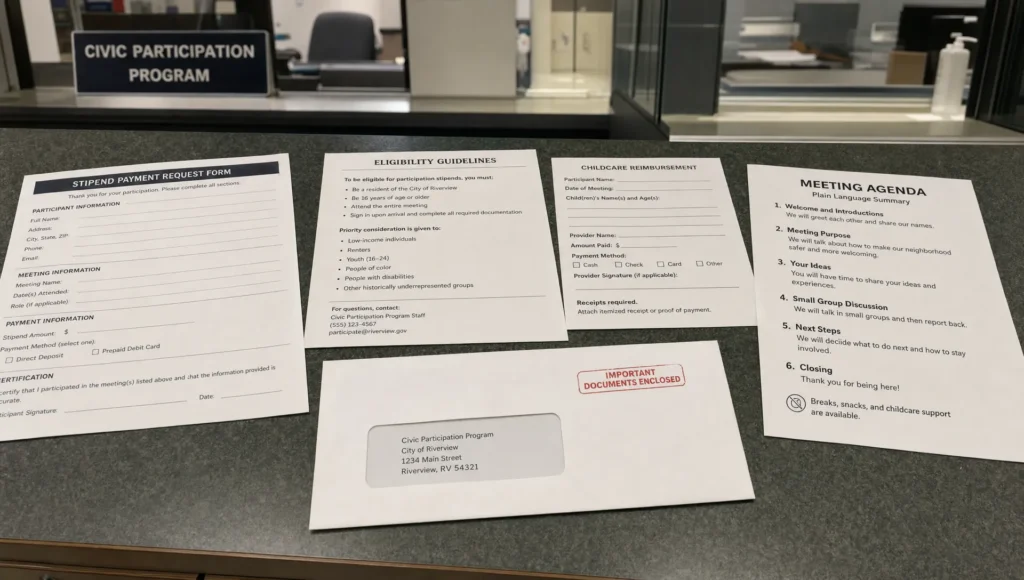
A practical preparedness process should invite residents to help map local risk, test communication channels, review evacuation routes and identify vulnerable groups without exposing personal data unnecessarily. It should also give people receipts, meaning clear records of what was heard, what changed and what could not change.
| Preparedness task | What citizens contribute | What government should return |
|---|---|---|
| Risk mapping | Local hazards, access barriers and informal support networks | Public risk maps and prioritized fixes |
| Communication testing | Language gaps, trusted messengers and rumor patterns | Revised alert templates and outreach plans |
| Shelter planning | Accessibility needs, capacity concerns and location feedback | Updated shelter lists and transport options |
| Recovery planning | Community assets, volunteer capacity and economic concerns | Transparent recovery roles and timelines |
This makes preparedness more accurate, but it also changes the civic culture around emergency response. People are more likely to follow instructions when they recognize their own input in the plan.
Deliberative democracy turns hard tradeoffs into legitimate choices
Emergency preparedness includes uncomfortable tradeoffs. Which neighborhoods receive flood defenses first? Where should shelters be located? How much money should go to backup power, public education, cyber resilience or volunteer training? These are not only expert questions. They are public choices with moral consequences.
Deliberative democracy helps communities face those choices with structure. Instead of a loud meeting where only the most available or angry residents dominate, deliberation gives people time, information, facilitation and competing options. Participants can hear from emergency professionals, social workers, engineers, disability advocates, parents, business owners and local volunteers before making recommendations.
This does not mean every operational decision becomes a referendum. During an emergency, trained responders need authority to act. The democratic work belongs mainly before and after the crisis: before, to set priorities and design plans; after, to review what happened and decide what must change.
A citizens’ panel, community assembly or local preparedness jury can examine a narrow question, such as whether to fund neighborhood cooling centers or generator support for medical equipment. The final decision may still sit with elected officials, but those officials should have to answer to a public record of reasoned citizen input.
Discursive democracy improves the public signal during emergencies
Discursive democracy focuses on the quality of public conversation. In emergencies, that conversation can save lives or cause harm. Rumors, panic, distrust and political spin can move faster than official updates, especially when residents already feel ignored.
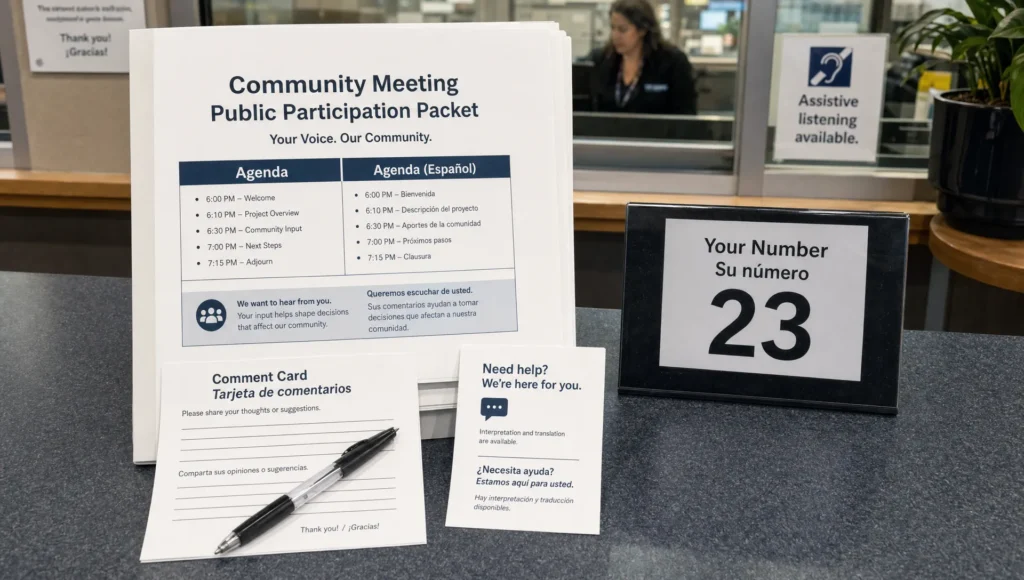
Better discourse starts long before a crisis. Local governments can host scenario discussions, publish plain-language preparedness explainers and build channels where residents can ask questions without being mocked, dismissed or buried in bureaucracy. Community groups can translate information, challenge misinformation and surface concerns that official agencies may not see.
The goal is not to make everyone agree. The goal is to make disagreement useful. If residents distrust a proposed evacuation route, that concern should be captured, tested and answered. If a minority community says alerts are not reaching them, the response should not be public relations. It should be redesign.
This is where emergency preparedness connects to JustSocial’s wider argument for a public sphere that is continuous and measurable. A society that already knows how to discuss policy in structured, transparent ways will not have to build those habits under pressure.
Public tech can make preparedness continuous
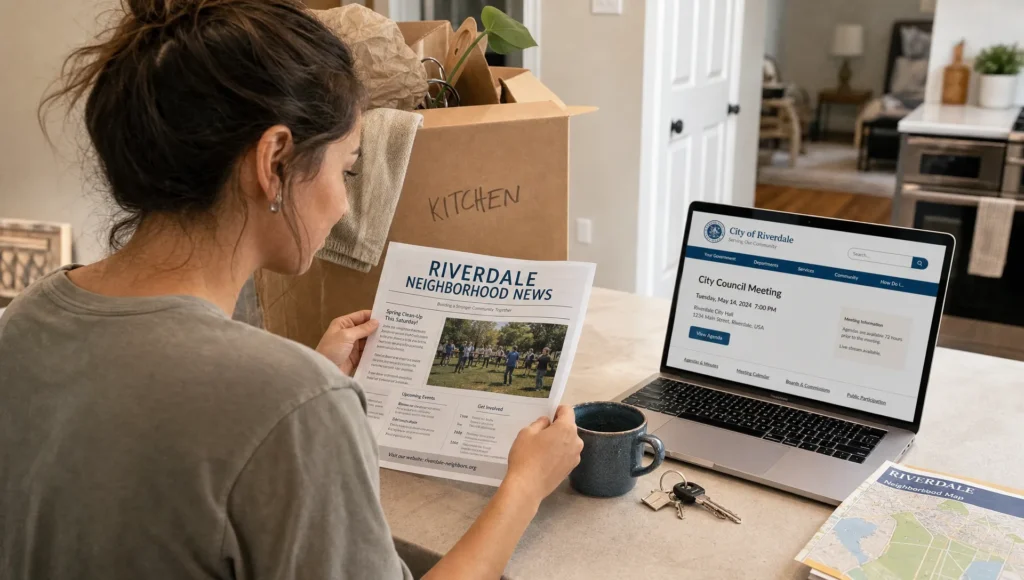
Preparedness meetings held twice a year are not enough. Public institutions need civic infrastructure that lets residents report risks, vote on local preparedness priorities, follow committee decisions and see whether commitments were fulfilled.
That does not require replacing professionals. It requires connecting professional responsibility with public visibility. A modern city should be able to show residents which emergency plans exist, when they were last reviewed, what evidence supports them, which department owns each action and where citizen feedback changed the plan.
This is close to the JustSocial argument that democracy needs better digital infrastructure, not just more speeches about engagement. For a deeper version of that case, see the article on why civic participation needs better public tech. Emergency preparedness is one of the clearest use cases because delays, confusion and missing accountability have immediate consequences.
Public tech also makes preparedness less dependent on personality. A good mayor, minister or agency head should not be the only reason residents are heard. The process itself should require listening, documentation and follow-up.
A practical participation model for emergency readiness
A community does not need to build a perfect system before doing useful work. It can start with a repeatable model that connects public input to official decisions.
The model should be simple: ask a concrete preparedness question, invite affected communities, provide trustworthy information, deliberate openly, publish the decision trail and review outcomes after drills or real events. This is civic participation as public maintenance, not political theater.
Neighborhood preparedness assemblies
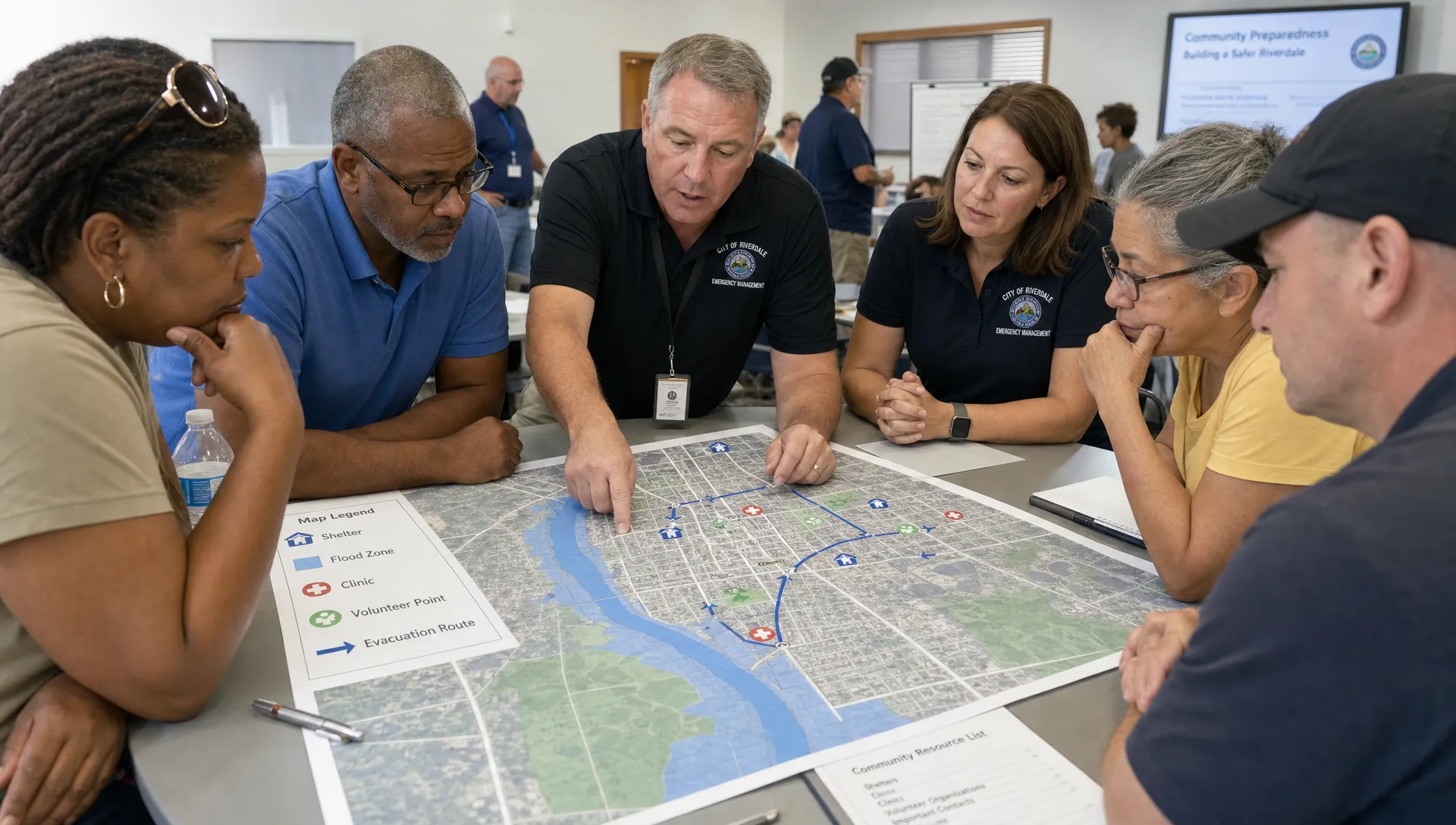
A neighborhood assembly can meet quarterly to review local risks and readiness. The agenda should be narrow enough to produce results: one meeting for heat waves, one for evacuation, one for shelter access, one for volunteer coordination.
The assembly should include residents who are usually missing from official discussions: renters, disabled residents, caregivers, small business owners, religious leaders, youth representatives, first responders and local service providers. Their task is not to replace emergency managers. Their task is to make plans more grounded.
Participatory emergency budgets
Cities already make preparedness budget choices. Citizens should be able to help rank small but meaningful investments: public first-aid training, backup communication equipment, school preparedness projects, neighborhood cooling spaces, community generators or accessible transport improvements.
Participatory emergency budgeting works best when the amount is clear, the eligible projects are realistic and the final vote is tied to implementation updates. Even a modest budget can teach residents how preparedness decisions are made and what constraints public agencies face.
Drills with public feedback receipts
Emergency drills often test agencies, but they should also test the public interface. Did residents receive the alert? Was the message understandable? Did people know where to go? Did vulnerable residents have support? Did volunteers know who was coordinating them?
After every drill, the government should publish a short feedback receipt: what was tested, what residents reported, what failed, who owns the fix and when the next review will happen. Without that loop, participation becomes extraction. Citizens give time and experience, then never learn whether it mattered.
Trust, privacy and auditability are emergency assets
Emergency preparedness increasingly depends on data: contact lists, medical vulnerabilities, shelter capacity, incident logs, volunteer credentials, infrastructure risks and digital alert systems. That data can help protect people, but it can also expose them if handled carelessly.
Trust requires boundaries. Governments should collect only what is needed, explain why it is needed, limit access, set retention rules and publish oversight procedures. Anonymous or aggregated input should be used whenever individual identification is not necessary.
Compliance is not a bureaucratic luxury here. It is part of resilience. Public agencies and civic tech teams that manage sensitive preparedness systems need evidence trails, risk controls, incident records and clear responsibilities. For European organizations, tools for compliance evidence and audit packs for GDPR, NIS2 and DORA can help make that operational discipline concrete.
Auditability also protects democracy. When emergency powers expand, citizens should be able to see who made decisions, what data was used, which rights were affected and when temporary measures ended. Preparedness should strengthen public trust, not normalize opaque governance.
Schools, workplaces and service communities can become readiness hubs
JustSocial’s manifesto connects political reform with educational reform, arguing that schools should move away from passive industrial models and toward more holistic, participatory learning. Emergency preparedness is a natural place to apply that idea.
Students can learn geography, science, ethics, media literacy and citizenship through preparedness projects. A class can map safe walking routes, interview elders about heat risk, evaluate public messages or design a multilingual family preparedness guide. The point is not to frighten children. The point is to teach them that community life is something people build together.
Workplaces can do similar work. Instead of treating emergency planning as an HR form, employers can coordinate with local authorities, nearby schools, clinics and transport providers. Service communities, including veterans, reservists, first responders and trained volunteers, can help translate operational knowledge into public readiness.
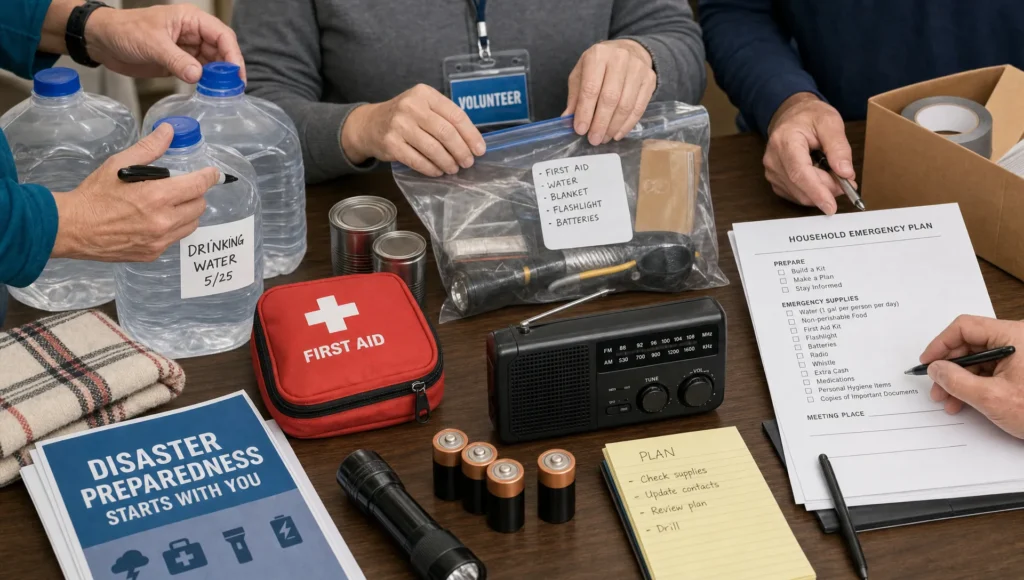
Households still matter. Resources like Ready.gov’s emergency planning guidance are useful starting points for family plans, but family readiness should connect to neighborhood readiness. A household plan is stronger when the surrounding community knows how to communicate and cooperate.
What JustSocial’s manifesto adds to emergency preparedness
The JustSocial manifesto returns again and again to one democratic claim: citizens should not be reduced to voters, taxpayers and consumers. In the context of emergency preparedness, that claim becomes practical. People should be treated as co-designers of public safety.
The manifesto’s idea of a People’s Branch is especially relevant. A permanent participation layer could collect public input on preparedness, connect it to committees and publish measurable signals for officials, journalists and researchers. The article on civic participation through a People’s Branch explores this model in more detail.
The Polis, as discussed in the manifesto through Charles Wayper’s political thought, gives another useful lens. In the Greek idea of the Polis, public life was immediate. Citizens did not experience the state as a remote machine. They experienced it as a shared life. Modern societies are much larger, but digital tools can help recover some of that immediacy if they are designed for participation, not manipulation.
Emergency preparedness is one place where the abstract becomes concrete. The road, the shelter, the alert, the school, the clinic and the volunteer network are where democracy either reaches people or fails them.
Frequently Asked Questions
How does civic participation improve emergency preparedness? It brings local knowledge into planning, improves trust in official instructions, identifies vulnerable groups earlier and creates accountability after drills or real emergencies.
Should citizens make decisions during an active emergency? Operational command should remain with trained responders during active danger. Citizens should have stronger roles before and after emergencies, especially in priority setting, preparedness design, drills and public review.
What is the difference between deliberative democracy and discursive democracy in this context? Deliberative democracy helps people weigh evidence and tradeoffs before recommending decisions. Discursive democracy improves the wider public conversation so concerns, questions and disagreements become useful inputs instead of noise.
What can a local community do first? Start with one concrete risk, such as heat, flooding, fire, cyber disruption or evacuation. Hold a structured local meeting, collect resident input, assign responsibilities and publish a short record of what will change.
How does this connect to a political movement? A political movement can turn scattered concern into organized pressure for better systems. In this case, the goal is continuous democratic participation that makes emergency preparedness more transparent, inclusive and effective.
Build emergency preparedness that hears the people
Preparedness is not only a government checklist. It is a democratic habit. Communities that practice participation before a crisis are better positioned to communicate, cooperate and recover when pressure arrives.
JustSocial exists to promote continuous democratic participation through technology, transparency and citizen empowerment. If that vision resonates, start locally: gather people around one preparedness problem, document what they know and demand a public process that turns their knowledge into action. Safer communities begin with citizens who are heard before they are endangered.