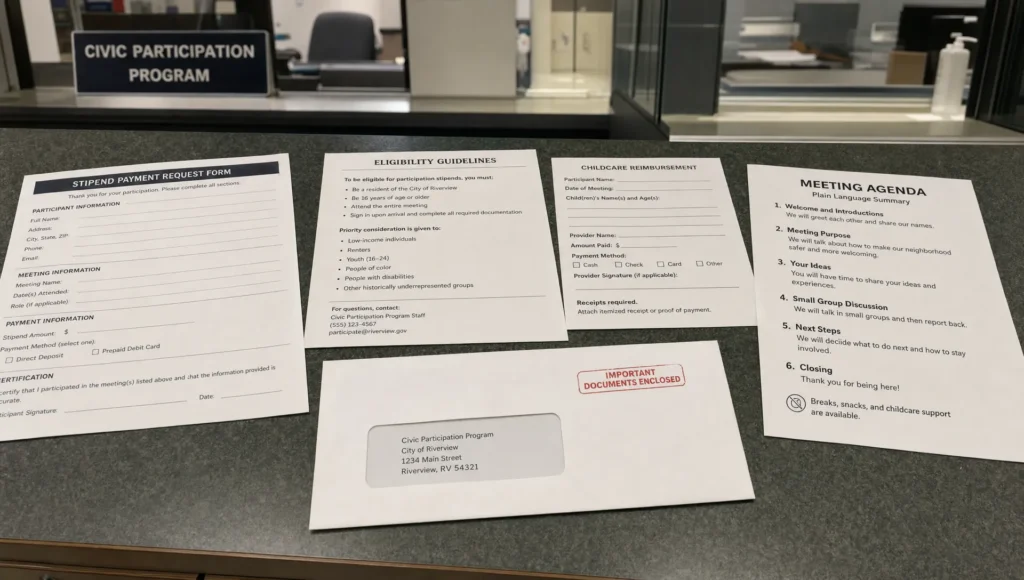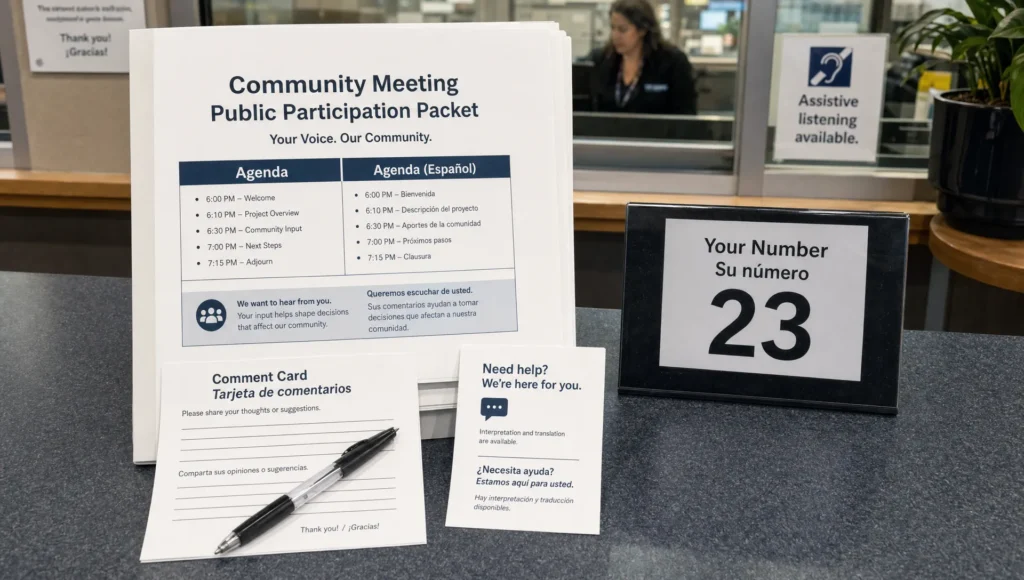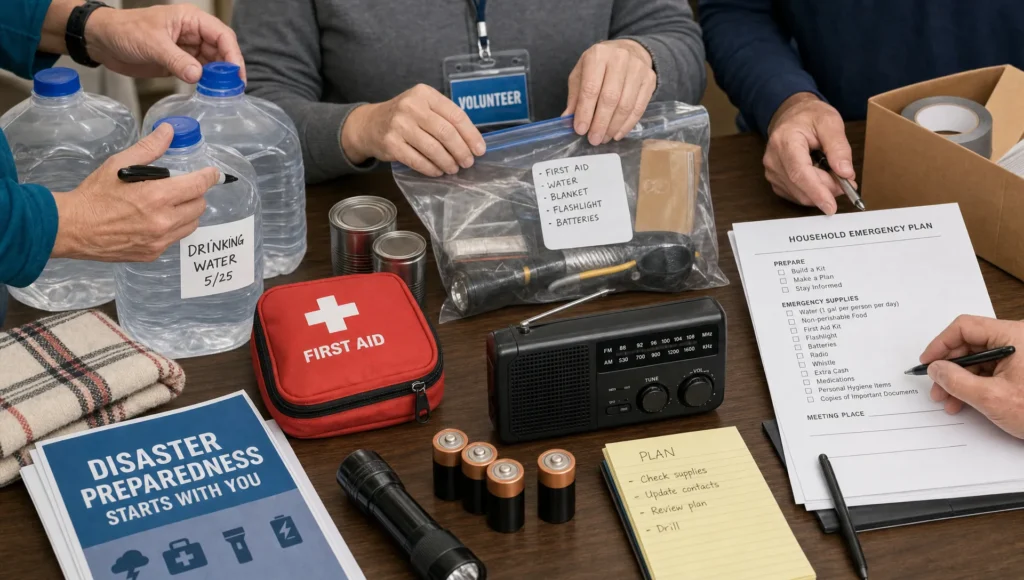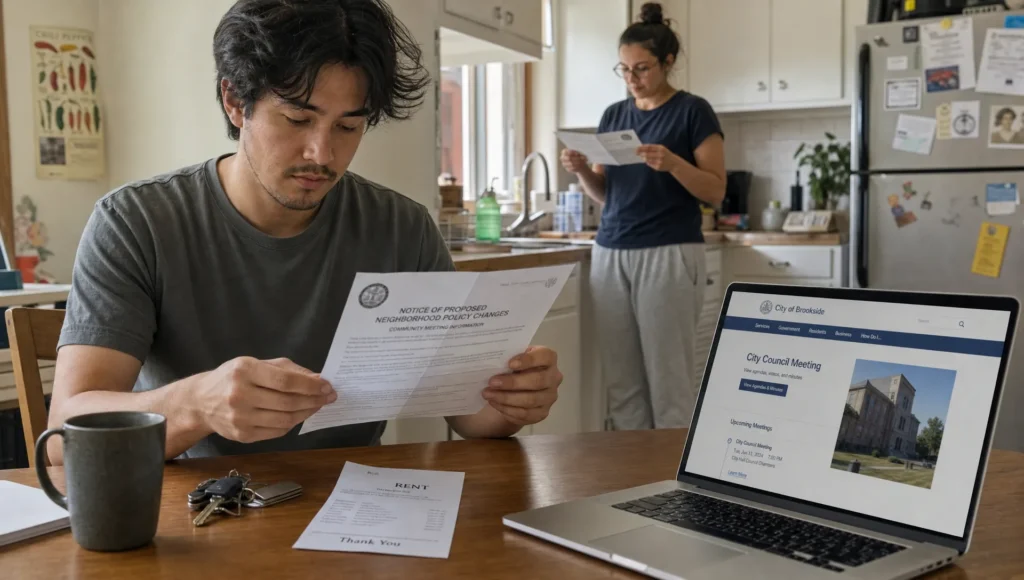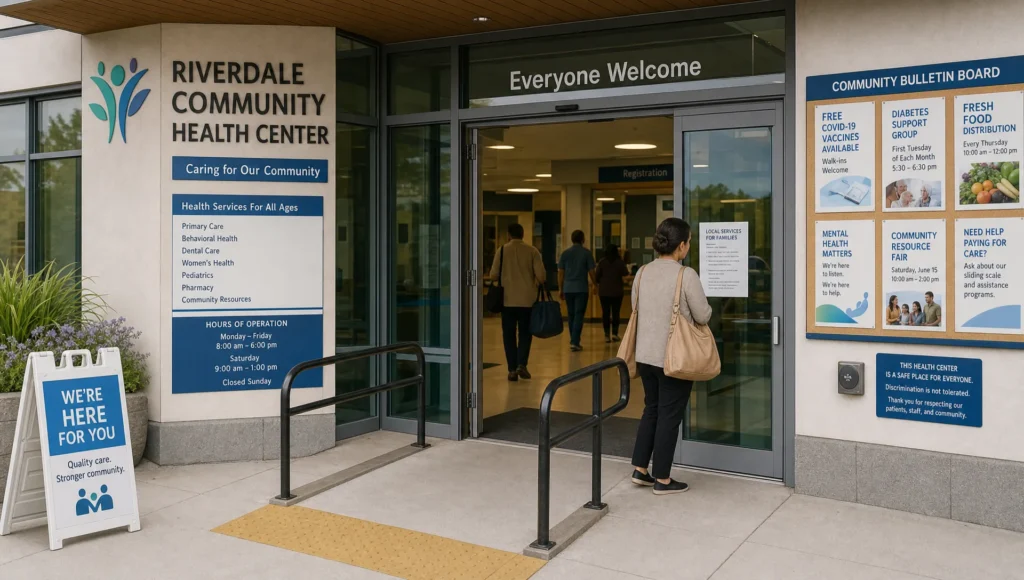
Limited English should never mean limited political power. In a healthy democracy, civic participation must be designed so people can understand decisions, express priorities and see whether officials acted on their input, even when they are still learning English or prefer another language at home.
This is not a niche accessibility issue. It affects immigrant families, refugees, multilingual neighborhoods, international students, naturalized citizens, long-time residents who use another language at home and people who can speak English socially but struggle with legal, budgetary or technical terms. If public life is only fluent in English, public power is not equally available.
Why civic participation is harder with limited English
Language barriers turn ordinary democratic tasks into high-friction tasks. A resident may care deeply about a school closure, zoning change or safety plan, but still hesitate to attend a meeting if the agenda is only in English, the sign-up form is confusing or the public comment period moves too quickly for interpretation.
According to the U.S. Census Bureau's 2019 ACS report, about 68 million people age 5 and older in the United States spoke a language other than English at home. That does not mean every person in that group needs language assistance, but it does show how unrealistic English-only public participation has become.
When civic participation depends on speed, insider vocabulary and confidence in public institutions, people with limited English are often filtered out before policy discussions even begin. The result is not just lower turnout. It is weaker information for decision-makers, because officials miss the lived experience of residents who use public transit, schools, clinics, housing programs and emergency services every day.
From translation to real political power
Translation is necessary, but it is not enough. A city can translate a flyer and still design a process where the real decision was made weeks earlier. A school board can provide interpretation and still ignore the comments delivered through it. Meaningful access requires a path from language support to visible influence.
The JustSocial manifesto argues that people should not be reduced to a voter, a taxpayer and a private consumer. Its vision of continuous direct democracy asks public systems to hear people more often than once every few years and to use technology to connect daily public opinion with real governance.
For JustSocial, civic participation is not a ceremonial invitation to speak after power has already moved on. It is a standing relationship between residents and the state. In that relationship, people with limited English must be treated as full political actors, not as outreach categories, translation burdens or afterthoughts.
The common barriers, and what fixes them
The first design step is to name the barriers plainly. Some are technical, but many are cultural. Public agencies often assume that if a meeting is open, participation is fair. In practice, access depends on notice, language, timing, trust, child care, transportation, digital skill and whether residents believe their input will matter.
A useful civic participation plan should diagnose each barrier and attach a concrete repair to it.
| Barrier | What it looks like | Better design choice |
|---|---|---|
| Late notice | Residents hear about a hearing after the agenda is set | Publish multilingual notices early and repeat them through trusted channels |
| Technical language | Terms like variance, procurement or ordinance are not explained | Use plain-language summaries with examples |
| No interpretation | People can attend but cannot follow discussion | Provide trained interpreters, not informal family translation |
| Fear of exposure | Immigrants worry that speaking publicly may bring scrutiny | Offer anonymous input, privacy notices and community intermediaries |
| No feedback loop | Residents speak but never learn what happened | Send multilingual receipts showing how input was used |
Design principles for multilingual access
Make English the bridge, not the gate
A public process should not reward only the people who already speak the language of government. Agencies can keep English as a shared administrative language while offering translated summaries, oral interpretation, multilingual hotlines and forms that accept answers in multiple languages.
Plain language matters even before translation. If the English source text is filled with jargon, the translated version will also be hard to understand. The better sequence is simple: write the public explanation clearly, translate it professionally, test it with community members and revise anything that causes confusion.
This is where civic participation becomes a design discipline rather than a slogan. Every notice, ballot prompt, comment form and meeting script should be checked against one question: can a resident understand what is being decided and how their input can change the outcome?
Use the channels people already trust
Limited English communities do not live in an information vacuum. They often receive news through family networks, neighborhood organizations, faith communities, ethnic media, messaging apps and streaming services. Commercial media has already adjusted to this reality, from foreign-language channels to guides for IPTV services in USA that help households find content across devices. Public institutions should be at least as serious about reaching people where they actually are.
Trusted messengers are not a substitute for government responsibility. They are a bridge. A city can partner with libraries, schools, clinics and community groups to explain decisions, collect questions and bring residents into formal channels without forcing every person to navigate bureaucracy alone.
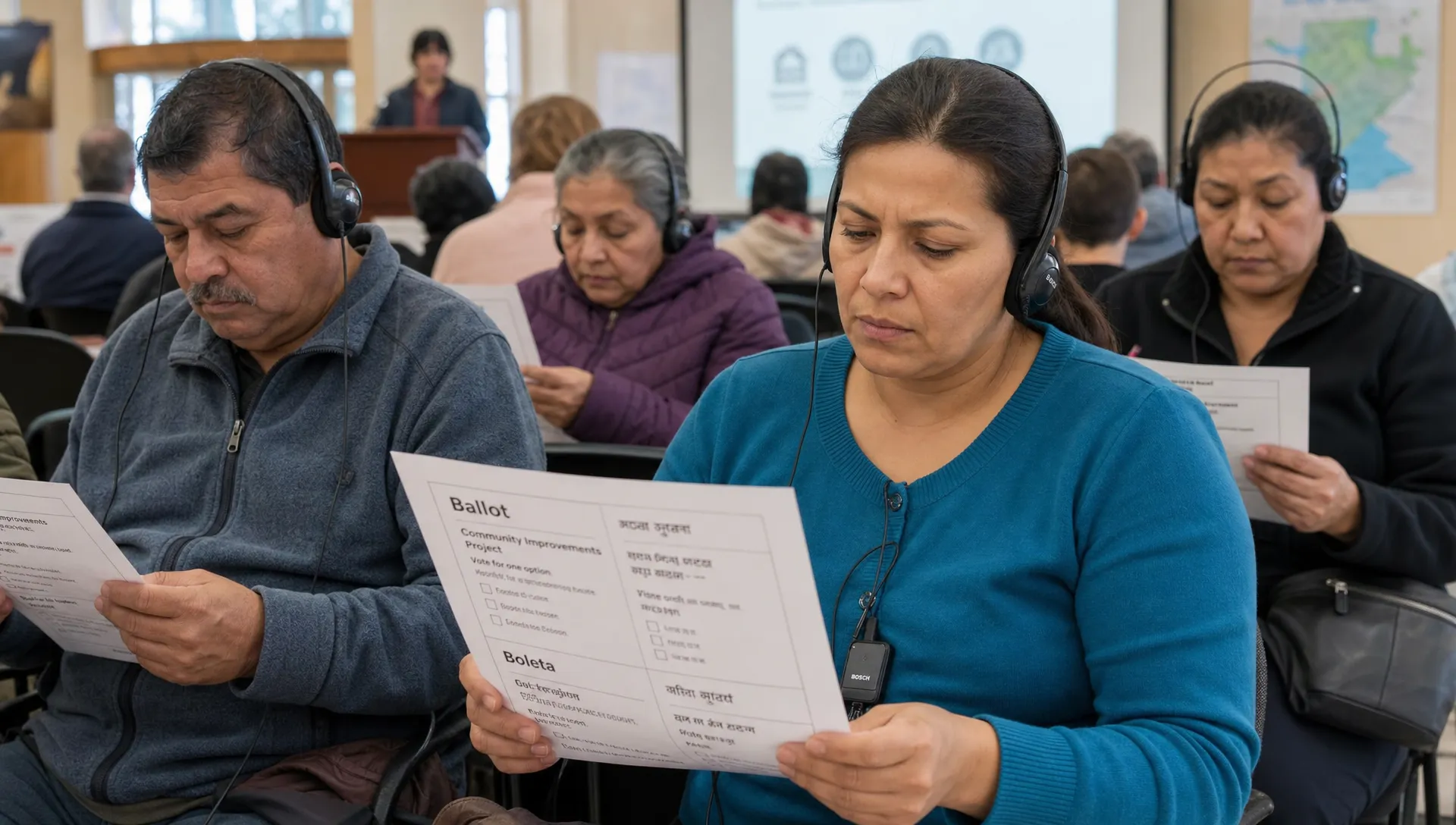
Digital democracy tools must be multilingual by default
Digital democracy can either widen access or reproduce old exclusions faster. An online voting platform, public comment portal or community decision tool that works only in English may look modern, but it still excludes residents who cannot comfortably read the interface.
If civic participation moves online, language access has to be part of the core product, not a plug-in added later. That means translated navigation, plain-language issue summaries, audio options, mobile-first design, low-bandwidth performance and help channels staffed by people who can respond in the community's languages.
Machine translation can help with speed, but it should not be the final layer for high-stakes public decisions. Legal notices, ballot language, budget questions and emergency instructions need review by qualified translators or trained bilingual staff. Poor translation can change meaning, create distrust and make the public record less reliable.
Privacy is just as important. JustSocial's idea of a People's Branch depends on continuous input, but continuous input must be protected by data minimization, clear consent and strong safeguards against retaliation or profiling.
A meeting model that works when languages differ
Public meetings often fail people with limited English because they treat interpretation as a side service. A better meeting is built around multilingual participation from the start.
In meetings, civic participation should follow a predictable structure that residents can understand before they enter the room.
| Stage | What organizers should do | What residents should receive |
|---|---|---|
| Before | Share translated agendas, key terms and decision options | Enough time to ask questions and prepare comments |
| During | Use trained interpreters, slow pacing and visual summaries | Equal opportunity to listen, speak and respond |
| After | Publish decisions and next steps in multiple languages | A clear record of what changed, what did not and why |
This model also helps English speakers. When a meeting is clearer, slower and better documented, everyone benefits. Language access is not a special favor to one group. It is a way to make government more understandable and accountable for the whole community.
Safeguards against tokenism and harm
Some residents avoid public processes not because they are apathetic, but because participation feels risky. A tenant may fear angering a landlord. A worker may fear employer retaliation. A mixed-status family may worry that any public record could be used against them. A newcomer may not know which agencies are safe to approach.
Safeguards make civic participation credible. They include anonymous or confidential comment options, clear privacy policies, limits on data sharing, no unnecessary immigration questions and meeting rules that prevent harassment. Public officials should also explain whether input is advisory, binding or part of a larger deliberative process.
Tokenism is another risk. Inviting a few multilingual residents to speak does not equal shared power. The goal is not a photo of diversity at a microphone. The goal is a process where language communities can shape agendas, compare policy options, challenge assumptions and see measurable responses.
For communities that face overlapping barriers, JustSocial's article on power with safeguards for minority communities offers a broader framework: expand influence while reducing the personal costs of speaking up.
What residents with limited English can do this month
A person with limited English can begin civic participation without mastering every rule of local government. Start with one issue that affects daily life, such as school transportation, rent, street safety, health access, sanitation, policing, parks or emergency alerts.
Then choose the smallest useful action. Ask a library, community group or city office whether translated materials exist. Submit a written comment in your strongest language. Attend one meeting with a friend who can help take notes. Join a neighborhood messaging group that shares official notices. If interpretation is not offered, request it in writing and keep the response.
Residents can also build collective habits. A group of five neighbors who translate notices, compare questions and attend meetings together often has more staying power than one person trying to do everything alone. Over time, that group can ask for agenda changes, serve on advisory boards, propose local ballots or push institutions to adopt multilingual digital tools.
The key is not to wait for perfect English before entering public life. Democracy improves when people participate from where they are.
Frequently Asked Questions
What does limited English mean in public participation? It usually refers to people who do not speak, read, write or understand English well enough to fully access a specific public process. A person may be conversational in English but still need help with legal, medical, educational or policy language.
Are governments required to provide language access? In many U.S. contexts, yes. LEP.gov explains that recipients of federal financial assistance must take reasonable steps to make programs accessible to people with limited English proficiency under Title VI guidance. Specific obligations depend on the agency, funding and service.
Is translation enough for civic participation? No. Translation helps people understand information, but meaningful participation also requires early notice, trusted channels, safe ways to respond, clear decision links and public follow-up.
Can online tools solve the language barrier? Online tools can help if they are multilingual, mobile-friendly, privacy-protective and connected to real decisions. If they are English-only or poorly translated, they simply move exclusion onto a screen.
Build a democracy that hears every language
JustSocial is a political movement for continuous direct democracy, citizen empowerment and public transparency. That vision only works if every resident can understand public decisions and help shape them, including people who are still learning English or use another language as their civic voice.
The future of democracy should not depend on who can decode government language fastest. It should depend on whether public systems can listen precisely, protect people wisely and turn shared input into accountable action.