Political movement volunteers are often asked to do the easiest visible work: share posts, recruit friends, attend events, repeat slogans, and show up when outrage peaks. Those actions can help, but they rarely build lasting civic power by themselves.
The volunteer roles that actually matter are the ones that turn public concern into usable democratic capacity. They help citizens understand decisions, produce evidence, facilitate better disagreement, protect trust, build tools, and track whether institutions respond.
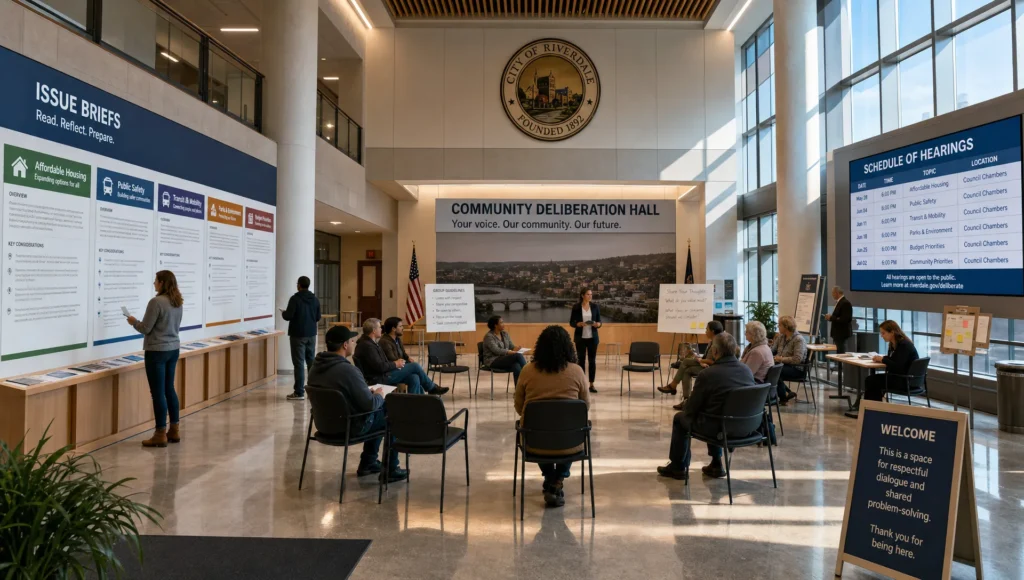
That is especially true for a movement like JustSocial, which is not only trying to win attention. Its manifesto, The Face of Democracy, argues for continuous direct democracy, a civic culture where people are heard between elections and where technology helps make public participation visible, structured, and accountable. In that kind of political movement, volunteers are not background labor. They are builders of democratic infrastructure.
What makes a volunteer role matter?
A role matters when it creates something the movement can reuse, inspect, improve, or hand to decision-makers. A social media post may disappear in a feed. A clear Issue Pack, public meeting summary, accessibility review, or implementation tracker can keep influencing a decision for weeks or months.
A useful volunteer role usually does at least one of four things:
- It helps more people participate safely and meaningfully.
- It improves the quality of public reasoning through discursive democracy.
- It turns discussion into decision-ready options through deliberative democracy.
- It creates public receipts that show what happened, what was promised, and what changed.
This is the difference between volunteering for political noise and volunteering for civic participation. The first seeks attention. The second builds power that can be audited.
The core roles political movement volunteers should prioritize
The best movement teams do not treat all volunteers as interchangeable. They match people to roles based on skills, time, temperament, and risk tolerance. A person who hates public confrontation may be excellent at evidence work. A person who is trusted in a local community may be better at listening sessions than at online debate. A developer may not need to write policy arguments to strengthen democracy. They may build the infrastructure that lets thousands of people participate more safely.
| Volunteer role | Why it matters | Concrete output |
|---|---|---|
| Decision Scout | Finds real decision points before they close | Decision Note with owner, deadline, process, and ask |
| Evidence Curator | Separates claims from facts and sources | Issue Pack or Evidence Commons |
| Discursive Moderator | Keeps public debate structured and usable | Moderation log, synthesis notes, debate prompts |
| Deliberation Facilitator | Helps groups reason through tradeoffs | Options Memo with pros, cons, and minority views |
| Community Listener | Brings in people usually excluded from politics | Listening summary and outreach map |
| Transparency Steward | Makes the movement inspectable | Public receipts, meeting notes, trackers |
| Civic Tech Contributor | Builds and improves participation tools | Prototype, QA report, accessibility fix, data workflow |
| Education Volunteer | Teaches people how to participate well | Workshop, guide, curriculum, practice session |
| Partnership Liaison | Connects civic work to institutions | Meeting brief, response request, collaboration proposal |
| Operations Coordinator | Keeps volunteer energy sustainable | Calendar, onboarding flow, role board, handoff docs |
None of these roles are symbolic. Each produces evidence of civic work. That is what makes a political movement more than a campaign hashtag.
1. Decision Scouts: find the real place where power moves
Many citizens know what they are angry about, but not where the relevant decision is actually being made. Is the issue controlled by a city council, a ministry, a school board, a procurement office, a parliamentary committee, a regulator, or a private contractor acting under public authority?
Decision Scouts solve that problem. Their job is to identify the real decision owner, the decision window, the legal or procedural pathway, and the specific moment when public input can matter.
For example, instead of saying, ‘housing is broken,’ a Decision Scout might produce a one-page note that says: the planning committee will vote on zoning changes on June 18, public comments close on June 10, the relevant staff report is published here, and the public should request three specific amendments.
This role directly connects to JustSocial’s manifesto because continuous democracy depends on daily public awareness of state affairs. If citizens cannot see the decision surface, they cannot participate in it. Decision Scouts make the hidden machinery of government legible.
2. Evidence Curators: build a shared factual floor
A movement that cannot distinguish claims, evidence, uncertainty, and opinion will eventually be captured by whoever speaks with the most confidence. Evidence Curators prevent that.
Their role is not to become the movement’s Ministry of Truth. It is to create a shared factual floor where disagreement can become more honest. They gather official documents, credible research, community testimony, budget data, prior decisions, and competing arguments. Then they organize them so ordinary citizens can understand what is known, what is disputed, and what still needs investigation.
In discursive democracy, this kind of work is essential. Public debate improves when people can see the claims being made and the evidence behind them. In deliberative democracy, it becomes even more important, because participants need balanced material before they can produce fair recommendations.
A strong Evidence Curator produces artifacts such as:
- A short Issue Pack written in plain language.
- A source index with links, dates, and authors.
- A claim table that distinguishes facts, interpretations, and proposals.
- An uncertainty note explaining where evidence is weak or contested.
The movement gains credibility when it can say: here is what we know, here is what we do not know, and here is how we reached that conclusion.
3. Discursive Moderators: make public debate usable
Most online political debate is designed for reaction, not reasoning. Discursive Moderators help change that.
Discursive democracy is about the quality of public conversation: how claims are framed, whose experiences are visible, whether people can challenge one another without humiliation, and whether public talk can feed into real decisions. A Discursive Moderator does not silence disagreement. They create process boundaries that keep disagreement useful.
That can mean asking people to restate a claim clearly, separate evidence from emotion, name the decision they want changed, or acknowledge a tradeoff. It can also mean slowing down a thread when outrage is moving faster than facts.
This is difficult work because moderation in political spaces is often misunderstood as censorship. The key is to moderate by process, not viewpoint. A movement can allow fierce disagreement while still requiring relevance, disclosure of conflicts, respect for privacy, and basic evidence discipline.
A good Discursive Moderator helps the movement avoid two common failures: chaotic free-for-all debate that produces no output, and over-controlled messaging that makes citizens feel managed rather than heard.
4. Deliberation Facilitators: turn disagreement into options
Discursive democracy opens up the public conversation. Deliberative democracy narrows the conversation into decision-ready judgment.
Deliberation Facilitators help small groups examine evidence, compare options, weigh tradeoffs, and produce outputs that decision-makers can actually use. This is not the same as hosting a debate. A debate often rewards performance. Deliberation rewards listening, revision, and clarity.
A facilitator might guide a group through a local issue such as school phone policy, public transit routes, housing density, AI use in classrooms, or budget priorities. The output should not be ‘we talked about it.’ The output should be an Options Memo that explains the main choices, the strongest arguments for each, the risks, the equity concerns, and any minority reports.
This role is central to JustSocial’s theory of change. The manifesto imagines citizens weighing in consistently, not just voting every few years. For that to work, movements must prove that public input can become structured judgment rather than raw opinion volume.
5. Community Listeners: include people politics usually misses
Political movements often over-represent the people who already have time, confidence, language fluency, and institutional trust. Community Listeners expand the circle.
Their role is to speak with people who may not attend meetings, post online, or identify as political. That includes working parents, immigrants, minority communities, low-income residents, remote workers, students, veterans, disabled people, and those who distrust institutions for good reasons.
Listening is not a branding exercise. It should produce usable civic information. What decision affects this community? What harm do people fear from participating? What format would make participation safer? What language or accessibility support is needed? What would count as a meaningful response?
This role reflects one of the manifesto’s deepest concerns: citizens should not be reduced to voters, taxpayers, and consumers. Community Listeners help people become participants in the public life that already shapes them.
6. Transparency Stewards: publish the receipts
Trust is not built by saying ‘trust us.’ It is built by showing the work.
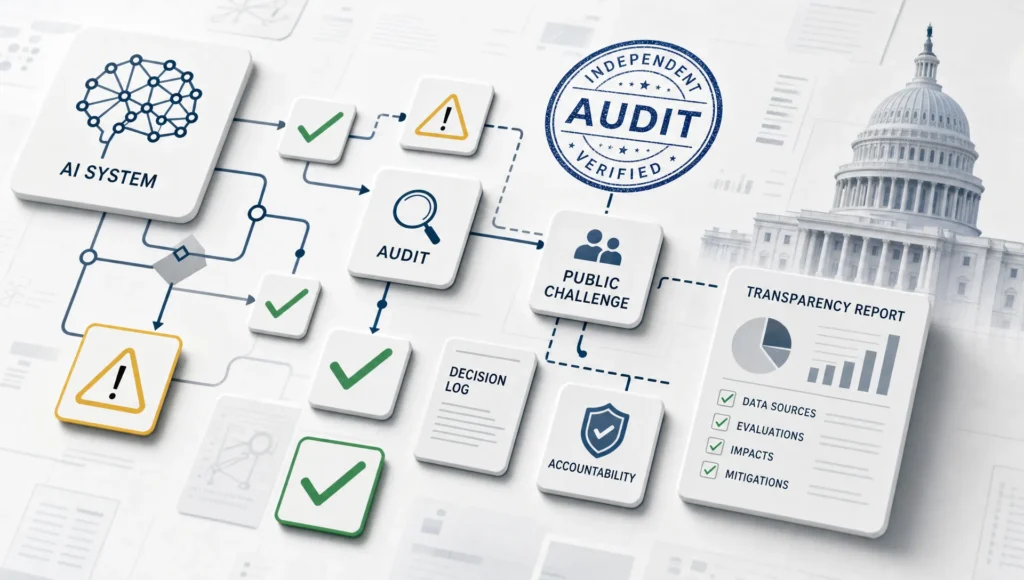
Transparency Stewards make sure a political movement publishes its basic civic receipts: agendas, meeting notes, decision rules, funding summaries, public commitments, evidence indexes, response logs, and implementation trackers. This role may sound administrative, but it is one of the most politically important jobs in any reform movement.
A movement that demands transparency from government should practice transparency internally. It should be clear how priorities are chosen, how volunteers can influence direction, what money is being used for, which decisions are open, and which are already settled.
This does not mean publishing private personal data or exposing vulnerable participants. Good transparency is designed. It protects privacy while making power inspectable.
| Receipt type | What it proves | Why volunteers should care |
|---|---|---|
| Participation Promise | What influence participants have | Prevents engagement theater |
| Meeting Notes | What was discussed and decided | Reduces rumor and confusion |
| Evidence Index | Which sources informed the work | Improves credibility |
| Decision Memo | Why a choice was made | Makes leadership accountable |
| Implementation Tracker | Whether promises became action | Keeps momentum after announcements |
Transparency Stewards are the people who turn movement integrity into something citizens can verify.
7. Civic Tech Contributors: build the tools, but respect the politics
JustSocial’s manifesto names several technology concepts, including TakeAction!, rParliament, rConcensus, public analytics, open legal repositories, and AI-supported education. These ideas all point toward one principle: technology should make civic participation more continuous, transparent, and practical.
Civic Tech Contributors can include backend developers, frontend developers, UX designers, product managers, accessibility testers, data analysts, cybersecurity volunteers, translators, QA testers, and documentation writers. Their work matters because democracy technology fails when it is treated like ordinary software. It must handle trust, privacy, inclusion, manipulation risks, identity questions, and public accountability.
A civic tech volunteer can contribute by improving onboarding, testing prototype flows, writing plain-language interface copy, designing accessibility patterns, reviewing threat models, structuring data for public analytics, or helping publish stable civic artifacts.
Infrastructure also includes the basic web presence of a movement. If a local civic team relies on a WordPress site to publish receipts, events, and public documents, practical support such as WordPress maintenance and security support can protect the reliability of that public record, especially for volunteer teams without dedicated technical staff.
The point is not to worship technology. The point is to make civic work easier to join, harder to manipulate, and easier to audit.
8. Education Volunteers: train citizens for continuous democracy
A continuous democracy requires civic skill. People need to know how to read a public agenda, identify a decision owner, evaluate evidence, write a decision-ready request, participate in a structured discussion, and track implementation.
Education Volunteers build that capacity. They run workshops, create guides, coach new volunteers, translate complex civic processes into plain language, and help communities practice deliberation before the stakes are high.
This connects directly to the manifesto’s emphasis on educational reform. JustSocial argues that industrial-era education often fails to prepare people for modern civic life. Political movement volunteers can begin repairing that gap now by teaching participation as a practical skill, not just a school subject.
A strong civic education session should leave participants with a usable output. For example, each person might complete a Decision Note, draft a public comment, map a local decision process, or practice converting a complaint into a concrete policy request.
9. Partnership Liaisons: connect movement work to institutions
A political movement can build pressure from outside institutions, but it also needs pathways into them. Partnership Liaisons help create those pathways.
They contact city officials, school administrators, journalists, academics, civil society groups, public servants, and local organizers. Their goal is not to beg for access. Their goal is to present organized civic work in a form institutions can respond to.
Instead of saying, ‘please listen to us,’ a Partnership Liaison can say: here is an Issue Pack, here is the community input summary, here are three decision-ready options, here is the implementation question, and here is the date by which we are requesting a public response.
This role is especially important for a movement that wants governments to adopt better participation tools and public transparency practices. Institutions are more likely to engage when volunteer energy arrives as structured civic capacity rather than scattered frustration.
10. Operations Coordinators: prevent burnout and chaos
Every movement eventually discovers that passion is not a management system. Operations Coordinators make volunteer participation sustainable.
They maintain role boards, calendars, onboarding guides, contact lists, handoff documents, meeting rhythms, and follow-up reminders. They make sure new volunteers know where to start and experienced volunteers do not become bottlenecks.
This role may not feel glamorous, but it protects the movement from one of the most common failures: a few committed people doing everything until they burn out. If JustSocial’s goal is continuous civic participation, the internal movement culture must also be continuous. That means clear roles, realistic commitments, and repeatable workflows.
How to choose the right volunteer role
The best role is not always the most visible one. It is the role you can do consistently and responsibly.
| If you have… | Consider this role | Good first output |
|---|---|---|
| 30 minutes a week | Decision Scout | One Decision Note per week |
| Research skills | Evidence Curator | A short Issue Pack |
| Calm under conflict | Discursive Moderator | A structured discussion thread |
| Facilitation experience | Deliberation Facilitator | One Options Memo |
| Local trust | Community Listener | Listening summary from 5 conversations |
| Writing discipline | Transparency Steward | Public meeting notes and action log |
| Technical skills | Civic Tech Contributor | QA report or prototype improvement |
| Teaching ability | Education Volunteer | 60-minute civic skills workshop |
| Institutional network | Partnership Liaison | Briefing request to one decision owner |
| Organizational patience | Operations Coordinator | Volunteer onboarding checklist |
If you are unsure, start with a small public artifact. A movement learns more from one completed Decision Note than from ten vague offers to help.
Roles that look useful but often waste volunteer energy
Not every movement task is bad, but some tasks become traps when they are not connected to outcomes.
Pure amplification is one example. Sharing posts can help, but if nobody is collecting responses, converting interest into participation, or linking attention to a decision, the energy evaporates.
Unstructured meetings are another trap. A weekly call with no agenda, no notes, no decision rules, and no follow-up can make people feel included while producing very little.
Personality-centered campaigning can also weaken a reform movement. JustSocial’s manifesto argues that representatives should become more like pipelines for public consensus and implementation, not rulers above the public. A movement built around one personality cannot credibly argue for continuous citizen power unless it also builds processes that outlast personalities.
Finally, avoid roles that ask volunteers to become unpaid chaos managers. If a movement expects volunteers to absorb harassment, confusion, urgency, and unclear expectations without support, it is not building democracy. It is consuming people.
A simple 30-day volunteer pathway
For people who want to help but do not know where to begin, start with one month of structured contribution.
In the first week, read the manifesto, choose one issue area, and create a simple Civic Log. Track the decisions, institutions, and people connected to that issue.
In the second week, produce one small public artifact: a Decision Note, Issue Pack, listening summary, accessibility review, or meeting note. Keep it short enough that someone else can understand it in five minutes.
In the third week, join or form a tiny team of three to five people. Assign roles clearly: one person finds decisions, one gathers evidence, one writes summaries, one handles outreach, and one tracks follow-up.
In the fourth week, deliver the work to a real decision surface. That might be a public comment process, a school board meeting, a city council office, a journalist covering the issue, or a movement working group. Then publish what happened and what response is still needed.
This is how volunteer work becomes civic participation. It creates a loop: find the decision, improve the discussion, deliberate on options, ask for a response, and track implementation.
Frequently Asked Questions
Do I need political experience to volunteer for a political movement? No. Many of the most useful roles require ordinary professional or community skills: research, writing, facilitation, design, translation, project management, technical testing, outreach, or teaching. The key is producing work that helps citizens participate and helps institutions respond.
What is the difference between discursive and deliberative volunteer work? Discursive work improves the public conversation by structuring claims, evidence, disagreement, and visibility. Deliberative work takes a defined issue and helps a group produce decision-ready options after weighing evidence and tradeoffs. Both are needed for meaningful civic participation.
Can technical volunteers help without becoming political spokespeople? Yes. Technical volunteers can contribute through accessibility testing, security thinking, documentation, interface design, data organization, prototype development, and reliability work. In a civic tech movement, these contributions can be politically meaningful without requiring every volunteer to speak publicly on policy.
How much time should a volunteer commit? Consistency matters more than intensity. A reliable 30 to 60 minutes per week can produce valuable outputs if the role is clear. Movements should design low-burden roles so participation is possible for people with jobs, families, health constraints, and limited free time.
How can a movement prevent volunteer burnout? Burnout drops when roles are specific, meetings have outputs, responsibilities rotate, public receipts reduce confusion, and leaders avoid treating urgency as a permanent operating mode. Operations volunteers are essential because they make participation sustainable.
Build the movement by building the work
Political movement volunteers matter most when they help citizens become more than spectators. The task is not only to persuade people that democracy should improve. The task is to build the habits, tools, records, and civic pathways that make improvement possible.
That is the spirit of JustSocial’s call for continuous direct democracy: citizens should have meaningful ways to weigh in between elections, public institutions should become more transparent, and technology should serve participation rather than replace it.
If that vision speaks to you, start with one role and one artifact. Read The Face of Democracy, choose the kind of contribution you can sustain, and help turn democratic frustration into civic infrastructure that actually matters.