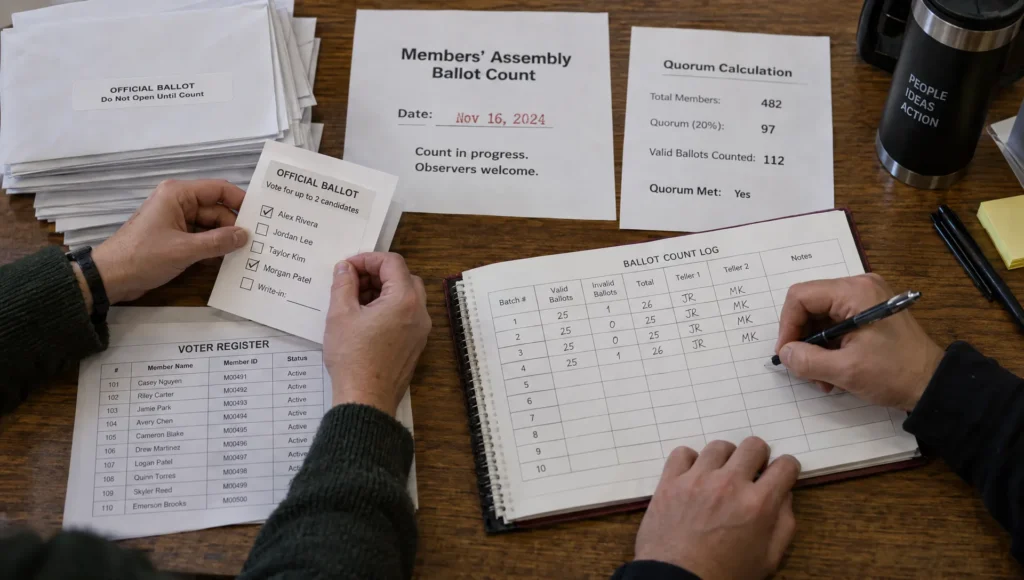
Voting matters, but it is only the opening act. The harder question is what happens after the ballot, when campaign slogans become budgets, appointments, committee hearings, procurement decisions, school policies, zoning changes, and implementation delays.
For busy adults, civic participation often fails because it is framed as a second job. Attend every meeting. Read every agenda. Track every politician. Argue online. Volunteer every weekend. Most people cannot do that, and a democracy that requires full-time activism from working parents, caregivers, students, employees, and small business owners is not designed for real life.
The better model is continuous but lightweight civic participation: small, repeatable actions tied to real decisions. This is close to the vision in JustSocial’s manifesto, The Face of Democracy, which argues that citizens should not be reduced to voters, taxpayers, and consumers. After the ballot, citizens need practical ways to remain visible, informed, and consequential without burning out.
After the Ballot Is Where Power Moves
Election day creates political permission. Governing happens afterward.
The candidate you supported may now have to negotiate with a council, party, ministry, agency, school board, committee, or court. The promise you liked may be rewritten as a budget line. The reform you opposed may appear in a technical hearing that almost nobody attends. The public meeting may be advisory, while the real decision happens two weeks later in a procurement vote.
This is why civic participation after the ballot should focus less on constant attention and more on decision tracking. Busy adults do not need to follow every controversy. They need to know which decisions affect their lives, who owns those decisions, when the public can intervene, and what proof exists that officials listened.
In JustSocial terms, this is the practical gap between representative democracy and continuous direct democracy. Representatives still govern, but citizens need ongoing channels to express public judgment, inspect the process, and demand follow-through.
The Civic Maintenance Mindset
Think of post-election participation as civic maintenance. You do not check every pipe in your home every day, but you do notice leaks, keep records, pay attention to major repairs, and call the right person when something breaks.
The same logic applies to public life. A busy adult can create a realistic civic routine by choosing four limits:
- One issue lane: Schools, housing, public safety, transportation, taxes, healthcare, local tech, environment, or another area that affects your household or community.
- One institution: City council, school board, neighborhood committee, national representative, ministry, agency, or party caucus.
- One monthly review: A recurring calendar block to check agendas, votes, budgets, and public comment windows.
- One proof standard: A habit of asking for public receipts, such as minutes, response memos, implementation trackers, or published rationales.
This turns civic participation from emotional reaction into adult infrastructure. You stop trying to be everywhere. You start becoming reliable somewhere.
A useful comparison is financial literacy. Most adults do not become professional investors, but they learn enough to manage risk, read basic signals, and avoid obvious traps. Civic literacy can work the same way. Resources that teach people to build financial judgment, such as beginner-friendly investing education, show why structured learning matters: the goal is not obsession, it is informed agency.
What to Track in the First 100 Days After an Election
The first 100 days after an election are especially important because new officials convert campaign identity into governing behavior. For busy adults, this period is not about judging every speech. It is about creating a baseline.
| Post-election signal | Why it matters | Busy adult action |
|---|---|---|
| Committee assignments | Shows who will shape specific policy areas | Save the committee page and meeting calendar |
| Budget proposals | Reveals actual priorities behind campaign language | Search for your issue lane in the draft budget |
| Appointments | Determines who will run agencies, schools, or public programs | Note names, qualifications, and confirmation dates |
| Public comment windows | Often the only formal moment for input | Add deadlines to your calendar |
| Early votes | Creates an accountability record | Compare votes to campaign promises |
| Implementation plans | Shows whether promises become operations | Ask for timelines, metrics, and responsible offices |
This table is intentionally simple. Busy adults need a short list of signals that expose whether public power is moving toward promises, away from them, or into opaque bureaucracy.
A Practical Participation Stack for Busy Adults
The goal is not to do everything. The goal is to move from passive opinion to usable civic input. The following stack can fit into a normal month.
15 minutes: Find the decision surface
A decision surface is the place where public input can actually touch power. It may be a council agenda, a school board item, an agency consultation, a budget hearing, a procurement notice, or a committee vote.
Instead of asking, “What do I think about politics today?” ask, “What decision is open, who owns it, and when does it close?”
That single shift prevents wasted effort. It also protects citizens from endless online discourse that never reaches an institution.
30 minutes: Send a decision-ready request
A decision-ready request is short, specific, and answerable. It does not need to be poetic. It needs to help the decision-maker understand what you want and why.
Use this format:
I am writing about [specific decision]. I support or oppose [specific option] because [one reason tied to evidence or lived experience]. Please publish [specific receipt], such as the final rationale, vote record, implementation timeline, or response to public comments.
This is civic participation built for adults with limited time. It respects your schedule while creating a traceable record.
60 minutes: Join one structured conversation
Discursive democracy matters here. Public talk shapes what issues become visible, which groups are heard, and which arguments feel legitimate. But open debate often collapses into slogans, insults, or status competition.
A one-hour structured conversation can be far more valuable than a week of online argument. The rule is simple: each person must name a claim, give a reason, identify uncertainty, and propose a decision-relevant request.
That format turns conversation into civic material. It also prepares the ground for deliberative democracy, where a smaller group can compare options, weigh tradeoffs, and produce a recommendation.
2 hours monthly: Publish or request public receipts
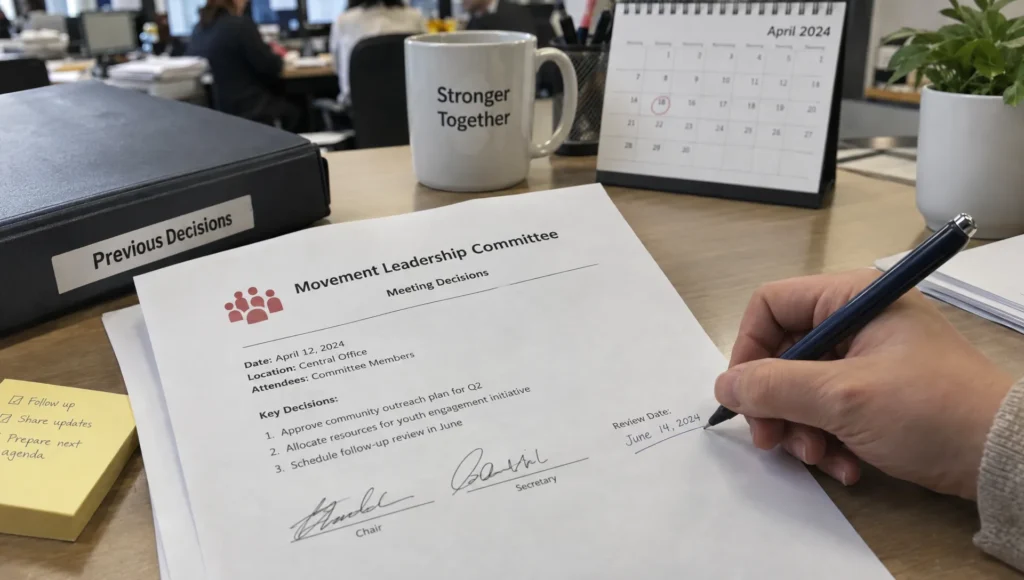
A public receipt is evidence that participation entered the system. It can be a meeting summary, vote record, decision memo, public response, implementation tracker, budget update, or issue pack.
The receipt does not guarantee victory. It guarantees visibility. It allows citizens to ask, “How did public input affect the outcome?” and “If it did not affect the outcome, why not?”
That is the difference between symbolic engagement and civic participation with accountability.

Discursive and Deliberative Democracy, in Adult Terms
The words can sound academic, but the distinction is practical.
Discursive democracy is about improving public conversation. It asks: are people able to make claims, challenge assumptions, share lived experience, and contest narratives in a fair way?
Deliberative democracy is about producing better public judgment. It asks: have people reviewed evidence, compared tradeoffs, listened across difference, and created decision-ready options?
Busy adults need both. Discursive democracy helps you avoid being trapped by propaganda, party slogans, or social media outrage. Deliberative democracy helps you move from “something is wrong” to “here are three workable options and the tradeoffs of each.”
A healthy political movement should use both layers. It should create spaces for broad public speech, then convert that speech into structured recommendations, then push institutions to respond publicly.
That is exactly where JustSocial’s manifesto connects the emotional need for influence with the institutional need for structure. The vision is not merely more comments, more likes, or more outrage. It is a system where public opinion becomes measurable, inspectable, and connected to actual governance.
Build an After-Ballot Circle
The easiest way to sustain civic participation is not to do it alone. Busy adults can form a small after-ballot circle with three to five people. The group does not need to become a formal organization. It only needs a shared issue lane and a monthly cadence.
| Role | Time needed | What the role produces |
|---|---|---|
| Agenda watcher | 20 minutes weekly | Notes upcoming decisions and deadlines |
| Evidence finder | 30 minutes weekly | Collects links, reports, budget pages, and public records |
| Message drafter | 30 minutes monthly | Writes short decision-ready requests |
| Meeting attendee | 1 to 2 hours monthly | Attends or watches one public meeting |
| Receipt tracker | 20 minutes weekly | Logs responses, votes, rationales, and implementation updates |
This is how civic participation becomes compatible with adult life. One person does not carry the whole burden. The group creates continuity.
It also reflects a deeper democratic principle: citizens should not be isolated consumers of politics. They should be members of a public, capable of learning together, remembering together, and acting together.
Example: After a School Board Election
Imagine you voted in a school board election because you cared about classroom technology, student mental health, or curriculum transparency. After the ballot, your work is not to argue endlessly about whether you chose the right candidate. Your work is to track the decisions that will turn values into policy.
Start with one question: what decision will the board make in the next 90 days that affects this issue?
Maybe the answer is a budget vote for counseling staff. Maybe it is an AI policy for classrooms. Maybe it is a phone-use rule. Maybe it is a curriculum review.
Now create a one-page Decision Note:
| Field | Example |
|---|---|
| Decision | Whether to fund two additional school counselors |
| Decision owner | School board and superintendent |
| Decision window | Budget hearing in June, vote in July |
| Public input channel | Written comments and board meeting testimony |
| Your request | Publish student support staffing ratios and explain how public comments affect the final budget |
| Receipt expected | Response memo, vote record, and implementation timeline |
This is not dramatic. That is the point. A democracy that works should not require drama for citizens to be heard.
What to Ask Officials After You Vote
The most powerful post-election questions are process questions. They are harder to dismiss because they do not depend on partisan agreement.
Ask officials:
- What specific decision will determine whether this promise is implemented?
- Who is responsible for drafting, approving, and executing it?
- When can the public review the proposal before the vote?
- What evidence or budget assumptions are being used?
- Will you publish a response explaining how public input shaped the final decision?
These questions fit almost any issue. They also move the conversation from personality to governance.
Use Technology, but Do Not Worship It
Technology can make after-ballot civic participation easier. Calendars can track hearings. Shared folders can store issue packs. AI can summarize long agendas if humans verify the output. Online platforms can collect input, display public sentiment, support deliberation, and publish implementation updates.
But technology is not democracy by itself. A platform that gathers comments but never forces a response is only a suggestion box. A voting tool without transparency can create false legitimacy. Analytics without privacy safeguards can become surveillance. AI without human review can distort public reasoning.
This is why JustSocial’s political movement emphasizes technology-driven participation alongside transparency, safeguards, and institutional design. Product ideas from the manifesto, such as TakeAction!, rParliament, rConcensus, public analytics, and open law repositories, are valuable because they point toward a broader principle: citizens need civic tools that connect public attention to public decisions.
The future of civic participation should not be endless scrolling. It should be structured influence.
For Political Movements: Respect Adult Time
Political movements often ask too much and prove too little. They demand attention, donations, posts, attendance, loyalty, and emotional energy, but they do not always show how those contributions changed anything.
A movement built for busy adults should make participation predictable. It should publish clear asks, short issue packs, meeting notes, decision memos, financial summaries, and implementation trackers. It should give supporters multiple levels of involvement, from five-minute actions to deeper deliberative work.
Most importantly, it should not confuse mobilization with democracy. Mobilization gets people to act. Democracy helps people reason, decide, and hold power accountable.
That is the difference between a campaign machine and a civic movement.
A Monthly After-Ballot Routine
Here is a realistic monthly rhythm for adults who want to stay involved after voting without turning politics into a full-time burden.
| Week | Civic action | Output |
|---|---|---|
| Week 1 | Check one agenda, budget page, or committee calendar | One decision added to your Civic Log |
| Week 2 | Read or summarize the relevant proposal | Three key facts and one uncertainty |
| Week 3 | Send a decision-ready request or public comment | A written record sent to the decision owner |
| Week 4 | Check for a response, vote, memo, or delay | A public receipt or follow-up request |
If you do this every month, you will create more civic influence than many people create through years of unfocused outrage.
The Real Goal: Becoming More Than a Voter
The ballot is essential because it authorizes leadership. But adult citizenship cannot end there. The public decisions that shape daily life are too continuous, too technical, and too consequential to be left untouched between elections.
Busy adults do not need guilt. They need workable civic architecture.
That means choosing a lane, tracking real decisions, practicing healthier public discourse, joining small deliberative circles, asking for receipts, and supporting movements that treat participation as infrastructure.
This is the practical meaning of citizen empowerment after the ballot: not everyone doing everything, but many people doing small, visible, coordinated things often enough that government can no longer pretend the public is absent.
Frequently Asked Questions
Is voting still the most important form of civic participation? Voting is essential, but it is not enough on its own. Voting chooses representatives or decides ballot questions. Post-election civic participation tracks whether public promises become real decisions, budgets, and implementation.
How much time does a busy adult really need? A useful minimum is one hour per month. That is enough to track one decision, send one decision-ready message, and request one public receipt. A small group can multiply that impact by splitting roles.
What is the difference between civic participation and political arguing? Political arguing often expresses identity or frustration. Civic participation is tied to a real decision, a decision owner, a timeline, and a request for a public response or outcome.
Can online participation be legitimate? Yes, if it includes clear rules, privacy safeguards, accessibility, identity protections appropriate to the stakes, transparent moderation, and public follow-through. Online participation without decision linkage is usually weak.
What should I do if officials ignore my input? Ask for the missing receipt. Request the rationale, vote record, response memo, or implementation timeline. If there is still no response, organize with others to make the lack of accountability visible and repeated.
Help Build Democracy After the Ballot
JustSocial exists to promote continuous direct democracy, civic technology, public transparency, and citizen empowerment beyond election day. If you believe adults should have practical ways to influence public life after the ballot, start by reading The Face of Democracy and choosing one contribution lane.
You can participate as a citizen, volunteer, builder, educator, organizer, supporter, or simply as someone who refuses to disappear after voting. Democracy should not ask everyone to become a full-time activist. It should give every citizen a usable path to be heard, counted, and answered.