Civic participation is often treated as a motivation problem. If only more people cared, the argument goes, democracy would work better. But many citizens do care. They attend meetings, sign petitions, post carefully argued comments, email officials, and still see their input disappear into a black box.
That is not only a civic culture problem. It is a public tech problem.
In 2026, a person can track a package across continents in real time, compare thousands of product reviews, and coordinate a group across time zones. Yet in many public systems, the same person cannot easily find the real decision owner, see what evidence officials are using, understand how public input will be weighed, or verify whether a promise became action.
Better public tech will not save democracy by itself. Institutions, laws, norms, education, and trust still matter. But civic participation cannot become continuous, transparent, and consequential if the public sector keeps using industrial-era processes wrapped in PDFs, inboxes, and ceremonial hearings.
This is a central point in JustSocial’s manifesto, The Face of Democracy: modern society has changed through technology, but public institutions still behave like relics of a previous era. If citizens are no longer satisfied being only voters, taxpayers, and consumers, then democracy needs tools that let them participate, reason, decide, and verify.

Public Tech Is Democratic Infrastructure
Public tech means technology created, procured, or governed to support public decision-making. It includes participation platforms, online voting systems, public records tools, open data portals, identity and eligibility systems, livestream archives, decision trackers, and civic analytics.
The key word is public. A tool used by government or a political movement is not automatically democratic just because it is digital. A comment box can be manipulative. A survey can be meaningless. A voting feature can be insecure. A dashboard can hide more than it reveals.
Good public tech must answer civic questions before it answers product questions:
- What public decision is this connected to?
- Who is eligible to participate, and why?
- What promise is being made about the influence of participation?
- What evidence is available to participants?
- What public record will prove how input was used?
Without those answers, technology becomes engagement theater. It gives citizens an interface but not influence.
The point is not to replace elected officials with apps. The point is to make democratic work more visible, structured, accessible, and auditable between elections. Representatives can still decide. Courts can still protect rights. Administrators can still implement. But the public should be able to see and affect the pipeline from issue to decision to outcome.
Why Current Civic Participation Feels Broken
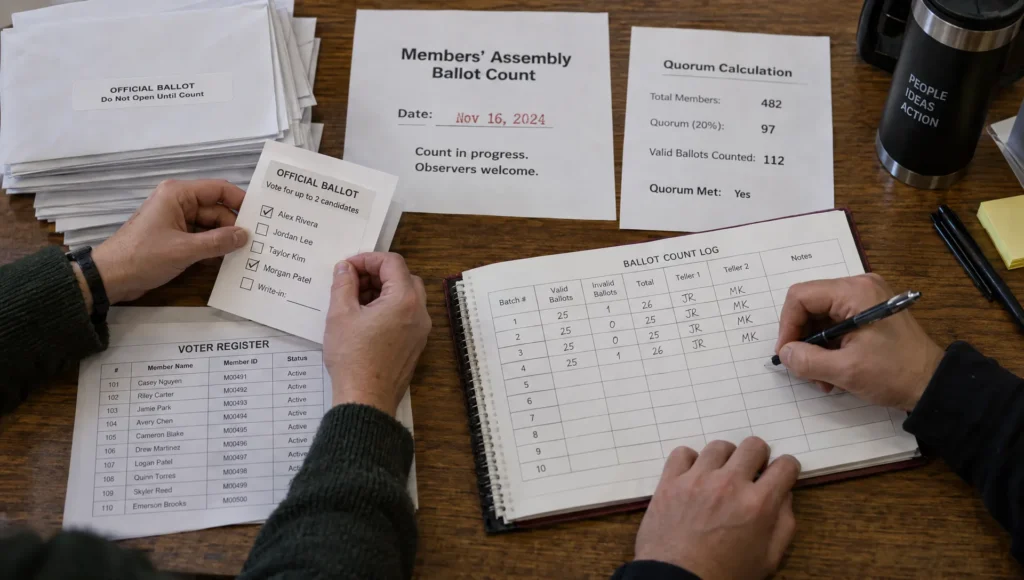
Many public participation processes fail because they are built for intake, not impact. They collect testimony, comments, signatures, or survey responses, then leave citizens guessing what happened next.
The common pattern looks familiar. A government publishes a notice that few people see. A public meeting is held at an inconvenient time. A few prepared insiders dominate the room. Written comments are accepted through a generic email address. Weeks later, a decision appears with limited explanation. Citizens are told they were consulted, but they cannot trace their input into the final reasoning.
This experience teaches people that participation is symbolic. That lesson is dangerous.
The OECD’s 2024 Trust Survey found that only 39 percent of people across surveyed OECD countries reported high or moderately high trust in their national government. Trust is not restored by telling people to be more optimistic. It is restored when institutions become easier to inspect.
A healthier system would let citizens answer simple questions: What is being decided? Who decides? What evidence matters? What options are on the table? How did public input change the outcome? What happens after the decision?
Public tech should make those answers visible by default.
Better Public Tech Is Not Consumer Social Media With a Civic Logo
One reason civic participation needs better public tech is that most digital habits were shaped by private platforms. Consumer platforms often optimize for attention, speed, personalization, and emotional response. Democracy needs almost the opposite: context, fairness, traceability, inclusion, and accountability.
This does not mean the public sector should ignore consumer innovation. Good innovation often respects an existing human practice while improving access and experience. For example, warm-air herbal vaporization reimagines how people experience traditional herbs through a new interface. Public life deserves a similar level of thoughtful redesign: preserve the civic purpose, modernize the way people can take part.
But democratic technology has different success metrics. A viral thread is not the same as public reasoning. A high click rate is not the same as informed consent. A popular comment is not the same as a legitimate decision.
| Design question | Private platform logic | Better public tech logic |
|---|---|---|
| What gets attention? | Content likely to trigger engagement | Information tied to real decisions |
| How is identity handled? | Growth, profiling, and personalization | Eligibility, privacy, and accountability |
| What counts as success? | Clicks, shares, watch time, conversion | Inclusion, reasoning quality, decision linkage, follow-through |
| How is conflict managed? | Moderation after harm spreads | Process rules, evidence, facilitation, and appeal paths |
| What record remains? | Feed history controlled by the platform | Public artifacts that citizens can inspect |
Public tech must be slower where democracy needs reflection, faster where citizens need access, and stricter where legitimacy depends on rules.
The Five Capabilities Civic Participation Needs
Better civic participation is not one feature. It is a chain of capabilities. If one link is missing, the process breaks.
1. Decision visibility
Citizens cannot participate meaningfully if they cannot find the real decision. Public tech should create decision pages for budgets, regulations, committee votes, procurement choices, school policies, zoning changes, and public service reforms.
A useful decision page states the owner, timeline, authority, decision rule, participation window, relevant documents, and expected public outputs. This sounds basic, but it changes the power dynamic. Citizens stop speaking into the void and start engaging with a defined public process.
2. Shared evidence
Civic participation becomes chaotic when everyone argues from different facts. It becomes captured when only experts or insiders have access to the evidence.
Better public tech should support Issue Packs and Evidence Commons: readable, source-linked collections of data, legal constraints, budget limits, stakeholder claims, uncertainty notes, and competing interpretations. This connects directly to JustSocial’s idea of an Academic Branch, where expertise supports public judgment without replacing citizen legitimacy.
The goal is not technocracy. The goal is contestable expertise. Citizens should be able to see what experts claim, what they do not know, who disagrees, and how evidence connects to options.
3. Discursive democracy tools
Discursive democracy is the layer where public conversation becomes more useful. It is not just free expression, although free expression matters. It is public reasoning with enough structure to produce civic value.
A discursive public tech layer can ask people to submit claims with reasons, sources, affected communities, and specific requests. It can cluster recurring concerns, surface minority perspectives, show disagreement maps, and publish synthesis notes. It can also moderate by process rather than viewpoint, focusing on relevance, safety, evidence, and format.
This is where many current systems fail. They collect comments, but they do not transform comments into public knowledge.
4. Deliberative democracy tools
Deliberative democracy is the layer where a group studies an issue, hears evidence, discusses tradeoffs, and produces decision-ready recommendations. It is especially important for complex issues where raw voting can oversimplify the choice.
Public tech can support deliberation by managing recruitment, accessibility, translation, evidence libraries, facilitated agendas, note-taking, options drafting, minority reports, and publication of outputs. But it should not replace human judgment. AI can summarize, translate, and help organize, but final civic reasoning must remain contestable and human accountable.
A good deliberative output is not a vibe. It is an Options Memo with tradeoffs, reasons, dissent, and implementation implications.
5. Accountability and memory
The most neglected part of civic participation is the afterlife of input. What happened to the recommendation? Did officials respond? Was the policy implemented? Did the outcome match the promise?
Better public tech should publish response memos, vote records, implementation trackers, change logs, and outcome reviews. This is how participation becomes cumulative. Citizens learn. Officials become more accountable. Movements can build from evidence rather than outrage alone.
| Civic need | Public tech capability | Public artifact |
|---|---|---|
| Know what is being decided | Decision docket | Decision page |
| Understand the issue | Shared evidence base | Issue Pack or Evidence Commons |
| Contribute safely | Identity, accessibility, and input rules | Participation record and moderation receipts |
| Reason together | Discursive and deliberative workspaces | Synthesis notes and Options Memo |
| See official response | Decision linkage | Response memo and rationale |
| Track results | Oversight tools | Implementation tracker and outcome review |
The People’s Branch Needs Tools, Not Slogans
In the JustSocial manifesto, the People’s Branch is proposed as a new democratic capacity: a way for citizens to be consistently heard throughout the term, not only during elections. This is not mob rule. It is not a referendum on every detail. It is a standing public layer that measures, structures, and communicates public judgment to institutions.
For that idea to become practical, public tech must do several things at once.
It must protect privacy while verifying eligibility when stakes require it. It must allow anonymous or pseudonymous participation in lower-risk public discourse, while using stronger identity checks for formal votes or official membership. It must publish enough information for public audit without exposing vulnerable participants to harassment. It must be accessible to people with disabilities, limited connectivity, different languages, and limited time.
It must also separate different democratic functions. Discursive democracy should be broad and open enough to surface concerns. Deliberative democracy should be structured enough to produce usable judgment. Voting or consensus mechanisms should be used only when the question is clear, the eligibility rules are fair, and the consequences are understood.
This is why public tech is not merely a website. It is institutional design expressed through software.
The Public Sector Should Stop Treating Tech as Decoration
Too often, governments digitize paperwork instead of redesigning participation. They turn a form into a PDF, stream a meeting without making it searchable, launch a portal without a duty to respond, or buy software without changing the underlying decision process.
That is not transformation. It is bureaucracy with a login screen.
The manifesto argues that the public sector should become a serious customer and driver of technology that improves social structures. That point matters. If the state can fund roads, utilities, defense systems, and administrative databases, it can also fund democratic infrastructure: public participation tools, open records systems, civic education platforms, and transparent policy feedback loops.
The private sector has spent decades refining analytics, collaboration tools, cloud systems, security practices, and user experience. Public institutions should not copy private incentives, but they should learn from technical maturity. Democracy should not have worse interfaces than online shopping.
What Better Public Tech Looks Like in Practice
A city, agency, school district, or political movement does not need to build a national platform on day one. It can start with one decision and one complete loop.
| Layer | What it does | Minimum version |
|---|---|---|
| Decision layer | Names the decision, owner, timeline, and authority | One public decision page |
| Evidence layer | Gives participants shared context | A readable Issue Pack with sources |
| Discursive layer | Collects structured public input | Claim, reason, request forms and synthesis notes |
| Deliberative layer | Produces decision-ready options | A facilitated working group and Options Memo |
| Response layer | Forces institutional accountability | Public response memo from the decision owner |
| Oversight layer | Tracks implementation and outcomes | A simple tracker updated on a fixed schedule |
This stack is small enough to pilot but serious enough to matter. It creates the civic equivalent of a paper trail, except designed for public learning rather than administrative self-protection.
JustSocial’s manifesto sketches product concepts in this direction. TakeAction! imagines connecting news to concrete civic action. rParliament imagines making committee work, documents, recordings, and citizen responses more visible. rConcensus imagines community voting and consensus-building. The common theme is not app worship. It is the idea that democracy needs an operating system for continuous participation.
Safety Rules for Better Public Tech
Bad public tech can make democracy worse. It can expose private data, amplify manipulation, privilege loud groups, bury minority concerns, or create the illusion of consent. That is why civic technology must be governed by democratic rules from the start.
A minimum safety standard should include:
- Clear participation promises, so people know whether they are advising, co-designing, voting, or simply commenting.
- Data minimization, so systems collect only what is needed for eligibility, security, and accountability.
- Accessibility by default, including plain language, mobile usability, assistive technology support, and offline alternatives.
- Transparent moderation rules, with public enforcement records and appeals.
- AI transparency, including disclosure when AI is used for summarization, clustering, translation, or risk detection.
- Anti-manipulation protections, including rate limits, eligibility checks proportional to stakes, and independent audits.
The highest principle is simple: public tech should reduce the amount of blind trust citizens must place in institutions. It should let them verify.
Why Political Movements Must Care About Public Tech
A political movement that wants democratic reform cannot only demand better outcomes. It must model better processes.
That means publishing agendas, decision notes, funding summaries, deliberation outputs, response logs, and implementation trackers. It means organizing supporters into civic teams that can produce useful public artifacts. It means resisting the temptation to become another attention machine.
Movements can also build shadow infrastructure before governments cooperate. If a city council does not publish a usable decision page, citizens can create one. If a committee livestream has no transcript or timestamps, volunteers can produce a public index. If officials ignore testimony, a movement can publish a synthesis and request a formal response.
This is not a substitute for institutional reform, but it creates pressure and proof. It shows what better participation looks like.
For JustSocial, this is the practical bridge between philosophy and politics. The movement’s vision of continuous direct democracy requires more than belief. It requires tools, repeatable processes, public records, civic education, and people willing to build.
A 30-Day Pilot Any Community Can Start
A better public tech future can begin with a modest pilot. Choose one real decision, preferably local, time-bound, and understandable. Then complete one full participation loop.
| Timeframe | Action | Output |
|---|---|---|
| Days 1 to 3 | Name the decision and decision owner | Decision page |
| Days 4 to 7 | Gather key documents, constraints, and claims | Issue Pack |
| Days 8 to 14 | Collect structured public input | Public synthesis note |
| Days 15 to 21 | Convene a small deliberative working group | Options Memo |
| Days 22 to 25 | Send outputs to the decision owner | Response request |
| Days 26 to 30 | Publish the response status and next steps | Implementation tracker |
The pilot does not need perfect software. It can use basic tools, as long as the public artifacts are clear, stable, and accessible. The lesson is procedural: build the democratic workflow first, then improve the technology.
The Real Standard: Can Citizens See Their Power?
Civic participation needs better public tech because democracy is no longer credible when citizens are asked to trust invisible processes. People should not need insider knowledge to understand public decisions. They should not need party loyalty to influence local reform. They should not need to shout online to be counted.
The standard for public tech is not whether it looks modern. The standard is whether it makes civic power visible.
Can citizens find the decision? Can they understand the evidence? Can they contribute safely? Can they reason with others? Can they see the official response? Can they track implementation? Can they learn from the record and return stronger next time?
If the answer is yes, civic participation becomes more than a ritual. It becomes a public habit.
Frequently Asked Questions
Why does civic participation need technology at all? Civic participation does not need technology for every action. People can still meet, organize, testify, and deliberate offline. But technology is essential for scale, memory, transparency, accessibility, and follow-through. Better public tech helps citizens see the full path from input to decision to implementation.
Is better public tech the same as online voting? No. Online voting is only one possible tool, and it should be used carefully. Civic participation also requires decision pages, evidence libraries, structured discussion, deliberative processes, public response memos, and implementation trackers. Voting without context and accountability can be shallow or risky.
How can public tech avoid becoming surveillance? Public tech should use data minimization, privacy-preserving identity, proportional verification, independent audits, and clear deletion rules. Not every civic action requires public naming. A well-designed system can verify eligibility where needed while protecting participants from unnecessary exposure.
Where do discursive democracy and deliberative democracy fit? Discursive democracy improves the public conversation by making claims, reasons, evidence, and disagreements visible. Deliberative democracy turns that public input into informed, decision-ready options. Better public tech should connect both layers instead of treating comments and decisions as separate worlds.
Can a political movement build public tech before government adopts it? Yes. A movement can publish decision pages, evidence packs, synthesis notes, and trackers even without official permission. This creates a public standard that institutions can later adopt, challenge, or improve. The key is to stay transparent, fair, and auditable.
Help Build the Public Tech Democracy Needs
JustSocial is working toward continuous direct democracy through civic participation, transparency, decision-making tools, and public technology that treats citizens as active participants in government.
If this vision resonates, start with the manifesto, share the ideas, test the concepts locally, or contribute your skills. Democracy will not become continuous by accident. It will be built through better institutions, better habits, and better public tech.