Elections matter. They decide who receives authority, who forms governments, and which broad promises enter public life. But most of politics happens after election night, when budgets are drafted, committees meet, agencies write rules, schools change policies, roads are redesigned, and public money quietly moves through institutions.
That is where civic participation becomes real.
Between elections, democracy should not mean waiting, complaining, or shouting into platforms that have no duty to listen. It should mean a continuous practice of public influence: noticing decisions, improving public debate, contributing evidence, joining deliberation, asking for explanations, and tracking whether promises became action.
In Yuval David Vered’s JustSocial manifesto, The Face of Democracy, one of the central criticisms is that the modern citizen is too often reduced to three roles: voter, taxpayer, and private consumer. Civic participation between elections is the practical alternative. It is how citizens become a living part of the public system instead of occasional input into it.
The election is a starting line, not the whole democracy
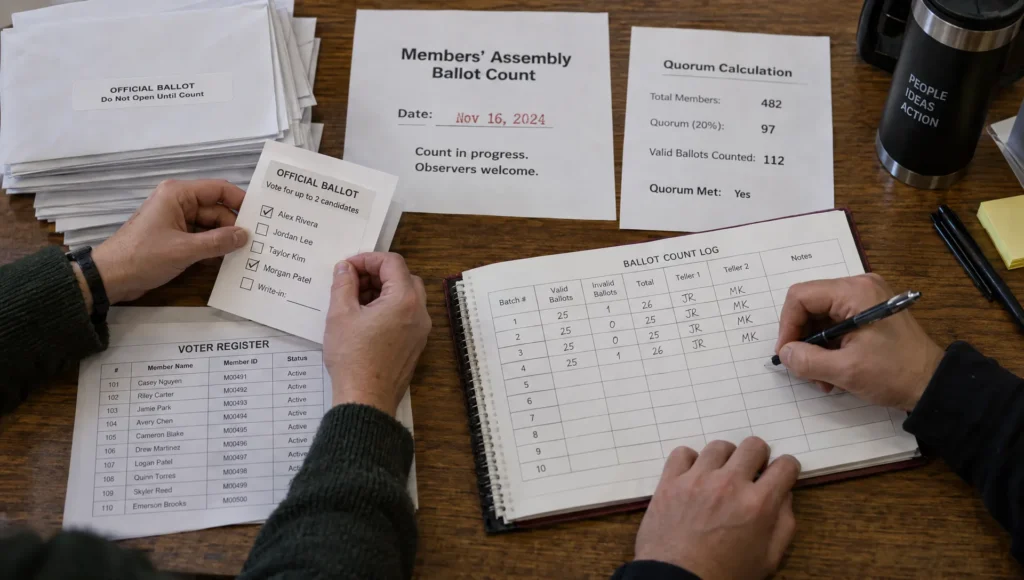
Representative elections are necessary, but they are not enough to make a society genuinely democratic. A vote every few years gives representatives a mandate, but it does not automatically tell them what citizens think about a housing proposal, a school reform, a police oversight policy, a local tax change, or a national emergency response.
Between elections, citizens need channels that are more precise than anger and more useful than applause. They need ways to say: here is the decision, here is the evidence, here are the tradeoffs, here is what different communities will experience, and here is how officials should explain their choice.
This is why civic participation is not the same as permanent campaigning. Campaigning asks, “Who should win power?” Participation asks, “How should public power be used now, and how can the public inspect it?”
The JustSocial vision of continuous direct democracy does not require every citizen to vote on every issue every day. That would create exhaustion and shallow decisions. Instead, it imagines a civic operating system where citizens can participate at different depths, from quick input to structured deliberation, and where institutions must publish visible records of how public input shaped outcomes.
What civic participation looks like in ordinary life
In practice, civic participation between elections often looks modest. It is not always a march, a viral post, or a dramatic town hall speech. Much of it is quieter, more disciplined, and more consequential.
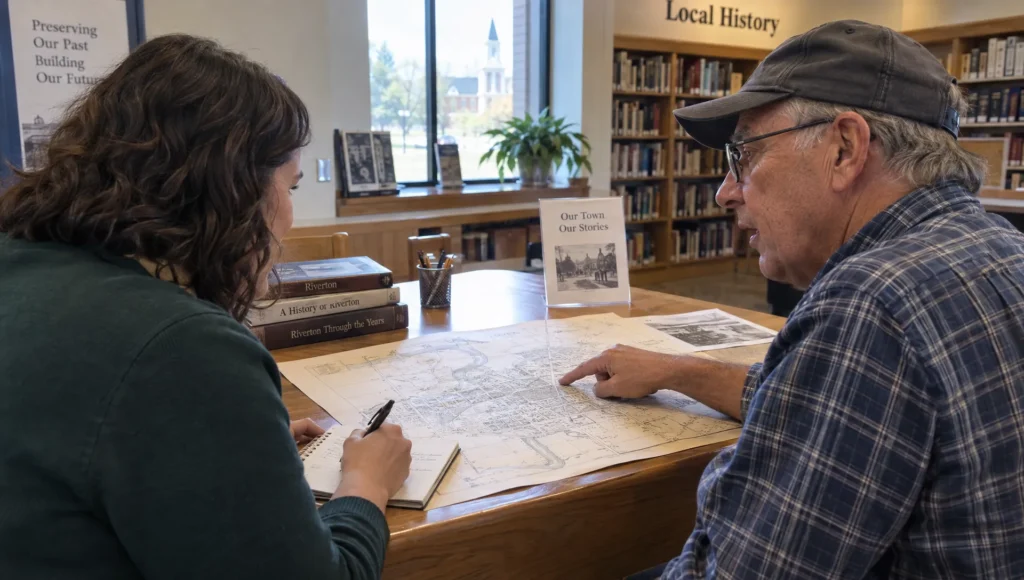
It looks like a parent reading a school board agenda before a vote on phone rules. It looks like a tenant group turning complaints about rent pressure into a clear policy request. It looks like residents asking why a public committee livestream has no transcript, no documents, and no follow-up memo. It looks like a student council learning to turn protest into proposals. It looks like a neighborhood group tracking whether a promised crosswalk was actually installed.
The difference is not volume. The difference is decision linkage. Useful participation connects public voice to a specific decision, a decision-maker, a timeline, and a public record.
| Election-only citizenship | Between-election civic participation |
|---|---|
| Votes for representatives periodically | Engages with decisions continuously |
| Reacts to political messaging | Asks for evidence, options, and reasons |
| Measures politics by winners and losers | Measures politics by public outcomes |
| Relies on trust in officials | Demands inspectable public receipts |
| Treats citizens as spectators | Treats citizens as contributors and overseers |
This shift matters because many public failures do not happen because citizens have no opinions. They happen because opinions remain unstructured, unmeasured, or disconnected from official decision workflows.
From public noise to discursive democracy
The first layer of between-election participation is better public conversation. This is where discursive democracy matters.
Discursive democracy focuses on the quality of public debate: how claims are made, how evidence is shared, how disagreements are framed, and whether people can speak without being dominated by status, money, harassment, or manipulation. It does not mean sanitizing politics. It means making conflict usable.
A healthier public discussion asks people to separate claims from insults, identify sources, disclose relevant interests, and make specific requests. Instead of “the city does not care about us,” a discursive format might produce: “The proposed bus route change increases walking distance for seniors in these three blocks. We request a published accessibility analysis before the vote.”
That sentence is not less emotional. It is more powerful. It gives officials something they can answer, journalists something they can verify, and neighbors something they can discuss.
Between elections, discursive democracy can happen in many places: community meetings, local media comment sections, school forums, neighborhood WhatsApp groups, civic platforms, committee livestream chats, and political movement assemblies. The key is that discussion should create memory. If a debate disappears after the meeting, democracy loses learning capacity.
From talk to judgment through deliberative democracy
Not every participant needs to study every issue deeply. But some issues require more than open comments or quick polls. That is where deliberative democracy enters.
Deliberative democracy creates structured spaces where a smaller, balanced group reviews evidence, hears different perspectives, weighs tradeoffs, and produces decision-ready recommendations. It is especially useful when the issue is complex, emotional, technical, or likely to affect communities differently.
For example, a city considering a vacant homes fee might first open a discursive phase for residents, landlords, renters, housing experts, and community groups to surface concerns. Then a deliberative group could study the evidence, test different fee designs, consider exemptions, and publish an options memo. Finally, elected officials would still decide, but they would have to respond to the public reasoning.
This is not rule by committee. It is public judgment made visible.
The JustSocial manifesto’s idea of a People’s Branch points in this direction. It imagines citizens not merely as a crowd to be counted, but as a recurring democratic institution that can express identity, opinion, and judgment in ways public officials must take seriously. Between elections, that means building processes that turn raw public concern into structured civic knowledge.
The public receipts that make participation real
The most important question between elections is simple: can citizens see what happened to their input?
If the answer is no, participation becomes theater. People speak, officials nod, and the system continues as before. If the answer is yes, participation becomes part of public accountability.
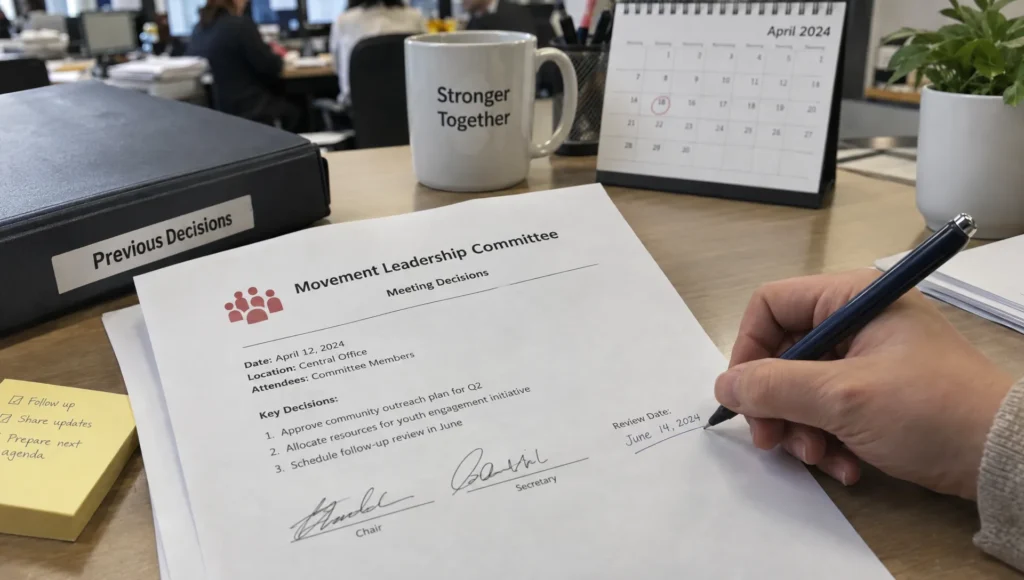
Public receipts are the documents and records that let people inspect the path from public input to public action. They do not need to be complicated, but they need to exist.
| Public receipt | What it shows | Why it matters |
|---|---|---|
| Decision note | The exact decision, owner, timeline, and stakes | Prevents vague participation |
| Evidence index | Sources, data, testimony, and uncertainties | Reduces misinformation and selective evidence |
| Public synthesis | Main themes, conflicts, and minority concerns | Shows that input was actually read |
| Options memo | Feasible choices with tradeoffs | Turns opinion into decision-grade material |
| Response memo | What officials accepted, rejected, or changed | Creates a duty to explain |
| Implementation tracker | Progress, delays, costs, and outcomes | Keeps accountability alive after the vote |
Government transparency is not only publishing more files. A livestream without timestamps, a budget PDF without explanation, or a consultation with no response can still leave citizens powerless. Transparency becomes democratic when it helps people understand decisions, contest reasoning, and track follow-through.
Education is where between-election democracy begins
A society cannot expect adults to participate responsibly if it trains children to be passive recipients of authority. The JustSocial manifesto connects democratic reform with educational reform for this reason. It criticizes industrial-era schooling and argues for more holistic, project-based, participatory learning that develops agency, curiosity, and responsibility.
This connection is not abstract. Civic participation depends on habits people learn early: listening, questioning, explaining reasons, collaborating, taking responsibility, and understanding that community decisions affect real lives. Schools that cultivate autonomy and purpose are not just educating future workers. They are educating future citizens.
That is why community-centered educational models, such as Colegio Pioneros Costa’s personalized, adaptive learning community in Maitencillo, are relevant to democratic culture. When students are deeply known, challenged without fear-based practices, encouraged to reflect, and gradually trusted with responsibility, they practice the same human capacities that democracy later requires.
Between-election civic participation is not only a political skill. It is a cultural skill. It grows in classrooms, families, workplaces, local associations, religious communities, service groups, and online spaces where people learn to combine care, challenge, and purpose.
Where technology helps, and where it must stay humble
In 2026, the technical tools for more continuous participation are no longer science fiction. We already know how to build secure identity layers, searchable public records, online voting platforms for appropriate use cases, public dashboards, evidence libraries, livestream archives, structured comment systems, and AI-assisted summaries.
The JustSocial manifesto makes this point clearly: much of the needed technology already exists, but public institutions have not absorbed it at the speed or seriousness required. The private sector uses analytics, cloud systems, social platforms, and user feedback loops constantly. Public institutions often still treat participation as an occasional meeting or a static form.
Technology can help civic participation between elections by making it easier to:
- Find decisions before they are finalized.
- Submit structured input in accessible formats.
- Preserve public records and meeting materials.
- Summarize large volumes of input without erasing minority views.
- Verify eligibility while protecting privacy.
- Track implementation after officials make commitments.
But technology is not democracy by itself. A platform can amplify manipulation, bury dissent, over-surveil citizens, or create the illusion of listening. AI can help summarize arguments, but it should not decide what is true or what policy should win. Blockchain may help with tamper-evident records in some contexts, but it does not solve trust, coercion, inclusion, or governance by magic.
The rule should be simple: technology must serve democratic process, not replace it. First define the participation promise, the safeguards, the decision link, and the public receipts. Then choose the tools.
What a political movement should do between elections
A political movement that only wakes up during elections is not building democracy. It is building a campaign machine.
A movement committed to civic participation should behave differently. It should help citizens understand decisions, create spaces for disciplined public discussion, organize deliberative groups, publish its own records, and pressure institutions to respond. It should model the transparency it demands from government.
This is especially important for movements that claim to represent democratic reform. Trust is not built by slogans. It is built by repeatable practices that outsiders can inspect.
A serious political movement between elections should publish a participation promise, explain how people can contribute, disclose how input will be used, protect minority and dissenting voices, and show what changed because people participated. It should be willing to say, “Here is what we heard, here is what we learned, here is what we changed, and here is what we still disagree about.”
That is how a movement becomes more than a brand. It becomes civic infrastructure.
A practical between-election rhythm
Civic participation becomes sustainable when people stop trying to follow everything. The goal is not to be constantly online or permanently outraged. The goal is to choose a small number of decisions and follow them well.
A realistic rhythm might look like this: once a month, choose one public decision that affects your life or community. Find the decision owner and timeline. Read the basic documents. Ask one clear question. Add one piece of evidence or lived experience. Attend one meeting or submit one structured comment. Ask for one public receipt. Then check whether anything changed.
For groups, the rhythm can be shared. One person tracks agendas, one gathers evidence, one attends meetings, one writes summaries, and one follows implementation. Small civic teams can do what isolated individuals cannot: create memory.
This is the cultural change JustSocial is pushing toward. Democracy should not be a rare performance. It should be a normal civic habit supported by public technology, transparent institutions, and citizens who understand their power.
Frequently Asked Questions
Is civic participation between elections the same as activism? Not exactly. Activism is one form of participation, often focused on pressure and visibility. Civic participation is broader. It includes deliberation, public oversight, evidence gathering, committee engagement, civic education, and structured input into decisions.
Does this replace voting? No. Voting remains essential for authorization and accountability. Between-election participation complements voting by helping citizens influence the many decisions that occur during a term of government.
Do citizens need to be policy experts to participate? No. Citizens bring lived experience, values, local knowledge, and democratic legitimacy. Experts can help clarify evidence and tradeoffs, but public decisions should remain accountable to the people affected by them.
What makes participation meaningful instead of symbolic? Meaningful participation has a named decision, a clear timeline, accessible information, a way to submit usable input, a public response, and follow-through tracking. Without those elements, participation can easily become theater.
Can this work before governments adopt official platforms? Yes. Citizens and movements can start by publishing their own decision notes, evidence indexes, public syntheses, and implementation trackers. These shadow processes can pressure institutions to become more transparent while building civic capacity.
Build democracy before the next ballot
Between elections, democracy is either alive or asleep. It lives when citizens can see decisions forming, contribute to public reasoning, deliberate on tradeoffs, demand explanations, and track implementation. It sleeps when people are invited to vote, then told to wait quietly until the next campaign.
JustSocial exists to help build the first version: continuous, transparent, technology-enabled civic participation that gives people a real role in shaping public life. If that vision resonates, read the manifesto, share it, contribute your skills, and help build the civic infrastructure that elections alone cannot provide.