Calls for national unity often arrive at the most dangerous moment: after a crisis, during polarization, or when citizens are exhausted by conflict. The phrase sounds healing, but it can also be misused. Too often, “unity” becomes a demand to stop questioning, stop criticizing, and fall in line.
That is not democracy. It is groupthink with patriotic branding.
Deliberative democracy for national unity without groupthink starts from a different premise: a nation does not become stronger when disagreement disappears. It becomes stronger when disagreement is made visible, reasoned, protected, and connected to decisions. The goal is not to make everyone think the same. The goal is to build enough shared reality, procedural trust, and civic capacity that citizens can argue fiercely without treating one another as enemies.
For JustSocial, this connects directly to the movement’s broader manifesto, The Face of Democracy. The manifesto argues that modern citizens should not be reduced to voters, taxpayers, and consumers. They should have continuous ways to be heard, to weigh in, and to help shape public life. Deliberation is one of the core practices that can make that vision serious rather than symbolic.
National unity is not sameness
A healthy country contains different religions, classes, regions, ethnic identities, life experiences, and political instincts. Any “unity” that depends on suppressing those differences will eventually become brittle. People may stop speaking in official spaces, but they will keep disagreeing elsewhere, usually with more anger and less trust.
Real national unity is not agreement on every policy. It is agreement on a civic method: we will face the same facts as much as possible, hear competing reasons, protect dissent, make decisions through legitimate processes, and keep records that citizens can inspect later.
This is where deliberative democracy matters. It gives civic participation a structure beyond shouting, polling, posting, or voting every few years. It asks citizens to work through evidence, tradeoffs, values, and consequences before forming public judgment.
The political theorist and practitioner James Fishkin helped popularize modern deliberative polling, showing how public opinion can shift when people receive balanced information and deliberate under fair conditions. The OECD has also documented the growth of citizens’ assemblies, citizens’ juries, and other representative deliberative processes around the world. These models do not eliminate politics. They make politics more thoughtful, more inspectable, and less vulnerable to pure mobilization.
Why groupthink is not unity
Groupthink happens when a group values harmony, loyalty, or speed so much that it stops testing its own assumptions. People self-censor. Leaders hear what they want to hear. Dissenters are treated as disloyal. Warning signs are ignored because admitting them would disturb the collective mood.
In national politics, groupthink can appear in different forms. A governing coalition may confuse its electoral win with permanent wisdom. A protest movement may punish internal dissent because it fears losing momentum. A media ecosystem may reward the most emotionally satisfying version of events rather than the most accurate one. A population under threat may treat every question as sabotage.
Deliberative democracy resists this by making dissent a design requirement. If the process cannot describe the strongest objection to a proposal, it has not deliberated well. If minority concerns are not recorded, the output is incomplete. If experts cannot explain uncertainty, the evidence base is too weak. If officials can ignore the public without a response, participation becomes theater.
| Question | Groupthink unity | Deliberative unity |
|---|---|---|
| What is the goal? | Preserve agreement and loyalty | Reach usable public judgment |
| What happens to dissent? | It is discouraged or stigmatized | It is invited, recorded, and tested |
| What counts as evidence? | What confirms the group narrative | Balanced information, uncertainty, and competing claims |
| What happens to minorities? | They are expected to adapt quietly | Their concerns become visible constraints |
| What is the output? | A slogan, mandate, or emotional consensus | Options, reasons, tradeoffs, and public receipts |
| What kind of unity emerges? | Fragile conformity | Durable civic trust |
The missing bridge between conflict and decision
Public debate alone is not enough. Discursive democracy, the broad public conversation where citizens frame problems, contest meanings, and tell their stories, is essential. But if discourse never moves toward a decision, it can become endless noise.
Direct voting alone is also not enough. A vote can authorize a choice, but it cannot always show whether citizens understood the tradeoffs, whether alternatives were considered, or whether the losing side was treated with dignity.
Deliberative democracy sits between the two. It receives the raw material of public discourse and turns it into decision-grade judgment. In practice, a healthy national process needs three layers:
- Discursive democracy: Citizens surface concerns, identities, stories, evidence, and competing frames.
- Deliberative democracy: A structured group works through the issue, compares options, hears expertise, and produces reasoned recommendations.
- Civic participation: The wider public reacts, contributes, votes where appropriate, monitors implementation, and demands accountability.
This layered model helps national unity because it gives every type of civic energy a legitimate place. Anger has a place, but it must eventually become a claim. A claim has a place, but it must eventually meet evidence. Evidence has a place, but it must eventually inform choices. Choices have a place, but they must eventually be tracked.
Five rules for unity without groupthink
1. Begin with a real decision, not a vague slogan
“National unity” is too broad to deliberate. A real process begins with a decision statement: What is being decided? Who has authority? What is the timeline? What constraints exist? What will officials do with the recommendations?
Without that clarity, participation becomes emotional release. With it, disagreement becomes useful. Citizens can argue about a defined question rather than fighting over identity alone.
For example, instead of asking, “How do we unite the country?” a government or political movement could ask, “What national civic education reforms should be adopted over the next three years to strengthen democratic participation across regions and communities?” That question is still ambitious, but it is concrete enough to deliberate.
2. Make dissent a required deliverable
A deliberative process should never publish only majority conclusions. It should also publish minority reports, unresolved disagreements, rejected options, and the strongest arguments against the final recommendation.
This is not a weakness. It is an anti-groupthink safeguard. When dissent is visible, citizens outside the room can see that the process did not simply manufacture consensus. Minority communities can see whether their concerns were heard. Officials can understand which risks remain even after a recommendation is adopted.
A nation does not need every citizen to cheer the same answer. It needs citizens to believe the answer was reached through a process that did not erase them.
3. Build a shared evidence commons
National arguments often collapse because citizens are not working from the same information environment. One side has statistics. Another has lived experience. Another has expert warnings. Another has historical memory. Another has rumors or selective clips.
A deliberative process should create an evidence commons: a public, organized, updateable collection of sources, claims, counterclaims, uncertainty notes, and relevance explanations. The point is not to pretend that evidence will settle every value conflict. It will not. The point is to prevent the debate from floating free of reality.
Civic education can also widen the imagination of citizens beyond their immediate tribe. When people learn to compare how different communities handle conservation, tourism, local livelihoods, and public authority, they become less trapped in domestic slogans. Even a concrete example like learning from local Uganda safari guides can help students see how public values such as environmental protection, economic opportunity, safety, and community knowledge interact in the real world.
That kind of curiosity matters. A society that cannot examine tradeoffs outside its own partisan frame will struggle to examine them at home.
4. Separate facilitation from persuasion
A common failure in national unity efforts is that the organizers already know the desired answer. They invite citizens into a process, but the process is designed to validate a prewritten conclusion.
Deliberative democracy requires role separation. Facilitators should protect the process, not push outcomes. Experts should explain evidence and uncertainty, not dictate values. Participants should reason together, not perform loyalty. Officials should respond publicly, not quietly absorb what helps them and ignore the rest.
This connects to JustSocial’s manifesto idea of adding stronger institutional roles for the people and academia. A People’s Branch can make public input continuous and visible. An Academic Branch can help provide contestable expertise and civic education. Neither should replace elected leadership, courts, or constitutional rights. Instead, they can create a stronger democratic operating system around them.
5. Publish public receipts
National unity cannot depend on trust alone. It needs records.
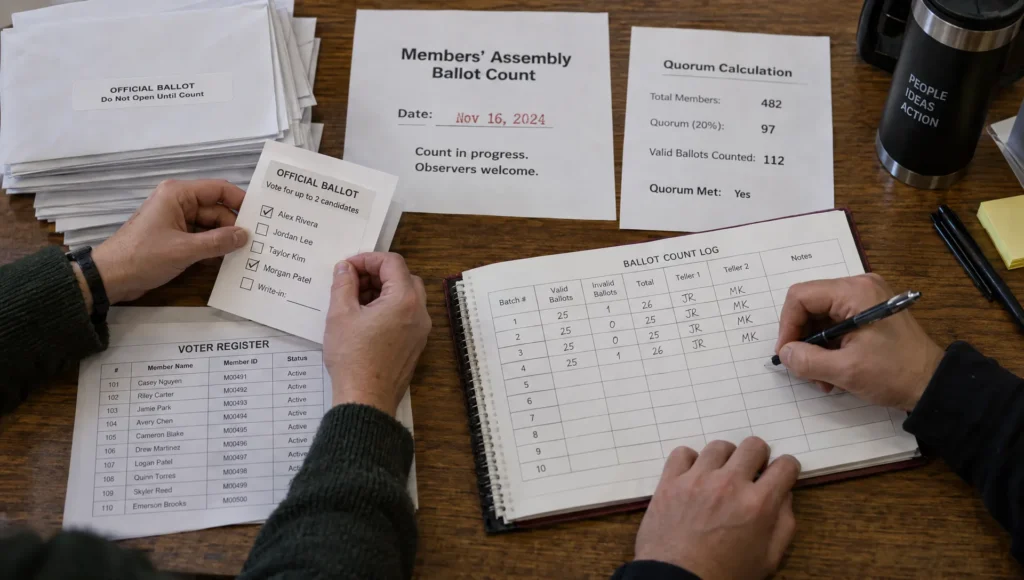
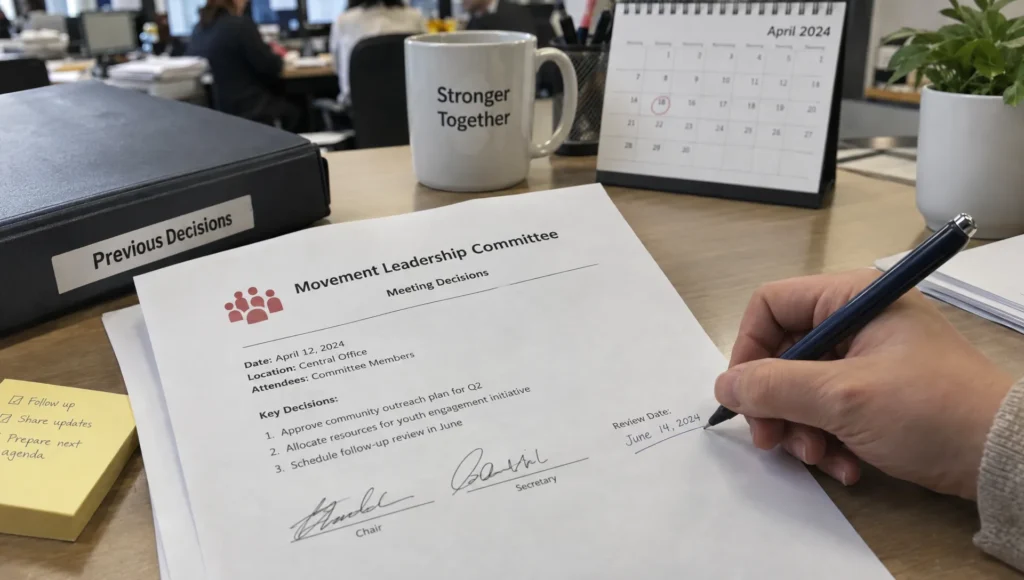
Every deliberative process should publish artifacts that let outsiders inspect what happened: the decision statement, participation promise, evidence index, facilitation rules, participant selection method, options memo, dissent report, official response, and implementation tracker.
These public receipts do something psychologically important. They lower the amount of blind trust citizens need. People do not have to simply believe that their voices mattered. They can see what was said, how it was considered, what changed, and what remains unresolved.
What this looks like in a national reform process
Imagine a country trying to reform civic education after years of polarization. One camp wants stronger national identity. Another fears indoctrination. Another wants more local autonomy. Another wants digital literacy and misinformation resistance. Another wants schools to focus on jobs, not politics.
A groupthink approach would try to force one patriotic curriculum on everyone or avoid the conflict entirely. A deliberative approach would make the conflict legible.
| Phase | Core question | Public artifact | Anti-groupthink function |
|---|---|---|---|
| Framing | What decision is actually on the table? | Decision Statement | Prevents vague unity slogans |
| Discursive intake | What do communities fear, want, and value? | Public Claim Map | Makes hidden disagreements visible |
| Evidence building | What do we know, not know, and dispute? | Evidence Commons | Reduces rumor-driven debate |
| Deliberation | Which options are legitimate and workable? | Options Memo | Converts conflict into comparable choices |
| Dissent recording | What objections remain? | Minority Report | Protects disagreement from erasure |
| Decision linkage | What will officials do next? | Response Memo | Prevents participation theater |
| Follow-through | What happened after the decision? | Implementation Tracker | Builds civic memory |
This process may not produce full consensus. That is acceptable. In fact, full consensus on a deeply value-laden issue may be suspicious. The more realistic goal is a recommendation that citizens can understand, inspect, criticize, and improve over time.
Technology can scale deliberation, but it cannot replace judgment
The JustSocial manifesto argues that the technology needed for continuous civic participation already exists: social platforms, analytics, cloud infrastructure, AI language models, and possibly blockchain for security and confidentiality. The challenge is not imagination. It is institutional design.
For national unity without groupthink, technology should help with structure, memory, access, and transparency. It should not manipulate feeds to maximize outrage. It should not hide moderation rules. It should not reduce citizens to sentiment data. It should not treat a viral reaction as considered judgment.
A democracy tool serving deliberative democracy should help citizens see the issue, contribute in structured formats, compare evidence, understand tradeoffs, protect privacy where needed, and follow the decision after the meeting ends. Tools like the manifesto’s proposed rParliament, rConcensus, and public analytics concepts point toward that larger ambition: not just more posts, but a more measurable connection between citizens and institutions.
The crucial test is simple: does the tool help people think together, or does it merely count reactions?
Metrics that show unity is real
If national unity is serious, it should be measured by more than approval ratings or patriotic language. A deliberative system can track whether unity is becoming more thoughtful, inclusive, and durable.
| Metric | What it reveals | Why it prevents groupthink |
|---|---|---|
| Dissent visibility | Whether minority views are recorded and published | Prevents false consensus |
| Evidence diversity | Whether competing sources and uncertainties are included | Prevents confirmation bias |
| Participation diversity | Whether regions, communities, and social groups are represented | Prevents elite capture |
| Reason quality | Whether claims include reasons, tradeoffs, and sources | Prevents slogan politics |
| Opinion movement with reasons | Whether people changed views after learning, not pressure | Distinguishes persuasion from conformity |
| Duty-to-respond coverage | Whether officials answered recommendations publicly | Prevents symbolic participation |
| Implementation tracking | Whether decisions are followed over time | Prevents civic amnesia |
These metrics do not make democracy mechanical. They make democratic practice inspectable. That is essential for any political movement claiming to build a better public life.
The deeper promise: from Polis to Cosmopolis
In the JustSocial manifesto, Yuval D. Vered draws on the Greek Polis as a model of intense civic belonging, while acknowledging that ancient direct democracy could not scale with the technology of its time. The manifesto’s future-facing idea, the Cosmopolis, asks whether modern technology can restore some of that civic immediacy at national scale.
Deliberative democracy is one answer to that question. It does not romanticize the crowd. It does not assume every citizen has time to study every issue. It does not pretend that online voting alone can solve legitimacy. Instead, it creates repeatable channels where citizens can move from raw opinion to informed judgment, from identity conflict to public reasoning, and from public reasoning to accountable decisions.
That is the kind of unity a modern democracy needs. Not unity as silence. Not unity as obedience. Not unity as a demand to forget injustice, ignore danger, or flatten identity. Unity as a shared civic discipline: we will keep talking, keep reasoning, keep recording, keep deciding, and keep checking whether power listened.
Frequently Asked Questions
Does deliberative democracy require consensus? No. Good deliberation can produce consensus, but it does not require it. The more important goal is reasoned public judgment, including clear records of disagreement, tradeoffs, and minority concerns.
How does deliberative democracy differ from ordinary debate? Ordinary debate often rewards performance, speed, and victory. Deliberative democracy uses structured rules, balanced evidence, facilitation, and public outputs so citizens can work through a decision rather than simply argue past one another.
Can deliberative democracy work at a national scale? Yes, but not by putting everyone in one giant discussion. It scales through representative mini-publics, local deliberation cells, digital evidence systems, public receipts, and wider civic participation that responds to and audits the process.
How does this protect minorities? It protects minorities by requiring inclusive recruitment, privacy safeguards where needed, minority reports, rights constraints, and public documentation of how minority concerns affected the final options or decision.
What role should a political movement play? A political movement should model the democratic standards it demands from government. That means publishing rules, welcoming dissent, creating deliberative spaces, producing decision-ready outputs, and showing public receipts for its own choices.
Build a unity that can think
If national unity is going to mean anything in the 21st century, it must be stronger than a slogan. It must be a civic practice that lets citizens disagree without collapsing into enemies, deliberate without being manipulated, and participate without being ignored.
JustSocial exists to help build that kind of democratic infrastructure: continuous, transparent, technology-supported, and rooted in citizen empowerment. If this vision speaks to you, start by reading The Face of Democracy, then consider how you can contribute as a citizen, volunteer, builder, educator, organizer, or supporter.
Democracy does not need a nation of people who think alike. It needs a nation of people with the courage, tools, and institutions to think together.