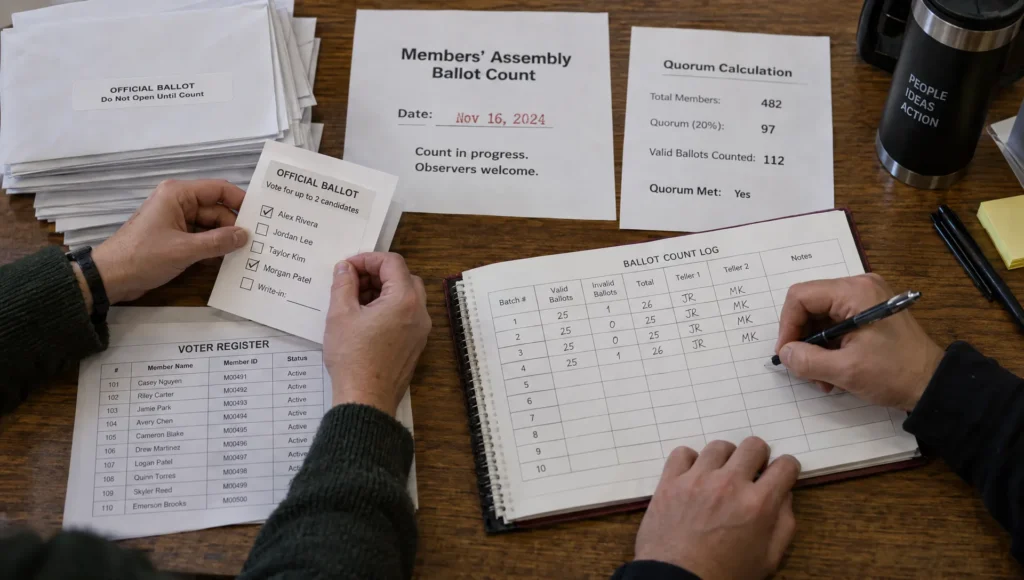
Many citizens who care about public life are tired of being told that influence begins and ends at the ballot box. Voting matters. It is one of the core acts of democratic life. But if the only recognized democratic action happens every few years, public life becomes a long silence interrupted by campaign season.
Civic participation for real influence asks a different question: how can citizens be heard while decisions are still being formed, not only after the outcome is already decided?
That question sits at the heart of JustSocial as a political movement. As the JustSocial manifesto argues, the current social contract too often reduces citizens to voters, taxpayers, and consumers. A healthier democracy should treat citizens as ongoing participants in public judgment, public priorities, and public accountability.
Real influence is not the same as constant outrage. It is not posting more, shouting louder, or collecting symbolic reactions that never reach a decision-maker. Real influence means citizen input becomes part of a visible democratic process, one that includes deliberation, public reasoning, technological access, and a duty for institutions to respond.
Real influence is a loop, not a moment
Most civic participation fails when it is treated as a single action. A petition is launched. A comment is submitted. A town hall is held. People speak, officials listen politely, and then no one can tell whether anything changed.
Influence requires a loop. Citizens need a way to identify the issue, understand the decision path, deliberate with others, deliver input to the right institutional surface, and track what happened next. Without that loop, participation becomes expression. Expression has value, but it is not the same as power.
JustSocial has already explored the mechanics of civic participation that actually changes decisions. The deeper point is that citizens should not have to guess where their voice belongs. A democratic system should make the path from public input to public decision visible.
A strong civic participation loop includes five basic elements:
| Element | What citizens need | What institutions owe |
|---|---|---|
| Issue clarity | A specific public problem, not vague frustration | Plain-language explanation of the decision at stake |
| Deliberation | Time to hear evidence and competing views | Access to relevant documents, data, and expert input |
| Collective signal | A way to show how many people support, oppose, or question an option | Accurate measurement without manipulation |
| Decision link | A named authority, deadline, and decision rule | A response explaining what was accepted, rejected, or changed |
| Public memory | A record of promises and outcomes | Transparent archives that citizens can revisit |
This is where civic participation becomes more than engagement. It becomes a democratic operating system.
Why elections alone cannot carry democratic life
Elections are essential, but they are not a complete civic operating system. A four-year rhythm may be administratively convenient, yet modern life changes faster than that. Housing costs, education policy, war, technology, labor markets, public health, transportation, and civil rights can shift dramatically between elections.
In a moment when Freedom House has warned that global freedom declined for the 19th consecutive year in 2024, democracies cannot afford to treat citizens as passive spectators. The answer is not to weaken constitutional protections or replace institutions with raw majority rule. The answer is to make democratic institutions listen continuously, transparently, and intelligently.
The JustSocial manifesto calls this continuous direct democracy. That does not have to mean every public question becomes a binding referendum. It can mean something more practical and safer: citizens have recognized channels to express priorities, deliberate on tradeoffs, create civic data points, and pressure representatives to justify their choices.
| Old civic rhythm | Continuous civic rhythm |
|---|---|
| Vote, wait, complain | Vote, deliberate, monitor, contribute |
| Campaigns dominate attention | Public issues remain visible between elections |
| Representatives infer what citizens want | Citizens create measurable signals on specific issues |
| Public input is scattered | Public input is organized and auditable |
| Accountability arrives late | Accountability becomes ongoing |
This is the difference between being ruled in the name of the people and governing with the people.
Deliberative democracy gives participation depth
Civic participation becomes stronger when it is deliberative. Deliberative democracy is the idea that public decisions gain legitimacy when citizens have a real chance to examine evidence, listen to different viewpoints, weigh tradeoffs, and refine their views before decisions are made.
This matters because raw opinion is often unstable. People may know what they fear, oppose, or desire, but public policy usually involves competing goods. A city may need more housing and more green space. A country may need security and civil liberty. A school system may need academic standards and student autonomy. Deliberation helps citizens move from reaction to judgment.
The OECD has documented a growing deliberative wave, including citizens assemblies, juries, and panels designed to bring ordinary people into structured public reasoning. These processes are not perfect, but they point to a crucial democratic lesson: citizens are often more thoughtful when institutions give them time, information, and responsibility.
For citizens who want real influence, deliberation is not a delay tactic. It is a power tool. It prevents civic energy from being dismissed as uninformed anger. It also forces institutions to respond to arguments, not just volume.
Discursive democracy gives participation culture
Discursive democracy is closely related, but it focuses on the wider public conversation. If deliberative democracy asks how citizens reason together in structured settings, discursive democracy asks how public meaning is formed across society: in media, classrooms, community groups, social platforms, unions, professional associations, religious communities, and local meetings.
This is where the JustSocial manifesto connects civic participation to education and culture. A society cannot build continuous democracy if citizens are never trained to disagree, investigate, speak, listen, and revise their views. Civic influence depends on civic capacity.
Discursive democracy also asks who gets to speak and whose language counts. If only lobbyists, donors, media personalities, and party insiders can shape the public agenda, then ordinary citizens remain present but politically thin. They may have opinions, but they do not shape the terms of debate.
A healthier public sphere needs more than open comment boxes. It needs accessible civic platforms, transparent parliamentary records, public-interest media, civic education, and a culture that rewards reason-giving over manipulation.
| Democratic idea | Main purpose | What it adds to real influence |
|---|---|---|
| Civic participation | Gets citizens involved in public decisions | Creates action, pressure, and accountability |
| Deliberative democracy | Improves the quality of public judgment | Turns opinion into reasoned recommendation |
| Discursive democracy | Shapes the public conversation | Makes democratic voice part of everyday culture |
| Political movement | Organizes people around shared change | Converts scattered energy into durable power |
These ideas work best together. Participation without deliberation can become noise. Deliberation without decision links can become civic theater. Discourse without organization can dissolve into endless talk. A political movement without democratic habits can reproduce the same power problems it claims to oppose.
The civic influence stack
Citizens who want real influence should think in layers. One person can contribute, but influence compounds when many citizens build shared civic infrastructure over time.
| Layer | Citizen task | Why it creates influence |
|---|---|---|
| Information | Understand the issue, timeline, and authority | Prevents energy from being wasted in the wrong place |
| Deliberation | Test arguments with people who disagree | Produces stronger, more defensible positions |
| Public signal | Show the scale and direction of citizen opinion | Makes public will visible without relying on anecdotes |
| Delivery | Send input to the official decision surface | Connects participation to institutional responsibility |
| Accountability | Track whether promises and explanations match outcomes | Turns memory into pressure |
| Institution-building | Create groups, tools, archives, and routines | Makes participation durable beyond one campaign |
This stack reflects one of the manifesto’s central insights: technology already gives society the ability to hear people more continuously, but democratic culture has not caught up. The challenge is not simply inventing new tools. It is building trustworthy civic habits around them.
Technology can expand participation, but design is everything
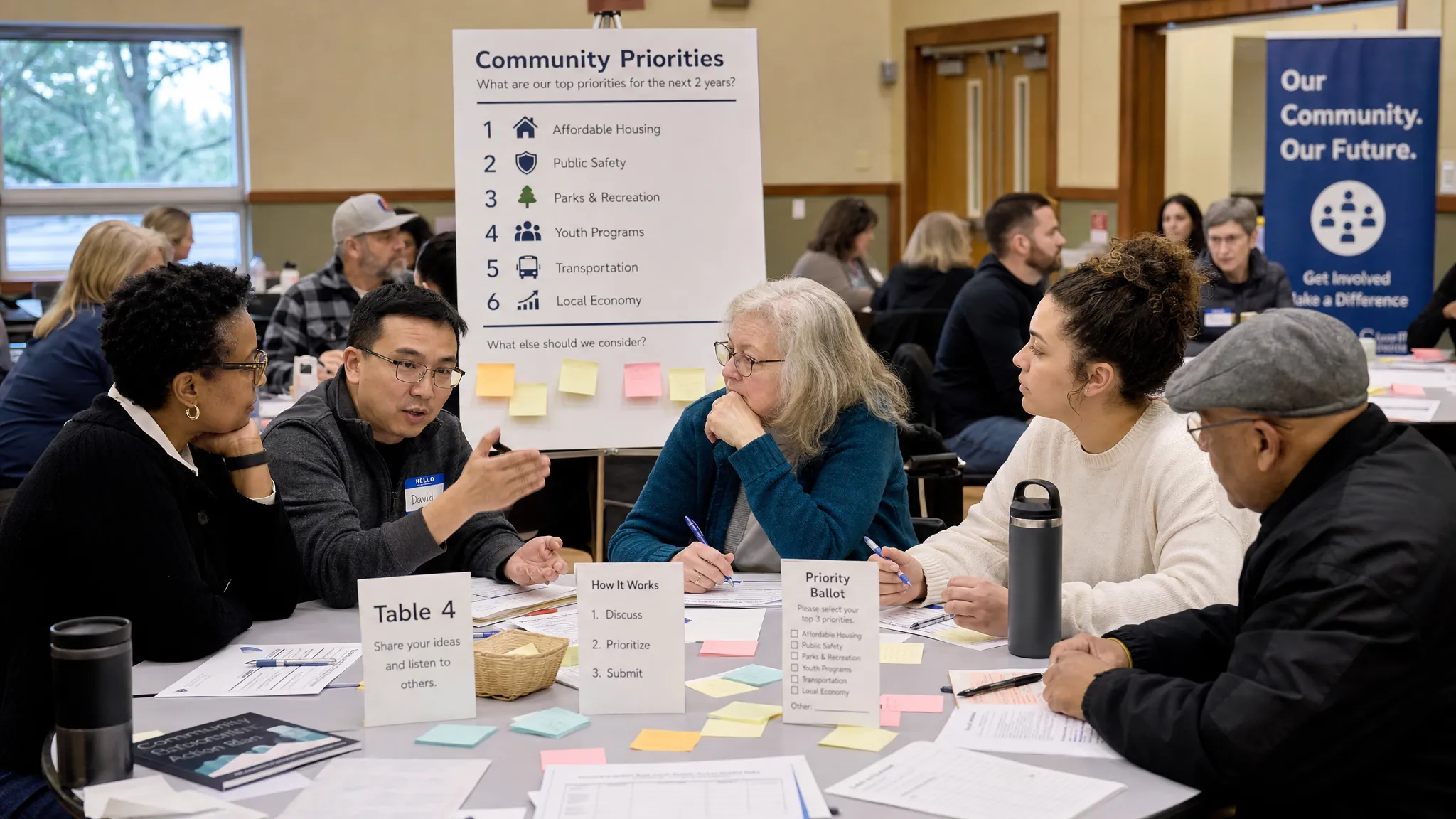
Digital democracy is powerful because it can lower the cost of participation. Citizens who cannot attend a meeting at 2 p.m. can still review materials, vote in a community ballot, sign onto a proposal, or comment on a public agenda. Public records can be searchable. Committee hearings can be archived. Civic data can reveal patterns that representatives would otherwise ignore.
This is why the JustSocial manifesto points to social platforms, analytics, cloud storage, AI, and possibly blockchain as ingredients for a more continuous democracy. But democratic technology must be designed with restraint. If civic platforms become surveillance tools, popularity contests, or manipulation engines, they will weaken the very citizenship they claim to empower.
Online voting and civic decision platforms deserve especially careful design. The National Academies report on election security has warned about the serious risks of internet voting in binding public elections. That does not mean technology has no role. It means different uses must be clearly separated: binding elections, advisory ballots, participatory budgeting, petition systems, civic polling, and deliberative forums each require different security and legitimacy standards.
A trustworthy civic platform should protect anonymity where needed, verify participation without exposing citizens, publish clear rules, allow independent audits, remain accessible to people with disabilities and limited digital access, and distinguish between public opinion data and legally binding decisions.
Technology should make citizens more powerful, not more measurable for the wrong reasons.
Where citizens can exert real pressure
Real influence usually appears in one of four arenas. Citizens become more effective when they know which arena they are entering.
| Arena | What citizens can influence | Strong civic contribution |
|---|---|---|
| Agenda | What issues officials must address | Public evidence that a problem is widespread and urgent |
| Budget | What receives funding | Clear priorities, tradeoffs, and local impact examples |
| Rules and policy | How laws, regulations, or procedures are written | Specific language, objections, alternatives, and expert support |
| Oversight | Whether institutions did what they promised | Records, timelines, audits, public questions, and follow-up |
This is why small, consistent action can matter. A citizen who spends ten focused minutes identifying a decision window may create more influence than someone who spends an hour arguing in a comment thread with no institutional destination. For a realistic routine, JustSocial’s guide to civic participation in 10 minutes a day offers a useful starting point.
The goal is not to turn every citizen into a full-time activist. The goal is to make participation normal, frequent, and connected enough that representatives can no longer pretend the public is silent between elections.
From individual citizens to a political movement
Individuals create signals. Groups create leverage. Movements create history.
A political movement for real civic participation must do more than demand better democracy from the outside. It must practice better democracy internally. That means transparent priorities, open deliberation, clear roles for volunteers, accountable leadership, and a willingness to revise tactics when citizens provide better arguments.
The manifesto’s vision of the Polis and the Cosmopolis is useful here. The ancient Polis mattered because citizens felt the state as something immediate, not distant. The modern challenge is scale. We cannot simply recreate a small city-state, but we can use technology, education, and institutional design to restore some of that intimacy between citizen and public life.
A movement for civic participation should therefore build bridges between local concerns and national structures. A school issue, a neighborhood budget, a committee hearing, or a public transparency demand should not remain isolated. Each can become part of a larger democratic habit: citizens identify problems, deliberate, act, measure, and remember.
That is how a political movement becomes more than a brand. It becomes a civic engine.
Frequently Asked Questions
What is civic participation for real influence? Civic participation for real influence is ongoing citizen action that connects to actual public decisions. It includes learning, deliberating, organizing, submitting input, voting where appropriate, and tracking whether institutions respond.
How is deliberative democracy different from ordinary debate? Ordinary debate often rewards speed, performance, and winning. Deliberative democracy gives citizens time, evidence, structure, and responsibility so they can weigh tradeoffs and produce better public judgment.
What is discursive democracy in plain language? Discursive democracy is the idea that democracy depends on the quality of public conversation. It asks whether citizens can meaningfully shape the language, priorities, and assumptions that guide public decisions.
Does continuous direct democracy replace elected representatives? Not necessarily. A continuous model can make representatives more accountable by giving them better, more precise signals from citizens between elections. Institutions can still deliberate, protect rights, and make final decisions, but they must take public input seriously.
Can digital tools make democracy more trustworthy? Yes, if they are designed for transparency, security, accessibility, and accountability. Digital tools can also damage trust if they hide decision rules, expose private data, or blur the line between advisory participation and binding votes.
Help build civic participation that counts
If you believe citizens should be more than voters, taxpayers, and consumers, the next step is not cynicism. It is organization.
JustSocial is working to advance continuous direct democracy, citizen empowerment, and technology-driven participation. Explore JustSocial.io to learn more about the movement, the vision, and ways to support the work of making civic participation a source of real influence.