Publics do not fracture only because citizens disagree. They fracture when people stop believing that disagreement can be handled fairly. At that point, an election result feels like domination, a court ruling feels like conspiracy, a policy debate feels like cultural war, and a social feed feels more politically real than the institutions meant to govern public life.
That is the challenge of deliberative democracy for divided publics. The goal is not to make everyone moderate, erase ideology, or pretend that deep conflicts are misunderstandings. The goal is to build civic processes where people can argue under conditions that make public judgment more informed, more legitimate, and harder to dismiss as manipulation.
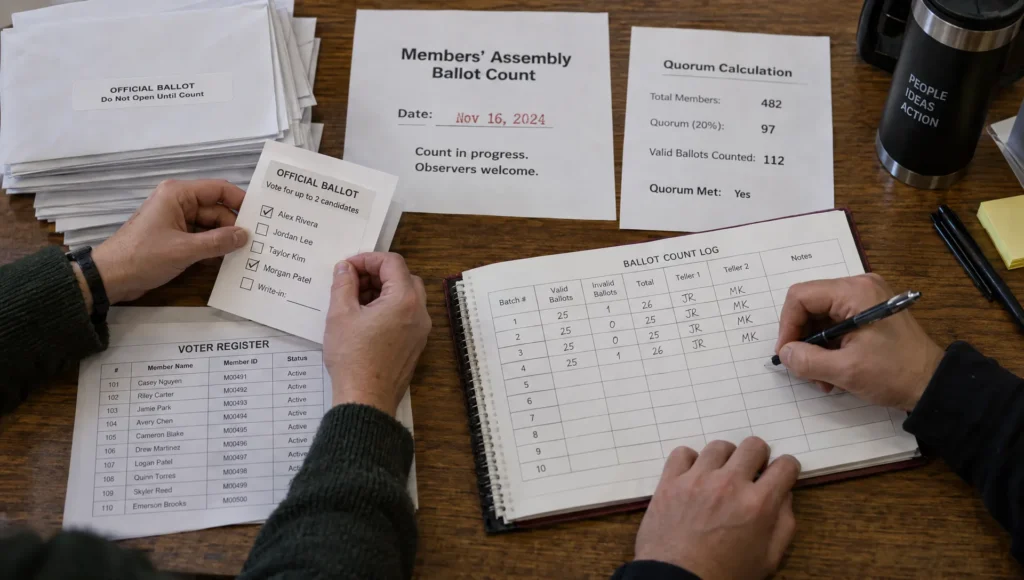
For a political movement committed to continuous direct democracy, this distinction matters. More voting alone will not heal a divided public if citizens do not trust the process, the evidence, or one another. But deliberation without participation can become a polite forum with no democratic force. The future requires both: broad civic participation and structured public reasoning.
The problem is not disagreement. It is democratic distance
A divided public is not simply a public with left and right, religious and secular, urban and rural, majority and minority, or young and old. Those differences are normal in a free society. The deeper problem begins when different groups no longer share a sense that they belong to the same political project.
In divided publics, citizens often experience political life through separate realities. They follow different information sources, trust different authorities, use different moral languages, and suspect different enemies. When a decision is made, the losing side may not merely think the decision is wrong. It may think the decision is illegitimate.
This is why democratic decline is not only an institutional story. Freedom House has documented years of global democratic backsliding, but the crisis also lives inside everyday civic life: distrust, humiliation, apathy, rage, and the sense that ordinary people have been reduced to spectators.
JustSocial’s manifesto speaks directly to that frustration. It argues that citizens should not be reduced to voters, taxpayers, and consumers who are asked to participate roughly once every few years. In the vision described in the JustSocial manifesto, democracy becomes continuous: citizens are heard throughout the term, public institutions use technology to register public opinion, and civic life moves closer to the immediacy once associated with the Polis, where politics was part of daily life.
Deliberative democracy can help make that continuous participation wiser. It gives divided publics a way to slow down at key moments, examine evidence, listen across difference, and produce recommendations that public officials cannot honestly ignore.
What deliberative democracy can and cannot do
Deliberative democracy is based on a simple but demanding idea: legitimate public decisions should be shaped by reasons that citizens can examine, challenge, and revise together. It is not only about expressing preferences. It is about forming better public judgment under fair conditions.
In practice, deliberative processes often include balanced briefing materials, moderated discussion, access to experts, small-group dialogue, public reasoning, and recommendations. The Stanford Encyclopedia of Philosophy describes deliberative democracy as an approach that emphasizes reason-giving among free and equal citizens. That sounds abstract, but its practical importance is very concrete: citizens are not treated as a crowd to be managed, but as people capable of understanding tradeoffs.
Still, deliberative democracy should not be oversold. It cannot remove all propaganda, eliminate power imbalances, or guarantee consensus. In divided publics, consensus may not even be the right measure of success. A better standard is whether the process creates:
- Clearer disagreement, where citizens understand what the conflict is really about.
- Better evidence, where claims can be inspected instead of merely repeated.
- More legitimate outcomes, where people can see how a recommendation was reached.
- Stronger civic trust, where opponents become fellow citizens rather than enemies.
- Actionable guidance, where institutions receive usable public judgment instead of raw outrage.
The deepest achievement of deliberation is often not agreement. It is converting chaos into a disagreement that can be governed.
Divided publics need a layered democracy
One mistake in democratic reform is expecting one process to do everything. Public debate, civic education, voting, protest, expert review, and legislative decision-making each serve different functions. A healthy democracy needs layers.
Discursive democracy is the broad public-sphere layer. It is where people contest language, identity, narratives, values, and public attention. It includes media, public forums, civic networks, community debate, and the messy process through which issues become visible. For more on this layer, JustSocial’s article on discursive democracy for polarized communities explains how public conflict can be made healthier before it reaches formal decision-making.
Deliberative democracy is the structured reasoning layer. It takes a public issue and creates conditions for citizens to weigh evidence, hear one another, and produce considered judgment.
Participatory democracy and direct democracy are the broad action layers. They let citizens vote, propose, petition, volunteer, comment, mobilize, and keep institutions responsive between elections.
For divided publics, the sequence matters. If a society jumps straight from outrage to online voting, it may simply count polarization. If it stays forever in discussion, it may exhaust citizens without changing power. A better model moves from open public expression to structured deliberation to visible institutional response.
Design principles for deliberation in divided publics
Deliberation fails when it assumes citizens already trust the room. In divided publics, the room itself must earn legitimacy. That means process design is not a technical detail. It is the democratic substance.
| Public fracture | Common symptom | Deliberative design response |
|---|---|---|
| Identity divide | People hear disagreement as disrespect toward their group | Begin with lived experience and dignity rules before moving to policy tradeoffs |
| Information divide | Citizens rely on incompatible facts | Create a shared evidence record that can be questioned and updated |
| Trust divide | Participants suspect capture or manipulation | Use transparent selection, independent facilitation, and public documentation |
| Power divide | Well-organized groups dominate quieter citizens | Use representative recruitment and structured speaking time |
| Attention divide | Complex issues lose to viral conflict | Break decisions into clear questions, options, costs, and consequences |
A deliberative process for divided publics should be built around several principles.
- Treat identity as context, not an obstacle. People do not enter public life as abstract rational units. They bring memory, fear, loyalty, faith, class, language, and personal experience. Good deliberation does not suppress these realities. It makes room for them without allowing them to replace evidence.
- Separate testimony, evidence, and decision. Lived experience matters, but it is not the same as statistical evidence or legal analysis. A strong process lets each type of knowledge do its own work.
- Make the evidence public. Citizens should be able to see what information was used, who supplied it, what was disputed, and why certain claims were accepted or rejected. This is why a public evidence layer for deliberative democracy is essential.
- Use representative selection and open participation together. A randomly selected or demographically balanced panel can deliberate deeply, while the wider public can submit questions, testimony, priorities, and objections.
- Protect minority voices without giving every faction a veto. Divided publics need safeguards against majority arrogance, but they also need decisions that can move forward.
- Require an official response. If institutions can ignore deliberative recommendations without explanation, the process becomes civic theater. Public officials should answer what they accept, reject, or modify, and why.
A practical process for divided publics
A workable model does not need to begin with constitutional transformation. Cities, schools, agencies, parties, civil society groups, and national parliaments can all start with specific issues where conflict is high and trust is low.
First, define the public question in a way that is specific enough to deliberate. A divided public cannot deliberate on whether the country is broken, but it can deliberate on housing allocation rules, school funding priorities, policing oversight, climate adaptation, public transit tradeoffs, or digital privacy standards.
Second, map the conflict before trying to solve it. This is the discursive phase. What stories do different groups tell? Which words trigger suspicion? Which harms are ignored by the other side? Which facts are disputed? Which institutions are not trusted?
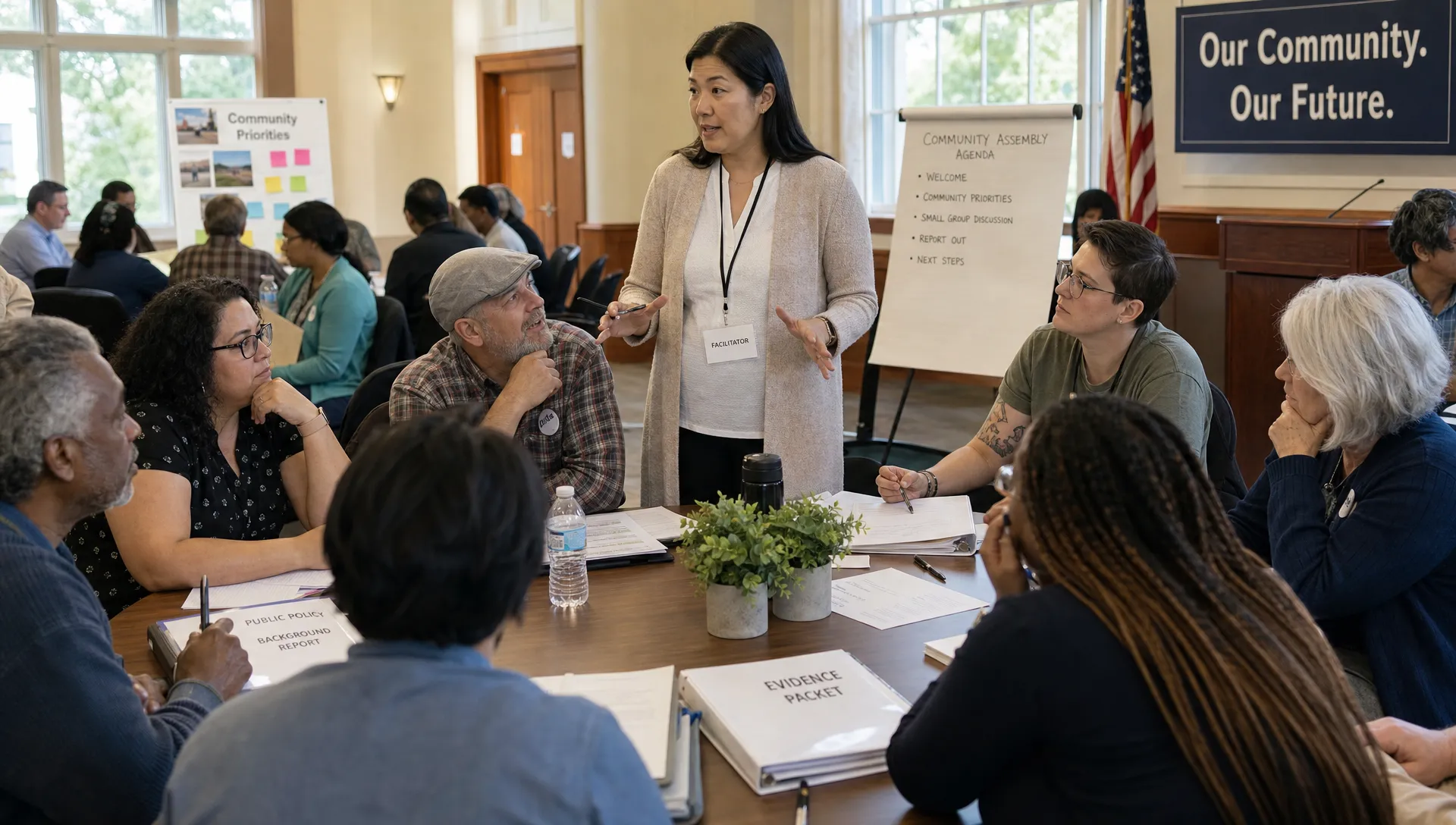
Third, assemble a deliberative body that reflects the affected public. The OECD has encouraged governments to use representative deliberative processes when they need informed citizen judgment on complex issues, especially when legitimacy matters. OECD guidance on citizen participation emphasizes purpose, transparency, accountability, and inclusion as central design standards.
Fourth, give citizens balanced materials and access to competing expertise. Experts should inform the process, not control it. Participants should be able to question experts, request missing information, and identify uncertainty.
Fifth, deliberate in stages. Early sessions should build understanding. Middle sessions should compare options. Final sessions should produce recommendations, minority reports, and a clear explanation of tradeoffs.
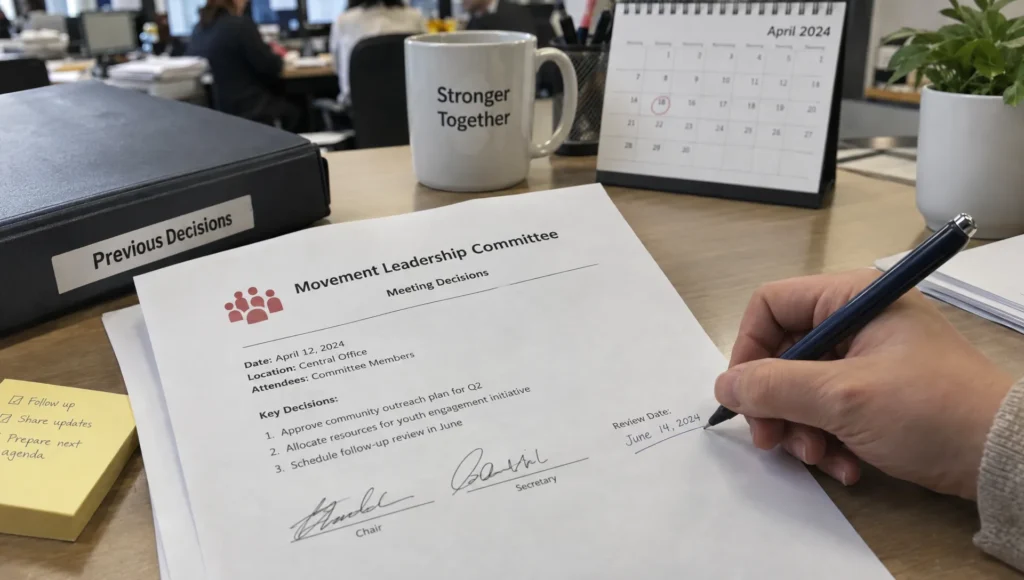
Sixth, publish everything that can safely be published: the mandate, materials, experts, process rules, recommendations, government response, and implementation timeline. Government transparency is not decoration. It is how legitimacy travels beyond the room.
Finally, keep the process continuous. After officials respond, citizens should be able to track implementation, revisit outcomes, and feed new information back into the public process. This is where deliberative democracy connects naturally to continuous direct democracy.
Where technology belongs
Technology should not be treated as a magic cure for polarization. A badly designed online voting platform can amplify manipulation, simplify complex questions, or turn public life into another engagement metric. But technology can serve democracy when it is built around civic purpose rather than attention extraction.
For divided publics, democracy tools can help in several ways. They can make public agendas visible, collect citizen questions, organize evidence, publish committee materials, support secure participation, enable community ballots, and make public officials respond in traceable ways. They can also lower the cost of participation for people who cannot attend a town hall at a specific hour.
This fits the broader JustSocial idea of citizen empowerment via technology. The manifesto imagines state-sanctioned civic platforms, public analytics, online participation, transparent committee records, and civic identity features that allow citizens to be heard continuously while protecting privacy. Whether every institutional detail takes that exact form is a matter for debate. The larger principle is harder to dismiss: if private platforms can measure attention constantly, democratic institutions should be able to listen to citizens responsibly, transparently, and ethically.
The key word is responsibly. Democratic technology must be designed for legitimacy. That means privacy protection, cybersecurity, accessibility, auditability, public oversight, and clear separation between civic participation and manipulation. The point is not to replace parliaments, courts, or professional administration with instant polls. The point is to make institutions more permeable to public reasoning.
Why deliberation matters for a political movement
A political movement that seeks democratic renewal faces a temptation: mobilize anger first and build process later. That may create attention, but it rarely creates durable legitimacy. If the movement wants to serve divided publics, it must model the democracy it wants to build.
That means inviting disagreement inside the movement. It means creating spaces where supporters can challenge proposals, refine tools, question assumptions, and improve public ideas. It means resisting the fantasy that the people already speak with one voice. The people are plural. Democracy is the discipline of turning that plurality into shared power.
JustSocial’s vision of a modern democracy, including direct democracy tools, public transparency, educational reform, civic technology, and a stronger role for citizens between elections, points toward a deeper social contract. But a continuous democracy must also be a deliberative democracy. If citizens are heard every day, the quality of that hearing matters. If public opinion becomes data, the ethics of collection, interpretation, and response matter. If representatives become pipelines for public consensus, the process that forms consensus matters.
Divided publics do not need politics that pretends conflict is shameful. They need politics that makes conflict productive enough to live with.
Frequently Asked Questions
What is deliberative democracy in simple terms? Deliberative democracy is a way of making public decisions through informed, structured discussion among citizens. People receive evidence, hear different views, discuss tradeoffs, and produce considered recommendations or decisions.
Can deliberative democracy work in a deeply divided public? Yes, but only if it is designed for distrust. That means transparent rules, balanced evidence, skilled facilitation, representative participation, and a clear link between citizen recommendations and official response.
Is deliberative democracy the same as direct democracy? No. Direct democracy focuses on citizens voting or deciding directly. Deliberative democracy focuses on citizens reasoning together before decisions are made. In a modern system, the two can strengthen each other.
Why is discursive democracy important before deliberation? Discursive democracy helps reveal the stories, identities, grievances, and frames shaping public conflict. Without that wider public conversation, formal deliberation may miss what citizens are actually fighting about.
What role should technology play in deliberative democracy? Technology should help citizens access information, participate securely, follow public decisions, and hold institutions accountable. It should support public reasoning, not replace it with shallow clicks or manipulated engagement.
Building democratic muscle for divided times
Deliberative democracy is not a soft alternative to power. It is a way to make power answerable to citizens who are informed, visible, and taken seriously. For divided publics, that is not a luxury. It is civic infrastructure.
If this direction resonates, JustSocial invites citizens, builders, volunteers, educators, technologists, and public-minded organizers to help shape a politics that listens continuously and reasons publicly. Explore the movement at JustSocial.io and take part in building a democracy worthy of the people it claims to represent.